Taiyaki is a popular Japanese snack shaped like a fish, known for its crispy outer shell and warm, sweet filling. It originated over a century ago as a way to offer an affordable treat that resembled the red sea bream, a fish considered lucky and special in Japan.
This unique shape and cultural meaning helped taiyaki become a beloved street food across the country. We often find taiyaki filled with sweet red bean paste, but many variations exist today, including custard, chocolate, and even savory fillings.
Made from a batter similar to pancakes or waffles, taiyaki is cooked in fish-shaped molds, giving it a fun and eye-catching appearance. The snack has also spread to other countries, adapting to new tastes and styles along the way.
Key Takeaways
- Taiyaki is a fish-shaped Japanese snack with a sweet or savory filling.
- It was originally created to mimic a lucky fish and offer an affordable treat.
- Variations in batter and fillings have made taiyaki popular worldwide.
Taiyaki: Origins, Significance, and Cultural Impact
Taiyaki is a snack deeply rooted in Japanese history and culture. Its unique fish shape carries symbolic meaning and plays a strong role in traditional street food culture.
Several famous shops and regions have kept the taiyaki tradition alive through the decades. Taiyaki was first created during Japan’s Meiji period, around the early 1900s.
It was invented by Seijiro Kobe, who owned a shop called Naniwaya in Tokyo’s Azabu-Juban neighborhood. He originally sold imagawayaki, a round pancake filled with sweet red bean paste, but wanted a new shape to set his product apart.
Kobe experimented with molds shaped like turtles and airships but found no success until he made molds in the shape of sea bream, or tai. Sea bream was considered a luxury fish and a symbol of celebration, making this shape perfect for a sweet treat that was affordable for everyday people.
Taiyaki became popular because it brought a sense of festivity into common life, particularly during the Showa period. The fish-shaped taiyaki is modeled after tai or sea bream, known in Japan as a symbol of good fortune and happiness.
The fish often features in traditional New Year celebrations called osechi, where it represents prosperity and good luck for the year ahead. The shape also reflects determination and strength, themes common in Japanese folklore.
Eating taiyaki is more than enjoying a snack; it connects us to cultural ideas of hope and celebration. Taiyaki is a staple of Japanese street food and matsuri (festivals).
Stalls selling taiyaki line the streets of Tokyo and other cities, especially in areas like Azabu-Juban, where the snack first gained fame. Its warm, crispy exterior and sweet fillings make it a comforting treat in colder weather.
At festivals, taiyaki stands attract people of all ages, offering a quick bite that’s both nostalgic and affordable. The snack is versatile, with common fillings like azuki (red bean paste), custard, or chocolate.
Naniwaya Sohonten in Tokyo remains the most iconic taiyaki shop and is closely tied to the snack’s history. Established by Kobe’s family, the store has been a local favorite since the early 20th century, especially in the Azabu-Juban district.
Beyond Tokyo, many regions have their own taiyaki variations and shops. Over 150 stores in Tokyo alone serve it regularly, and its influence extends nationwide.
The song “Oyoge! Taiyaki-kun,” released during the Showa period, helped popularize taiyaki even more, embedding it firmly in Japanese culture. Taiyaki’s wide distribution and connection to well-known shops keep it simple but meaningful—a true piece of Japan’s culinary heritage.
Taiyaki Batter, Fillings, and Variations
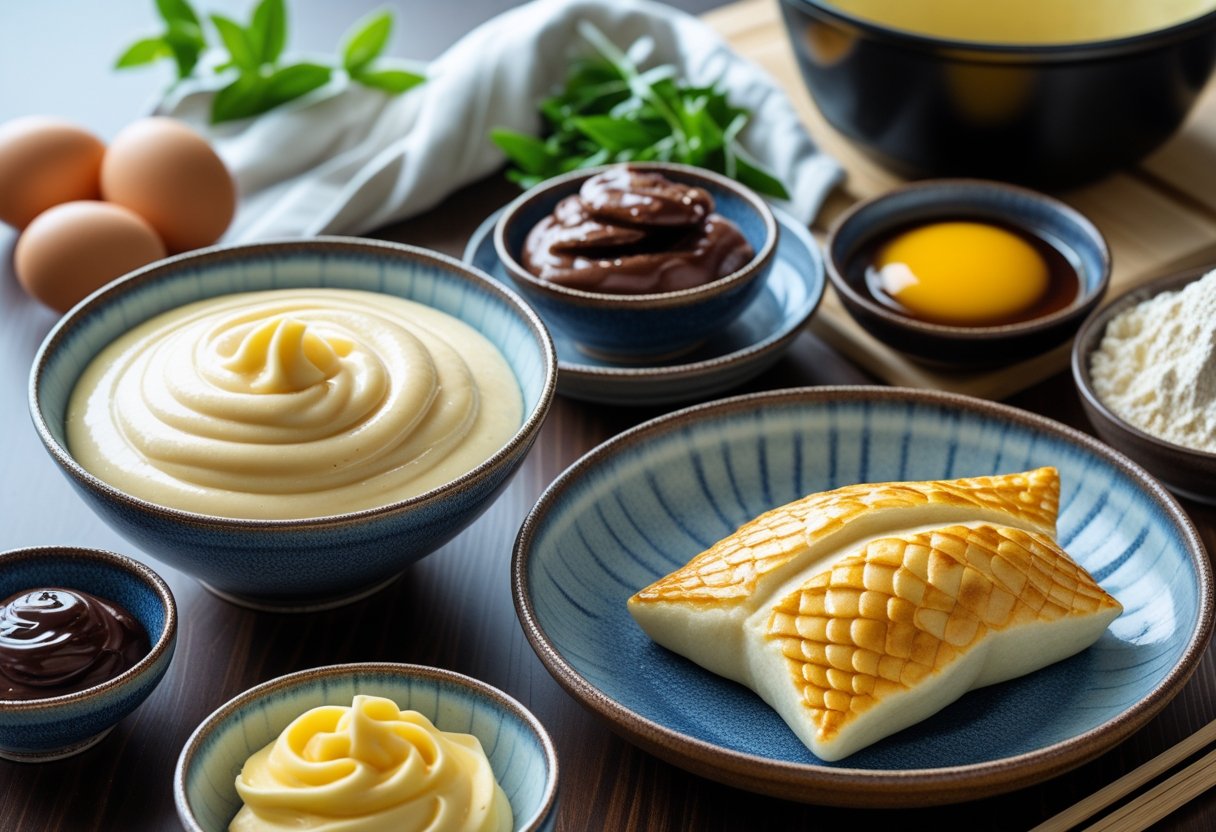
Taiyaki’s appeal lies not only in its fish-shaped form but also in the batter’s texture and the variety of fillings inside. From the basic ingredients of the batter to the traditional and modern choices for fillings, each aspect plays a vital role in crafting authentic Japanese fish-shaped cakes.
Different regions and bakers also offer unique takes that expand taiyaki’s flavor and style. The batter for taiyaki is similar to pancake or waffle batter but specifically balanced to create a thin, crispy shell.
It usually contains flour, baking powder, sugar, eggs, milk, and sometimes a little melted butter for richness. The key is mixing these ingredients into a smooth, pourable consistency without lumps.
A proper taiyaki pan or fish-shaped mold is essential. It allows us to cook the batter evenly on both sides while forming the pastry’s distinctive fish shape.
We preheat the pan and lightly grease it before pouring the batter. Pouring a thin layer first, then adding the filling, and topping with more batter ensures the perfect filling-to-batter ratio.
Cooking each side for 3–4 minutes makes the outer shell crispy and golden brown. The traditional filling for taiyaki is anko, a sweet paste made from azuki beans.
There are two main types: tsubuan, which contains whole or lightly mashed beans, and koshian, a smooth, sieved paste. Both add a rich, earthy sweetness that balances the batter’s mild flavor.
Today, we also enjoy many other fillings. Custard offers a creamy contrast, while chocolate adds a richer sweetness.
For a modern twist, fillings like matcha cream or even sweet potato paste are popular. Some shops experiment with savory options such as cheese or curry, but sweet red bean paste remains the classic favorite.
Across Japan and beyond, taiyaki has evolved with local tastes and innovations. Some regions serve thicker, doughier versions that resemble mochi.
Others use different fillings like fruit jams or ice cream, often served inside the warm, crispy shell for texture contrast. Creative makers shape the molds differently or fill taiyaki with layered ingredients.
There are even ice cream taiyaki shops where the pastry acts as a cone. These variations show how versatile our beloved Japanese fish-shaped cake has become while still rooted in tradition.
For a detailed taiyaki recipe and tips on batter and fillings, we can explore trusted guides to make this snack at home.
Frequently Asked Questions
Taiyaki offers a variety of fillings, from sweet to savory, that give it unique flavors. Making it at home is possible with simple ingredients and the right tools.
We can also explore how Taiyaki differs from waffles and where to taste the best versions in Tokyo. Its place in Japanese dessert culture and the needed equipment for making Taiyaki are important details to know.
What are typical fillings for Taiyaki?
The classic filling is anko, a sweet red bean paste made from azuki beans. Other popular options include custard cream, chocolate, matcha-flavored cream, and sweet potato.
Some places even offer savory fillings like cheese or curry.
How do you make Taiyaki at home?
We prepare a simple batter similar to pancake or waffle batter. Using a fish-shaped mold, we pour some batter, add the filling, then cover it with more batter.
Cooking takes place on a stove or electric griddle until the outside is golden brown and crispy.
What is the difference between Taiyaki and a regular waffle?
Taiyaki is fish-shaped with a crispy outer crust and a soft inside that holds sweet or savory filling. Waffles, on the other hand, have a grid pattern and usually don’t contain fillings baked inside.
The texture and shape make Taiyaki distinct.
Where can you find the best Taiyaki in Tokyo?
The original and one of the best-known shops is Naniwaya Sōhonten in Azabu-Jūban. This place has been making Taiyaki since 1909, keeping the traditional taste alive.
Can Taiyaki be considered a traditional Japanese dessert?
Yes, Taiyaki has been around for over a century, beginning in the Meiji era. It evolved from an older snack and is now a staple street food, often eaten warm with classic fillings like anko.
What equipment is needed to make Taiyaki?
A special cast-iron fish-shaped mold is essential. These molds come in single or batch styles.
If you can’t find a mold, don’t panic. A waffle iron or muffin tray can step in for a similar taste—just don’t expect anything fishy about the shape!