Spanish paella is a beloved dish that many people try to recreate at home. It combines rice, meat, and vegetables cooked together in a special pan to create a rich and flavorful meal.
The key to making authentic Spanish paella is using the right ingredients and cooking techniques to get the perfect texture and taste.
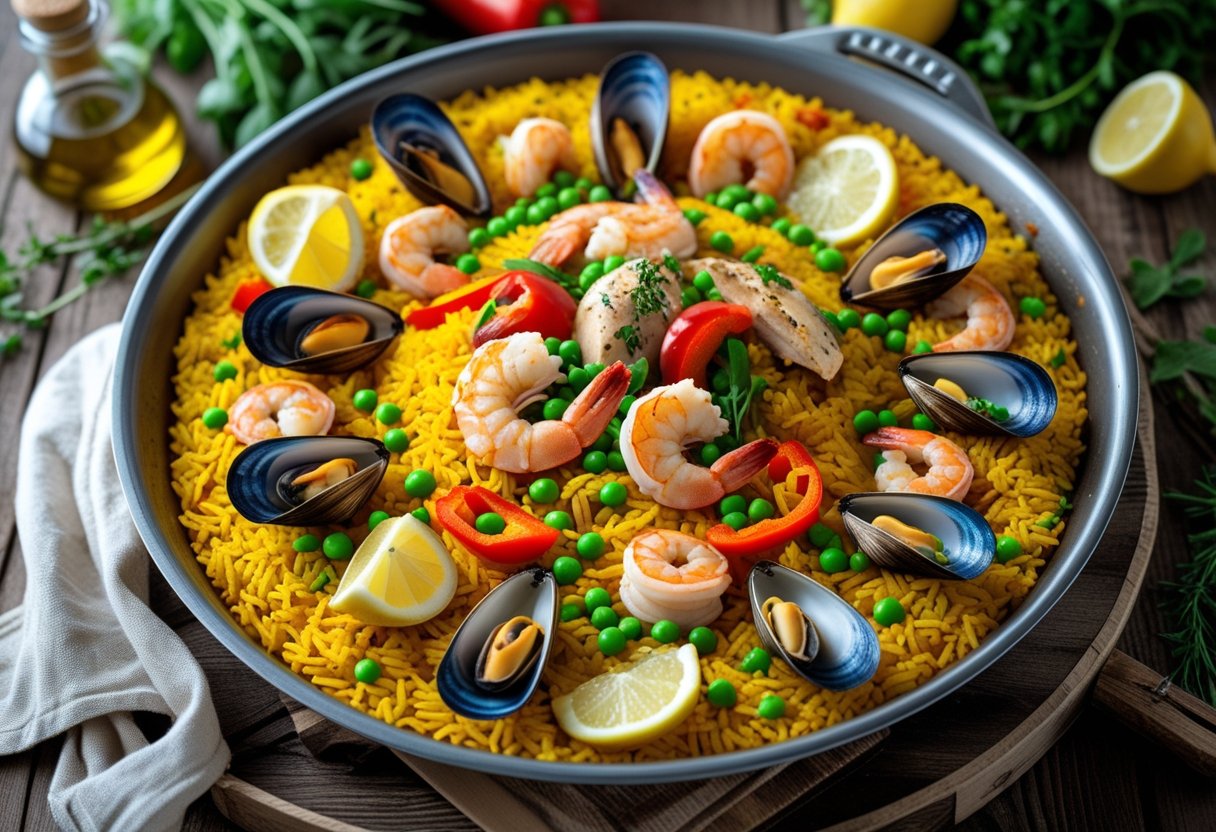
While seafood paella is popular, the original Valencian paella typically includes chicken, rabbit, and local beans. All are cooked slowly with saffron and paprika for deep flavor.
Learning how to balance these elements is what makes the dish truly special. By following simple tips and understanding the ingredients, you can create a meal that brings the taste of Spain right to your table.
Key Takeaways
- Using the correct ingredients is essential for traditional flavor.
- Cooking technique affects the texture and taste of the rice.
- Patience and careful timing help develop authentic flavors.
Key Ingredients for Spanish Paella
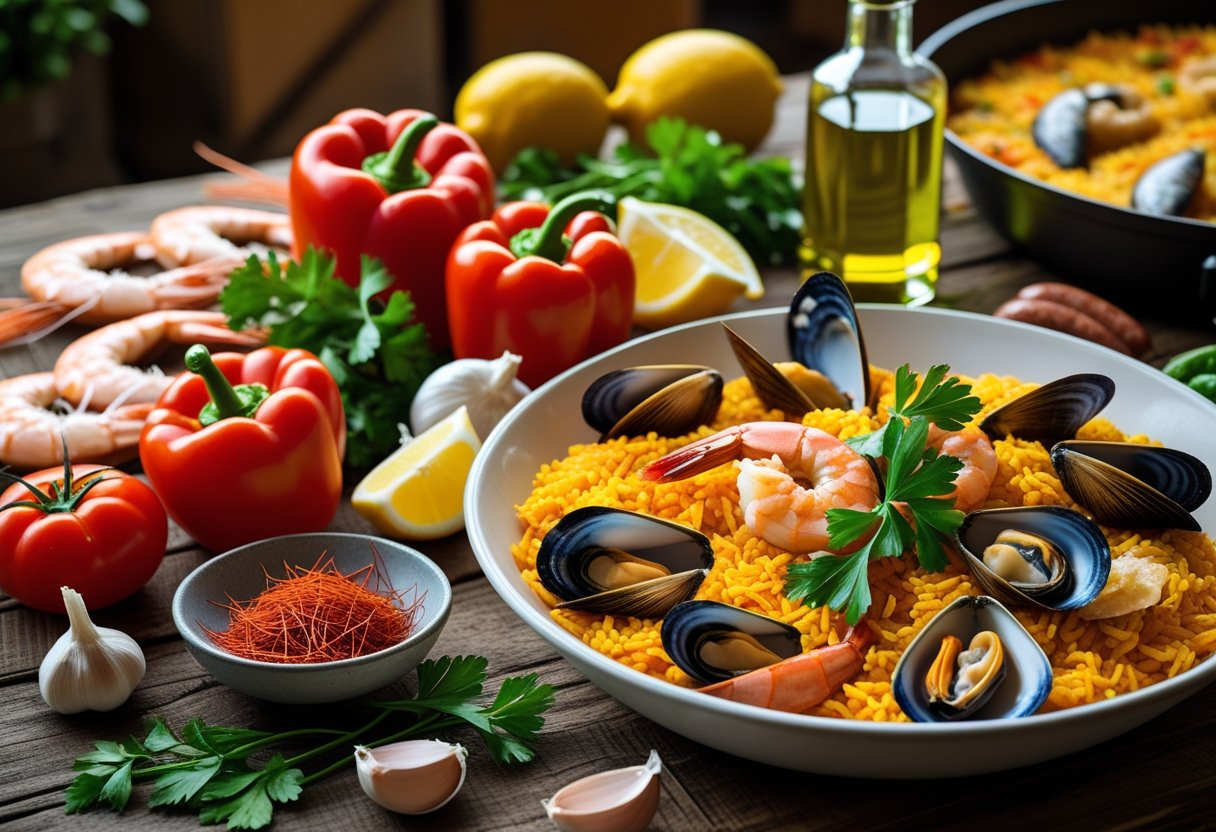
Making an authentic Spanish paella requires careful selection of ingredients that balance flavor, texture, and tradition. Getting the right rice, proteins, spices, and extras is essential to capturing the true spirit of this classic rice dish.
Traditional Rice Varieties and Substitutes
The choice of rice is key for paella. Bomba rice is the traditional favorite because it absorbs three times its volume in liquid without becoming mushy.
This short-grain rice keeps its shape and texture well during cooking. If bomba rice is unavailable, we can use other short- or medium-grain rice varieties.
Calrose rice is a common substitute in the US; it also absorbs liquid but is softer. Arborio rice, known for risotto, can work in a pinch but may create a creamier texture unlike classic paella.
Avoid long-grain rice since it won’t absorb flavors or juices properly. Using the right rice ensures each grain is infused with saffron, stock, and other ingredients.
Essential Proteins and Seafood
Paella often combines meat and seafood for rich, varied flavors. Popular proteins include chicken thighs and rabbit, both traditional choices in Valencian paella.
The meat is browned first to add color and depth. Seafood is critical for coastal or seafood paellas.
We might use shrimp, mussels, and clams, which add salty sweetness. Sometimes chorizo sausage is included for a smoky, spiced note, although it’s not traditional in all regions.
Freshness is important—seafood should be cleaned and prepped carefully. The broth used to cook the rice is often either chicken stock or fish stock depending on the proteins.
Classic Aromatics and Spices
The base flavors come from a combination of fresh aromatics and bold spices. Key items include garlic cloves, onion, and red bell pepper, which are usually sautéed in olive oil to start the sofrito—a flavorful sauce foundation.
Grated crushed tomatoes add acidity and enhance umami. The defining spice is saffron threads, which give paella its golden color and unique aroma.
For a cheaper or additional option, turmeric is sometimes used without overpowering saffron. We also add paprika, especially smoked paprika, for depth and subtle heat.
A bay leaf is common in the broth for earthy notes. Freshly ground black pepper adjusts seasoning at the end.
Other Important Additions
Vegetables like flat green beans or frozen peas add texture and balance the richness of meat and seafood. Roasted or fresh red peppers can add sweetness and color.
Using extra virgin olive oil is important for authentic flavor in cooking. The liquid component is usually hot broth—chicken broth for meat paellas or fish stock for seafood versions—to cook the rice properly.
Finishing touches such as a squeeze of a lemon wedge and chopped fresh parsley add brightness before serving. These small details lift the dish and highlight its fresh ingredients.
How to Make Authentic Spanish Paella
Making an authentic Spanish paella requires attention to details like the cooking process, the right pan, and achieving the perfect texture. We focus on layering flavors carefully, using the right cookware, and mastering the key to a great paella — the socarrat, or crispy rice.
Step-by-Step Cooking Instructions
We start by preparing all ingredients: chopping onions, garlic, bell peppers, and tomatoes, and cleaning seafood or trimming chicken if used. Heat olive oil in the paella pan, then sauté vegetables and seafood or chicken separately.
Next, add garlic and tomato to form the sofrito base. We add bomba rice next, spreading it evenly without stirring much.
Then we pour in saffron-infused seafood or chicken broth, letting the rice absorb the liquid slowly. The key is cooking at a medium heat for about 15-20 minutes until the rice is almost done.
We avoid stirring at this stage to let layers form properly. Finally, we remove the pan from heat and cover it for 5-10 minutes to rest.
This allows the flavors to meld and the rice to finish cooking gently. Voilà—your paella is ready for its dramatic table entrance.
Choosing and Using a Paella Pan or Skillet
The authentic paella pan is wide, shallow, and has sloping sides. This shape helps cook the rice evenly and allows liquid to evaporate at the right pace.
We recommend using a paella pan if possible, but a large, heavy skillet can work in a pinch. The pan should be placed over a steady, even heat.
Outdoor open flames are ideal, matching traditional cooking methods. If cooking indoors, using a gas burner or an oven finish can help maintain consistent heat.
Proper pan size depends on how many people we are cooking for. Half a cup of rice per person is a good rule.
Make sure the ingredients are spread in a thin, even layer to avoid overcrowding and ensure even cooking.
Tips for Achieving Socarrat and Perfect Texture
The socarrat is the crispy, slightly caramelized rice layer at the bottom of the pan, prized in authentic paella. To get it right, control the heat carefully—medium to medium-high towards the end of cooking.
Avoid stirring once the broth is added so the bottom layer can form its crust. If the heat is too low, the socarrat won’t develop; if too high, it can go from golden to “uh-oh” in seconds.
If the broth runs low, add more gradually. This keeps the rice moist but lets it absorb fully.
After cooking, let the paella rest covered. This helps the rice grains firm up while keeping the moisture balanced.
A well-made paella is all about tender rice with a crispy base. Plus, uniform cooking brings out the saffron’s color and flavor like a culinary magic trick.