You want bold, juicy carne asada with bright citrus notes and a quick grill-ready method you can trust.
We show you how to make Sonoran-style carne asada that stays tender, zesty, and ready for tacos or a simple plate in under a day.
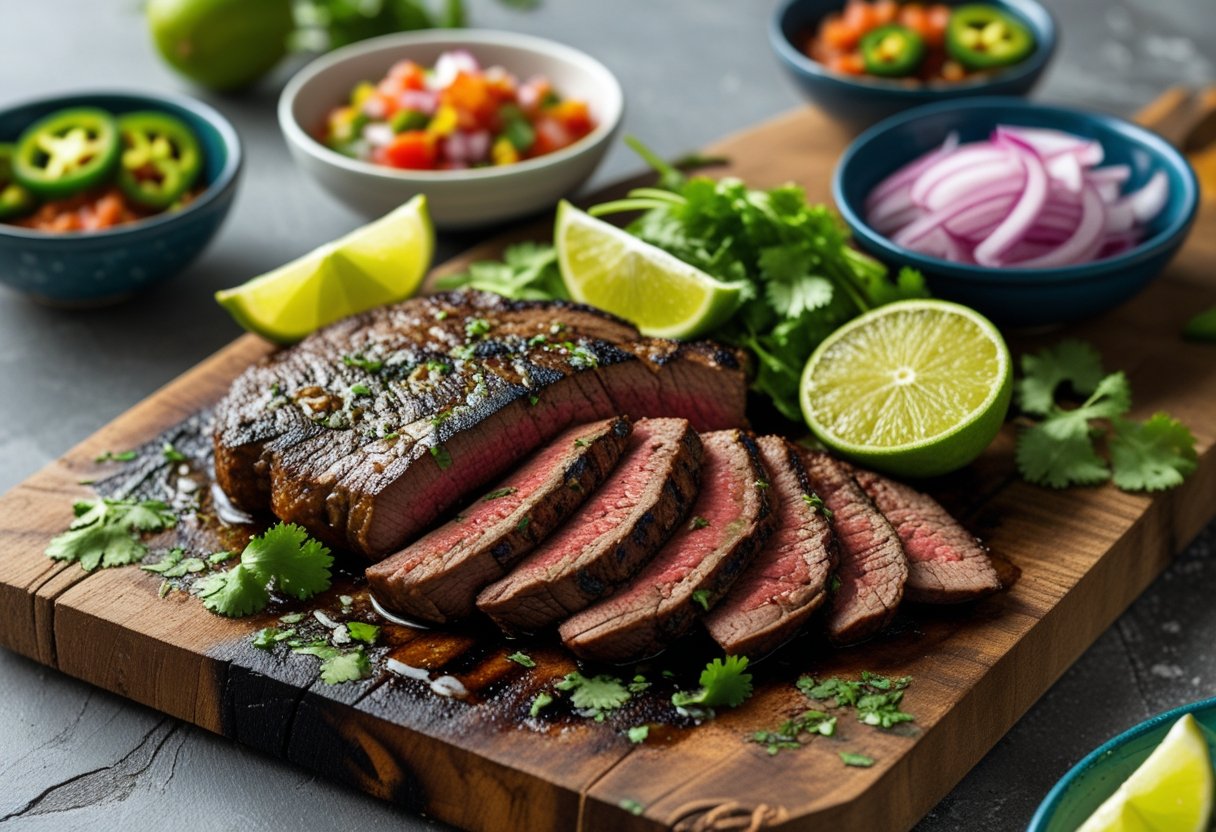
You’ll learn the exact citrus-forward marinade, the best cuts and brief prep tips, plus simple grilling steps that lock in flavor.
Follow our clear directions and you’ll get consistent results without fuss.
Key Takeaways
- The recipe gives a citrus marinade and clear prep steps for tender steak.
- Quick grilling tips help achieve smoky char and even doneness.
- Simple serving ideas turn the steak into tacos, bowls, or a family meal.
Sonoran-Style Carne Asada: The Essential Guide
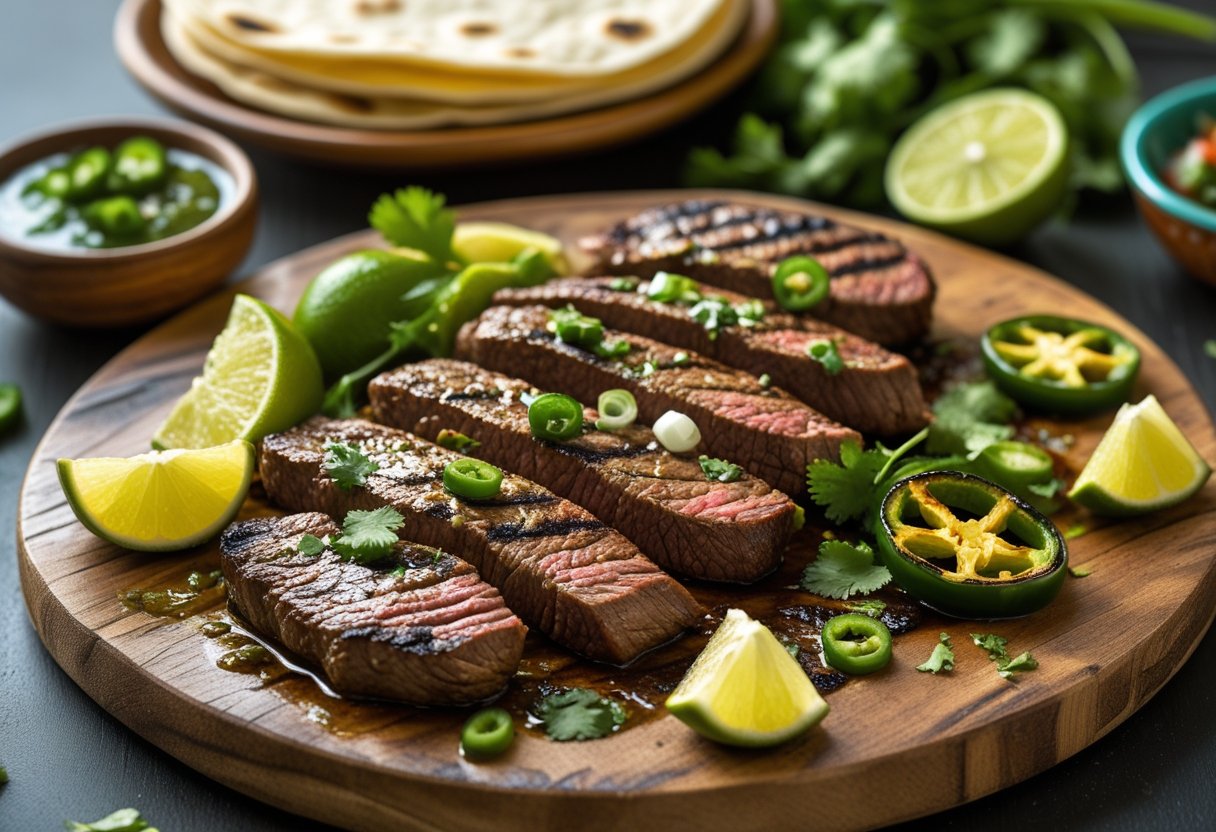
We focus on grilled steak cooked simply, salted well, and brightened with citrus.
Expect notes on texture, quick citrus marinades using lime, and the right cuts that hold up to high heat.
What Sets Sonoran-Style Carne Asada Apart
Sonoran carne asada favors high-heat grilling and minimal seasoning so the beef’s flavor shines.
We sear thin or moderately thick steaks over very hot coals or a smoking-hot gas grill.
A single flip keeps juices inside and creates deep char without overcooking.
Tortillas and sides matter.
In Sonora, flour tortillas are common and tacos are built with refried beans, guacamole, and a roasted salsa.
We let the meat rest briefly, then cut it into bite-size pieces for easy taco assembly.
Salt timing is crucial.
We salt right before or as the steak hits the grill to draw out less moisture.
That gives crisp edges and a tender interior.
Simple technique, big payoff.
Traditional Citrus Marinade Techniques
Citrus marinades in Sonoran-style cooking are brief and bright.
We use fresh lime juice as the acid, often mixed with a small amount of orange or vinegar, minced garlic, chopped cilantro, and a touch of oil.
The goal: flavor and quick tenderizing—not a long soak.
Marinate time depends on thickness.
Thin steaks need 15–30 minutes.
Thicker cuts can take up to 2 hours, but we avoid overnight citrus so the meat doesn’t turn mushy.
Always pat steaks dry before grilling to ensure a strong sear.
We balance citrus with salt and a little fat.
Lime gives freshness; a bit of oil prevents sticking and helps heat transfer.
If we want deeper char, we reserve some marinade to brush on near the end, rather than soaking the steak the whole time.
Choosing the Best Steak Cuts for Authentic Flavor
Traditional Sonoran cuts include palomilla (top sirloin) and diezmillo (chuck roll).
These cuts deliver real beef flavor and hold up to high heat.
We choose steaks about 1/2-inch thick for fast, even cooking and easy slicing.
If those cuts aren’t available, skirt steak or flank work well.
Look for even thickness and moderate marbling.
Trim excess fat but leave some for flavor and flare-ups on the grill.
Slice across the grain after resting to maximize tenderness.
For tacos, we dice or thinly slice the meat so each bite mixes well with lime, salsa, and beans.
Serving and Enjoying Sonoran-Style Carne Asada
We focus on warm, thin flour tortillas, bright fresh toppings, and simple plating that lets the grilled beef shine.
Small details—how we heat the tortillas, how we chop onions, and when we squeeze lime—change every bite.
Warming and Selecting the Right Tortillas
We use thin flour tortillas (tortillas de agua or sobaqueras) for authentic Sonoran tacos.
They should be pliable and large—about 8–10 inches—so they hold chopped meat and toppings without tearing.
Warm them directly over a hot grill grate for 5–10 seconds per side, or heat in a cast-iron skillet 20–30 seconds each side.
Stack warmed tortillas in a clean kitchen towel or tortilla warmer to keep them soft and moist.
If we only have thicker store-bought flour tortillas, we gently press them with a hot skillet to flatten and soften before serving.
For a touch of smoke when using a gas grill, we briefly char each tortilla edge over an exposed flame.
Always serve tortillas warm; cold tortillas break and mute flavors.
Classic Toppings: Cilantro, Onion, and Lime
We keep toppings simple: finely diced white onion, chopped cilantro, and lime wedges.
Use about 1/4 cup finely diced onion and 2 tablespoons chopped cilantro per pound of cooked steak as a guideline.
Mix toppings on a small plate so guests add what they like.
We rinse cilantro leaves, dry them thoroughly, then chop just the leafy parts for a fresh herb punch.
For onions, we prefer white onion for its crisp bite; soak diced onion in cold water for 5 minutes if sulfur is sharp.
Cut limes into wedges and squeeze just before eating to brighten the meat.
Offer a mild roasted salsa or a tangy tomatillo salsa on the side.
We avoid heavy sauces that cover the citrus-marinated flavor of the steak.
Presentation and Pairing Suggestions
We plate tacos on warm tortillas with a small mound of chopped carne asada, a sprinkle of onion and cilantro, and a lime wedge on the side.
Arrange tacos in a single layer on a platter to keep them from steaming and getting soggy.
For sides, we recommend refried beans, grilled nopales, or a simple cabbage slaw for crunch.
Drink pairings that work well include a light Mexican lager, agua fresca (like hibiscus or lime), or a citrusy margarita to echo the marinade.
For serving tools, provide tongs, a sharp knife for any last-minute chopping, and small bowls for toppings so guests can customize each taco.
Frequently Asked Questions
We cover exact ingredients, marinating times, suitable cuts, regional differences, ideal sides, and cooking tips you can use at the grill or stovetop.
Each answer gives steps or measurements so you can replicate Sonoran-style carne asada confidently.
What are the essential ingredients for a traditional Sonoran carne asada marinade?
Traditional Sonoran carne asada relies mainly on the meat quality plus simple seasonings.
We use coarse salt and freshly ground black pepper as the base seasoning, sometimes with a light citrus touch.
If you opt for a marinade, common additions include lime and orange juice, minced garlic, cilantro, and a small amount of olive oil.
These ingredients add brightness without masking the beef’s flavor.
For authenticity, choose thin, tender cuts like skirt, flank, or ranchera and avoid heavy, sugary marinades.
Good tortillas and fresh salsas complete the dish more than complex marinades do.
How long should steak be marinated to achieve the authentic Sonoran-style carne asada flavor?
For a light citrus-based marinade, marinate 1 to 4 hours for skirt or flank steak.
This time tenderizes the meat and adds flavor without turning it mushy.
If you use only salt and pepper, you can grill immediately after seasoning.
Thin steaks cook fast and benefit from minimal wait time.
Can the Sonoran carne asada marinade be used with other cuts of meat?
Yes.
We can use the same marinade on hanger, sirloin, or flank steak.
Tougher cuts like skirt or flank gain the most benefit from citrus-based marinades.
Avoid marinating very delicate steaks (like filet mignon) for long periods; shorter times preserve texture.
You can also use the marinade on chicken or pork, but adjust marinating time to avoid over-acidifying the meat.
What is the difference between Sonoran-style carne asada and other regional variations?
Sonoran-style focuses on high-quality beef, simple seasoning, and quick grilling over high heat.
The emphasis is on the meat, complemented by fresh salsas and flour tortillas.
Other regional styles often use heavier marinades, more spices, or longer marinating times.
Some regions add beer, chipotle, or smoked paprika for a different flavor profile.
What are the best side dishes to serve with Sonoran-style carne asada?
We pair carne asada with warm flour tortillas, pico de gallo, guacamole, and pickled onions.
These sides balance the meat’s salt and char with acidity and freshness.
Grilled vegetables, refried beans, or simple rice also work well for a fuller plate.
Keep sides bright and not overly sauced to highlight the grilled beef.
How can I ensure my carne asada remains juicy and flavorful throughout the cooking process?
Preheat your grill or skillet until it’s blazing hot. This way, your steak will sear quickly and keep all those tasty juices inside.
Sear each side for 3–6 minutes, depending on how thick your steak is. Once it hits your preferred doneness, take it off the heat.
Let the steak rest for 5–10 minutes under a cover—this gives the juices time to redistribute, so every bite is as juicy as possible. Slice thinly against the grain, and serve right away with warm tortillas and your favorite fresh toppings.