Sausage-and-herb stuffing is a classic side dish that brings rich, savory flavors to any holiday table. Made with hearty sausage, fresh herbs, and bread cubes, this recipe is both simple and satisfying.
The beauty of this recipe lies in its balance of soft, buttery bread and crisp, golden edges, enhanced by aromatic herbs like sage and rosemary. It’s easy to prepare ahead of time and can be adapted to suit different tastes or occasions.
With a little know-how, we can make stuffing that impresses without stress. In this post, we’ll guide you through the essentials, share tips for the best result, and explain how to serve and store this dish for maximum flavor and convenience.
Key Takeaways
- Using fresh herbs and quality sausage creates the best flavor.
- Cooking in stages ensures the stuffing is moist but crispy on top.
- Preparing ahead helps with easy holiday meal planning.
Essential Ingredients for Sausage-and-Herb Stuffing
The right ingredients create the perfect balance of flavors and textures in sausage-and-herb stuffing. We focus on selecting bread that holds moisture without becoming soggy.
Sausage type influences taste and fat content. Fresh herbs add the classic holiday aroma and depth.
Broth and moisture enhancers ensure a tender, flavorful stuffing. Let’s break down the essentials.
Choosing the Right Bread for Stuffing
Bread is the base of stuffing, so choosing the right type is important. We prefer store-bought unseasoned stuffing cubes or toasted bread cubes.
These hold moisture well without turning mushy. White bread or sourdough cubes work best because they soak up broth but keep some texture.
Avoid fresh soft bread unless toasted, as it can create a soggy stuffing. Drying bread for a day helps but using cubes saves time.
The bread should be cut into roughly 1-inch cubes for even cooking. Size matters—at least for bread cubes.
Selecting Sausage: Sweet, Spicy, or Mild
The sausage you choose shapes the stuffing’s flavor. We usually pick bulk sweet Italian sausage for a mild, slightly sweet taste that balances the herbs.
Removing casings makes it easy to crumble the sausage as it cooks, distributing flavor evenly. For a spicier dish, you can try hot Italian sausage, but be mindful if you want a milder flavor.
Use good quality sausage with enough fat to keep the stuffing moist—sausage fat adds richness and depth. Cooking sausage first also creates flavorful drippings to mix into the bread.
Key Fresh Herbs for Robust Flavor
Herbs define herb stuffing. We rely on fresh sage, parsley, and rosemary for their earthy, bright flavors.
Sage is essential for its warm, slightly peppery taste that pairs well with sausage. Added fresh parsley gives freshness and a hint of color.
Rosemary brings piney notes that enhance the overall aroma. Sometimes, we add a small amount of thyme for extra depth.
Using fresh herbs rather than dried preserves vibrant flavor. We chop them finely so the herb mix spreads well through the stuffing.
Broth and Moisture Enhancers
Moisture is key for stuffing that is soft but not soggy. We use low-sodium chicken broth or homemade stock to control salt levels.
Adding broth slowly lets us reach the perfect consistency. To bind the stuffing, we include a beaten egg, which helps the mixture hold together once baked.
We also cook onions, celery, and garlic in unsalted butter, which adds moisture and a rich base flavor. The combination of broth, egg, and sausage fat provides a moist, tender stuffing with balanced richness.
Step-by-Step Guide to Making Sausage-and-Herb Stuffing
To make a tasty sausage-and-herb stuffing, we start by preparing the bread for the right texture. Then, we cook the vegetables and sausage to build layers of flavor.
Finally, we combine everything and bake it to a golden, crispy finish. Here’s how to make stuffing that’ll have your guests fighting over the last scoop.
Prepping the Bread for Perfect Texture
We need store-bought unseasoned stuffing cubes or dried bread cubes. These cubes save time since they are already dried and cut to the right size.
If using fresh bread, it must be toasted or dried out well to avoid soggy stuffing. We place about 8 cups of bread cubes in a large bowl for easy mixing later.
Toasted bread gives the stuffing a firm but tender texture and helps absorb flavors from the sausage fat and broth. Avoid using seasoned cubes because they can overpower the subtle herb flavors like fresh sage.
Unsalted butter will add richness without extra salt, so don’t skip it. Your bread cubes deserve to party in style.
Sautéing Vegetables and Aromatics
We melt a stick of unsalted butter in a large pan first. Then, we add about 1½ cups diced onions and 1 cup diced celery.
Cooking them on medium heat for 8 minutes softens them and releases their natural sweetness. Next, we add 4 chopped garlic cloves and cook for two more minutes.
Garlic adds depth but cooks quickly, so it is added last to avoid burning. Using the same pan makes sure we capture all flavor from the butter and vegetables.
These aromatics create a savory base that complements the sausage. Bonus: your kitchen will smell amazing.
Cooking and Crumbling the Sausage
In the pan with the softened vegetables, we brown 1 pound of bulk sweet Italian sausage. If you only have sausages with casings, we remove them before cooking.
Using a metal spatula, we break the sausage into small pieces about ¼ inch or smaller. Cooking for 8 to 10 minutes ensures it is fully browned and the fat renders out.
This sausage fat will soak into the bread cubes, adding richness to the stuffing. We keep the browned sausage and fat in the pan to mix with the bread and vegetables, which keeps all the flavors together.
Combining Ingredients and Baking
We now mix the browned sausage, sautéed vegetables, and bread cubes in a large bowl. Adding 2¾ cups of low-sodium chicken broth helps moisten everything without making it soggy.
We beat 1 large egg and stir it in to help bind the stuffing. Then, we add 1 tablespoon each of chopped fresh rosemary and fresh sage, plus ¼ cup chopped parsley.
These herbs give the stuffing its classic holiday flavor. We season with ½ teaspoon salt and ½ teaspoon black pepper, then mix gently until all bread cubes are soft but hold their shape.
Next, we transfer the stuffing to a buttered 9 x 13-inch baking dish. We bake uncovered at 350°F for 65 to 75 minutes.
The top should turn golden brown and crisp, while the inside stays moist and flavorful. If the stuffing starts to look too brown, loosely tent with foil and keep baking.
Expert Tips for Best Results
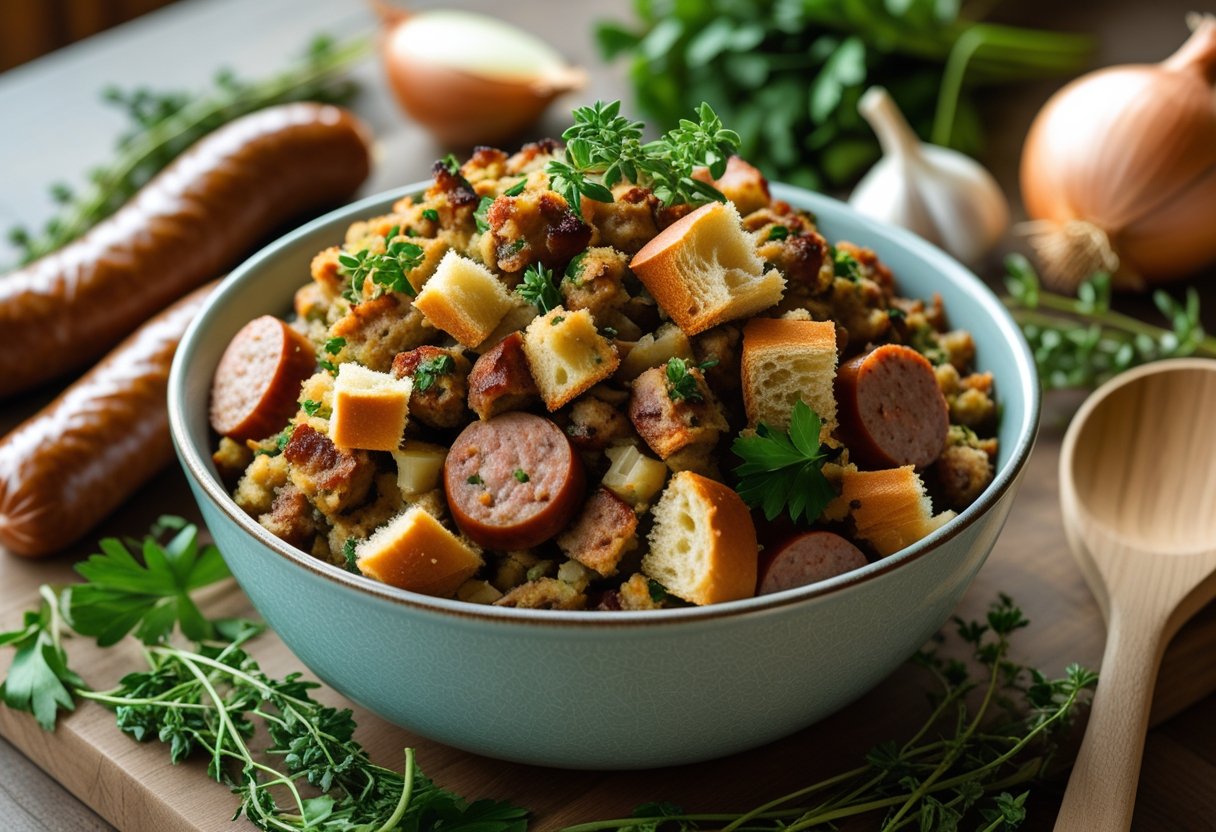
To make sausage-and-herb stuffing turn out perfectly, we focus on moisture control, flavor personalization, and smart preparation techniques. These steps help us avoid common problems like dry or soggy stuffing while boosting taste and convenience.
Achieving the Ideal Moisture Balance
Moisture is key to good stuffing. Using dried or toasted bread cubes helps absorb liquid without turning mushy.
We prefer day-old bread or bake fresh cubes at 300°F for 15–20 minutes to get the right texture. Chicken broth or low-sodium stock adds flavor and moisture.
We start with about 1 cup and add more little by little if the bread feels dry. The mixture should hold together lightly when squeezed but not be soggy.
Covering the dish tightly with foil while baking traps steam and locks in moisture. We remove the foil near the end to create a golden, crispy top.
Using unsalted butter melted into the mix also adds richness and helps crispiness.
Customizing Flavors and Add-Ins
We think fresh herbs like parsley, thyme, and sage are essential for bright, layered flavors. A good balance between meatiness from sausage and herb freshness makes the stuffing stand out.
For extra depth, we sometimes add sautéed onions, garlic, or mushrooms. A pinch of red pepper flakes can introduce subtle heat if we want to spice it up.
Other tasty options include small diced apples or dried cranberries for a sweet contrast. We keep seasoning simple with salt and pepper, adjusting to taste after mixing everything.
Make-Ahead and Freezer Instructions
Stuffing can be made ahead to save time on busy days. We cook and cool the sausage and aromatics first, then mix with bread and broth just before baking.
For convenience, we assemble the entire stuffing without extra broth, refrigerate overnight, and add liquids just before baking. Before cooking, we bring the mixture to room temperature for even warm-up.
Leftover cooked stuffing freezes well too. We pack it airtight and freeze for up to 3 months.
Thawing it overnight in the fridge and reheating in the oven at 350°F keeps the texture and flavor intact. Leftovers never had it so good.
Serving and Storing Sausage-and-Herb Stuffing
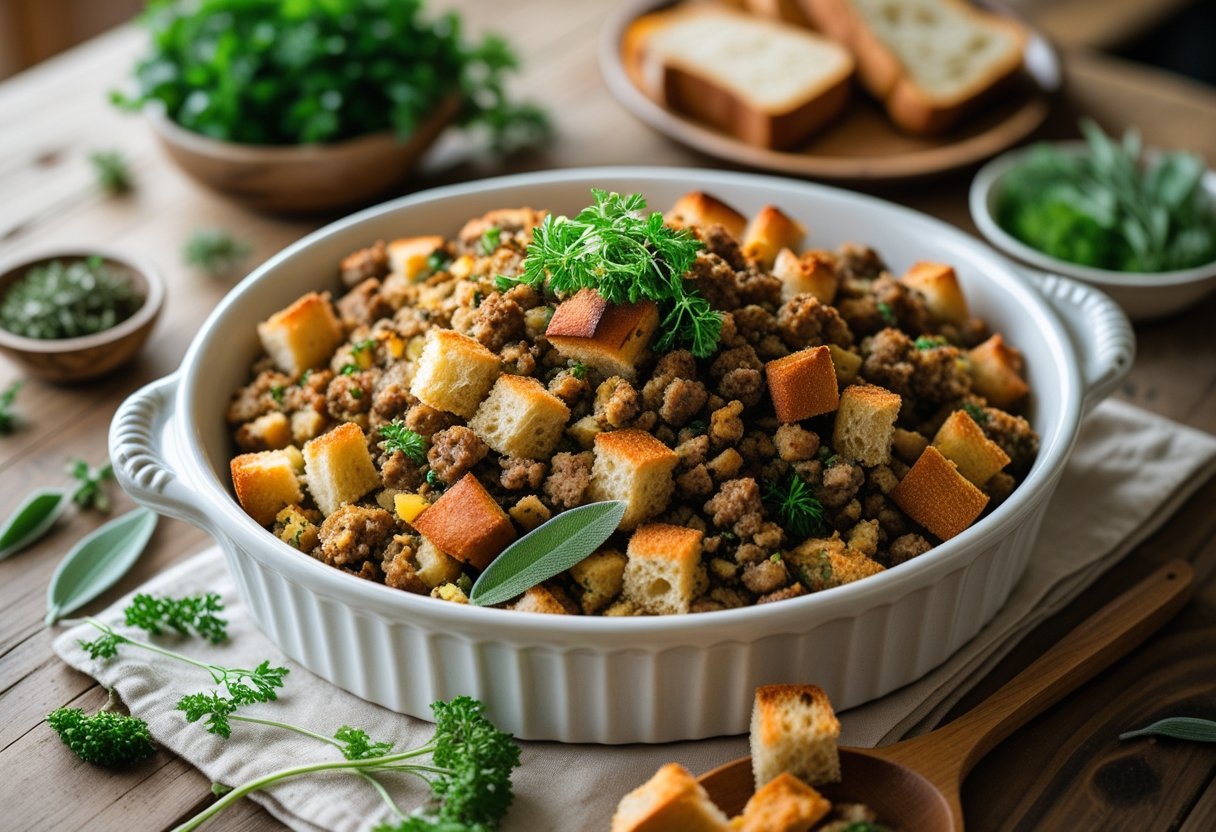
We want to make sure our sausage and herb stuffing looks appealing and stays fresh after cooking. Proper presentation enhances the meal, especially on special occasions.
Storing and reheating it correctly keeps the flavors and texture intact for later enjoyment. Because nobody likes sad, soggy leftovers.
Presentation Ideas for Special Occasions
To serve sausage & herb stuffing at its best, we can use a buttered ceramic or glass baking dish. This helps create a golden, crispy top that looks inviting on the table.
For a festive touch, garnish the stuffing with fresh chopped parsley or rosemary. We can also use individual ramekins for a more elegant presentation.
This allows each guest to have a perfectly portioned serving with a crispy crust on top. Adding sides like cranberry sauce or turkey gravy nearby complements the rich sausage flavors.
For variety, we can sprinkle toasted nuts or dried cranberries over the stuffing just before serving to add color and texture contrast.
Safe Storage and Reheating Methods
After baking, let the stuffing cool to room temperature to keep any unwanted bacteria at bay.
Transfer it to an airtight container or cover the baking dish tightly with foil or plastic wrap.
The stuffing can hang out in your fridge for up to 24 hours. When you’re ready to reheat, cover the dish with foil to lock in moisture and pop it in a 325°F oven for about 25-30 minutes.
This keeps the stuffing moist inside and prevents the top from turning into a burnt offering to the oven gods.
You can also freeze fully baked stuffing for up to 3 months. Just defrost it in the refrigerator overnight before reheating.
Reheat it covered in the oven at 325°F. Try to resist the urge to microwave—it tends to zap the life (and texture) out of your stuffing.
For more details on making and storing this dish, check out the Easy Sausage & Herb Stuffing Recipe.