Rocky Mountain trout with lemon butter gives you a fresh, clean dinner that feels special without extra work. You get tender fish, bright lemon, and rich butter all in one simple plate.
We make this meal when you want real flavor and a calm cooking process. It’s the kind of dinner that says, “I cooked, but I didn’t stress.”
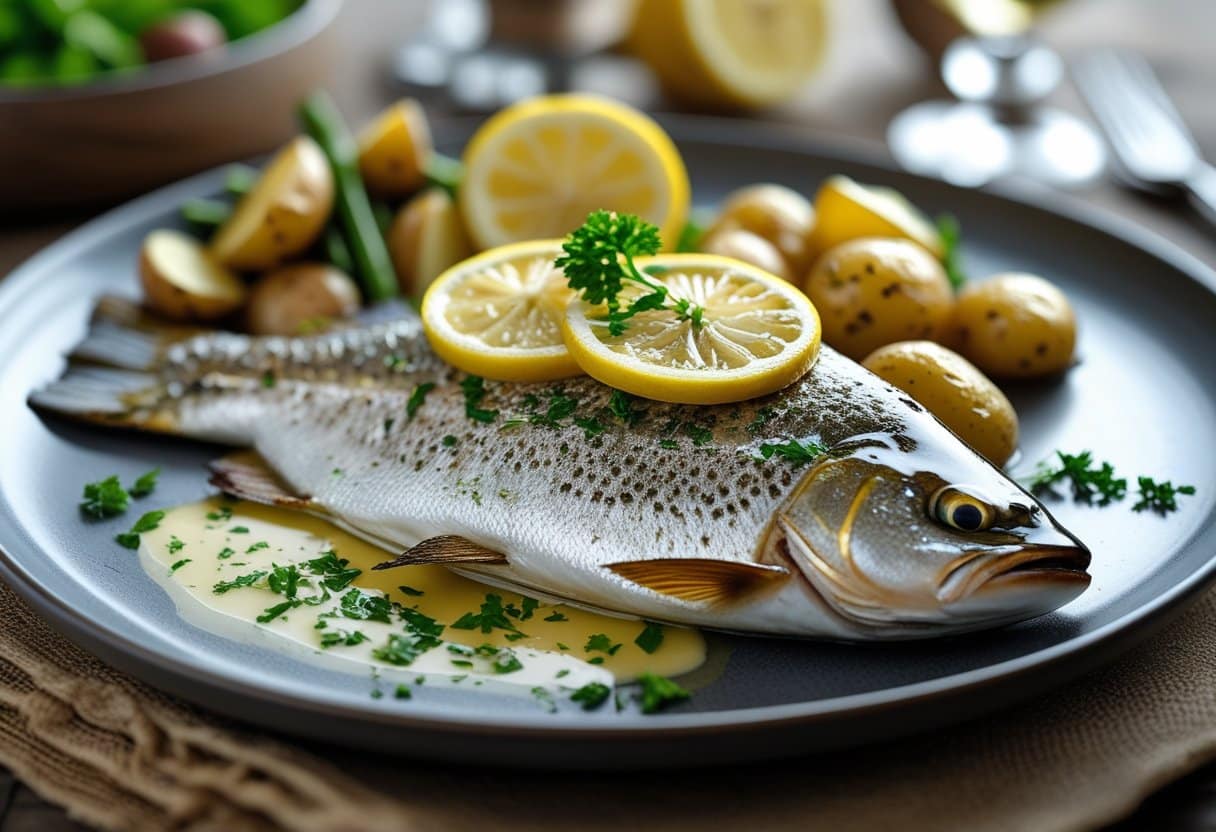
You can make Rocky Mountain trout with lemon butter in under 30 minutes using simple ingredients and basic steps. We focus on clean taste, easy prep, and a result that fits both weeknights and relaxed weekends.
You stay close to the fish’s natural flavor while adding just enough richness. No culinary gymnastics required.
We walk you through the method, smart pairings, and simple storage tips. You cook with confidence and serve a meal that feels fresh from start to finish.
Key Takeaways
- This dish delivers fresh trout flavor with a simple lemon butter sauce
- The cooking method stays easy and quick for home kitchens
- Serving and storage tips help you enjoy leftovers safely
How to Make Rocky Mountain Trout with Lemon Butter
We focus on fresh rainbow trout, simple seasoning, and clean cooking methods. Careful heat and a balanced lemon butter sauce keep the fish moist and mild.
Choosing the Perfect Rainbow Trout Fillets
We start with rainbow trout fillets that look clean and moist. The flesh should appear pink to light orange, not dull or gray.
A mild smell matters. Fresh trout smells like clean water, not like you forgot to take out the trash.
We choose fillets that measure about ¾ to 1 inch thick. Even thickness helps the trout cook at the same speed.
Skin-on fillets work well for pan-fried trout because the skin protects the flesh and adds texture. Plus, it makes you look like you know what you’re doing.
If we buy frozen trout, we thaw it slowly in the fridge. We pat it dry before cooking.
Dry flesh browns better and keeps the trout from turning soft. Nobody likes soggy fish.
Essential Ingredients and Seasoning Tips
This dish needs few ingredients, so quality matters. We use trout fillets, unsalted butter, fresh lemon, salt, and black pepper.
Fresh herbs like parsley or dill add a clean finish. We season the trout just before cooking.
Salt draws out moisture, so early seasoning can dry the fish. A light coat of oil helps prevent sticking and supports even browning.
For trout with lemon, balance matters. Too much lemon hides the fish flavor.
We use fresh juice, not bottled, and add zest for aroma without extra acid. Bottled lemon juice, step aside.
Step-by-Step Cooking Methods: Pan-Fried, Baked, Broiled, and Steamed
Pan-fried trout cooks fast and builds flavor. We heat a skillet over medium, add oil, and place the fillets skin-side down.
We cook until the skin turns crisp, then flip once. This method works well for a pan fried trout with lemon butter sauce.
Baking suits thicker fillets. We bake at 400°F until the flesh flakes.
Broiling gives light browning. We place trout close to the heat and watch closely.
Steaming stays gentle and keeps the fish moist, similar to methods in this how to cook trout guide.
Crafting a Bright Lemon Herb Butter Sauce
We make lemon herb butter while the trout rests. We melt butter over low heat to avoid browning.
We stir in lemon juice a little at a time. Fresh herbs matter here.
Parsley adds color, while dill pairs well with rainbow trout. We season lightly with salt and pepper.
We spoon the lemon butter sauce over warm trout fillets just before serving. The heat releases the aroma and coats the fish without soaking it.
This step ties the dish together and keeps the flavor clear and balanced. It’s the finishing touch that makes you want to brag to your neighbors.
Serving Ideas, Benefits, and Storage
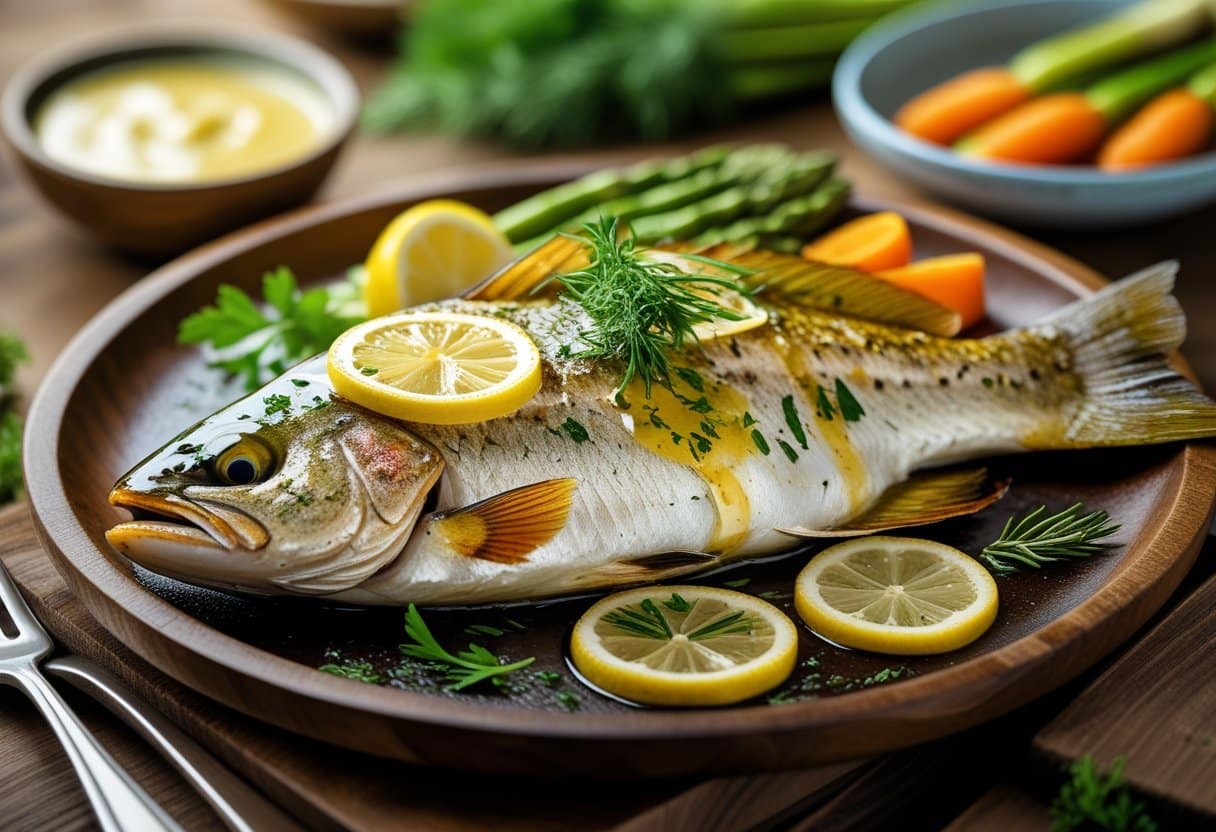
We serve Rocky Mountain trout as a clean, balanced seafood dinner that feels special but stays simple. Smart sides keep the fish in focus, while proper storage protects flavor and texture.
Clear nutrition facts also help us plan meals with purpose. Trout: it’s not just delicious, it’s responsible.
Fresh Pairings and Side Dishes for a Balanced Seafood Dinner
We pair lemon butter trout with sides that add texture without hiding the fish. Mild grains, crisp vegetables, and light salads work best.
These choices support a balanced seafood dinner and keep the plate fresh. Nobody wants a side dish that tries to steal the show.
Reliable side options
- Rice pilaf with herbs for gentle flavor
- Roasted carrots or asparagus with olive oil
- Arugula or mixed green salad with lemon vinaigrette
- Small potatoes roasted or boiled
For more ideas, we often review guides like side dishes that pair well with trout. Citrus-based sides echo the lemon butter, while herbs like dill or parsley tie the plate together.
We avoid heavy sauces or fried sides. They compete with the trout and dull its clean taste.
Simple cooking keeps the fish flaky and bright, whether we grill or bake Rocky Mountain trout with lemon butter. Let the fish be the star!
Health Highlights: Protein and Omega-3 Fatty Acids
Trout offers solid nutrition without excess calories. We rely on it for lean protein that supports muscle repair and daily energy needs.
A standard portion fits well into a weeknight meal plan. Trout also provides omega-3 fatty acids, which support heart health and normal brain function.
These fats work best when we cook gently, such as baking or grilling, and avoid deep frying. Let’s keep the trout healthy and skip the deep fryer.
Key nutrition points
- High-quality protein per serving
- Natural omega-3 fatty acids
- Lower saturated fat than many meats
Lemon butter adds flavor but also adds fat, so we use it in moderation. A light drizzle gives taste without masking the fish or changing its nutrition balance.
Tips for Storing and Reheating Cooked Trout
We store cooked trout promptly to keep it safe and fresh. Let it cool, then pop it into an airtight container.
Refrigerate within two hours of cooking. This helps keep any unwanted science experiments out of your fridge.
Storage and reheating guide
| Step | Best Practice |
|---|---|
| Refrigeration | Up to 3 days at 40°F or lower |
| Freezing | Up to 2 months, tightly wrapped |
| Reheating | Low heat, covered, with a splash of water |
We reheat trout gently in the oven or skillet. Low heat keeps the fish happy and the lemon butter sauce from staging a dramatic separation.
Avoid microwaving if you can, since it can turn your delicate trout into a chewy memory and split the butter.