Patatas bravas is one of the most popular Spanish tapas, known for its crispy potato cubes paired with a spicy, flavorful sauce. Making this dish at home is simple, and the key to great patatas bravas lies in getting the potatoes crispy and balancing the heat of the sauce. This recipe will guide you through each step to make an authentic version that brings a taste of Spain to your table.
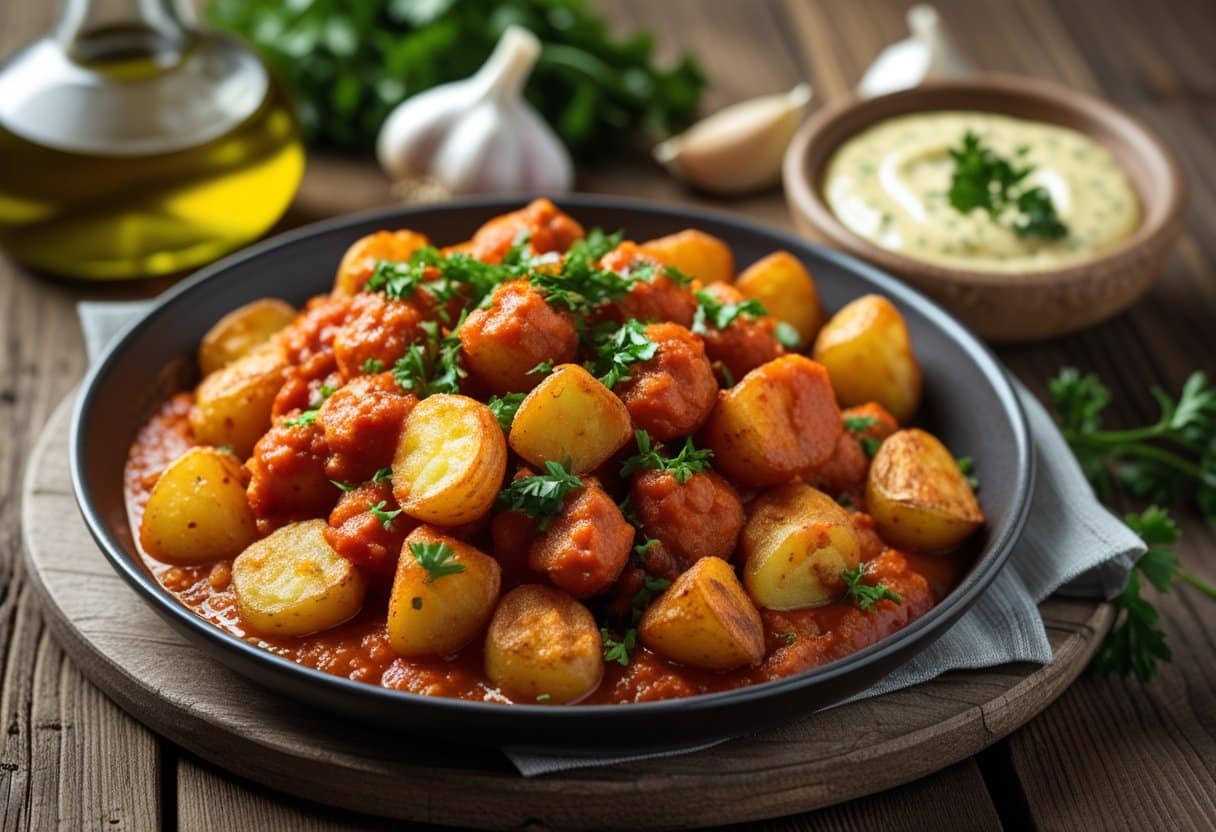
I’ve learned that the right ingredients and cooking technique make all the difference in creating this classic tapa. Whether you’re serving it as a snack, appetizer, or part of a tapas spread, patatas bravas offers a perfect combination of texture and bold flavors. You don’t need fancy tools or hard-to-find spices to get it right.
As you read on, I’ll share easy tips and tricks from my experience, so you can enjoy this traditional Spanish dish anytime. If you want a simple yet impressive dish that captures the spirit of Spanish tapas, this recipe is for you.
Key Takeaways
- Crispy potatoes and a spicy sauce are essential for authentic patatas bravas.
- The dish is a classic Spanish tapa that fits well in any meal or gathering.
- Simple ingredients and techniques can create bold, traditional flavors.
What Is Patatas Bravas?
Patatas bravas is a popular Spanish tapa made of fried potatoes served with a spicy red sauce called salsa brava. It is known for its crispy texture and bold, spicy flavor. This dish has deep roots in Spanish culture and varies in style depending on the region.
Origin and Cultural Significance
Patatas bravas first appeared in Spain around the mid-20th century. Madrid is often credited as the birthplace of this dish, where it quickly became a staple in tapas bars. The name “bravas” means “brave” or “fierce,” highlighting the spicy nature of the sauce.
It became popular because it’s simple, tasty, and pairs well with drinks. Almost every Spanish tapas bar has its own take on the dish. The dish has a social role too—it’s meant to be shared among friends over conversation. Patatas bravas remain a classic example of Spain’s love for small, flavorful plates.
Regional Variations
While the basic concept stays the same—fried potatoes with salsa brava—there are many versions across Spain. Some areas add garlic mayonnaise (allioli) or change the sauce’s heat level. The salsa brava itself can vary; some recipes use just paprika and chili while others add tomato.
In Madrid, the sauce tends to be richer and more tomato-based. In coastal areas, it might be milder or mixed with other ingredients like bell peppers. The potatoes can be cut into large chunks or smaller pieces. These differences show how patatas bravas adapts to local tastes while keeping its core identity as a spicy, fried potato tapa.
For a detailed recipe and history, you can visit the authentic patatas bravas guide.
Essential Ingredients for Patatas Bravas
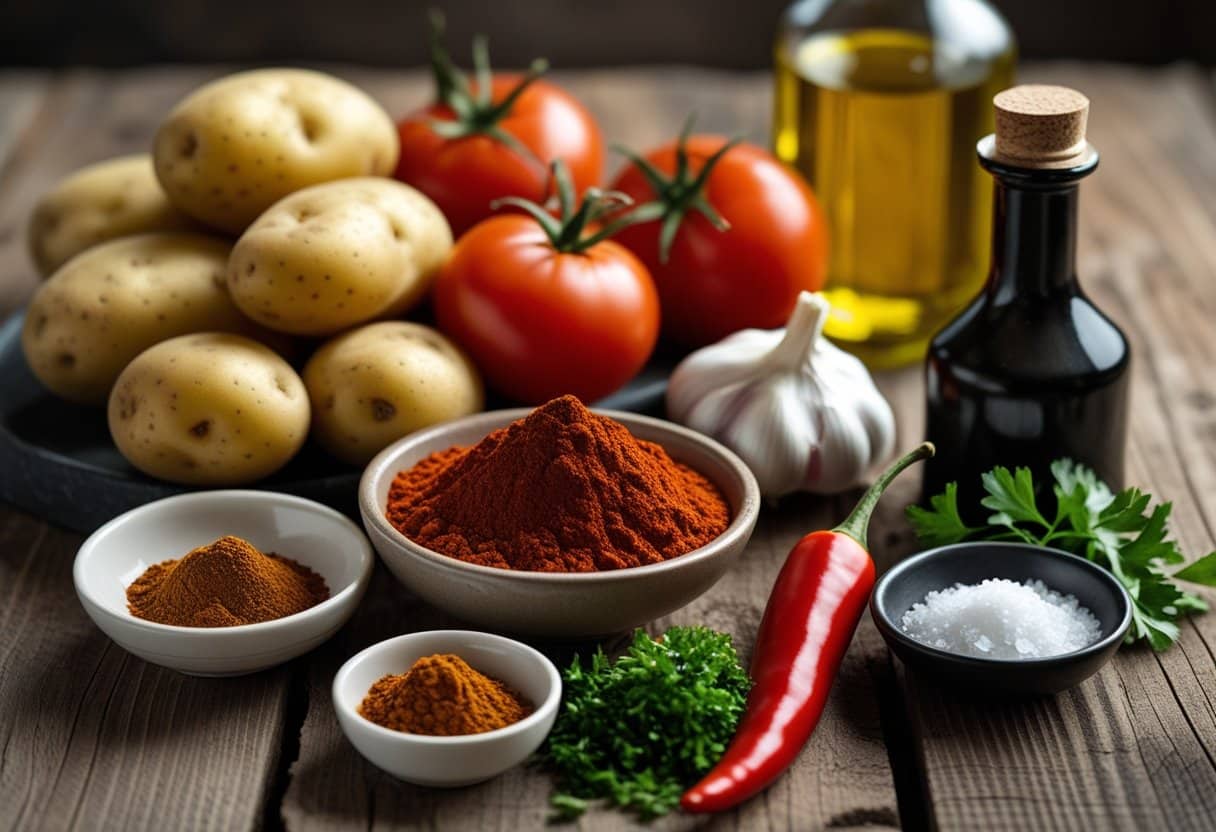
To make Patatas Bravas well, you need the right potatoes, the correct oil for frying, and key spices and flavorings for the sauce. Each part plays a big role in building the dish’s texture and taste. Choosing these ingredients carefully ensures the crispy potatoes and bold sauce work perfectly together.
Best Potatoes for Patatas Bravas
I prefer using waxy potatoes like Yukon Gold or Spanish Monalisa for Patatas Bravas. These types hold their shape well during cooking and deliver a firm texture inside while allowing for a crispy outside. Avoid russet potatoes because their high starch content can make the potatoes mushy after frying.
Potatoes should be cut into uniform 1-inch cubes for even cooking. I soak the potatoes in cold water for about 30 minutes before cooking to remove extra starch. This step is key because it helps the potatoes get crispier when fried.
Choosing the Right Oil
For frying, I always use Spanish extra virgin olive oil when I can. It adds an authentic flavor that neutral oils don’t offer. If extra virgin olive oil isn’t available, a neutral oil like sunflower or vegetable oil will work.
The temperature of the oil is important. I keep it around 340°F to get crispy potatoes without burning the outside or leaving the inside undercooked. Using enough oil to fully submerge the potatoes also helps cook them evenly.
Key Spices and Flavorings
The bravas sauce needs a balance of sweet and spicy flavors. I use both sweet smoked paprika and hot smoked paprika to get the right depth and heat. A little cayenne pepper can be added for extra kick, but it depends on your spice tolerance.
Fresh garlic and onion add important savory notes to the sauce. I cook them gently in extra virgin olive oil before adding tomato paste and broth—usually chicken or vegetable broth—to build the sauce’s body. Salt is critical too, as it brings out all the flavors in the potatoes and sauce.
How to Make Patatas Bravas
Making patatas bravas means getting the potatoes just right and pairing them with the right sauces. You need potatoes that are crispy outside and soft inside, a spicy bravas sauce, and a creamy garlic aioli. Each step needs attention to get the best balance of flavors and textures.
Preparing and Cutting Potatoes
I start by choosing starchy potatoes like Russets because they get crispy when cooked. I peel the potatoes and cut them into medium-sized cubes or wedges—about 1 to 1.5 inches. This size helps them cook evenly and get a nice crunch.
Before cooking, I soak the cut potatoes in cold water for at least 30 minutes. This removes extra starch and prevents them from sticking together. After soaking, I dry them thoroughly using a clean towel, which is key for crispiness.
Sometimes, I toss the potato pieces in a little olive oil and season with salt to add flavor even before cooking.
Cooking Methods: Frying, Baking, and Roasting
There are three main ways I cook patatas bravas: frying, roasting, and baking. Frying is traditional and gives the crispiest result. I heat oil to about 350°F and fry the potatoes in batches until golden brown. Then I drain them on paper towels.
For a healthier option, I roast the potatoes in the oven at 425°F. I toss the potato pieces with olive oil and a pinch of salt, then roast them for 30-40 minutes, turning once to cook evenly.
Baking is similar to roasting but usually at a lower temperature. Sometimes I microwave the potatoes briefly to soften them before finishing in the oven. This shortens the cooking time and keeps the inside tender.
How to Make Bravas Sauce
Bravas sauce is a spicy tomato-based sauce that defines this dish. I start with olive oil, sauté garlic and onion until soft. Then I add smoked paprika for a deep, smoky flavor, along with cayenne pepper or chili flakes for heat.
Next, I stir in tomato sauce or pureed tomatoes, and simmer for 10 to 15 minutes to blend the flavors. I add a pinch of sugar to balance the acidity and some vinegar for brightness.
For a thicker sauce, I sometimes use a cornstarch slurry—mixing cornstarch with water and stirring it in to thicken the sauce quickly without changing the flavor.
Making Garlic Aioli
Garlic aioli is a creamy, garlicky mayo-based dip I serve alongside or on top of patatas bravas. To make it, I mix mayonnaise with minced garlic and a little lemon juice.
Some recipes call for blending fresh garlic with olive oil and egg yolk for a more authentic aioli, but mayo works well and saves time. I season the aioli with salt, and sometimes add a pinch of smoked paprika to tie it to the bravas sauce.
This creamy element helps cool the heat of the spicy tomato sauce and adds richness to the potatoes.
Serving and Presentation
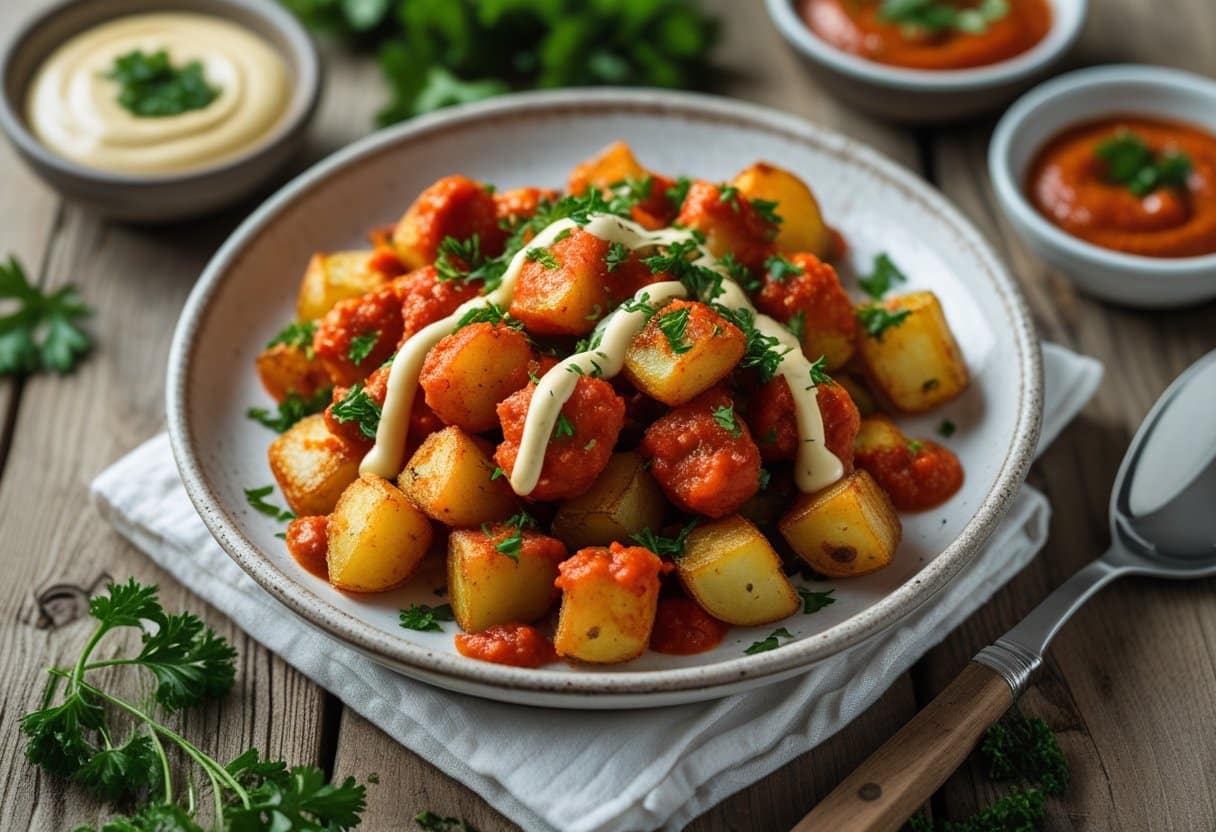
Serving patatas bravas well enhances the eating experience. It’s important to balance the crispy potatoes with the right amount of sauce and fresh toppings for both flavor and look.
Plating Patatas Bravas
I like to plate patatas bravas on a shallow dish or a rustic serving plate. This lets the potatoes spread out, so they stay crispy.
I usually start by placing the hot, golden potatoes evenly across the plate. Then, I drizzle the bravas sauce over them, making sure each piece gets a little spicy kick without drowning the potatoes.
The sauce should be warm but not too hot to keep the flavors bright. You can serve some extra sauce on the side for dipping.
This method helps keep the potatoes crispy under the sauce and makes the dish inviting to eat right away.
Garnishes and Toppings
Fresh chopped parsley is a must for me because it adds color and a fresh, herbal note that cuts through the richness. I sprinkle it liberally over the potatoes.
Garlic aioli is a common partner for patatas bravas. I either place dollops on the side or lightly swirl it over the dish, giving a creamy and mild contrast to the spicy bravas sauce.
Adding just a bit of extra smoked paprika or a few chili flakes on top can highlight the smoky flavors and add a subtle heat if you like.
A clean, bright garnish not only makes the dish look better but also balances the strong flavors.
Tips for the Best Patatas Bravas
To make great patatas bravas, focus on getting your potatoes extra crispy and balancing the sauce’s spices well. The right cooking steps for the potatoes and choosing the right paprika types can change the dish completely.
Achieving Crispy Potatoes
I always start by using starchy potatoes like Maris Piper or King Edward because they crisp up better. After cutting them into cubes, I dry them completely to remove any moisture. This step is key because water stops the potatoes from getting crispy.
Double-frying is my go-to method. First, I fry the potatoes at a lower temperature until they’re soft inside. Then, after letting them cool, I fry them again in hotter oil to get a golden, crispy crust. I also season the potatoes right after frying while they are still hot with a good pinch of salt.
Avoid overcrowding the pan to keep the oil temperature steady. Using high-quality light olive oil works best for a clean flavor and crisp texture.
Adjusting Spice and Flavor
The sauce is where you control the heat and depth. I mix smoked paprika, sweet paprika, and sometimes a bit of hot paprika to get a balanced smoky and spicy flavor. Too much hot paprika can overpower, so I add it cautiously.
Adding a splash of sherry vinegar creates a nice tang that cuts through the richness of the fried potatoes. I cook the sauce slowly to blend the flavors well, using fresh garlic and onion as a base. Keeping the sauce warm but not hot when serving helps maintain its flavor without burning the palate.
If you want a milder sauce, focus on sweet paprika and reduce chili flakes. Adjusting the paprika mix lets you customize the heat to your liking while keeping the sauce rich and tasty.
For more detailed steps on perfecting your patatas bravas, see this ultimate patatas bravas recipe.
Variations and Related Potato Dishes
Patatas bravas can be adapted in many ways to suit different tastes. You can change the sauce or explore other Spanish potato dishes that offer new flavors and textures. These options expand what patatas bravas can be and how you enjoy simple potatoes.
Alternative Sauces
The classic bravas sauce is slightly spicy with a smoky flavor. However, many people add alioli, a garlic mayonnaise, which softens the heat and adds creaminess. Some drizzle both sauces on the potatoes for extra contrast.
For those wanting less heat, you can use a milder tomato-based sauce or add honey for sweetness. Vegan versions often swap chicken broth in the bravas sauce for vegetable broth, keeping it plant-based without losing flavor.
Other sauce ideas include spicy romesco, made from roasted red peppers and nuts, or a smoky paprika aioli. These sauces keep the potatoes moist and flavorful but offer different flavor profiles.
Other Spanish and Potato Recipes
Besides patatas bravas, Spain has many potato dishes worth trying. Tortilla de patatas is a thick potato omelet, simple but filling. It uses sliced potatoes, onions, eggs, and olive oil, cooked slowly like a frittata.
Roasted or baked potatoes are common too, often with herbs like rosemary and garlic for flavor. Mashed potatoes are less traditional but can be a nice side to Spanish meals.
If you want something with meat, pinchos morunos (pork skewers) pair well with patatas bravas for a full tapas experience. These dishes highlight the versatility of potatoes in Spanish cooking.
For more about making patatas bravas or Spanish recipes, see this Patatas Bravas Recipe.