If you’ve ever wondered what makes Moroccan couscous with seven vegetables so special, it’s all about the cozy mix of tender veggies, fluffy couscous, and the sweet, caramelized onion and raisin topping known as couscous tfaya.
This dish isn’t just food; it’s a hug on a plate that’s perfect for sharing with friends and family, especially if you want to impress without stressing.
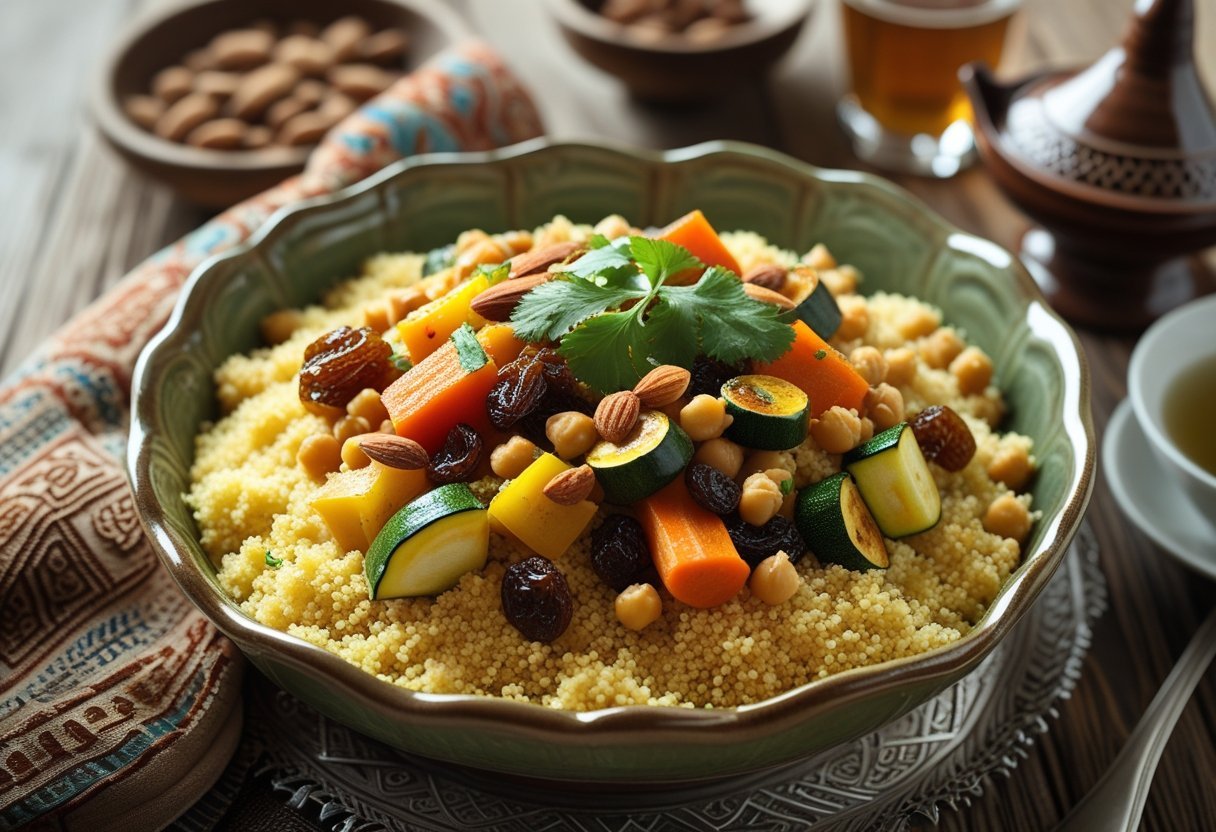
We love how the seven vegetables—like carrots, zucchini, and turnips—slow-cook into a rich, flavorful stew that seeps into every grain of couscous.
And the secret kicker? Tfaya, that sweet and spicy onion-raisin combo that takes this meal from “pretty good” to “wow, can I get seconds?”
Getting this dish right is easier than you think.
It’s a wonderful way to add some spice to your weeknight dinners.
Stick with us, and we’ll walk you through making authentic Moroccan couscous with seven vegetables and the unforgettable tfaya garnish that’ll have everyone asking for your recipe.
Essential Ingredients and Seven Vegetable Lineup
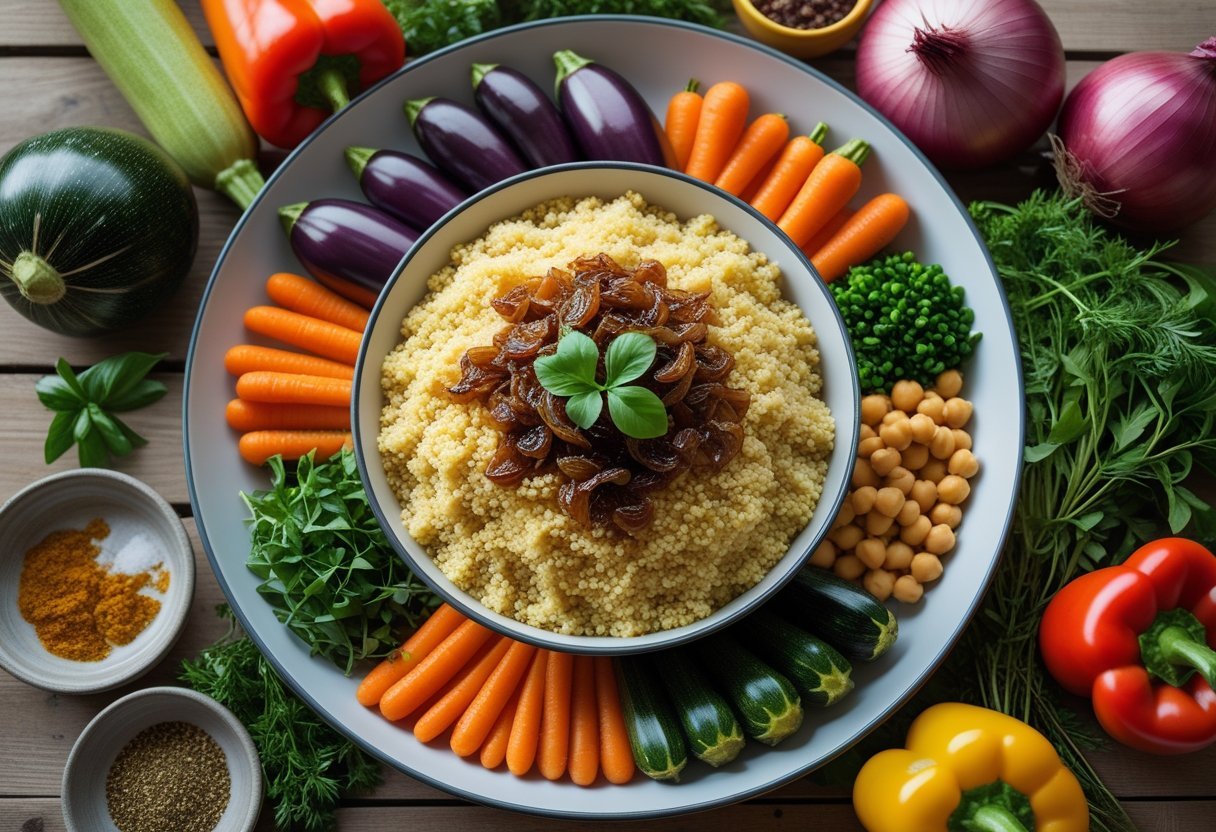
When making Moroccan Couscous with Seven Vegetables, choosing the right grains, picking the perfect veggies, and knowing your spices is like assembling the ultimate dream team for your taste buds.
Each part works together to create that mouthwatering, cozy dish we all want sitting on our tables.
Couscous Grains and Grain-ology 101
Let’s start with the star of the show: couscous grains.
Couscous comes from semolina, which is made from durum wheat.
These tiny grains might look simple, but their magic happens when steamed properly—they puff up light and fluffy, not sticky or clumpy.
We want to treat them right by hydrating with warm water and steaming, not just boiling like pasta.
Avoid the quick-cook instant stuff here if you can.
Fresh couscous or traditional semolina grains give us that perfect texture.
A little olive oil mixed in before steaming helps keep the grains separate, silky, and shiny—like tiny dance partners gliding on the plate.
Meet the 7 Mighty Vegetables
Now, onto the veggie posse.
The seven vegetables traditionally include carrots, onions (preferably caramelized for that sweet twist), turnips, zucchini, pumpkin or butternut squash, potatoes or sweet potatoes, and green beans or cabbage.
Chickpeas—either canned or dried and cooked—tag along for protein and texture.
Carrots and turnips bring earthiness, while pumpkin or squash add softness and a touch of sweetness.
Zucchini and green beans give freshness and a mild crunch.
Then, those caramelized onions and garlic give the whole dish a rich, cozy depth.
Every vegetable is chopped into similar sizes so they cook evenly and make sure none steals the spotlight!
Spices, Oils, and Everything Nice
The secret behind the flavor? Spices!
Moroccan couscous doesn’t mess around when it comes to seasoning.
We’re talking turmeric, ground ginger, and sometimes a pinch of saffron for that golden glow.
Cinnamon and a drizzle of honey can sneak in to add warmth and a hint of sweetness, balancing the savory with a subtle twist.
Olive oil is our trusty sidekick here—it adds richness and helps blend those spices like a charm.
Using high-quality extra virgin olive oil makes a noticeable difference.
Don’t forget garlic, either; it’s essential for that aromatic punch.
Combining these ingredients just right brings to life a dish that’s comforting, colorful, and packed with layers of flavor.
For more on vegetable couscous and the veggie lineup, check out this detailed seven vegetables couscous recipe.
How To Make Moroccan Couscous with Tfaya Like a Pro
Ready to whip up couscous with tfaya that makes your taste buds sing?
We’ll juggle steaming grains, cooking veggies perfectly, and mastering caramelized onion magic—without turning the kitchen into chaos.
Grab your olive oil and let’s get to work.
Step-by-Step Preparation (Yes, You Can Multitask!)
First off, multitasking is our secret weapon here.
While the chicken or lamb simmers with garlic, turmeric, and black pepper, we start prepping our seven vegetables—think potatoes, carrots, zucchini, and chickpeas.
Don’t get ahead of yourself on the veggies; some take longer than others.
Keep a water bath simmering in your couscoussier or Dutch oven, so you’re ready to steam those fluffy couscous grains as soon as the stew bubbles.
Meanwhile, chop onions for tfaya because those babies need slow love to caramelize perfectly.
This way, while your stew simmers and veggies soften, tfaya cooks low and slow, giving us that sweet, cinnamon-and-honey balance that makes couscous with tfaya oh-so-special.
Couscous Grains: Steaming Versus Shortcuts
Here’s the big question: steam your couscous like a Moroccan grandmaster using a couscoussier, or take the microwave shortcut?
Steaming is the gold standard—fluffy, light, and separate grains that scream authenticity.
We toss dry couscous with olive oil and salt first, then add water to let it absorb.
Then comes the steaming part—spread it evenly on the steamer without pressing down, and let the steam do its magic for about 15 minutes.
If you’re short on time or don’t own a couscoussier, use a microwave method.
Hydrate couscous with hot water, fluff, then microwave in short bursts with butter or ghee added in between.
The texture won’t be exactly the same, but it’s a worthy backup to maintain fluffy grains without the fuss.
Vegetable & Broth Timing: Avoiding Veggie Mayhem
Let’s talk veggie timing, aka how to avoid mushy carrots or crunchy potatoes.
Start with the hardiest vegetables like potatoes and sweet potatoes since they take longest to cook.
Add carrots and cabbage next.
Chickpeas and zucchini are the last to hit the pot — they cook fast and you don’t want them turning to mush.
Keep adding just enough hot water or broth to barely cover veggies; too much results in a watery stew with soggy veggies.
Stir sparingly and adjust seasoning carefully with turmeric, ground ginger, and a pinch of salt.
This method keeps each vegetable’s texture intact and flavors balanced, so we avoid what I call Veggie Mayhem—an unappetizing mushpile.
Tfaya Magic: Caramelized Onion and Raisin Glory
Tfaya is where the magic happens, turning couscous from good to “Wow.”
We slowly caramelize onions in olive oil, sprinkle with salt, turmeric, ginger, and cinnamon.
This slow cook will take 45-50 minutes, stirring occasionally—and yes, it’s worth every sticky, sweet minute.
When the onions turn golden and soft, we add raisins and a drizzle of honey to build a syrupy, sweet-savory sauce.
Add a splash of broth if the mixture thickens too much.
Tfaya should be thick but saucy enough to drape over your couscous like a warm hug.
This topping is the plot twist that brings the whole dish together, balancing savory meat and spiced veggies with its sugary charm.
Frequently Asked Questions
We all wonder how to get our veggies to play nice, which spices bring the real Moroccan party, and whether raisins are sneaky guests or welcome friends.
Plus, can zucchini take the lead, and how wild can we go while keeping things authentic? Let’s dig into these tasty mysteries.
How do I convince my veggies to get cozy in a Moroccan Couscous pot?
First, patience is key.
We add veggies in stages so each one gets its moment to soak up the broth without turning into mush.
Think of it like a veggie spa day, but with more steam and spices.
Keeping vegetables whole or in big chunks helps them stay proud and not collapse into a sad veggie pile.
Tossing them gently during cooking also keeps the party going without an unwanted veggie breakup.
What secret spices make Moroccan Couscous slap the taste buds silly?
Ginger, turmeric, and a good punch of pepper mix like a bold dance crew in your couscous pot.
Don’t forget the parsley and cilantro bouquet—it’s like the spice’s hype squad.
A little smen, the Moroccan preserved butter, is the secret weapon if you really want to up the flavor game.
It makes your dish buttery and nostalgic but totally worth the sweat of finding it.
Could a zucchini be the star of my Couscous show, or is it just another veggie in the chorus?
Zucchini can definitely shine!
Its mild sweetness and soft texture soak up the broth like a sponge—no diva moves, just good teamwork.
Still, it doesn’t steal the spotlight from bold contenders like carrots or chickpeas.
Zucchini is the versatile sidekick that keeps everything balanced and happy.
Is it true that Moroccan Couscous with Seven Vegetables can end world hunger, or is it just really filling?
While it’s a great tummy-filler, world hunger might need a bit more than couscous magic.
But trust us, one big plate of this stew will handle your hunger with a hug.
It combines hearty veggies, protein, and fluffy grains that keep you full and fueled for hours.
Basically, it’s like food with a PhD in satisfaction.
Are raisins negotiable in Moroccan Couscous, or will I be raisin’ some eyebrows?
Raisins in the tfaya (that sweet onion-raisins topping) add a surprising twist that some swear by.
Skip them if you don’t dig sweet in your savory, but be ready for some raised eyebrows at the table.
If you’re feeling adventurous, try soaking them until plump and then caramelizing with onions.
It’s like a sweet little party crash that can change your couscous game forever.
Can I channel my inner Jamie Oliver and still keep the Couscous authentically Moroccan?
Yes, but tread carefully! Using quick-fix instant couscous or skipping key spices puts you dangerously close to Couscous Impersonator territory.
Bring your creativity on the side, but honor the slow steaming and layering of flavors. That way, you’re a proud ambassador, not just a kitchen tourist.
For a full Moroccan Couscous with Seven Vegetables recipe, check this detailed guide.