You can whip up a simple, hearty side that tastes like pure homestead nostalgia with just potatoes, peas, butter, and cream. Montana creamed peas and potatoes deliver warm, creamy comfort in under 30 minutes using pantry basics and fresh or frozen peas.
Taste and texture matter: the potatoes stay tender but not mushy. The sauce should coat each bite without feeling like you’re eating glue.
We’ll show you easy steps, helpful tips, and simple swaps to match your pantry or diet. The old-school flavor stays put, no matter what.
We’ll also explain how this dish became a staple and answer common questions about timing, potato types, and reheating. You’ll be ready to serve it for weeknights or holiday feasts.
Key Takeaways
- Classic homestead flavors made with simple ingredients and easy technique.
- Potato texture and sauce balance make the dish stand out.
- Practical tips cover timing, swaps, and reheating for best results.
Montana Creamed Peas & Potatoes: Classic Homestead Staple
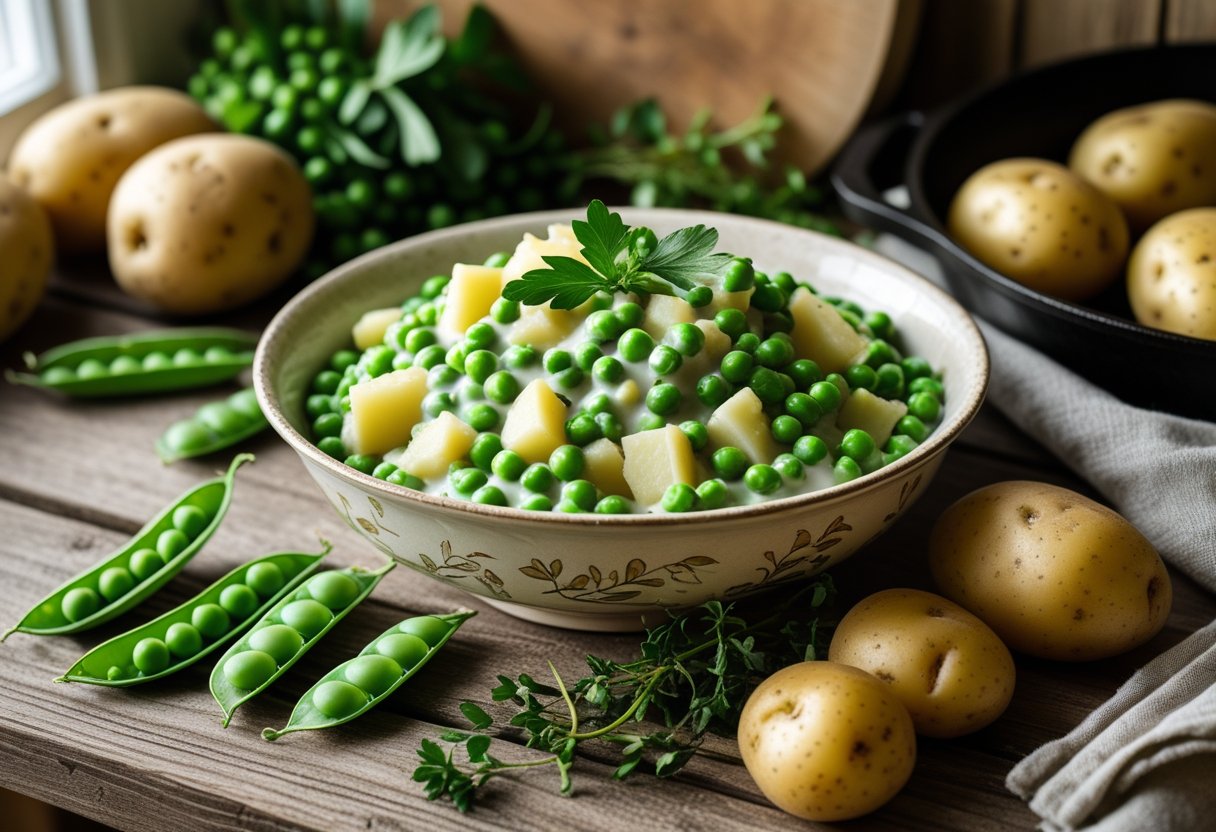
This recipe is all about tender potatoes, sweet peas, butter, and a simple cream sauce. It grew out of homestead kitchens where you made do with what you had and aimed for a dish that feeds a family without any drama.
Traditional Preparation Methods
Start by choosing small, waxy new potatoes and cutting them into even cubes. This way, they cook evenly and no one gets stuck with a raw chunk.
Boil them until just fork-tender, then drain—no one wants watery sauce.
Next, make a roux: melt butter, stir in flour, and cook it briefly to banish raw flour taste.
Whisk in whole milk and a splash of cream for richness. Stir until the sauce thickens and coats the back of a spoon (the classic “does it stick?” test).
Peas go in last to keep their color and sweetness. Toss in frozen peas straight to the hot sauce; fresh peas get a quick blanch.
Fold in the potatoes gently so they don’t fall apart. Finish with salt, pepper, and a handful of chopped chives for a little green flair.
Key Ingredients and Seasonal Variations
New potatoes are the texture heroes: their thin skins and firm flesh hold up better than starchy russets. Leave skins on for flavor and to save yourself some peeling, or peel for a more delicate vibe.
Butter, flour, and whole milk make the base. For a lighter sauce, use just milk; for extra silkiness, stir in a bit of cream.
Salt and white pepper keep the sauce tasting clean and simple.
Seasonal swaps add fun.
In spring, use fresh peas and add mint or chives. In late summer, fold in corn for a little sweetness. For a smoky touch, stir in cooked ham or bacon.
Vegetarian versions skip the meat and add a squeeze of lemon to brighten things up.
Serving Suggestions and Occasions
Serve this as a hearty side with roast chicken, baked ham, or pot roast. It can also fly solo as a main if you add a fried egg or some shredded smoked trout.
For 4–6 people, about 2 pounds of new potatoes and 1 cup of peas makes a generous side. Garnish with chopped parsley or chives if you’re feeling fancy.
It fits right in at holiday tables and everyday meals. Reheats like a champ—just add a splash of milk to bring back the creaminess.
It also travels well in a covered dish for potlucks or family gatherings.
Montana homesteads loved this recipe for its low cost, easy scaling, and reliable use of spring garden peas and new potatoes.
Potatoes in Homestead and Southern Cooking
Potatoes are the MVP of the homestead kitchen: sturdy, cheap, and endlessly flexible. Boil them, mash them, or fold them into a creamy sauce with peas—your family will thank you.
Choosing the Right Potato: Russet, New, and More
Pick potatoes by texture and what you’re cooking. Russet potatoes are high-starch and great for fluffy mashed potatoes or baking.
They break down when boiled, so use them when you want smooth, airy mashed potatoes.
New potatoes and waxy types (like red or Yukon Gold) hold their shape when boiled.
We love these for creamed potatoes and peas because the cubes stay intact in the sauce. Yukon Gold adds a naturally buttery flavor, so you can get away with less added fat.
Consider water content, skin thickness, and flavor. Need a thick, smooth mash? Go russet. Need firm cubes for cream sauce? Grab new or waxy potatoes.
Comparison With Mashed Potatoes
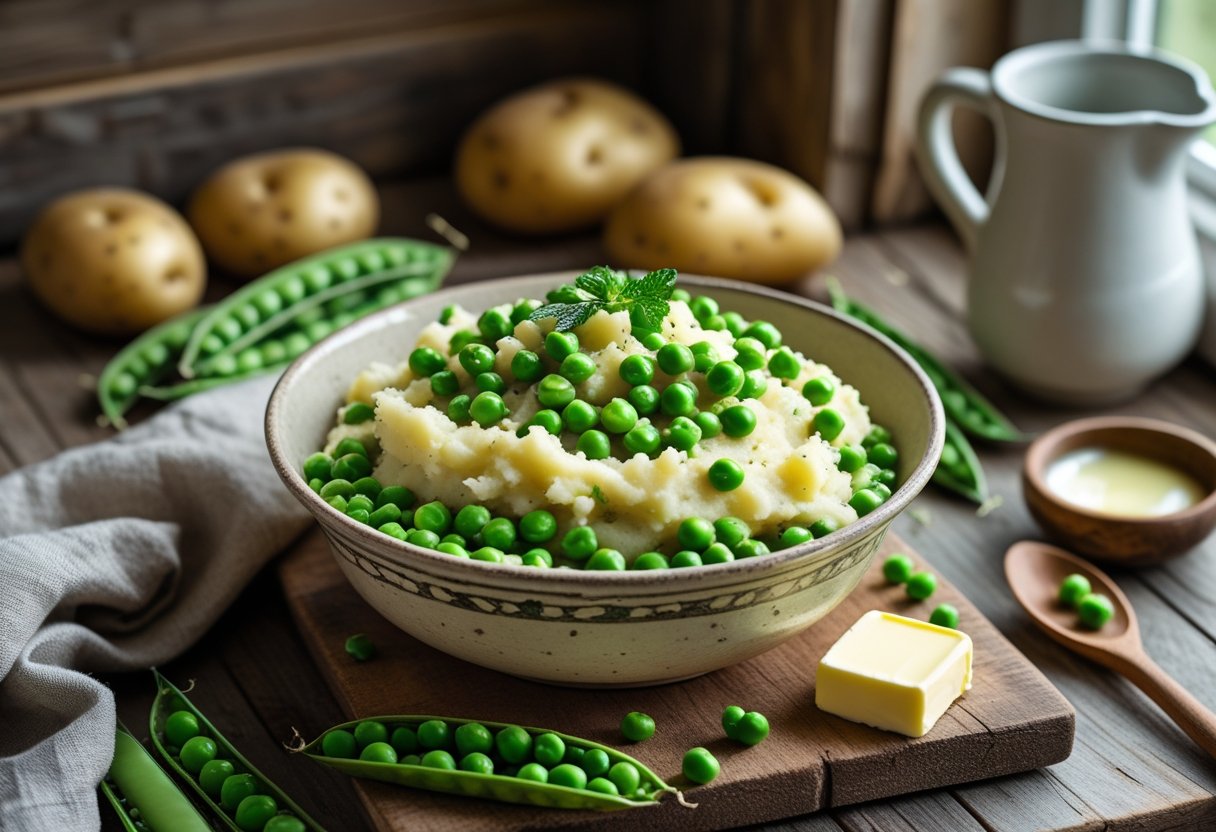
Creamed potatoes and peas vs. classic mashed potatoes: it’s all about texture and the job you want them to do. Mashed potatoes are smooth and uniform—boil russets, drain, then mash with butter and milk or cream.
Creamed potatoes keep some structure. Cube waxy potatoes, simmer, then combine with a white sauce. The peas add sweetness and color.
This dish is great with roasted meats, especially when you want a saucy side to soak up all those juices.
Mashed potatoes are perfect as a neutral bed for gravies. Creamed potatoes and peas are a self-contained side with sauce—think of them as mashed potatoes’ fancier cousin.
Classic Mashed Potatoes Recipe vs. Creamed Potatoes and Peas
Here’s a quick rundown of both approaches:
Classic mashed potatoes:
- Peel and cut 2 pounds russet potatoes into chunks.
- Boil in salted water 12–15 minutes until fork-tender.
- Drain, mash with 4 tbsp butter and 1/2–3/4 cup warm milk or cream.
- Season with salt and pepper; whip for fluffiness.
Creamed potatoes and peas:
- Cube 2 pounds Yukon Gold or red potatoes.
- Boil until just tender, drain.
- Make a roux of 3 tbsp butter + 2–3 tbsp flour; whisk in 1–1¼ cups milk or cream to thicken.
- Stir in 1–2 cups peas, then fold in potatoes gently.
- Season with salt and white pepper.
Mashed potatoes are all about smoothness and lift. The creamed version focuses on sauce and sweet peas.
Choose based on the texture you want and how you want the dish to play with your main course.
Frequently Asked Questions
We’ve got you covered on ingredients, cream sauce technique, frozen produce, popular mix-ins, dietary swaps, and storage. Each answer is short, sweet, and to the point—just how we like our side dishes.
What ingredients are needed for making traditional creamed peas and potatoes?
You’ll need 1 pound small new potatoes (halved), 1 cup fresh or frozen peas, 2 tablespoons unsalted butter, 2 tablespoons all-purpose flour, 1 1/2 cups milk (whole or 2%), and 2/3 cup heavy cream.
Add 1 teaspoon garlic powder, 1 teaspoon onion powder, 1/2 teaspoon kosher salt, and 1/4 teaspoon black pepper. Optional: 3–4 strips bacon or 1/2 cup grated cheddar for extra flavor.
How do you prepare the cream sauce for this dish?
Melt butter in a skillet over medium heat, then whisk in flour and cook 1–2 minutes to make a roux.
Add milk gradually while whisking, then stir in heavy cream and simmer 3–5 minutes until the sauce thickens enough to coat the back of a spoon.
Can you use frozen peas and potatoes for this recipe, or do they have to be fresh?
Frozen peas work great—they thaw and heat quickly in the hot sauce and keep their sweetness.
For potatoes, fresh new potatoes or baby reds are best; frozen cooked potatoes can get mushy, so only use them if you’re desperate or like your potatoes on the soft side.
What are some common variations or additions to the classic recipe?
Crispy bacon or diced ham adds a smoky, savory boost.
Try 1/2 cup shredded cheddar, or fold in sautéed pearl onions, green beans, or fresh herbs like dill or parsley for extra brightness.
How can this dish be adapted to accommodate dietary restrictions, such as gluten-free or vegan diets?
Swap all-purpose flour with a 1:1 gluten-free flour or use 1 tablespoon cornstarch mixed with cold milk.
For vegan, use vegan margarine, plant milk like oat or soy, full-fat canned coconut milk or plant-based cream, and skip the bacon (or use smoked tempeh if you’re feeling adventurous).
What are the best ways to store and reheat leftovers of creamed peas and potatoes?
Pop your leftovers in an airtight container and stash them in the fridge for up to three days. If you’re planning for the long haul, toss them in a freezer-safe container and freeze for up to three months.
When it’s time to reheat, keep things chill—well, low and slow—on the stove over low heat. Stir often and add a splash of milk to bring back that creamy magic, but steer clear of high heat unless you want a science experiment in separation.