You’ll love how simple and rewarding campfire cornbread can be when you cook it in a cast-iron skillet over an open flame. This Montana-style skillet cornbread gives you a golden crust, tender crumb, and easy steps you can follow at camp or at home.
We’ll show you the small list of ingredients, the basic pan and heat setup, and a few tricks to get reliable results every time. Ready to impress your fellow campers or just yourself? Let’s dive in.
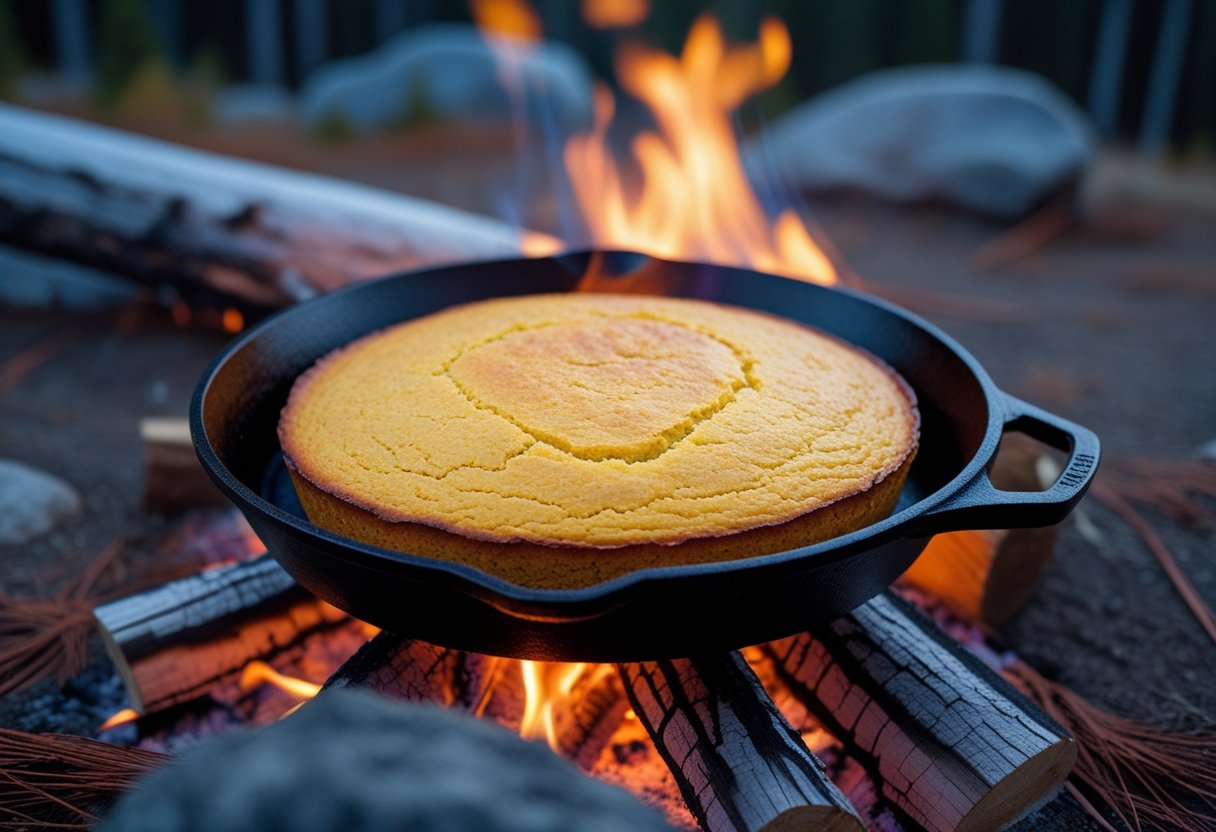
Follow our clear instructions and you’ll turn basic pantry items into a warm, shareable skillet of cornbread that pairs perfectly with chili, stew, or a cold night under the stars. Along the way, we’ll cover what gear matters, how to control the heat, and quick fixes if the crust browns too fast or the center stays soft.
Key Takeaways
- You can make reliable skillet cornbread with a short ingredient list and a cast-iron pan.
- Small heat-control and timing tricks prevent a burnt edge or undercooked center.
- One pan yields a warm, shareable side that pairs well with hearty outdoor meals.
Montana Campfire Skillet Cornbread Essentials
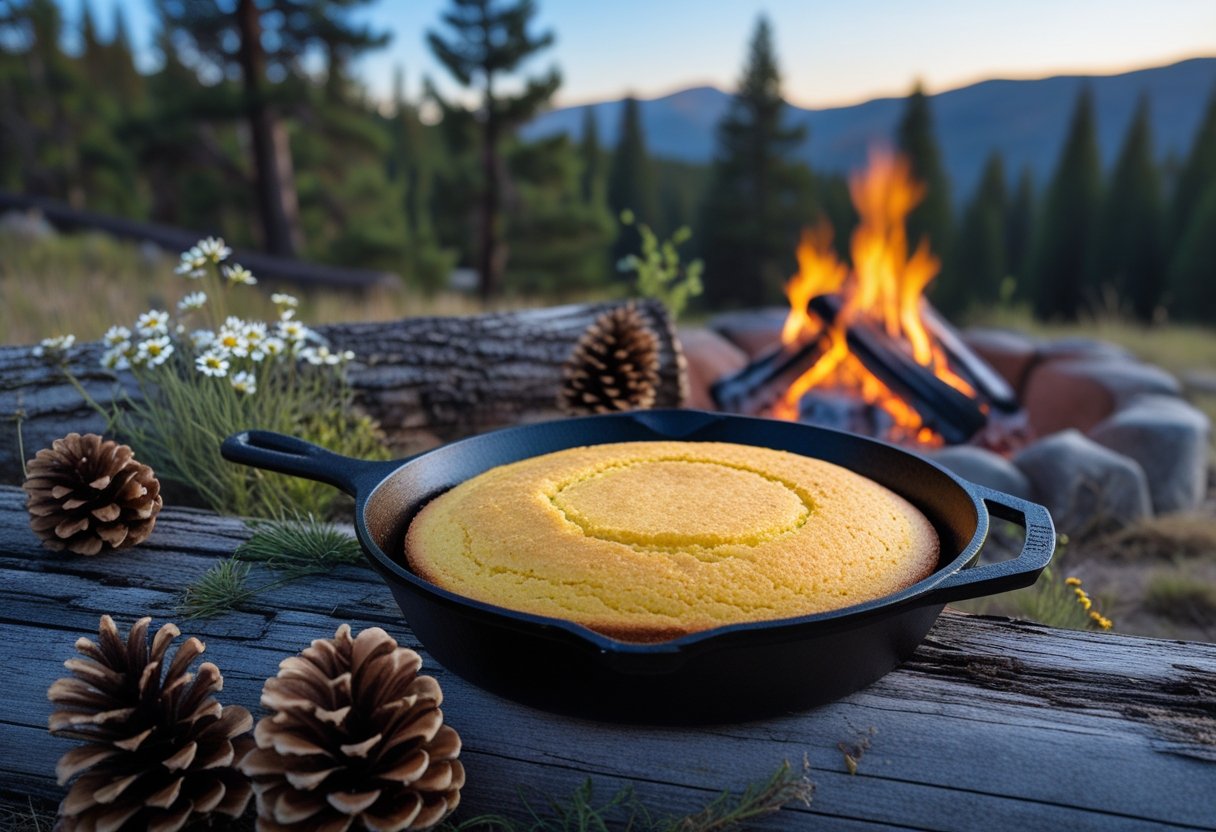
We focus on the few things that matter most: a sturdy cast iron pan, plain yellow cornmeal, and a simple batter that holds up to campfire heat. Get those right and you’re halfway to cornbread glory.
Overview of Skillet Cornbread and Outdoor Cooking
We make cornbread over coals to get a crispy crust and a moist center. Cooking in a cast iron skillet gives even heat and a golden edge that a camp stove rarely matches.
For camp use, keep the batter slightly thicker than oven recipes so it holds shape in the hot pan. We aim for a 10–12 inch skillet for 6–8 servings.
A Dutch oven works too, but a skillet creates the classic pan-style slices campers expect. Pre-mix dry ingredients at home to cut camp prep time and reduce dust in your cookware.
Heat control matters more than fancy ingredients. Build a bed of glowing coals, place a grate 4–6 inches above for indirect heat, and rotate the pan every 5–7 minutes to avoid hot spots.
We always bring gloves and a lid or foil to trap top heat if needed. No one likes a burnt-bottom, raw-center cornbread disaster.
Key Ingredients: Yellow Cornmeal and Cornbread Fundamentals
Yellow cornmeal is the base. We use medium-grind yellow cornmeal for texture — not too gritty, not too fine.
For a basic camp recipe, combine 1.5 cups yellow cornmeal, 0.5 cup all-purpose flour, 1 tablespoon baking powder, 1 teaspoon salt, and 1–2 tablespoons sugar if we want slight sweetness. Wet mix is simple: 2 eggs, 1 cup milk (or buttermilk), and 1/4 cup melted butter or oil.
We fold wet into dry until just combined. Add-ins like shredded cheddar, diced jalapeño, or cooked bacon are fine, but keep quantities modest so the batter still bakes through over coals.
Pack dry mix in a zip-top bag labeled with wet-ingredient amounts for quick campsite assembly. Bring a small whisk and a measuring cup. That saves time and avoids measuring in wind or low light (trust us, it’s a mess).
Cast Iron Skillet Selection and Prepping for Campfire Use
We choose a 10- or 12-inch well-seasoned cast iron skillet. Look for a flat bottom and a comfortable handle with a hole for a hook.
Avoid pans with loose handles or uneven bases that wobble on a grate. Seasoning matters: a slick, black surface cuts sticking.
If the pan is new, season it at home with several thin layers of oil baked at high heat. For camp, preheat the skillet on the grate for 4–6 minutes until a drop of water sizzles.
Then add a tablespoon of butter or bacon grease and coat the sides. Bring tools: heat-resistant gloves, a long spatula, and a small lid or ten-inch piece of foil to cover the skillet if the top needs extra heat.
If we use a Dutch oven instead, we place coals on the lid to mimic oven-top heat. For more tips on cast iron care and campfire technique, consult a full campfire cast iron cornbread guide.
Step-by-Step Recipe and Outdoor Cooking Tips
We list clear steps for mixing the batter, getting a hot skillet, and cooking over coals so the cornbread bakes through with a crisp edge and tender crumb.
Preparing and Mixing the Batter
We use 1 cup yellow cornmeal, 1/2 cup all-purpose flour, 1 tbsp baking powder, 1/2 tsp salt, 2 tbsp sugar or 3 tbsp honey, 1 cup milk, 2 eggs, and 4 tbsp melted butter. Measure dry ingredients into one bowl and whisk to break lumps.
In a separate bowl, beat eggs, milk, and sweetener, then stir in warm melted butter. Combine wet into dry with a few gentle strokes — stop when just mixed.
Overmixing makes the cornbread dense. Let the batter rest 5–10 minutes while the skillet heats; this hydrates the yellow cornmeal and improves texture.
If you want richer flavor, swap 1/4 cup of milk for buttermilk or add a tablespoon of melted bacon fat. Because bacon makes everything better.
Campfire Cooking Techniques for Crispy Edges
We preheat a 10″ cast iron skillet over medium coals for 5 minutes, then add 1 tbsp butter to coat and let it brown slightly. Pour batter into the hot skillet; the sizzle creates a crunchy bottom.
Cover with foil or an inverted lid to trap heat, and place hot coals on the lid’s rim if using a dutch oven setup. Maintain steady heat: move skillet off direct flame to moderate coals if the bottom darkens too fast.
Cook 15–20 minutes until the top springs back and a toothpick comes out clean. Rotate the skillet every 5 minutes for even browning.
Let the cornbread rest in the skillet 5 minutes before slicing to finish steam cooking. Resist the urge to dig in early unless you like molten cornbread lava.
Serving Suggestions and Pairings
We serve slices straight from the skillet with a pat of butter and a drizzle of honey for a classic pairing. Cornbread goes well with a bowl of chili, beef stew, or campfire beans; the slightly sweet yellow cornmeal balances savory stews.
For variations, fold in 1/2 cup grated cheddar or 2 tbsp chopped jalapeño before pouring the batter. Leftovers reheat well in the skillet over low heat.
If you want a picnic-friendly option, cut into wedges and wrap in foil for easy transport. Bonus: cornbread makes an excellent midnight snack.
Frequently Asked Questions
We cover practical changes to recipes, using Dutch ovens, stovetop methods, a clear campfire skillet recipe, texture differences between skillet and oven cornbread, and ways to stop sticking. Here’s the lowdown:
What are the necessary modifications to adapt a traditional cornbread recipe for a campfire setting?
We reduce liquid slightly and increase fat to protect against uneven heat. This helps the batter set faster and keeps the center moist when cooking over coals.
We pre-mix dry ingredients at home and carry eggs, milk (or powdered milk), and melted butter or oil in a sealed container. We also cut batter-resting time; letting batter sit 5–10 minutes helps cornmeal hydrate without losing heat control at the fire.
We use a slightly shallower pan or a 10–12 inch skillet so the cornbread cooks through in 20–30 minutes. Add mix-ins sparingly so the center doesn’t stay wet.
Can you make cornbread in a dutch oven over a campfire, and if so, how?
Yes. We use a 10–12 inch Dutch oven with a flanged lid and cook with coals under and on top for even heat.
Place 6–8 hot coals under the oven and 12–15 on the lid as a starting point for a 20–30 minute bake. We preheat the Dutch oven on coals for 5 minutes, grease the base, pour in batter, and set the lid with coals.
Check at 15 minutes with a toothpick and rotate the oven 180 degrees halfway through to even out hot spots. Keep a small shovel, lid lifter, and heat-resistant gloves on hand.
If the top browns too fast, remove a few top coals or tent with foil. If the bottom browns too fast, scrape coals away or raise the oven on a bed of ash.
What is the best way to cook cornbread on a stovetop when an oven isn’t available?
We use a heavy, well-seasoned cast iron skillet and cook over medium-low heat on a stovetop. Preheat the skillet for 3–5 minutes, add 1–2 tablespoons of fat, pour batter, cover with a lid, and cook 12–18 minutes until set.
Check doneness with a toothpick; if the top is still wet but the bottom is done, finish by covering the skillet with foil and a lid to trap heat. For very even results, place the covered skillet on a low burner and rotate it every few minutes.
Avoid high heat. Too much direct heat burns the bottom while leaving the center raw. Adjust flame so you keep a steady simmer beneath the pan.
Could you provide a step-by-step campfire cornbread recipe suitable for outdoor cooking?
We mix batter at camp using dry mix prepared at home or a boxed mix. For a simple from-scratch mix: combine 1.5 cups cornmeal, 1/2 cup flour, 1 tbsp baking powder, 1 tsp salt, and 1 tbsp sugar in a bag.
At camp add 2 beaten eggs, 1 cup milk, and 1/4 cup melted butter. Heat a 10–12 inch cast iron skillet over coals for 3–5 minutes, add 1 tbsp butter and swirl.
Pour batter into the hot skillet and place it on a grate about 4–6 inches above glowing coals, or set the skillet directly over a low bed of coals with a ring of coals at the edge. Cook 20–30 minutes, rotating the skillet a quarter turn every 5–7 minutes to avoid hot spots.
Test with a toothpick; when it comes out clean or with a few dry crumbs, the cornbread is done. Let rest 5 minutes before slicing. Then try to resist eating the whole thing yourself.
What are the differences in texture and taste between skillet cornbread and oven-baked cornbread?
Skillet cornbread develops a thicker, crispier crust on the bottom and edges from direct contact with hot cast iron. The interior often stays moist and slightly denser than a high, cake-like oven loaf.
Oven-baked cornbread tends to rise more evenly and have a lighter, more uniform crumb when baked in a deep pan or an ovenproof dish. Oven baking gives a gentler top browning, while camp skillet versions have a heartier, toasted flavor from the pan and coals.
How do you prevent cornbread from sticking to the skillet when cooking over a campfire?
First things first: always preheat your skillet. Then, toss in a generous amount of fat—think at least a tablespoon of butter, bacon fat, or oil—so the batter sizzles like it’s auditioning for a cooking show.
That glorious sizzle forms a tasty barrier and helps the cornbread pop out later. Keep your cast iron well seasoned, and if you’re using a new pan, give it some love and season it at home before your trip.
Still dealing with rogue sticking? Run a thin metal spatula around the edges while it’s hot. Let the cornbread cool a bit before flipping it out—patience is a virtue, especially when cornbread is involved.