You’ll love how this Montana beef stew fills the kitchen with a warm, savory aroma. It’s a true ranch-style meal in one pot, perfect for when you want to feel like a cowboy without leaving your kitchen.
This recipe delivers tender beef, hearty vegetables, and a rich, tomato-forward broth. The mix of potatoes, beans, and smoked sausage makes every bite satisfying and easy to tweak to your taste.
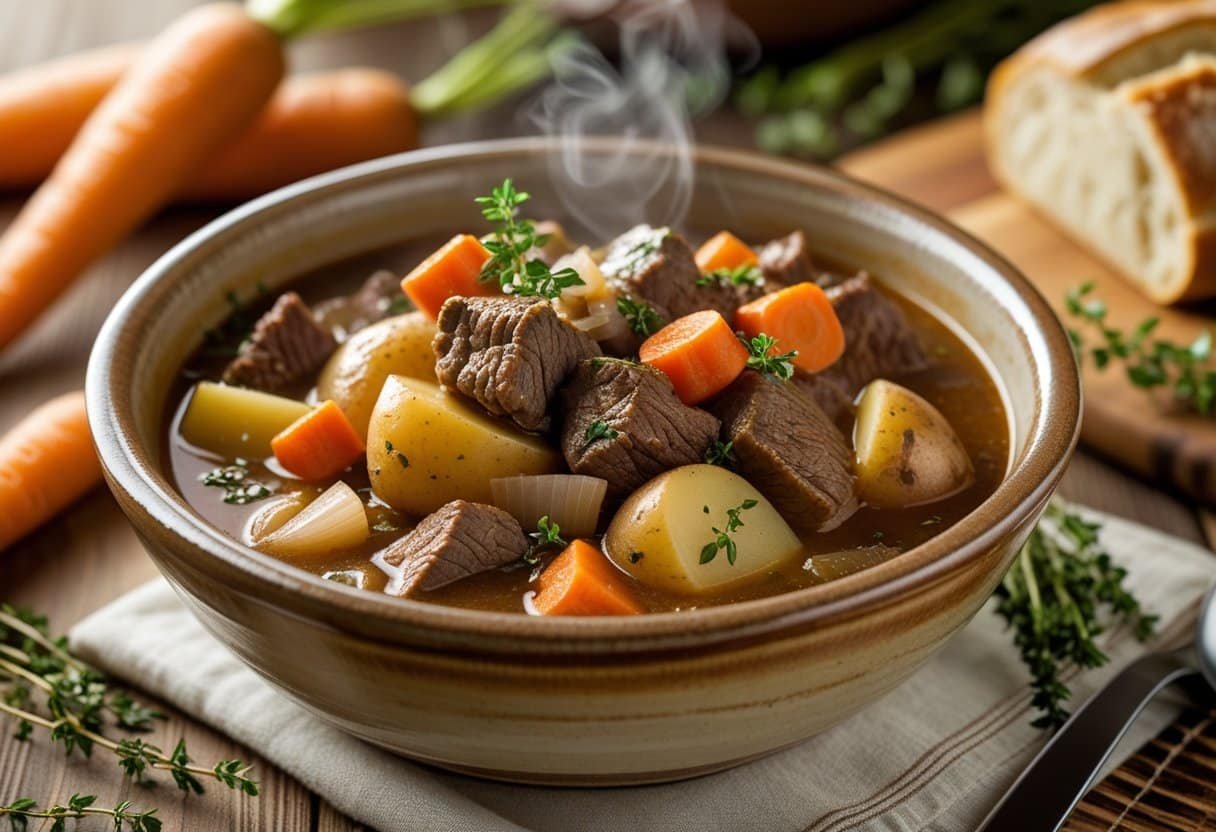
We’ll walk you through the ranch method so you can make this stew at home with clear steps and pantry-friendly ingredients. Expect tips for browning meat, building deep flavor, and keeping the stew hearty without fuss.
Key Takeaways
- This one-pot beef stew is robust and perfect for family meals.
- We share practical steps and tips to build deep, ranch-style flavor.
- Answers and tweaks help you adapt the stew for crowds or weeknights.
Montana Beef Stew: Flavor, Tradition, and Key Ingredients
This dish blends bold, smoky meats with tender potatoes and bright notes of tomato and chile. It uses simple pantry spices and a few key techniques to build deep, steady flavor.
The Montana Twist: Beef Stew Meets Cowboy Stew
We combine the slow-braised approach of classic beef stew with the bold, meaty profile of cowboy stew. Instead of just chuck roast, we often add browned ground beef and smoked sausage or kielbasa for extra meatiness.
Bacon or smoky sausage adds rendered fat and a savory backbone. Diced tomatoes and sometimes green chilies bring acidity and a mild kick.
Ranch-style or baked beans stirred in near the end add body and a touch of sweetness. The result is thick and spoonable, with the smoky, chili-tinged character of cowboy stew.
Essential Meats and Proteins
We start with a mix of proteins for texture and flavor contrast. Cubed chuck or roast gives rich, gelatinous bites after long simmering.
Ground beef browns quickly and spreads beef flavor through the broth. Smoked sausage or kielbasa adds smoky fat and slices of firm meat that hold their shape.
Crispy bacon bits add salt and umami. We add proteins in stages: bacon first for fat, then ground beef for browning, and finally the cubed roast to braise slowly.
If we use beans, we prefer ranch-style or baked beans added late so they keep some texture and sweet-savory balance.
Classic Vegetables and Aromatics
Onion and garlic form the aromatic base. We sweat diced onions until translucent, then add minced garlic to avoid burning and keep a bright garlic note.
Yukon Gold potatoes work best because they hold their shape and give a creamy mouthfeel. Sweet corn adds pops of sweetness, and green beans or diced carrots can join the party if you’re feeling wild.
Diced tomatoes add body and acidity, helping form a light tomato broth that clings to meat and potatoes. Dusting meat with a little flour before braising thickens the stew naturally.
Southwestern Spices and Seasonings
We keep seasoning straightforward and bold. Chili powder and ground cumin give the stew a warm, earthy backbone.
Salt and black pepper are essential, and we adjust them toward the end after the flavors concentrate. A touch of smoked paprika or a splash of Worcestershire deepens the savory profile.
Fresh parsley at the finish brightens things up. If using green chilies, we choose mild roasted chiles for gentle heat.
For a ranch-style hint, a small scoop of ranch seasoning or ranch beans adds that familiar tang. We taste as we go so the spices support the meats and vegetables, not mask them.
For more ideas, check out regional versions like the Montana Cowboy Stew recipe with potatoes and smoked sausage.
How to Make Montana Beef Stew: Step-by-Step Ranch Method
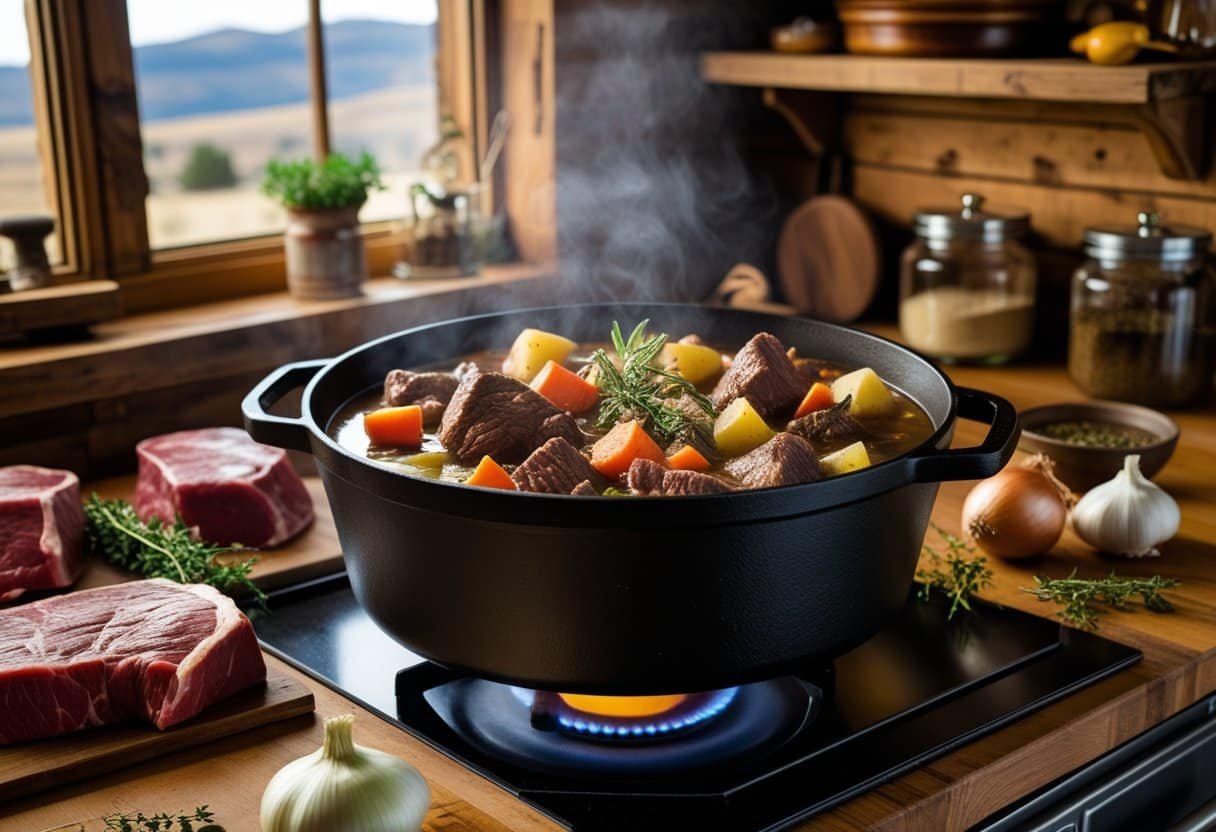
We focus on simple steps that build deep flavor: prepare sturdy ingredients, brown meat well, and simmer slowly in one pot. Small choices—cut size, searing time, and when to add vegetables—change texture and taste.
Prepping Ingredients Like a Rancher
We cut beef into 1- to 1½-inch cubes so each piece stays tender during long simmering. Trim large fat caps but leave some marbling for flavor.
Season cubes with salt and black pepper right before browning. For vegetables, use equal-sized chunks: 1-inch carrots, 1-inch potato cubes, and ¾–1-inch onion pieces.
This keeps everything from turning to mush. Mince 2–3 cloves garlic and chop 1–2 celery stalks for base aromatics.
Drain canned ranch-style beans if using, or rinse for less sodium. Measure about 4 cups beef stock for a 3-pound batch, plus 1 cup crushed or diced tomatoes for acidity.
Have a ranch dressing mix packet or spices (dried parsley, dill, onion powder, garlic powder) ready if you want the classic ranch twist.
Browning and Building Layers of Flavor
Heat a heavy Dutch oven or large skillet over medium-high heat. Add 1–2 tablespoons oil until shimmering.
Work in batches so meat browns; crowding causes steaming, and nobody wants steamed beef. Each batch should get 3–4 minutes per side until a deep brown crust forms.
After browning all meat, deglaze the pot with ½ cup red wine or beef stock, scraping up the browned bits. Those bits are pure gold.
Sauté onions and celery in the same pot until soft, about 4–5 minutes, then add garlic for 30–60 seconds. Return meat to the pot and sprinkle in the ranch mix or seasoning blend; stir to coat.
Simmering the Hearty One-Pot Meal
Add the measured beef stock and tomatoes, bring to a gentle boil, then reduce to a low simmer. Skim excess fat from the surface after 10–15 minutes.
Cover and simmer for 1.5–2 hours, or until meat is fork-tender. Check every 20–30 minutes and stir to prevent sticking.
Add potatoes and carrots in the last 30–40 minutes so they keep their shape. If using canned beans or corn, stir them in during the last 10–15 minutes to heat through.
For thicker gravy, mash a few potato pieces in the pot or make a slurry with 1–2 tablespoons cornstarch and cold water and stir it in.
Customizing Your Stew: Variations and Local Touches
Tailor the stew to leftovers and regional tastes. For a Texas cowboy stew feel, use smoked sausage or chorizo with the beef and add chipotle or chili powder.
For an old-fashioned cowboy stew, mix in baked ranch-style beans and a splash of molasses. Want to go full campfire? Brown meat in a cast-iron Dutch oven over coals and cook slowly with wood-smoke flavor.
For a lighter chicken stew version, substitute boneless thighs and reduce simmer time to 45 minutes. Leftover stew keeps well; refrigerate up to 4 days or freeze portions for a one-pot wonder that just gets better with time.
Serve with crusty bread or over mashed potatoes to soak up the gravy. For a fresher touch, finish with chopped parsley or a squeeze of lemon.
Check out the Cowboy Beef Stew recipe from the Montana Beef Council for more regional inspiration.
Frequently Asked Questions
We cover meat choices, cooking methods, thickeners, equipment, flavor boosters, and classic vegetables for a true Montana-style beef stew. Each answer gives concrete steps or ingredient choices you can use when you cook.
What is the traditional cut of meat for a hearty ranch-style beef stew?
We prefer chuck roast for stew. Chuck has good marbling and connective tissue that breaks down into tender, flavorful meat when cooked low and slow.
Brisket or bottom round work if chuck is unavailable, but they need careful cooking to avoid dryness. Trim excess fat, then cut into 1-1.5 inch cubes for even cooking.
How can I achieve fall-apart tenderness in my beef stew?
Brown the beef well first to develop flavor, then simmer it slowly at a low temperature. Cook at a gentle simmer (about 180–200°F / 82–93°C in a covered pot) for 2.5–3.5 hours, or until meat pulls apart easily.
Add a small amount of acid, like 1–2 tablespoons of tomato paste or a splash of vinegar, early in the braise to help break down connective tissue. Resting the stew off heat for 15–30 minutes before serving also helps the meat relax and shred.
What is the best thickener to use for a rich and hearty beef stew?
Use a simple flour or cornstarch slurry depending on the texture you want. For a silky, traditional gravy, whisk 2–3 tablespoons of all-purpose flour into the beef when browning or make a slurry with equal parts flour and cold water and stir it in near the end.
For a clearer, glossy finish, mix 1–2 tablespoons cornstarch with cold water and add slowly while simmering. Adjust the amount to reach the body you want; more thickener gives a heavier stew, less keeps it spoonable.
Can I cook an old fashioned beef stew recipe in a Dutch oven?
Yes. A heavy Dutch oven gives even heat and works well on the stovetop or in the oven.
We sear meat on the stovetop, add liquids and vegetables, then move the pot to a 300–325°F oven for slow, steady cooking. You can also use a Dutch oven on low stovetop heat if you don’t want to heat the oven.
Keep the lid on and check liquid levels once during cooking to prevent drying.
Is there a secret ingredient to enhance the flavor of beef stew?
We don’t rely on secrets, but a splash of Worcestershire sauce or a smear of tomato paste adds deep, savory umami. A bouquet garni with bay leaf, thyme, and a strip of rosemary also sharpens the stew’s aroma.
A small dose of beef stock concentrate or a tablespoon of soy sauce can boost depth without overpowering other flavors. Use these sparingly and taste as you go.
What vegetables are essential for an authentic Montana-style beef stew?
We include potatoes, carrots, and onions as the base vegetables. Potatoes should be firm-variety and cut into large chunks so they hold texture through long cooking.
Some regional versions throw in sliced smoked sausage or green beans for extra heft. Frozen peas or parsnips can be optional additions, tossed in near the end to keep them from turning into mush.