Mango Pickle, or Aam ka Achaar, is a traditional Indian condiment made from raw mangoes, spices, and mustard oil. It is a tangy and spicy pickle that adds flavor to simple meals like rice, dal, and parathas. This pickle is loved across India for its sharp taste and long shelf life.
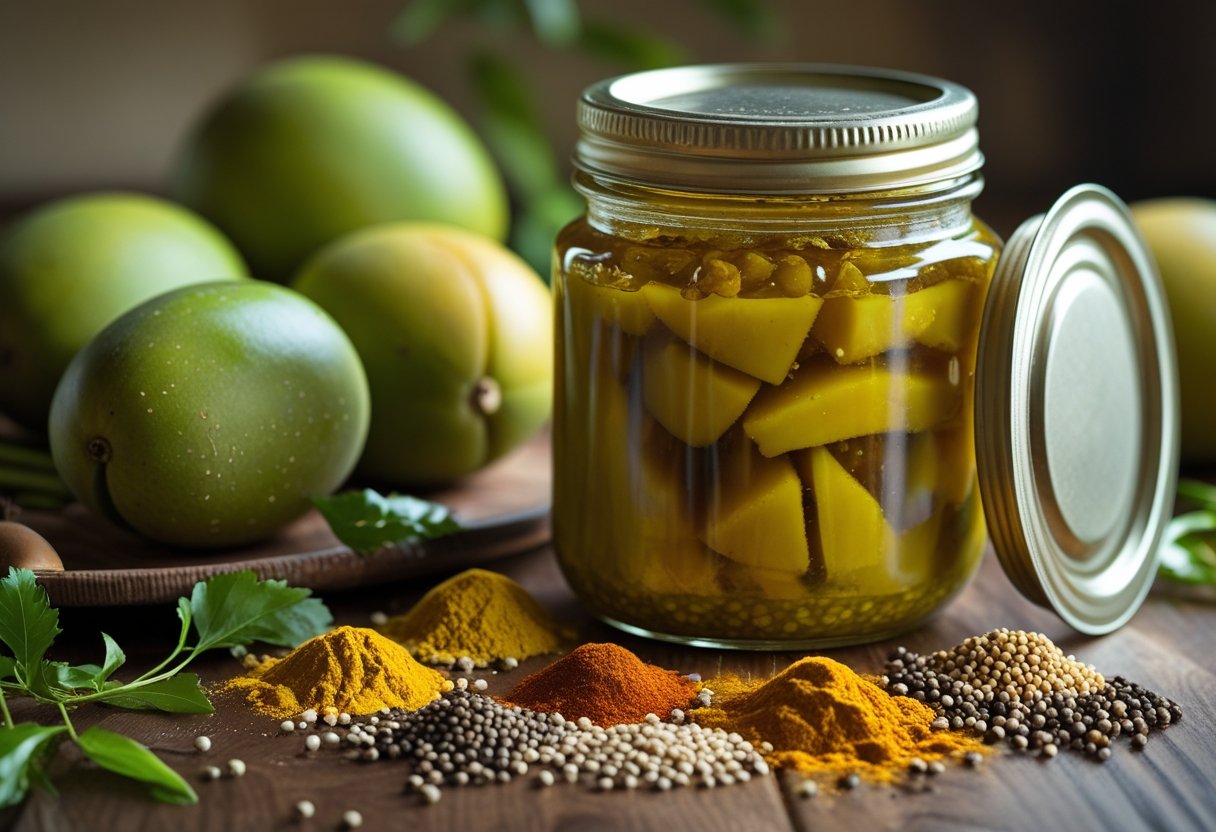
We can make this pickle at home using basic ingredients and simple steps. The process involves layering raw mango pieces with a mixture of spices and mustard oil, then letting it mature over time. The result is a rich, flavorful pickle that complements a variety of dishes.
Making Aam ka Achaar gives us a chance to enjoy authentic Indian flavors anytime. It’s a perfect side that brightens up everyday meals and is easy to store for months when kept in airtight containers. For more detailed instructions and tips, we can explore traditional recipes and variations.
Traditional Mango Pickle (Aam ka Achaar) Recipe
Making a traditional mango pickle involves carefully balancing ingredients and following a process that allows the flavors to develop over time. Using raw mangoes and the right spices creates a spicy, tangy, and aromatic pickle that lasts long and pairs well with many dishes.
Key Ingredients and Their Roles
Raw mangoes are the base of our aam ka achar, providing sourness and texture. Mustard oil acts as a preservative and adds a sharp, pungent flavor that defines the pickle’s character.
We use spices like turmeric powder to give color and mild earthiness, and fenugreek seeds for a bitter, nutty depth. Mustard seeds add crunch and a spicy note. Fennel seeds bring slight sweetness, while nigella seeds contribute a unique peppery, onion-like aroma.
Chilli powders, including Kashmiri red chili powder, give heat and a rich red hue without overpowering the pickle. Asafoetida helps with digestion and adds a subtle umami flavor.
Some recipes include jaggery for a touch of sweetness to balance the sour and spicy flavors. Salt is a key preservative, crucial for preventing spoilage.
Step-by-Step Preparation Process
First, we wash and thoroughly dry the raw mangoes to remove any moisture, which could spoil the pickle. Then, we cut them into small cubes, leaving the skin on if tender.
After cutting, we mix mango pieces with salt and turmeric powder and let them marinate for about an hour. This step helps draw out water and softens the mango.
Next, we prepare the spice mix by roasting coriander seeds and crushing them coarsely. Fenugreek and mustard seeds are ground into a coarse powder without roasting.
We combine the mangoes with these spices, fennel seeds, nigella seeds, and chili powders, mixing well. Then, mustard oil is added cold and stirred thoroughly. The mixture is stored in a covered container, usually wrapped with a muslin cloth to absorb moisture.
The pickle is stirred daily, and after a few days, additional mustard oil is added to ensure proper preservation and flavor development. After about 5 days, the pickle is ready to transfer to clean bottles for storage.
Tips for Perfect Pickling
Moisture control is vital. Always use dry mangoes, clean utensils, and sterilized storage jars to prevent mold. Using mustard oil raw helps keep the flavors intact and acts as a natural preservative.
Salt amount should be generous but not excessive. It not only preserves but also enhances the taste. Adjust chili powder as per your spice tolerance.
For a well-rounded flavor, balance the spices carefully—don’t omit fenugreek or nigella seeds, as they provide signature aromas and bitterness.
Allow the pickle to mature for at least 5 days. Longer aging softens the mangoes and deepens the flavor. Store the pickle in a cool, dark place and always use a dry spoon when serving to avoid contamination.
More detailed traditional recipes can be found at this Punjabi mango pickle guide.
Types, Serving Suggestions, and Storage of Mango Pickle
Mango pickle offers a wide range of flavors shaped by regional preferences and ingredients. It complements many dishes and requires proper storage to keep its taste fresh and spicy for months.
Regional Varieties and Instant Mango Pickle
Across India, mango pickle varies by region. North Indian mango pickle is bold and spicy, using mustard seeds and mustard oil for a strong flavor. South Indian versions often include fenugreek and use sesame oil for a nuttier taste. Bengali mango pickle balances tanginess with a hint of sweetness, sometimes adding vinegar for extra acidity.
Instant mango pickle is a quick version made without long sun-drying. It uses fresh raw mango pieces mixed with spices and oil, packed directly into a pickle jar. This saves time but has a shorter shelf life compared to traditional recipes.
Serving Ideas and Culinary Pairings
Mango achaar pairs well with many Indian meals. It enhances plain rice, dal (lentils), and vegetable dishes by adding tang and heat. Parathas, especially stuffed or plain, become more flavorful when served with mango pickle.
We can also use this Indian condiment in modern recipes. Adding a spoonful to sandwiches, wraps, or salads introduces a spicy, tangy twist. Some even mix it with pasta for a fusion flavor. It’s versatile and elevates both traditional and creative dishes.
Proper Storage and Shelf Life
Storing mango pickle correctly is crucial to maintain flavor and prevent spoilage. We recommend using a clean, dry glass jar rather than plastic. Glass prevents the pickle from absorbing unwanted odors and keeps it fresh longer.
Keep the jar in a cool, dark place to avoid direct sunlight. Stirring the pickle gently every day during the first week helps distribute the spices and oil evenly. When stored properly, raw mango pickle can last several months.
Mustard oil or sesame oil not only add taste but also act as natural preservatives by creating a barrier against air and moisture. Avoid using wet or dirty spoons when serving to prolong shelf life.