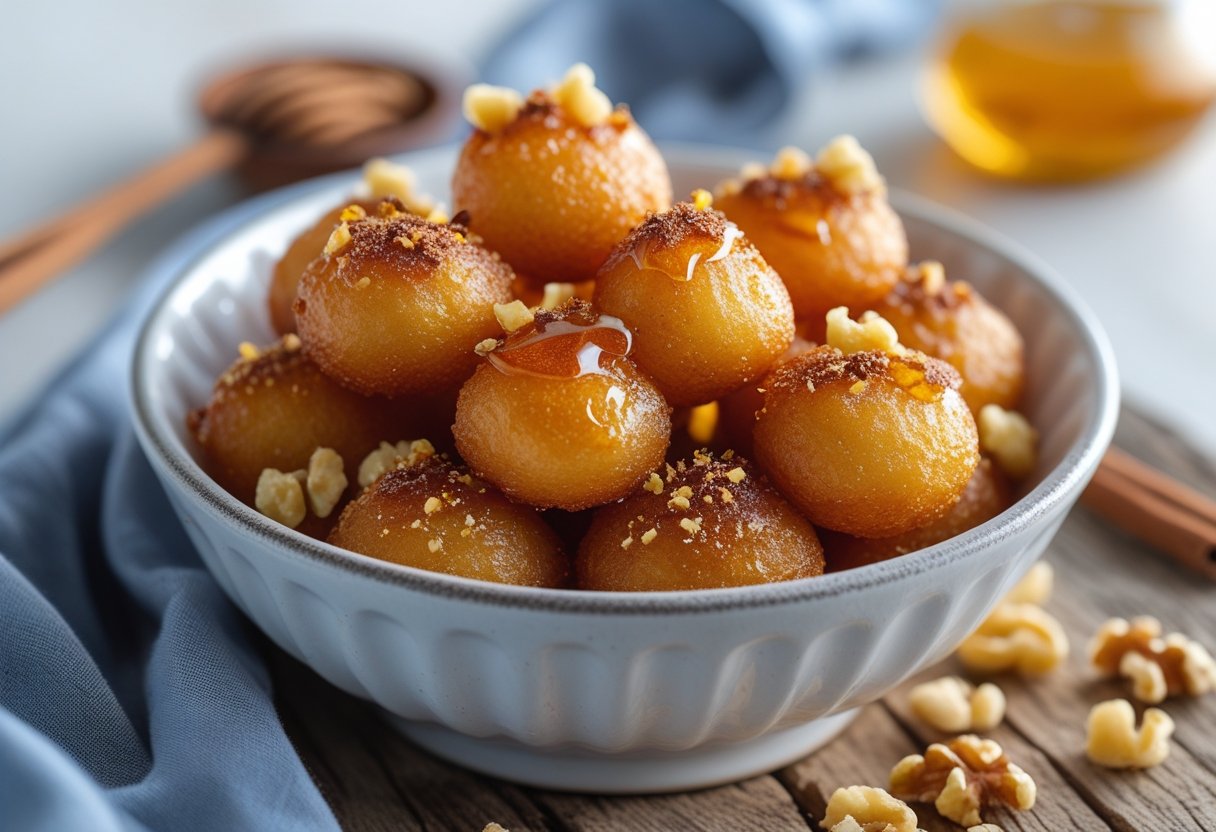
Loukoumades are small, deep-fried dough balls from Greece that are crispy on the outside and soft inside. They’re traditionally soaked in honey syrup and often sprinkled with cinnamon and nuts, making them a sweet treat loved across Greece and beyond.
These little donuts carry a rich history and cultural significance that go far beyond their delicious taste.
We can trace loukoumades back to ancient Greece, where they were used as rewards for Olympic athletes. Today, they remain a popular dessert at festivals, family gatherings, and street markets, symbolizing celebration and hospitality.
Their simple ingredients come together to create a unique flavor that connects us to Greek tradition.
Making loukoumades at home is straightforward, but you’ll want to keep an eye on things like yeast activation and frying temperature. You can enjoy them in many ways, from the classic honey and cinnamon to modern twists with chocolate or fruit toppings.
Key Takeaways
- Loukoumades are crispy, honey-soaked dough balls with deep cultural roots.
- Their history links to ancient Greek celebrations and traditions.
- They are easy to make and can be enjoyed with many different toppings.
Loukoumades: History, Tradition, and Cultural Importance
Loukoumades, small fried dough balls drenched in honey, have a rich story tied closely to Greek culture and tradition. Their journey from ancient times to today shows how food can connect history, celebration, and culinary art across regions.
Ancient Origins and Evolution
Loukoumades date back to Ancient Greece, where they were known as one of the earliest desserts. These Greek honey donuts appear in ancient texts, described as dough fried in olive oil and sweetened with honey.
According to tradition, winners of the first Olympic Games in 776 BC were given loukoumades as a prize, making them a symbol of victory. The name loukoumades traces back to the Arabic word “Luqmat al-Qadi,” meaning “judge’s morsels,” which became “lokma” in Turkey.
Over centuries, the recipe spread throughout the Eastern Mediterranean, adapting to local tastes but always keeping the core idea of crispy fried dough with honey.
Loukoumades in Greek Celebrations
Loukoumades hold a special place in Greek celebrations and everyday life. They’re commonly enjoyed during religious festivals, weddings, and family gatherings, serving as a sweet treat that brings people together.
In modern Greece, these Greek doughnuts are often served at cafes and street stalls, especially during the winter months. Their warm, sticky texture and honey flavor evoke a deep sense of tradition that connects us to our ancestors.
They are more than food; they are part of Greece’s cultural identity and a symbol of hospitality.
Regional and International Variations
While loukoumades are distinctly Greek, similar fried dough balls exist across many cultures. In Turkey, lokma shares the same honey glaze but is often served during religious ceremonies.
Italy’s Struffoli, tiny fried dough balls coated in honey and decorated with sprinkles, resemble loukoumades but are linked to Christmas traditions. Other examples include Croatia’s Fritule, which may include raisins and chocolate, and Mongolia’s Boortsog, typically served with tea and sometimes flavored with butter or cheese.
These variations highlight how fried dough balls are a universal dessert, each culture adapting the recipe to local ingredients and customs.
For more on the roots and variations of these traditional sweets, see loukoumades in Ancient Greece and beyond.
How to Make and Enjoy Loukoumades
Loukoumades are simple to make but require attention to detail for the best texture and flavor. Using the right ingredients and careful frying creates crispy, airy honey puffs.
We also explore how to serve them traditionally and with modern twists.
Essential Ingredients and Toppings
The key ingredients for loukoumades include flour, yeast, lukewarm water, and milk. These form a smooth batter, which must rest in a warm place to rise and develop airiness.
Sugar and olive oil add gentle sweetness and richness. For toppings, Greek honey syrup is essential — it soaks the fried dough balls, giving them their signature sweet, sticky finish.
We add cinnamon, crushed walnuts, or toasted sesame seeds for texture and flavor contrast. Walnuts provide a crunchy, nutty element, while cinnamon adds warmth.
Some recipes include dark chocolate sauce as an alternative topping. Simple, fresh ingredients give loukoumades their traditional, irresistible taste.
Step-by-Step Preparation Guide
First, dissolve active dry yeast in lukewarm water with sugar. Let this mix sit for 5 minutes until frothy to activate the yeast.
Next, mix in the milk, flour, salt, and olive oil until the batter is smooth without lumps. Cover and let the dough rise for about an hour in a warm spot, which helps achieve the fluffy texture.
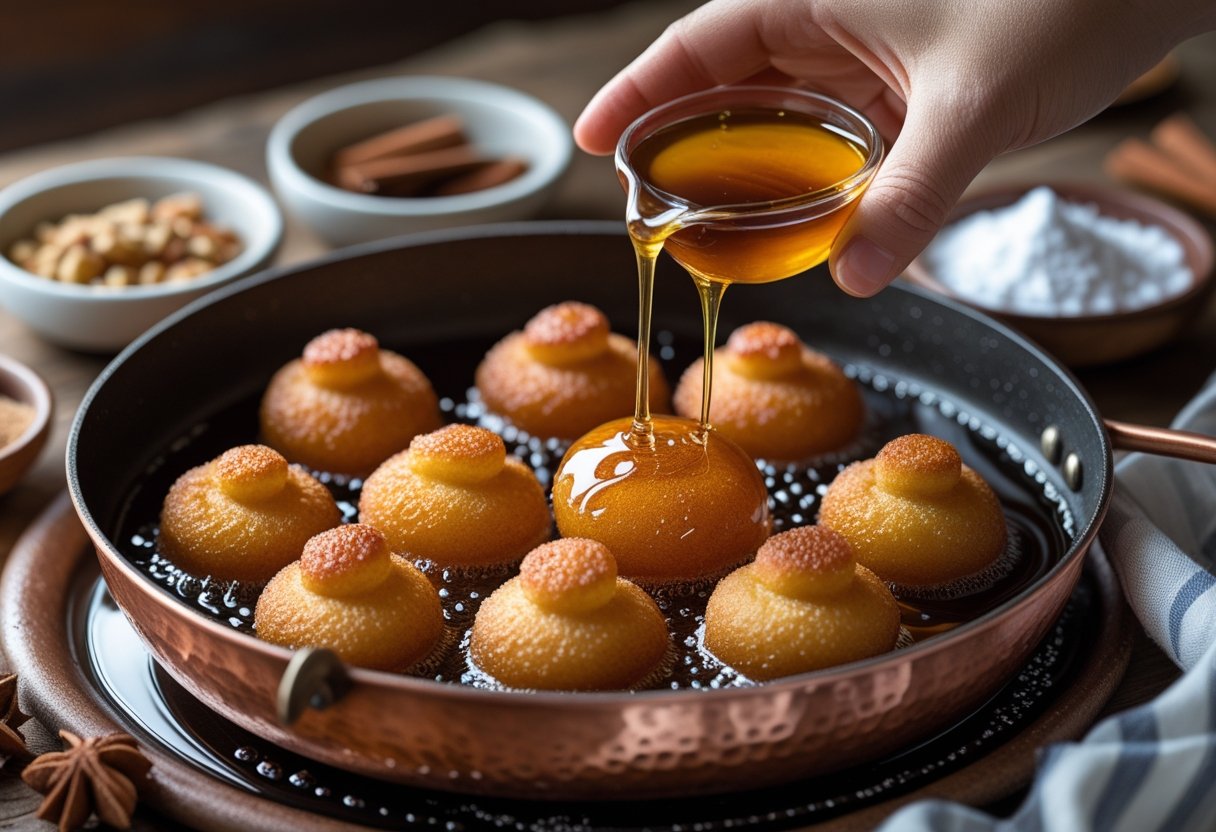
Heat vegetable oil to 160°C (320°F) in a pan for deep frying. Using a spoon and your hand, form small dough balls and drop them carefully into the hot oil.
Fry in small batches to keep oil temperature steady. Turn the loukoumades until they’re golden and crispy outside but soft inside.
Drain on paper towels to remove excess oil. Finally, drizzle warm honey syrup over the loukoumades and dust with cinnamon and crushed walnuts before serving.
Serving Suggestions and Modern Twists
Traditionally, we serve loukoumades warm with a generous drizzle of honey syrup and a sprinkle of cinnamon and walnuts. This makes a perfect dessert or snack after meals like moussaka or souvlaki.
For a modern twist, try topping loukoumades with chocolate sauce instead of honey. Adding vanilla ice cream creates a creamy contrast to the warm, crispy dough.
Some also like using toasted sesame seeds for a nutty flavor or dipping loukoumades in spiced syrups. Loukoumades work well for sharing, so arrange them on a big platter.
They are best enjoyed fresh, right after frying, to keep the crispy outside and soft, airy center intact.
Learn more about making these Greek donuts with a detailed loukoumades recipe.
Frequently Asked Questions
We often get questions about the ingredients, pronunciation, history, and making of loukoumades. People also ask about where to find the best ones and the different styles across Greece.
What ingredients are needed to make authentic loukoumades?
The main ingredients are simple: all-purpose flour, active dry yeast, warm water, sugar, salt, and olive oil. For frying, sunflower oil works best.
The honey syrup usually contains honey, sugar, water, and cinnamon.
How do you pronounce loukoumades correctly?
Loukoumades is pronounced as “loo-koo-MAH-thes.” The emphasis is on the third syllable, and the “th” sounds like the “th” in “think.”
Can you provide a simple recipe for making loukoumades at home?
Start by mixing yeast and sugar in warm water until frothy. Then add flour, salt, and olive oil to form a sticky dough.
Let it rise for 1 to 2 hours. Fry spoonfuls of dough in hot oil until golden.
Dip the fried balls in warm honey syrup and sprinkle with cinnamon or walnuts before serving.
Where can I find the best loukoumades in Greece?
You can find excellent loukoumades in Athens pastry shops, seaside tavernas, and at local festivals. Street stalls in popular tourist spots often serve fresh, hot loukoumades with classic toppings.
What is the history behind Greek loukoumades?
Loukoumades date back to 776 BC in ancient Greece. They were originally given to Olympic winners as “honey tokens.”
This makes them one of the oldest European desserts connected to victory and celebration.
Are there any variations of loukoumades in different regions of Greece?
Absolutely! Some regions get fancy and add crushed walnuts or a sprinkle of cinnamon on top.
Modern takes include drizzling them with chocolate or Nutella. If you’re feeling adventurous, you might even find them stuffed with savory fillings like feta cheese.
In Cyprus, they keep things bite-sized and often toss on some sesame seeds for good measure.