You want a bison burger that stays juicy without tasting greasy. We’ll show you how to do that using lean Wyoming bison and a few smart techniques.
Keep the meat cold, add small pockets of fat, and sear hot and fast to lock in flavor and moisture. This method gives you a rich, beefy bite with fewer calories than a traditional beef burger.
We’ll walk you through the simple ingredients and a step-by-step cooking plan. Expect clear, practical advice you can use the same day to make a restaurant-quality bison burger at home.
Key Takeaways
- Use cold meat and small fat pieces to keep the burger juicy.
- Focus on high-heat searing and minimal handling for best texture.
- Follow a short ingredient list and clear steps for consistent results.
What Sets Juicy Wyoming Bison Burgers Apart
We focus on three clear differences: bison’s lean nutrition and flavor, the traits that make a great bison burger, and why Wyoming-raised bison are prized for meat quality. These points explain why ground bison performs differently on the grill and why many cooks prefer it.
Lean Ground Bison vs Beef: Nutrition and Flavor
We choose lean ground bison for fewer calories and less fat than typical ground beef. A 4-ounce cooked patty of lean ground bison often has about half the fat of an 85/15 beef patty and more protein per ounce.
Bison burgers give a strong protein hit with fewer calories and less greasy mouthfeel. Flavor-wise, bison tastes slightly sweeter and cleaner than beef.
It lacks the heavy, fatty richness of chuck, so seasonings like coarse salt, cracked pepper, and smoked paprika bring out the meat’s natural profile. We recommend using 90/10 ground bison when possible.
If you must use leaner meat, add a tablespoon of olive oil or grated onion to keep the patties juicy.
Classic Bison Burger Characteristics
A classic bison burger is thinner or slightly thicker than a beef burger depending on heat and cook time. We shape patties gently and make a small center dimple to prevent doming while searing.
Because bison cooks faster, we sear hot and fast—3–4 minutes per side for medium-rare is a practical rule on a hot grill or cast-iron pan. Texture is tender when we avoid overworking the meat.
Juicy bison burgers rely on proper resting for 4–5 minutes after cooking to let juices redistribute. For toppings, we pair bold flavors—sharp cheddar, caramelized onions, or spicy aioli—to complement the lean meat.
Why Wyoming Bison is a Big Sky Favorite
Wyoming’s open rangelands and grass-based diets shape the meat’s texture and taste. We source bison from animals raised on native grasses and seasonal forage, which often yields a firmer muscle and a clean, slightly sweet flavor.
Producers in Wyoming typically manage smaller herds and use low-stress handling, which helps meat quality. That regional care, combined with local butchery practices that keep fat levels naturally lower, makes Wyoming bison a go-to for cooks seeking some of the best bison burgers available.
Essential Ingredients and Building the Perfect Bison Burger
We focus on a few small tricks that keep ground bison juicy. Give clear seasoning choices, and pick buns and toppings that hold up to a hearty patty.
Use a bit of fat, simple spices, hot cooking, and sturdy brioche to get the best results.
Key Ingredients for Juiciness: Butter, Spices, and Worcestershire Sauce
We add small amounts of extra fat and bold but simple seasonings to protect the lean bison patties from drying out. Mix 1 tablespoon of melted butter or 1–2 tablespoons of finely diced cold bacon fat per pound of ground bison for moisture without masking the meat’s flavor.
Worcestershire sauce works well—a teaspoon per pound adds umami and salt depth. Season simply and late.
Use coarse salt and freshly ground black pepper on the outside just before cooking. For internal mix-ins, keep it light: a pinch of garlic powder, onion powder, and smoked paprika.
Avoid heavy binders like breadcrumbs or egg unless you need extra hold. We recommend using 85/15 or 90/10 lean-to-fat ratios when possible.
If using very lean 95/5 bison, add the extra fat noted above and cook more gently to preserve juiciness.
How to Make Moist Bison Burger Patties
We shape patties cold and handle the meat as little as possible. Divide 1 pound of ground bison into two 8-ounce portions or three 5–6 ounce portions for smaller burgers.
Gently form loose balls and flatten to about 3/4–1 inch thick. Make a shallow dimple in the center of each patty to prevent doming while cooking.
Keep patties well chilled until they hit the hot pan or grill. Cook over high heat for a short time: roughly 3–4 minutes per side for medium-rare on a hot cast-iron skillet or a 450–500°F grill.
Use an instant-read thermometer and pull at 130–135°F for medium-rare. Rest the patties 4–5 minutes to let juices redistribute.
Don’t press the patties while cooking. That squeezes out moisture.
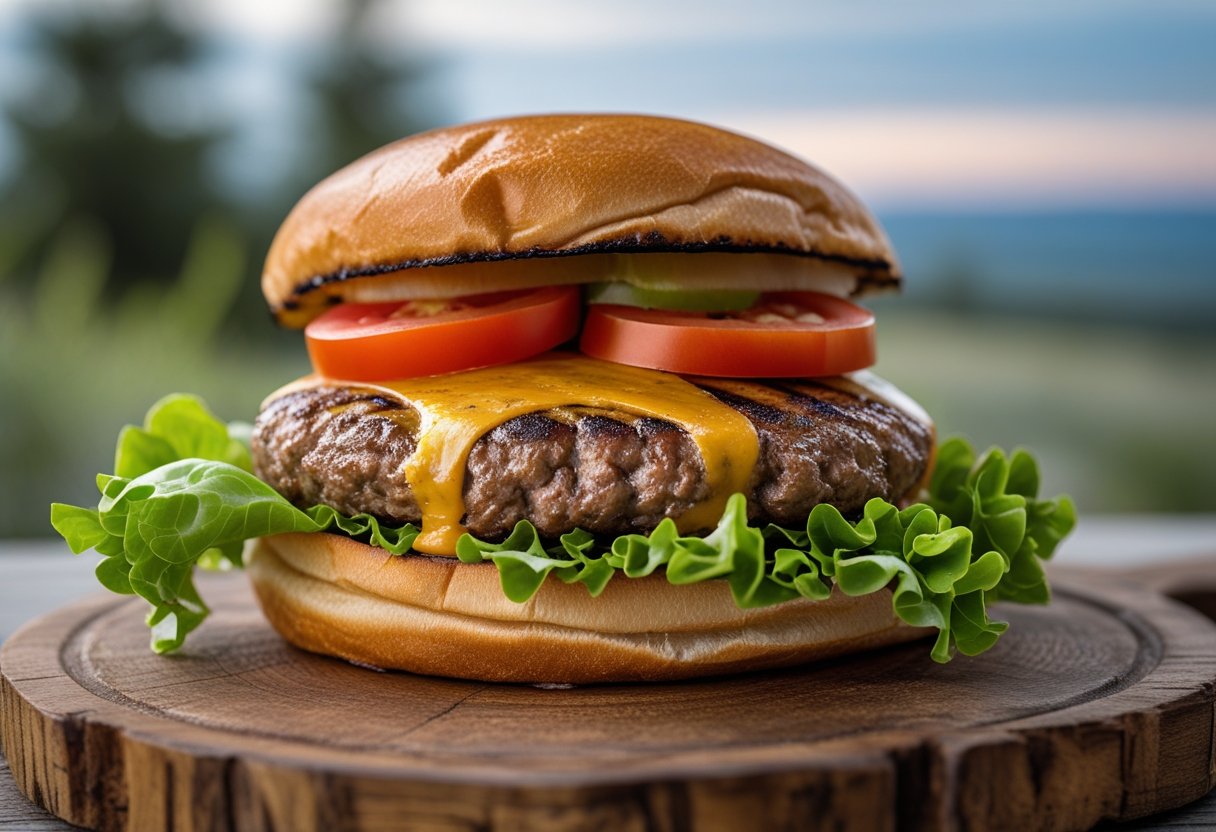
If you want cheese, place a slice on the patty during the last 30–60 seconds and cover to melt.
Choosing and Preparing Brioche Buns
We pick brioche buns for their soft crumb and slight sweetness, which complement the bison’s rich, earthy flavor. Choose buns that are sturdy enough to hold a juicy patty and toppings without collapsing.
Toast the cut sides in butter on a hot skillet for 20–30 seconds until golden. This adds flavor and creates a moisture barrier so the bun won’t get soggy from burger sauce or juices.
If serving outdoors, consider slightly larger brioche or potato rolls to handle bigger bison burger patties. Store buns at room temperature and toast just before assembling.
For extra grip, spread a thin layer of mayonnaise or melted butter on the bun before toasting.
Topping Ideas: Caramelized Onions, Burger Sauce, and More
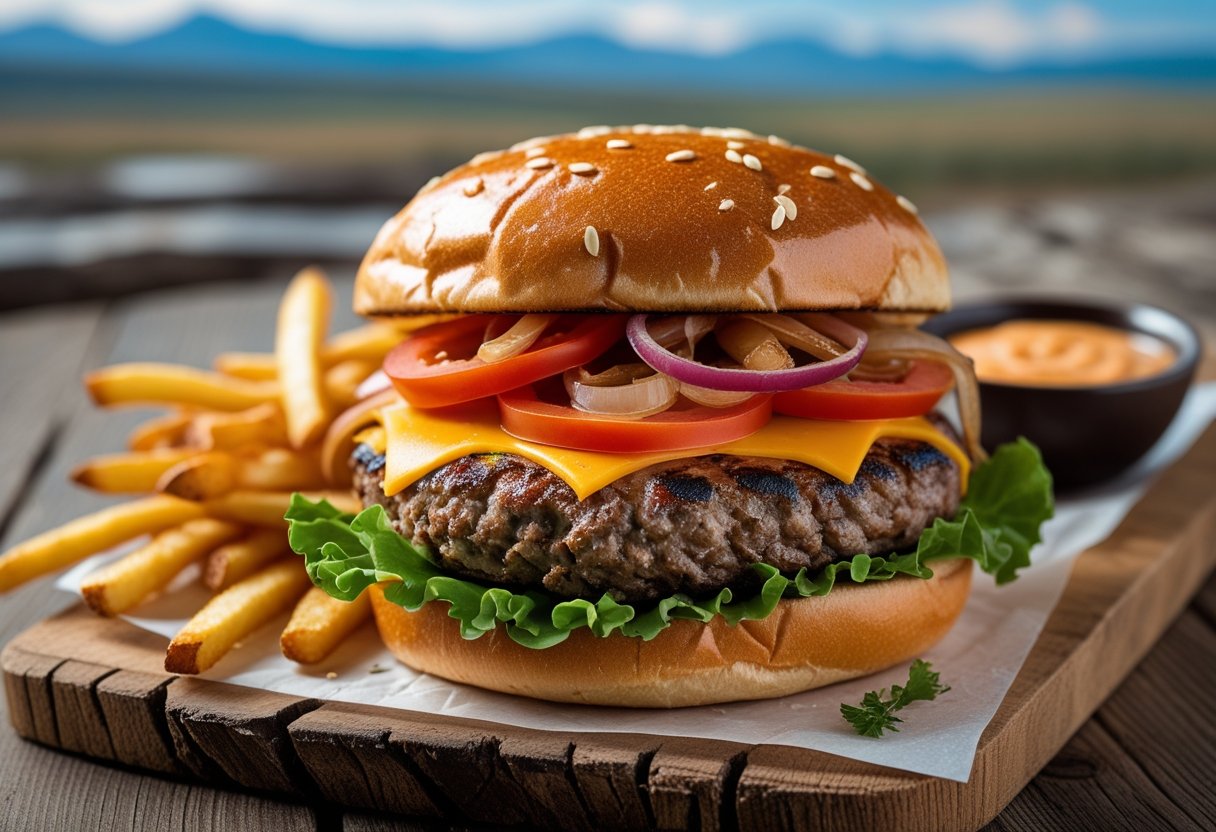
We favor toppings that add texture and contrast without overpowering bison patties. Caramelized onions pair exceptionally well: cook sliced onions in a bit of butter and a pinch of salt over low heat for 20–30 minutes until deep brown and sweet.
They add moisture and savory sweetness. For sauce, mix equal parts mayonnaise and ketchup, add a teaspoon of Worcestershire sauce, a dash of hot sauce, and a pinch of smoked paprika for a simple burger sauce.
Spoon thinly so it won’t drown the bun. Other solid toppings: sharp cheddar or smoked gouda, sautéed mushrooms, crisp dill pickles, and a handful of peppery arugula.
Keep lettuce and tomato minimal to avoid soggy buns.
Frequently Asked Questions
We cover exact ingredients, sauces, where to buy quality patties, cheese choices, skillet cooking steps, and common mistakes to avoid. Each answer gives clear, actionable tips you can use right away.
What ingredients are needed for the best bison burger recipe?
We use 85–90% lean ground bison. If you want firmer patties, add 1 egg or 1/4 cup breadcrumbs per pound, and 1 tablespoon Worcestershire sauce for umami.
Season with 1 teaspoon garlic powder, 1 teaspoon onion powder, 1/2 teaspoon salt, and 1/4 teaspoon black pepper per pound. Add 1 tablespoon olive oil when cooking to prevent sticking.
Toasted brioche or potato buns, crisp lettuce, and sliced tomato complete the burger.
Which sauces pair well with bison burgers to enhance their flavor?
We recommend tangy sauces like mustard-based BBQ or Dijon to cut the richness. Creamy sauces such as garlic aioli or a blue-cheese mayo add smooth texture and contrast.
For a smoky-sweet profile, use a bourbon or smoky BBQ sauce sparingly. A simple ketchup-and-onion jam combo also works well.
Where can I find premium bison burger patties for sale?
We buy from local ranchers and trusted online retailers that list grass-fed bison. Look for suppliers that show cut details and have refrigeration or frozen shipping.
Try specialty meat markets or national sellers that focus on bison; many offer single patties and bulk packs. One example of recipe and buying guidance can be found at this bison burger guide: Juicy Bison Hamburger Recipe – Easy & Flavorful Cooking Guide (https://www.soolfood.com/juicy-bison-hamburger-recipe/).
What cheeses complement the taste of bison burgers the most?
We choose sharp cheddar for bold, familiar flavor and Swiss for a milder, nutty note. Blue cheese brings tang and pairs well with caramelized onions or arugula.
Smoked Gouda or provolone add a creamy, slightly sweet layer that matches bison’s natural sweetness.
How can I cook bison burgers in a skillet to ensure they remain juicy?
We preheat a heavy skillet over medium-high heat and add 1 tablespoon oil to wipe the surface. Cook 3–4 minutes per side for medium, flipping once; aim for an internal temperature of 145–160°F depending on doneness preference.
Let patties rest 5 minutes before serving to keep juices inside. Avoid pressing the patties while cooking.
What are some common cooking errors to avoid when making bison burgers?
First off, don’t overwork the meat when mixing. Compact those patties gently—think of them as delicate snowballs, not stress balls.
Bison is leaner than beef, so overcooking is a no-go unless you like hockey pucks for dinner. Keep a close eye on the grill!
If you’re piling on salty toppings, skip the extra salt inside the meat. And whatever you do, resist the urge to press down on your burgers in the skillet—unless you want all those tasty juices running away.