You’ll love how wild Wyoming huckleberries turn simple ingredients into a jam that balances bright tartness with warm sweetness. We’ll show you how to make a small batch of huckleberry jam that captures true mountain flavor, using easy steps and common pantry items.
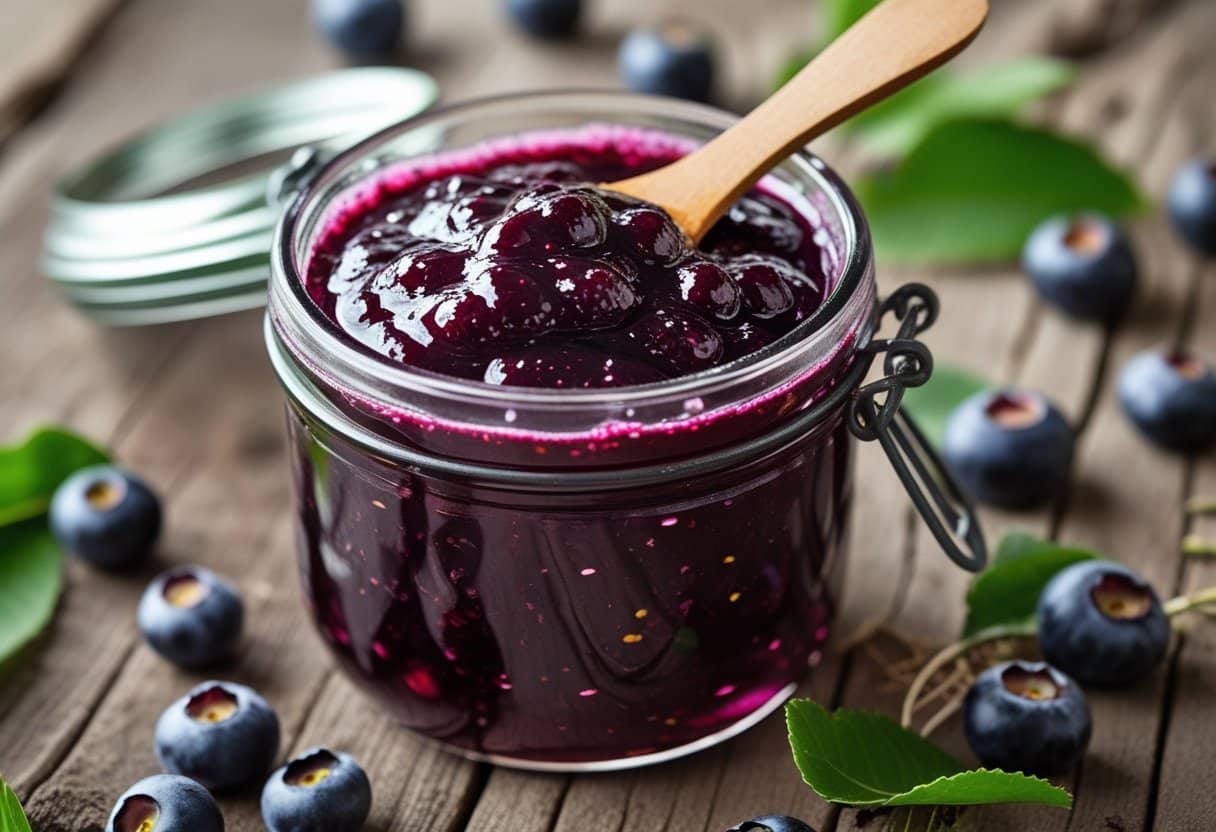
Follow our clear tips and you’ll have jam ready for toast, biscuits, or thoughtful gifts. We’ll also help you keep that gorgeous color and punchy flavor.
Expect straightforward pantry swaps, basic canning advice, and answers to the questions most people worry about when making wild berry preserves.
Key Takeaways
- Learn a simple method to make small-batch huckleberry jam with pantry ingredients.
- Use practical canning tips to preserve color, flavor, and shelf life.
- Find quick answers to common wild-berry jam questions.
Huckleberry Jam—Sweet & Tangy Wyoming Wild Berry Preserve Essentials
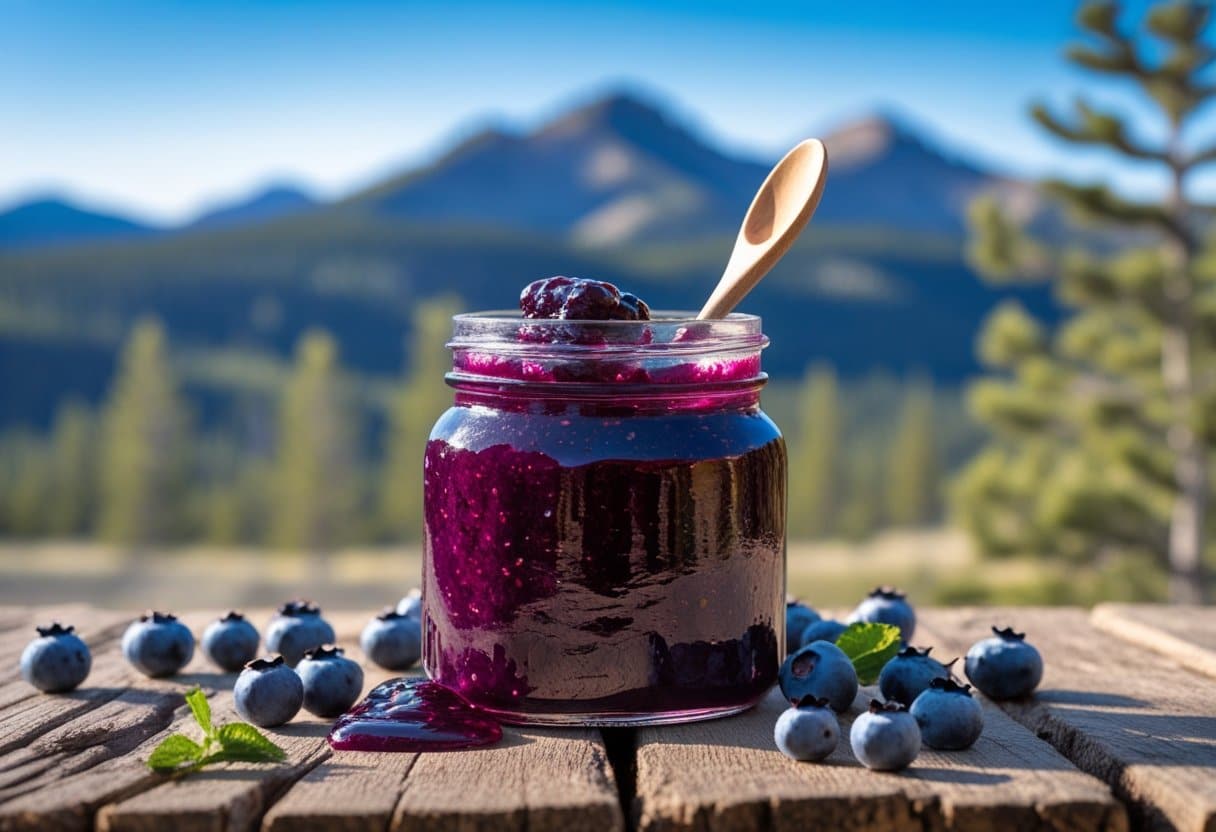
We choose wild huckleberries picked in Wyoming’s high country and turn them into jam that balances bright tartness with deep berry sweetness. The next parts explain what makes this jam unique, how it tastes, what goes into it, and the key nutrition points.
What Sets Huckleberry Jam Apart
We use wild huckleberries that grow in remote mountain slopes, not cultivated berries. Wild huckleberries are smaller and more concentrated than garden berries, so they give jam a richer, more complex flavor with less water content.
That concentration means each jar contains more intense berry compounds per spoonful than many standard berry jams. Hand-harvesting matters to the final product.
Pickers select ripe, fully colored berries, which preserves natural sugars and acids. Small-batch cooking also matters: we control cook time and temperature to keep bright color and reduce the need for excess sugar.
For a commercial example of small-batch offerings, see this wild huckleberry jam product.
The Flavor Profile of Wild Huckleberries
We describe huckleberry flavor as a layered mix of tart, sweet, and floral notes. The tartness often reminds people of raspberries; the underlying sweetness and slight minerality set huckleberries apart from blueberries.
In jam form, the fruit’s natural acidity cuts through sugar, keeping the spread lively rather than cloying. Texture is part of the profile too.
Wild berries cook down to a jam that can be slightly grainy from seeds and pulp, yet still smooth enough to spread. That texture pairs well with plain yogurt, toast, or savory items like goat cheese.
Retail listings often highlight this balance in product descriptions and serving ideas, such as in this Wyoming huckleberry jam listing.
Key Ingredients and Their Roles
We keep recipes simple: wild huckleberries, sugar, pectin, and a bit of acid like lemon or citric acid. Each ingredient has a clear role.
- Wild huckleberries: Provide the core flavor, color, and natural pectin precursors.
- Sugar: Preserves the jam and balances acidity. It also helps gel formation with pectin.
- Pectin: Ensures proper set and spreadability without overcooking the berries.
- Acid (lemon juice/citric acid): Brightens flavor and helps pectin set.
Some small-batch makers add a touch of corn syrup solids or water to adjust texture and shelf stability. We monitor ratios so the jam stays shelf-stable in jars without masking the wild berry taste.
For product examples listing similar ingredients, see this product detail page.
Health Benefits and Nutritional Value
We view huckleberry jam as a treat that also carries some nutritional value from the fruit. Wild huckleberries contribute antioxidants, vitamin C, and dietary fiber.
When made with moderate sugar and limited additives, jam can offer berry-derived compounds without excessive calories in small servings. One tablespoon of jam mainly provides carbohydrates from sugar, with small amounts of vitamins and fiber from the fruit.
We recommend using the jam in controlled portions—on toast, stirred into yogurt, or as a condiment—to enjoy flavor while managing sugar intake. Commercial labels vary, so check individual nutrition details on product pages like this wild huckleberry jam listing for exact values.
How to Make and Preserve Homemade Huckleberry Jam
We focus on choosing the best berries, a clear stovetop jam recipe, safe canning in sterilized jars, and simple serving ideas that highlight the jam. Follow precise measurements, cooking times, and canning steps to get a reliable set every time.
Choosing Fresh vs Frozen Huckleberries
We pick fresh huckleberries when we can. Fresh berries give the brightest flavor and firmer texture for a classic homemade huckleberry jam.
Look for deep purple, plump berries with no mold or soft spots. Rinse gently and drain well.
Frozen huckleberries work very well and are often more available. Thaw them in a colander so excess juice drains; this helps prevent a too-runny jam.
Frozen berries may need a few extra minutes to break down on the stove. If we want a thicker set, we decide about fruit pectin before cooking.
Natural pectin in huckleberries often suffices, but adding commercial pectin gives a faster, firmer finish. Use pectin according to the package.
Step-By-Step Huckleberry Jam Recipe
We weigh ingredients for consistency: 3 cups (about 450 g) huckleberries, 1/2 cup (120 ml) honey or 3/4–1 cup granulated sugar, and 2 tablespoons (30 ml) lemon juice. Optional: 1 teaspoon fruit pectin if we want a quicker set.
- Combine berries and sweetener in a wide, heavy-bottomed pot.
- Gently mash with a potato masher to release juice.
- Bring to a simmer over medium heat, stirring to prevent sticking.
- Simmer 10–20 minutes until mixture thickens; test set by spooning a small amount onto a chilled plate—if it gels, it’s ready.
- If using pectin, stir it in during the last minute and boil only as directed on the pectin package.
We skim foam with a spoon for a clear jam and stir in lemon juice near the end to balance acidity. Cool slightly before filling jars.
Canning and Storing in Sterilized Jars
We sterilize jars and lids by boiling them 10 minutes or running them through a hot dishwasher cycle. Keep jars hot until filling to avoid breakage or poor seals.
Fill hot jars with hot jam, leaving 1/4-inch headspace. Wipe rims clean and apply lids finger-tight.
Process jars in a boiling water bath for 5–10 minutes depending on altitude and jar size. Use a canner rack and ensure water covers jars by at least 1 inch.
Remove jars and let them cool undisturbed for 12–24 hours. Check seals—lids should be concave and not flex when pressed.
Label jars with date. Store sealed jars in a cool, dark place up to a year.
Refrigerate opened jars and use within 2–3 weeks.
Creative Serving Suggestions and Uses
We spread homemade jam on warm toast, biscuits, or English muffins for breakfast. It also pairs well with soft cheeses like brie on a cracker for appetizers.
We swirl jam into yogurt or oatmeal to add natural sweetness and color. Use it as a topping for pancakes or ice cream, or spoon into thumbprint cookies and tartlets.
For baking, fold jam into muffin batter or use it as a filling for a huckleberry pie to intensify berry flavor. For gifts, jar the jam in sterilized jars, add a fabric cover, and include a simple label with the cooking date.
Frequently Asked Questions
We answer practical questions about ingredients, where to buy huckleberry jam near Yellowstone, how it stacks up against other jams, potential health perks, common culinary uses, and what makes Wyoming jars unique. Each answer gives specific details you can use when shopping, cooking, or gifting.
What are the ingredients in a huckleberry jam recipe?
A basic huckleberry jam uses fresh or thawed wild huckleberries, granulated sugar, and lemon juice. Some recipes add water to help cook the berries and use commercial pectin for a reliable gel.
We also see variations that swap part of the sugar for honey or maple syrup for a different flavor. Spices like cinnamon or a splash of vanilla are optional but should be used sparingly so the berry flavor stays front and center.
Where can I find huckleberry jam in the Yellowstone region?
You can buy jars at roadside markets and farm stands around West Yellowstone and Cooke City during the summer and early fall. Many local general stores in small towns near the park carry regional preserves made from locally foraged berries.
For a wider selection, check farmers’ markets in Jackson and Bozeman or specialty shops in nearby college towns. Some producers also sell online or ship seasonally, so check producers’ listings before visiting.
How does huckleberry jam compare to other berry preserves?
Huckleberry jam tends to be more tart and aromatic than standard blueberry jam, with a deeper purple color and a bolder wild-berry aroma. Texture can vary from smooth to slightly seedy, depending on whether the recipe calls for mashing or straining.
Compared with blackberry or raspberry preserves, huckleberry jam often needs a careful balance of sugar and pectin because wild huckleberries can have variable natural pectin levels. That’s why many home recipes use tested pectin amounts or a water-bath canning method for consistency.
Are there any health benefits associated with consuming huckleberry products?
Huckleberries provide dietary antioxidants and vitamin C similar to other dark berries, which support general health when eaten as part of a balanced diet. A typical serving of jam, however, contains a lot of added sugar, so nutritional benefits are limited by the preserve’s sweetness.
We recommend enjoying huckleberry jam in small portions and pairing it with whole-grain bread or yogurt to add fiber and protein to the snack.
How is huckleberry jam traditionally used in culinary dishes?
Huckleberry jam commonly tops toast, biscuits, pancakes, and waffles for breakfast. It also makes a simple glaze for roasted meats or a filling for thumbprint cookies and tarts.
Chefs sometimes swirl it into yogurt or soft cheeses like cream cheese and ricotta. We often use a spoonful to brighten vinaigrettes or to finish a reduction sauce for game or pork.
What distinguishes Wyoming huckleberry jam from those made in Montana?
Wyoming huckleberry jam often features berries foraged from higher-elevation sagebrush and subalpine slopes. This can give the jam a slightly more tart and floral flavor.
Montana producers might use berries from a variety of microclimates. Their jams can taste sweeter or earthier depending on the local plants.
Both states use similar canning methods. However, Wyoming’s small-batch makers sometimes get fancy and highlight the exact county or mountain range right on the label.