Baking chocolate chip cookies in Colorado is not for the faint of heart. Thin air changes how dough spreads, rises, and bakes.
You want cookies that hold their shape, stay soft inside, and taste balanced. The struggle is real, but so is the reward.
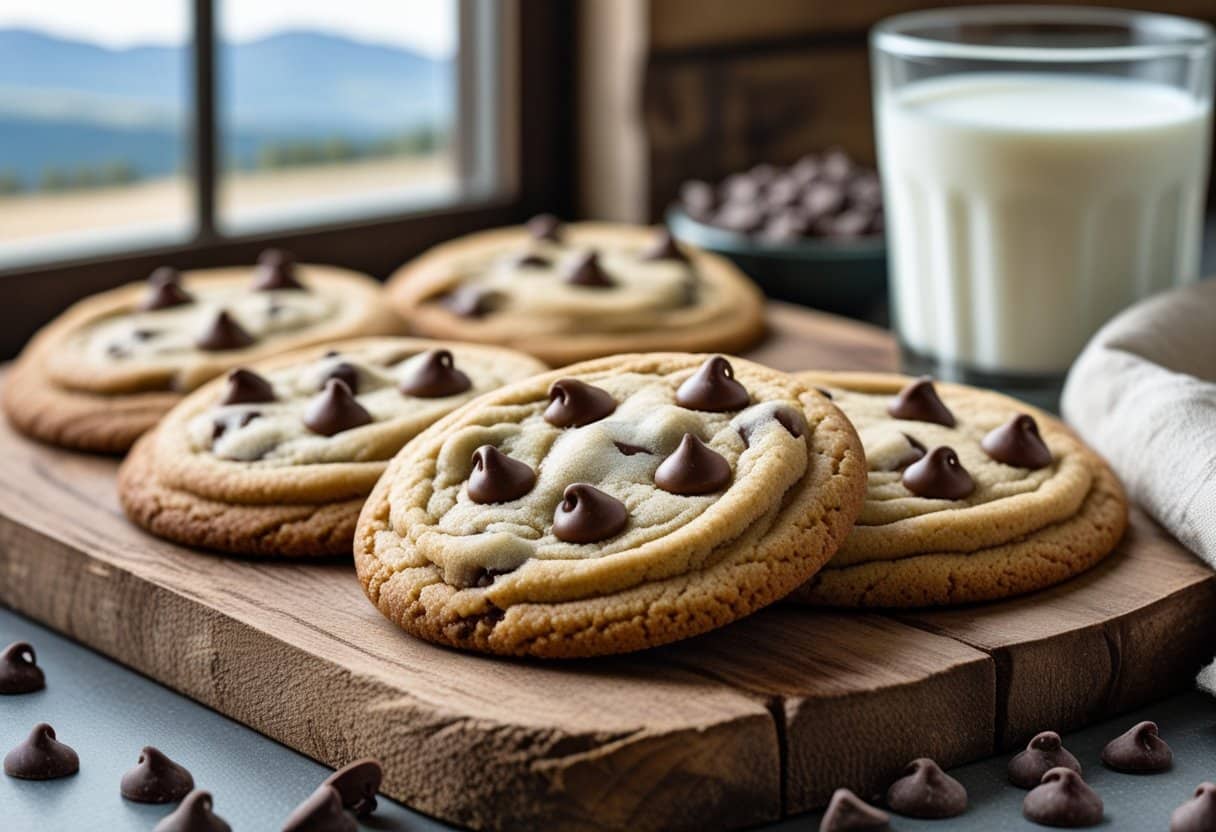
High altitude chocolate chip cookies work best when you tweak flour, sugar, fat, and bake time to match Colorado’s elevation. We focus on small, proven changes that stop flat cookies and dry centers.
You get cookies with chewy middles, set edges, and strong chocolate flavor. We share clear steps, smart swaps, and baker tips you can trust.
You can bake with confidence, even at a mile high, and enjoy cookies that turn out right every time.
Key Takeaways
- Learn why high altitude chocolate chip cookies need specific adjustments.
- Get practical methods that improve texture and shape at elevation.
- Find easy variations and tips that fit real home kitchens.
Mastering High-Altitude Chocolate Chip Cookies
We bake better cookies at elevation when we control spread, moisture, and structure. The right ingredient balance and method turn common high-altitude baking problems into predictable results.
Precision matters more than speed. Sometimes, baking at altitude feels like a science experiment—but hey, who doesn’t love cookies and science?
Why Altitude Changes the Cookie Game
At higher elevations, air pressure drops and moisture evaporates faster. This causes chocolate chip cookies to spread too much and dry out before they set.
Gases from baking soda expand faster, which weakens structure. Water also boils at a lower temperature, so dough loses moisture quickly in the oven.
That loss leads to crumbly edges and pale centers. Tested high altitude cookies recipes, like those developed for Colorado kitchens, adjust for these conditions.
For example, the King Arthur high-altitude chocolate chip cookies recipe was designed at 5,000 feet to limit spread and keep centers soft.
Essential Ingredient Adjustments
We fix most high-altitude issues by changing a few key ingredients. Small shifts make a big difference.
Common adjustments include:
| Ingredient | What We Change | Why It Helps |
|---|---|---|
| Flour | Slight increase | Adds structure |
| Sugar | Slight decrease | Reduces spread |
| Fat | Keep balanced | Prevents greasy cookies |
| Leavening | Reduce slightly | Controls rise |
| Liquid | Add a small amount | Replaces lost moisture |
Many high-altitude baking recipes also use cornstarch or an extra egg yolk. These additions help cookies hold shape and stay tender without tasting cakey.
Step-by-Step High-Altitude Cookie Method
We start with room-temperature butter and mix it with sugar just until combined. Overmixing adds too much air, which causes collapse.
We add eggs one at a time and mix gently. Next, we fold in dry ingredients on low speed.
The dough should feel soft but not loose. We chill it if the kitchen feels warm—Colorado sun, we see you.
We scoop even portions and space them wider than usual. Baking at 350°F works well for most chocolate chip cookies recipe adjustments.
Recipes tested at elevation, like those from Dough-Eyed high-altitude chocolate chip cookies, bake until edges turn light golden while centers stay slightly soft.
Recipe Variations and Pro Baker Tips
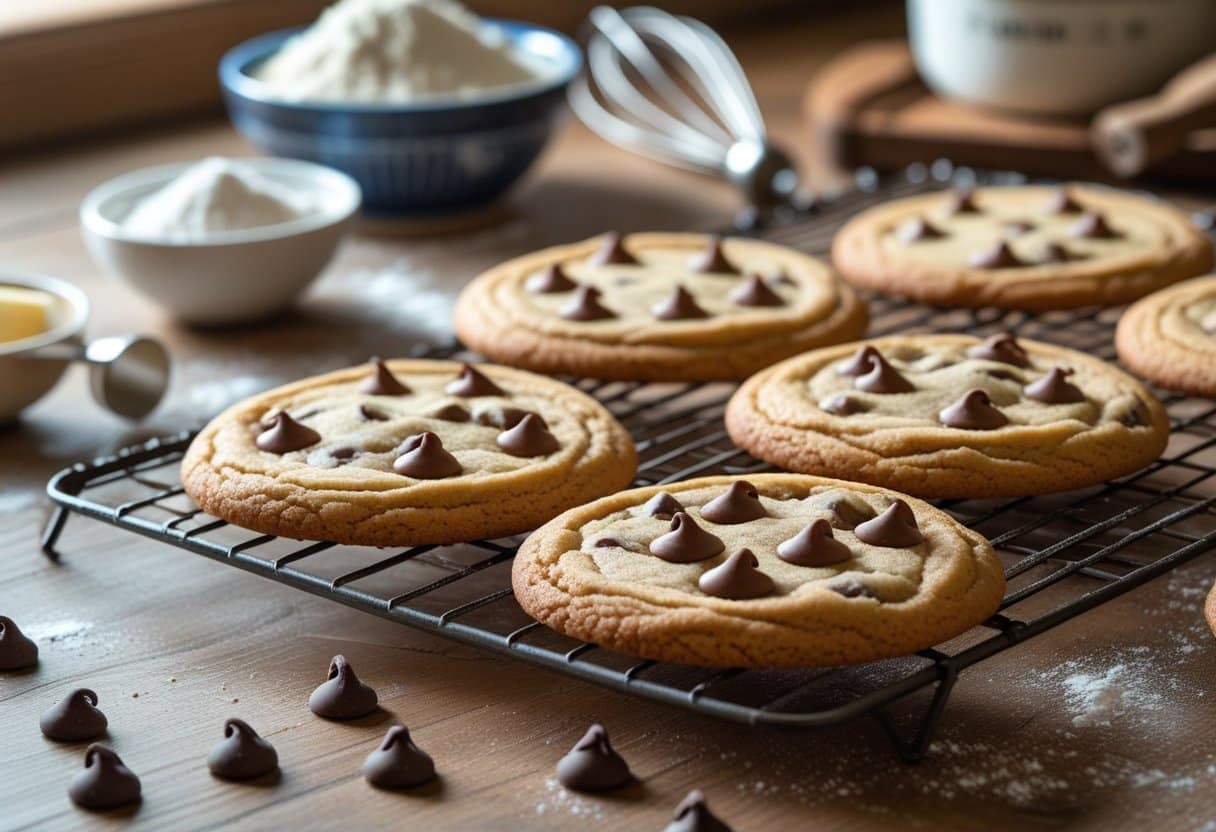
We fine-tune these options for Colorado kitchens where elevation changes dough behavior. Small shifts in ingredients and timing help keep cookies thick, chewy, and well baked.
Oatmeal and Dark Chocolate Chip Options
We turn classic dough into oatmeal chocolate chip cookies by swapping 25–30% of the flour for old-fashioned rolled oats. Oats add structure, which helps cookies hold shape at elevation.
Avoid quick oats because they absorb liquid too fast and dry the dough. We prefer dark chocolate chips or chopped dark chocolate with 60–70% cocoa.
Dark chocolate melts slower and balances sweetness. This matters because high altitude cookie recipes often use slightly less sugar.
Pro tips
- Chill dough for 30 minutes to limit spread.
- Increase oven heat by 10°F if cookies bake pale.
- For tested ratios, follow this high-altitude chocolate chip cookie recipe from King Arthur Baking.
Peanut Butter Chocolate Chip Cookie Adaptations
Peanut butter chocolate chip cookies need extra care at altitude. Peanut butter adds fat but less water, so dough can crumble.
We add 1–2 tablespoons of milk to keep it soft. Use creamy peanut butter, not natural styles.
Natural oils separate and cause flat cookies. Reduce butter by 2 tablespoons to prevent greasiness, and keep dark or semi-sweet chips for balance.
Key adjustments
- Add 1 extra tablespoon flour for lift.
- Bake 1–2 minutes less to avoid dry centers.
- For guidance built at 5,000 feet, we trust tips from Dough‑Eyed’s high‑altitude chocolate chip cookies.
Troubleshooting Common Issues
Even solid cookie recipes can misbehave at altitude. We use these fixes often.
| Problem | Likely Cause | What We Do |
|---|---|---|
| Cookies spread too much | Too much sugar or fat | Reduce sugar by 1–2 tbsp |
| Dry or crumbly texture | Not enough liquid | Add 1 tbsp milk |
| Pale tops | Oven too cool | Raise temp by 10°F |
| Hollow centers | Too much leavening | Cut baking soda by 1/8 tsp |
We always weigh flour when possible. Overmixing is a no-no if you want happy cookies.
Small changes can turn high altitude cookie drama into sweet success.