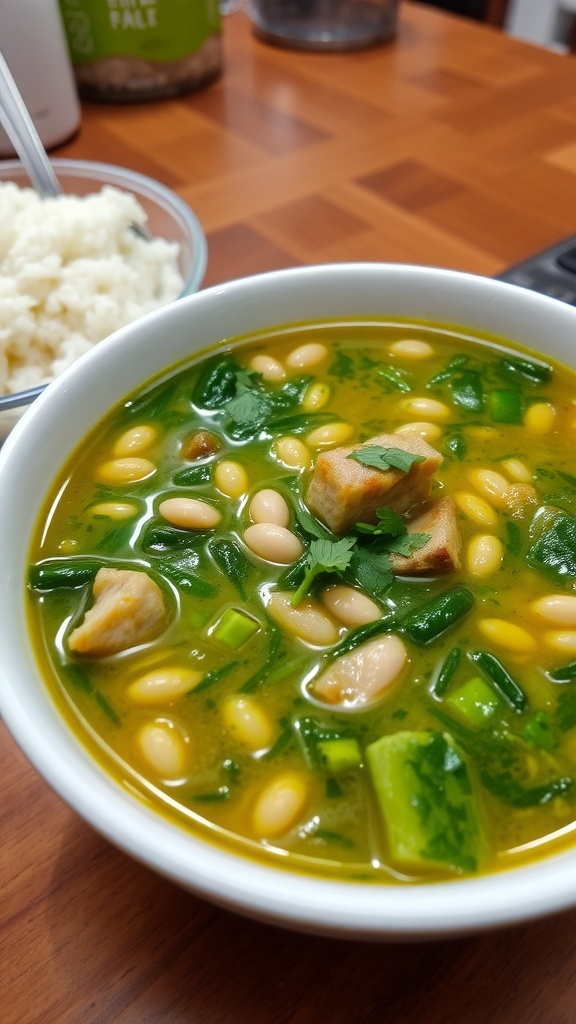
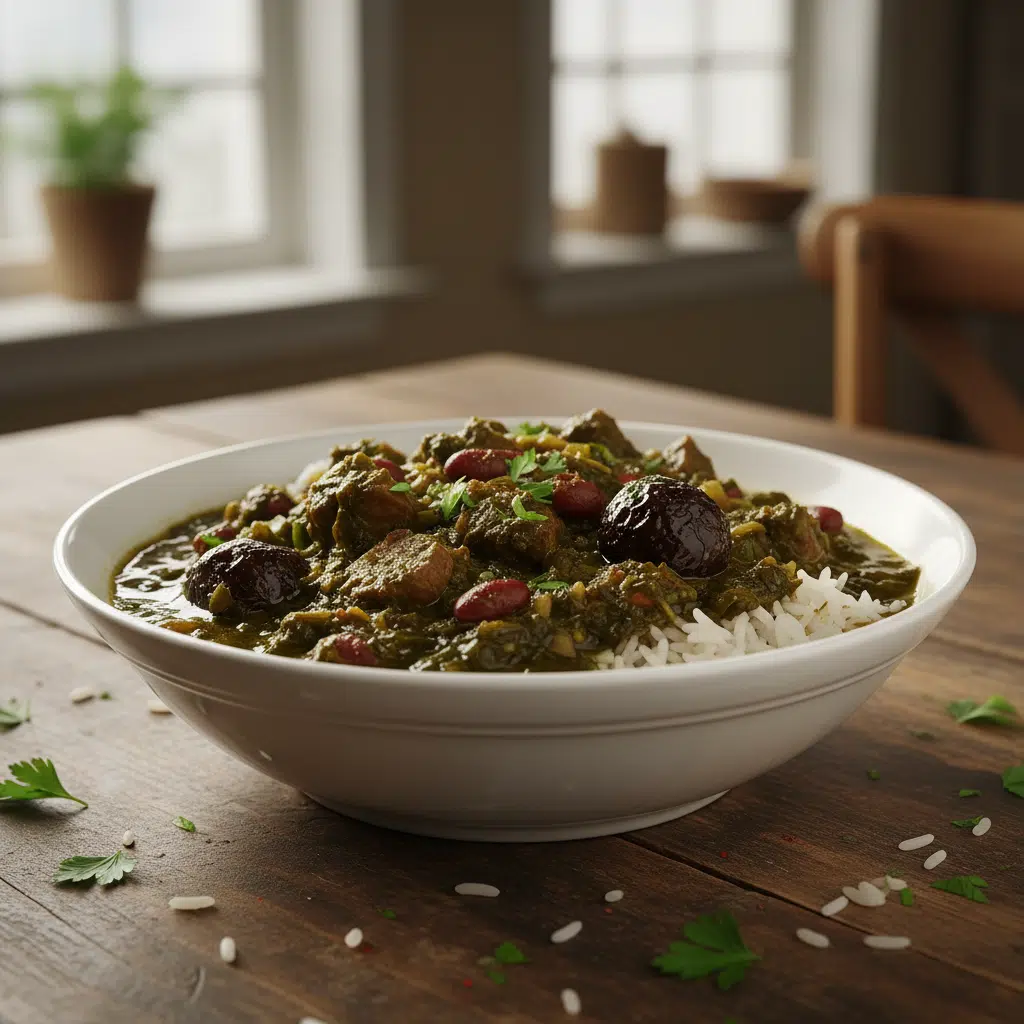
Ghormeh sabzi is Iran’s national dish, and once you try it, you’ll understand why Persians are so passionate about it. This aromatic herb stew combines tender meat, kidney beans, and dried limes with a massive amount of fresh herbs—parsley, cilantro, and fenugreek—creating this deeply savory, slightly tangy, incredibly complex flavor that’s unlike anything else. Served over fluffy basmati rice, it’s comfort food at its finest.
I first tried ghormeh sabzi at a Persian friend’s house, and I was blown away by the depth of flavor. The combination of all those herbs creates this rich, green stew that’s earthy, aromatic, and absolutely delicious. When I learned how to make it, I discovered that while it takes time, the process is actually quite straightforward. Now it’s one of my favorite dishes to make when I want something special and comforting.
Why This Recipe Works
What makes ghormeh sabzi special is the sheer quantity of herbs. We’re talking pounds of fresh herbs that get sautéed until dark and fragrant. This creates an incredibly rich, complex base that’s unlike any other stew. The dried limes (limoo omani) add a distinctive tangy, slightly bitter note that’s essential to the dish. And the long, slow cooking melds everything together into this deeply flavorful stew.
The key is taking your time with the herbs—they need to be sautéed until they’re dark green and aromatic, which takes patience but is absolutely worth it. And using good quality dried limes makes a huge difference in the final flavor.
The Complete Recipe
What You’ll Need
For the Stew:
2 pounds lamb stew meat or beef chuck, cut into 1-inch cubes
2 large bunches fresh parsley (about 4 cups chopped)
1 large bunch fresh cilantro (about 2 cups chopped)
1 cup fresh or dried fenugreek leaves (shambalileh)
1 large onion, finely diced
1 can (15 oz) red kidney beans, drained and rinsed
4-5 dried Persian limes (limoo omani), pierced with a fork
4 tablespoons vegetable oil
1 teaspoon turmeric
Salt and black pepper to taste
4 cups water or beef broth
For Serving:
Cooked basmati rice
Fresh herbs for garnish
Torshi (Persian pickles)
Mast-o-khiar (cucumber yogurt)
Step-by-Step Instructions
Step 1: Prepare the Herbs
Wash and thoroughly dry the parsley, cilantro, and fenugreek. Remove the thick stems.
Finely chop all the herbs. You can use a food processor to speed this up, but pulse carefully—you want them chopped, not pureed.
Step 2: Brown the Meat
Heat 2 tablespoons of oil in a large pot or Dutch oven over medium-high heat.
Season the meat with salt, pepper, and turmeric. Working in batches, brown the meat on all sides (about 5-7 minutes per batch). Don’t overcrowd the pot.
Remove the browned meat and set aside.
Step 3: Sauté the Onions
In the same pot, add the diced onions. Cook for 5-7 minutes until softened and golden.
Step 4: Cook the Herbs (This is the Key Step)
Add the remaining 2 tablespoons of oil to the pot. Add all the chopped herbs.
Cook the herbs over medium heat, stirring frequently, for 15-20 minutes. The herbs will darken significantly and become very fragrant. This step is crucial—don’t rush it. The herbs should be dark green and aromatic.
Step 5: Combine and Simmer
Return the browned meat to the pot with the herbs.
Add the water or broth. Pierce the dried limes with a fork (this allows their flavor to infuse) and add them to the pot.
Bring to a boil, then reduce heat to low. Cover and simmer for 1½ hours, stirring occasionally.
Step 6: Add the Beans
After 1½ hours, add the kidney beans. Continue simmering for another 30 minutes until the meat is very tender and the stew has thickened.
Taste and adjust seasoning with salt and pepper. The stew should be thick, rich, and deeply flavorful.
Step 7: Serve
Serve the ghormeh sabzi over fluffy basmati rice. Traditionally, it’s served with torshi (Persian pickles) and mast-o-khiar (cucumber yogurt) on the side.
Remove the dried limes before eating, or warn guests—they’re very sour and bitter if bitten into!
Tips I’ve Learned Along the Way
Don’t Rush the Herbs: The 15-20 minutes of sautéing the herbs is essential. This is what creates the deep, complex flavor.
Dried Limes are Essential: You can find them at Middle Eastern markets or online. They add a distinctive tangy flavor that’s irreplaceable.
Pierce the Limes: Always pierce dried limes with a fork before adding them. This allows their flavor to infuse into the stew.
Use Fresh Herbs: Fresh herbs are traditional and give the best flavor. Dried herbs won’t work as well.
Fenugreek is Important: Fenugreek (shambalileh) is a key herb in ghormeh sabzi. Look for it at Middle Eastern markets.
Low and Slow: The long simmering time makes the meat tender and allows the flavors to meld.
Make Ahead: Ghormeh sabzi tastes even better the next day. Make it ahead and reheat gently.
Variations I Love:
Vegetarian: Skip the meat and add more beans or use mushrooms
Chicken Version: Use chicken thighs instead of lamb or beef
Extra Tangy: Add a splash of lemon juice at the end
Spinach Addition: Some recipes add spinach along with the herbs
Leek Version: Add sliced leeks with the onions
Why This Stew is Special
Ghormeh sabzi is the ultimate Persian comfort food. The combination of herbs, meat, beans, and dried limes creates this incredibly complex, deeply savory flavor that’s unlike anything else. It’s earthy, tangy, rich, and absolutely satisfying.
What I love most is how it’s a celebration of herbs. Most stews use herbs as a garnish or accent, but ghormeh sabzi makes them the star. The result is this vibrant, green stew that’s packed with flavor and nutrition.
It’s also a dish that brings people together. In Persian culture, ghormeh sabzi is often made for special occasions and family gatherings. It’s the kind of dish that takes time and care, and that love comes through in every bite.
Serving Suggestions
Ghormeh sabzi is traditionally served with:
Fluffy basmati rice (essential)
Tahdig (crispy rice from the bottom of the pot)
Torshi (Persian pickles)
Mast-o-khiar (cucumber yogurt)
Fresh herbs (sabzi khordan)
Lavash bread
Doogh (Persian yogurt drink)
The Bottom Line
If you’ve never tried Persian food, ghormeh sabzi is a must. It’s Iran’s national dish for good reason—the combination of herbs, meat, beans, and dried limes creates this incredibly complex, deeply satisfying stew that’s unlike anything else.
I make this whenever I want something special and comforting, or when I want to share Persian cuisine with friends. It takes time, but most of it is hands-off simmering, and the result is absolutely worth it.
Give it a try, and I think you’ll understand why Persians are so passionate about their ghormeh sabzi. It’s one of those dishes that becomes a favorite from the first bite.
Have you tried Persian food? What’s your favorite herb-based dish? Let me know in the comments!
Recipe Card
Ghormeh Sabzi (Persian Herb Stew)
Prep Time: 30 minutes
Cook Time: 2 hours 30 minutes
Total Time: 3 hours
Servings: 6-8
Difficulty: Intermediate
Ingredients:
2 pounds lamb or beef stew meat, cubed
2 large bunches fresh parsley (4 cups chopped)
1 large bunch fresh cilantro (2 cups chopped)
1 cup fresh or dried fenugreek leaves
1 large onion, finely diced
1 can (15 oz) red kidney beans, drained
4-5 dried Persian limes, pierced
4 tablespoons vegetable oil
1 teaspoon turmeric
Salt and black pepper
4 cups water or beef broth
Cooked basmati rice for serving
Instructions:
Wash, dry, finely chop parsley, cilantro, fenugreek
Heat 2 tablespoons oil in large pot over medium-high
Season meat with salt, pepper, turmeric
Brown meat in batches, 5-7 minutes per batch, set aside
Add onions to pot, cook 5-7 minutes until golden
Add remaining 2 tablespoons oil and all chopped herbs
Cook herbs 15-20 minutes, stirring frequently, until dark green and aromatic
Return meat to pot
Add water/broth and pierced dried limes
Bring to boil, reduce to low, cover, simmer 1½ hours
Add kidney beans, simmer 30 more minutes
Taste, adjust seasoning
Serve over basmati rice with pickles and yogurt
Tips for Success:
Don’t rush herb sautéing (15-20 minutes crucial)
Dried limes essential (find at Middle Eastern markets)
Pierce limes with fork before adding
Use fresh herbs (not dried)
Fenugreek is important (shambalileh)
Low and slow cooking
Tastes better next day
Storage:
Refrigerate up to 5 days
Freeze up to 3 months
Reheat gently
Nutrition (per serving):
Calories: ~420
Fat: 18g
Protein: 38g
Carbohydrates: 28g
Fiber: 8g