Gazpacho is a classic chilled soup that comes from Spain, perfect for hot days when we want something light and refreshing. It’s a no-cook recipe that uses fresh vegetables like ripe tomatoes, cucumbers, and bell peppers blended together to create a smooth, flavorful cold soup.
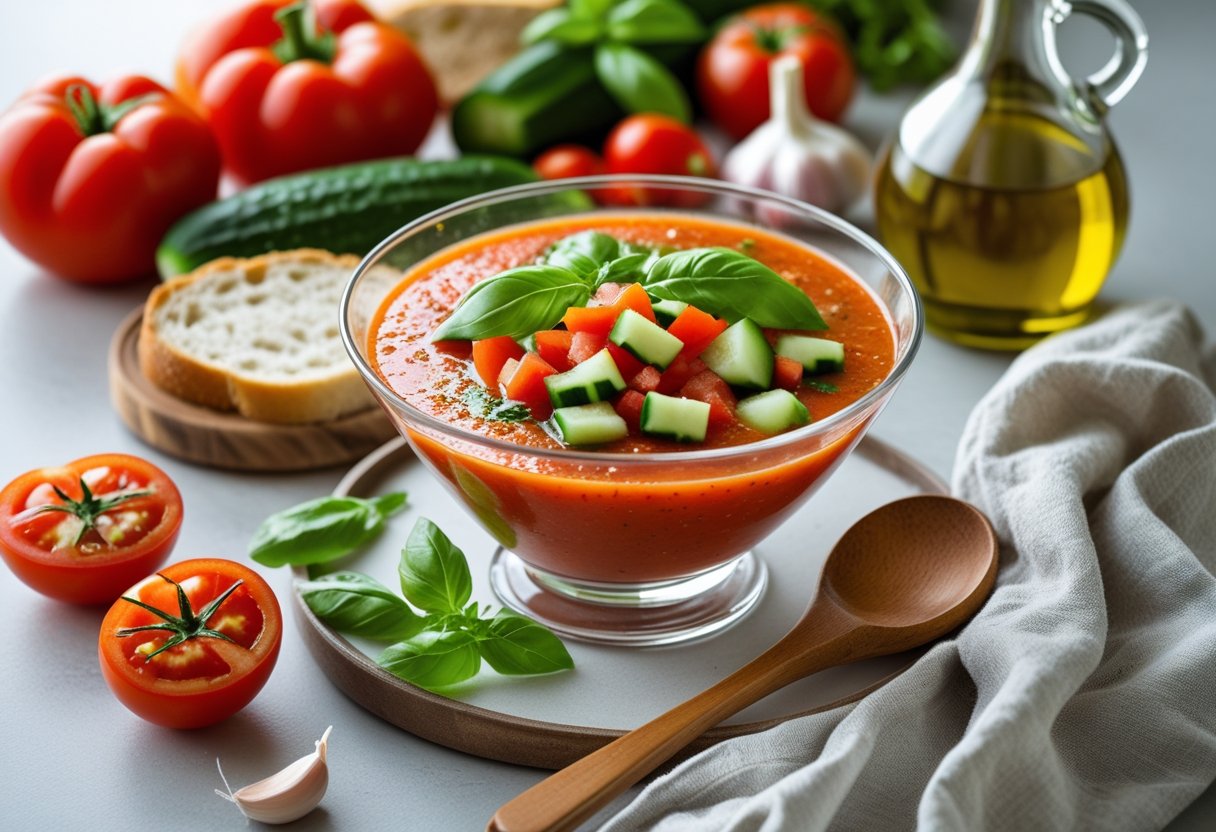
Making our own gazpacho recipe means we get a healthy, easy dish that cools us down and uses simple ingredients we can find in any kitchen. This soup is quick to prepare and doesn’t require heating, making it an ideal choice for summer meals or a light snack.
By blending fresh produce with olive oil, garlic, and a touch of vinegar or lemon juice, we create a refreshing soup that’s full of flavor without any fuss. This straightforward recipe lets us enjoy seasonal vegetables while keeping the kitchen cool. For a detailed guide on how to make this traditional Spanish chilled soup, see this authentic gazpacho recipe.
How to Make the Perfect Gazpacho
A great gazpacho depends on fresh, ripe ingredients, balanced flavors, and proper chilling. We focus on choosing the right vegetables, blending them carefully, and serving the soup cold to bring out its refreshing qualities.
Essential Ingredients and Their Roles
Tomatoes are the base of any good gazpacho. We prefer using ripe Roma tomatoes for their rich taste and low water content, but sometimes we add cherry tomatoes for extra sweetness. Cucumbers, especially English cucumbers, add coolness and texture.
Bell peppers, often green or red, contribute crunch and a mild sweetness. Garlic and red onion bring sharpness and depth. Celery can add a subtle, fresh earthiness.
To enhance flavor, we use extra virgin olive oil for smoothness, and a splash of red wine vinegar or sherry vinegar for acidity. Salt, black pepper, and sometimes a pinch of cayenne pepper or cumin give just the right seasoning.
Stale white or crusty bread softens in the mix and makes the soup creamier. This is key to homemade gazpacho‘s traditional texture.
Step-by-Step Preparation Process
We start by washing and peeling the cucumbers and tomatoes if desired. Then, chop all fresh vegetables roughly. This includes tomatoes, cucumbers, bell peppers, red onion, garlic, and celery.
Next, we soak the stale bread in cold water until softened, then squeeze out excess water. We add the bread to the blender with the vegetables, olive oil, vinegar, salt, and pepper.
Blend everything until smooth but not too watery. We like a slightly chunky texture to keep it interesting, so we can also pulse the blender or stir in some chopped veggies at the end.
Adjust seasoning carefully—taste for salt, acidity, and spice balance. At this point, adding a touch of cumin or cayenne is optional, but it gives a subtle warmth.
Chilling and Serving Tips
Gazpacho must chill for at least 2 hours to let flavors meld. We cover the soup tightly and refrigerate it. Cooling also thickens the texture slightly.
Before serving, stir the gazpacho well to recombine liquids. If needed, add a splash of cold water or olive oil to adjust thickness.
Serve in chilled bowls or glasses. Garnish with diced fresh cucumbers, bell peppers, and a drizzle of extra virgin olive oil. Adding small homemade croutons or fresh herbs like parsley enhances texture and presentation.
Always keep gazpacho cold until served to ensure it stays refreshing on hot days. This no-cook soup shines when served fresh and well chilled.
For more detail on making authentic gazpacho, see the authentic gazpacho recipe.
Gazpacho Variations and Storage
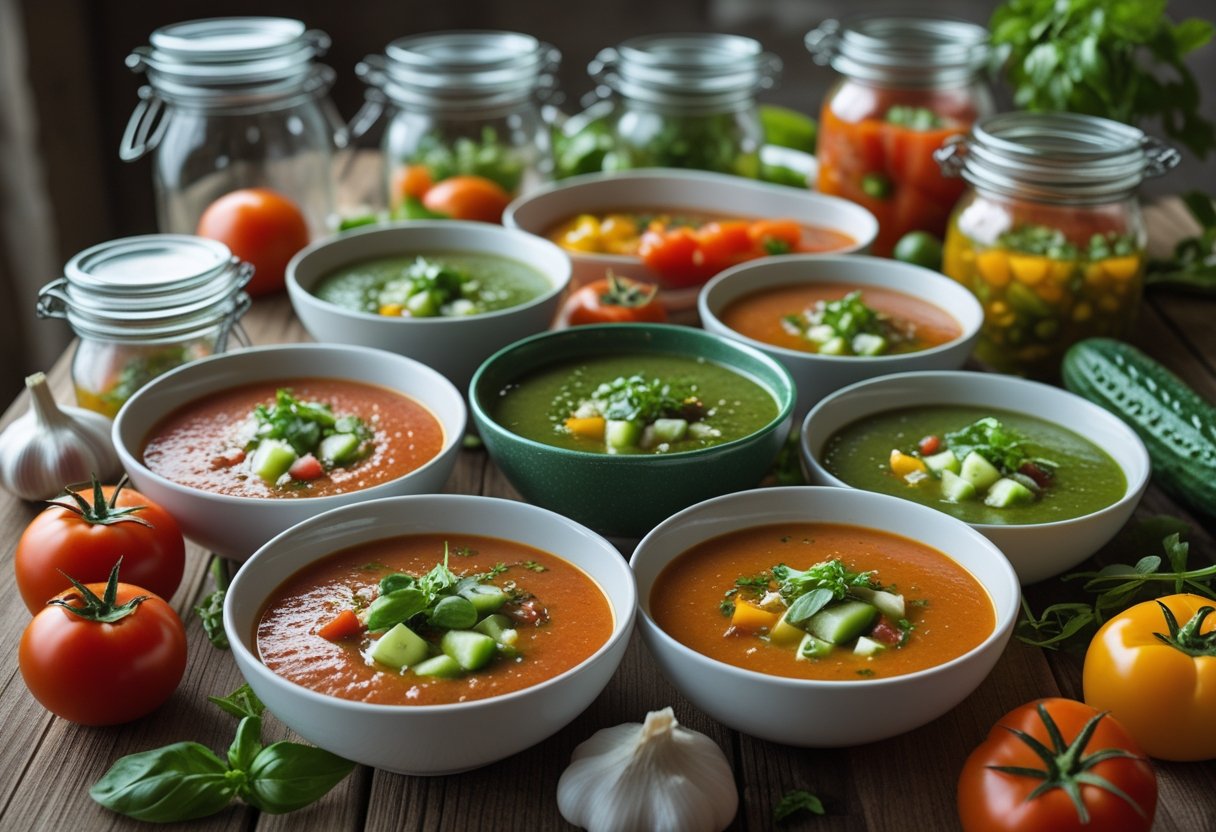
Gazpacho is a versatile soup that can be adapted with many ingredients to fit different tastes. How we serve it and store it also matters for keeping its fresh flavor and texture.
Creative Ingredient Variations
Traditional gazpacho uses tomatoes, cucumber, bell pepper, and garlic, but we can add or swap ingredients for new flavors. For a fruity twist, watermelon gazpacho is excellent. It combines sweet melon with fresh ginger for a light, refreshing soup.
Adding fresh basil or cilantro gives a bright herbal note that changes the soup’s character. You can also mix in avocado chunks for creaminess. Some like to use grapes or add a splash of sherry vinegar for depth. We recommend chopping ingredients into chunks before blending to keep a pleasant texture rather than a watery puree.
Serving Suggestions and Garnishes
How we present gazpacho impacts the eating experience. It can be served in bowls or tall glasses for a casual snack. Adding toppings like diced cucumber, finely chopped bell pepper, or croutons adds crunch and contrast.
A drizzle of good olive oil and a sprinkle of fresh basil or cilantro enhance flavor and freshness. For spice lovers, a pinch of cayenne or sliced jalapeños works well. Serving gazpacho with a lemon wedge or a small spoonful of sour cream or Greek yogurt can balance acidity and heat.
Storage and Freezing Tips
Gazpacho stores well but should be kept cold to maintain its vibrant taste. We keep leftovers in airtight containers in the fridge for up to four days. Stir the soup before serving as ingredients may settle.
Freezing gazpacho is possible but can slightly change the texture. If freezing, portion it into smaller containers and leave space for expansion. When thawed, mix it well and possibly add fresh herbs like basil or cilantro to refresh the flavor. Avoid freezing if you add avocado or other creamy ingredients, as they may become grainy.