If you’ve never tried Chebakia, get ready to meet your new favorite sticky, crispy, honey-coated cookie.
Chebakia is a Moroccan treat made by frying flower-shaped dough and soaking it in fragrant honey, then sprinkling it with toasted sesame seeds.
It sounds fancy, but don’t worry—nothing here explodes or requires magic, just some folding skills and patience (which we’ll help with).
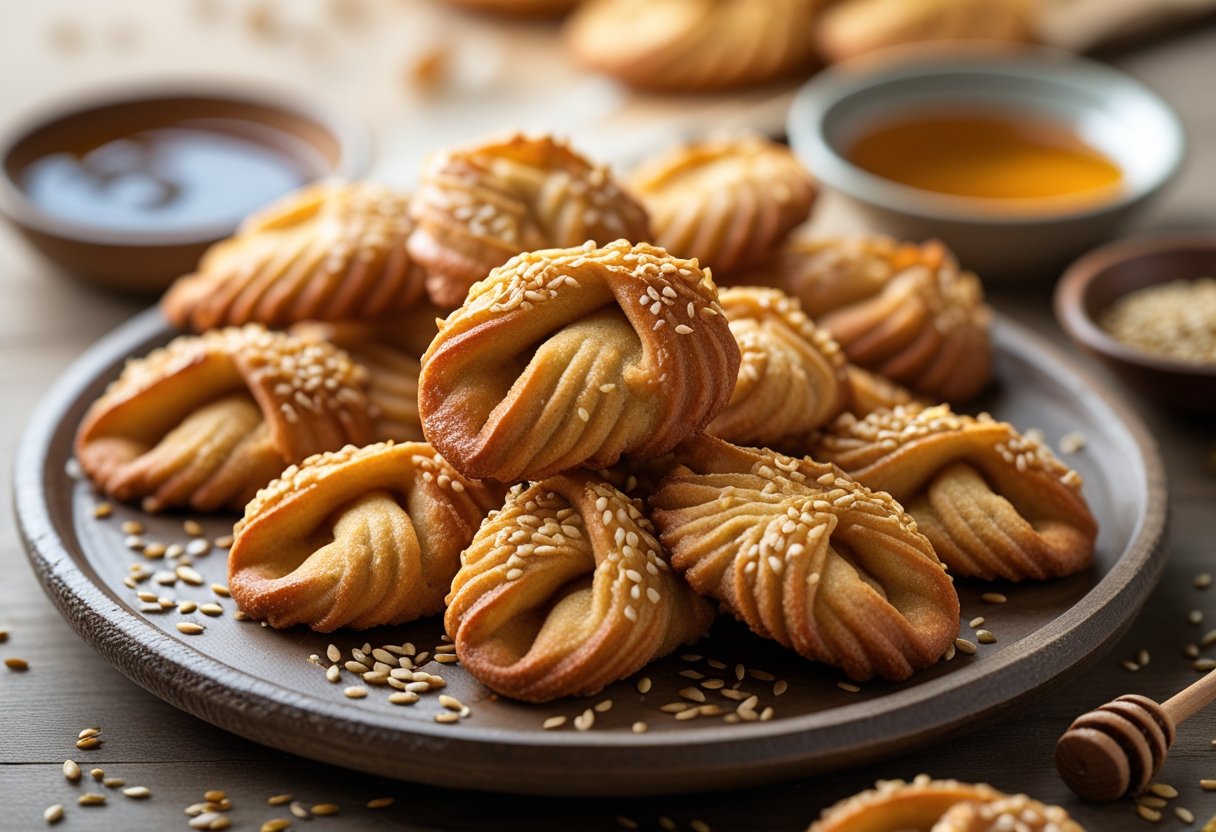
We love how these sweet sesame cookies are more than just a snack—they’re a whole tradition.
Ramadan or not, Chebakia brings people together, and honestly, who can say no to a cookie that tastes like a holiday?
Let’s roll up our sleeves and jump into a recipe that might just make us the favorite people at any gathering.
Chebakia Recipe Ingredients and Preparation
Making chebakia is a bit like conducting a kitchen orchestra—all those spices, flour, and honey come together to create a sweet symphony.
The dough needs just the right texture, the shaping requires some finger gymnastics, and frying demands patience to get that perfect golden crunch.
Let’s break down the essentials.
Key Ingredients for Classic Chebakia
To start, we need unhulled sesame seeds—toasting these is non-negotiable.
They bring in the nutty crunch that wakes up your taste buds.
Along with sesame, all-purpose flour is the dough’s base.
We add a hint of warm spices: cinnamon, anise seeds, and a pinch of saffron threads for that luxurious color and subtle flavor.
Wet ingredients include olive oil and melted unsalted butter, which keep the dough tender but firm.
Don’t forget vinegar—it helps the dough stay crisp after frying.
The dough also calls for a splash of orange blossom water, which gives it that floral zing we love, plus yeast for slight puffiness.
Some versions mix in ground almonds for extra richness, but that’s a personal power move if you want to get fancy.
Making the Dough: Tips and Common Pitfalls
Mixing chebakia dough isn’t rocket science, but it’s fussy.
Use your hands to combine the dry and wet ingredients into a dough that’s firm, like Play-Doh, but pliable enough to roll out.
If it’s too sticky, toss in more flour—too dry, add a tiny bit more olive oil or orange blossom water.
Knead it for about 7–8 minutes.
Resist the urge to skip this step.
Good kneading means the dough won’t crumble when you shape it.
Resting the dough for 10-15 minutes in a plastic bag helps it chill and relax, making rolling easier.
Avoid under or overworking: too little kneading = tough dough, too much = rubbery cookies.
It’s a sweet science.
How to Shape That Famous Chebakia Flower
This part tests your finger dexterity.
Roll the dough thin—about the thickness of a cardboard box.
Cut into palm-size rectangles, then make four cuts lengthwise inside the rectangle without slicing through the edges, creating five dough strips attached at the ends.
Now, here’s the trick: thread your middle finger through every other strip (1st, 3rd, 5th), pinch the corners together at the tip with your other hand, then gently flip the dough strips inside out over that pinch.
Voilà, a flower emerges!
Don’t worry if your first few look like abstract art; taste won’t judge your folding skills.
Frying and Dipping in Honey—It’s a Sticky Business
Heat vegetable oil over medium-low heat.
Fry each chebakia gently until golden brown all over.
If the oil’s too hot, the outside burns while the inside stays doughy—no thanks!
After frying, immediately dunk them in hot honey mixed with more orange blossom water.
Let the cookies soak for 5-7 minutes.
The longer the soak, the sweeter and stickier—and if you’re like us—you’re going to love every sticky finger.
Drain quickly, then sprinkle with toasted sesame seeds to finish.
Let them cool before indulging or storing; these beauties will keep for weeks but rarely last that long.
For the full step-by-step, check out the detailed chebakia recipe with honey and sesame.
Serving Chebakia: Moroccan Traditions and Sweet Pairings
Chebakia isn’t just a cookie; it’s a Moroccan superstar at the table, especially when it comes to festive moments and cozy gatherings.
Its sticky, sweet, and spicy nature means it demands some special company to truly shine.
Chebakia and Ramadan: Breaking the Fast with Style
When Ramadan rolls around, Chebakia takes center stage like the celebrity it is.
After a long day of fasting, we break our fast with this crispy, honey-coated sesame-and-honey cookie that’s as satisfying as the call to prayer itself.
Its rich sweetness provides a quick energy boost right when we need it most.
Traditionally, Chebakia is served alongside a warm bowl of harira soup, a tomato-based, spiced lentil and meat stew.
The soup’s mild, savory flavors perfectly balance the sweetness and crunch of the Chebakia.
It’s a combo that can make anyone say “Iftar, you complete me.”
Plus, the toasted sesame seeds in Chebakia add a lovely nutty crunch to end the day on a high note.
Perfect Pairings: Harira Soup, Mint Tea, and Beyond
After the harira-and-chebakia duet, it’s time for the grand finish—Moroccan mint tea.
This sweet, fresh, and slightly grassy drink cuts through the honey’s stickiness and refreshes our taste buds.
Pouring it with flair from high above the glass isn’t just for show; it aerates the tea and cools it down enough for us not to burn our tongues while talking about how amazing the Chebakia tasted.
Other Moroccan desserts sometimes join the party, but Chebakia’s unique spiced sweetness and sesame crunch make it a VIP on its own.
We might snack on it with a handful of fresh nuts or dried fruits, but honestly, it’s perfect just as it is—sticky, sweet, and begging for a second cookie.
Frequently Asked Questions
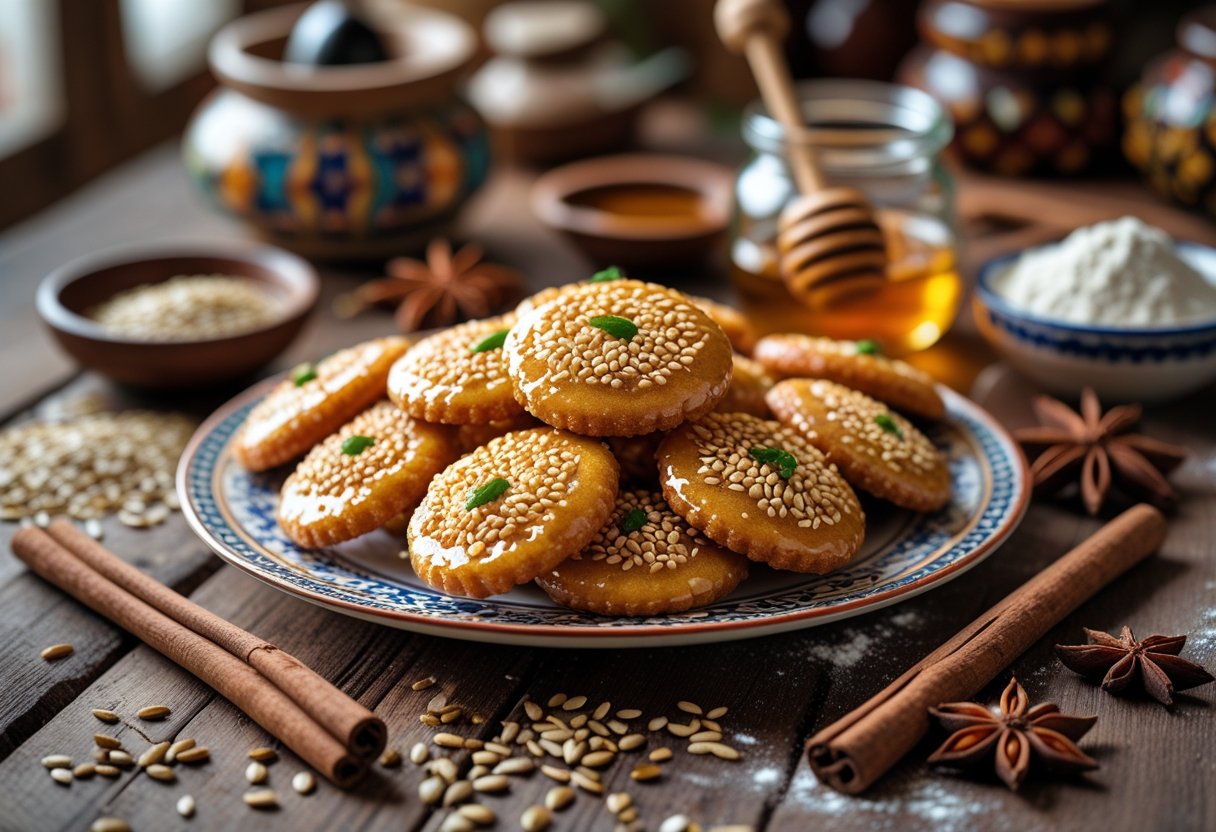
Making Chebakia means juggling sticky honey, hot oil, and a mountain of sesame seeds.
It’s a bit of a kitchen workout, but mastering the tricks will save your counters and your sanity.
Plus, knowing the right ingredients and frying tips makes the whole process a breeze.
What’s the secret to not messing up my kitchen when making Chebakia cookies?
Messy kitchens come with the territory, but we’ve got some hacks.
First, gather all your tools and ingredients before you start—trust us, it helps avoid frantic trips to the fridge.
Use a big enough workspace and flour or oil your hands lightly to keep the dough from sticking everywhere.
When frying, use a deep pot to avoid splatters, and fry in small batches.
A splatter screen might not be Moroccan, but it sure saves your countertops from sticky honey oil chaos.
Can someone tell me how many calories are in these honey-glazed delights, or should I just not look?
Okay, let’s just say Chebakia doesn’t come with a “light snack” label.
One medium cookie can pack about 130 calories.
The honey and sesame seeds add sweetness and crunch but also a decent number of calories.
Think of it as fuel for your Ramadan energy—or justification for going back for a second.
How do I avoid turning Chebakia into charcoal? Any tips for getting that golden brown just right?
Patience is key here.
Keep your oil temperature steady—medium-low heat works best.
Too hot and you get a burnt outside with a sad raw inside; too low and they soak up oil like sponges.
Test with one cookie first.
You want a slow fry until they turn a warm golden brown, around 10 minutes per batch.
Use a slotted spoon and watch closely.
Golden, not charred, is the goal.
Is there a way to make Chebakia without turning my kitchen into a sesame seed battlefield?
Sesame seeds seem like they stage a takeover if you’re not careful.
Toast seeds ahead of time and store them in a covered container to reduce spills during measuring.
Work over a large tray or tablecloth that’s easy to shake out later.
Using a food processor to grind seeds helps keep things tidy.
And put a bowl under your work area to catch stray seeds before they escape to your floor’s secret life.
What are the absolutely cannot-skip ingredients for an authentic Chebakia experience?
We won’t lie—orange flower water is non-negotiable.
It gives Chebakia that signature fragrant touch.
Sesame seeds (toasted and ground) are also essential.
Saffron might be pricey but adds a subtle depth that’s worth it if you want to impress.
Don’t skip anise, cinnamon, and pure honey for dipping.
Olive oil for the dough and vinegar help with texture.
Skimp on these, and you risk making cookies that taste like sad fried dough instead of a festive treat.
Do these scrumptious Chebakia cookies pair well with Harira, or is that just a Moroccan myth?
Not a myth at all! It’s a beloved Ramadan tradition in Morocco to break the fast with Harira soup alongside Chebakia.
The rich, spicy soup balances the sweet, sticky cookies perfectly. If you haven’t tried this combo yet, you’re missing out on the ultimate sweet-and-savory flavor dance.
It’s basically the perfect after-sunset team-up.