A bourbon-and-brown-sugar glazed turkey brings a delicious balance of sweet and savory flavors that really takes the bird up a notch. This recipe gives us juicy turkey with crispy skin and a rich, sticky glaze that makes every bite a flavor party.
Using simple ingredients like bourbon, brown sugar, and a touch of paprika, we whip up a glaze that caramelizes beautifully during roasting. Prepare for your kitchen to smell like a fancy Southern bakery.
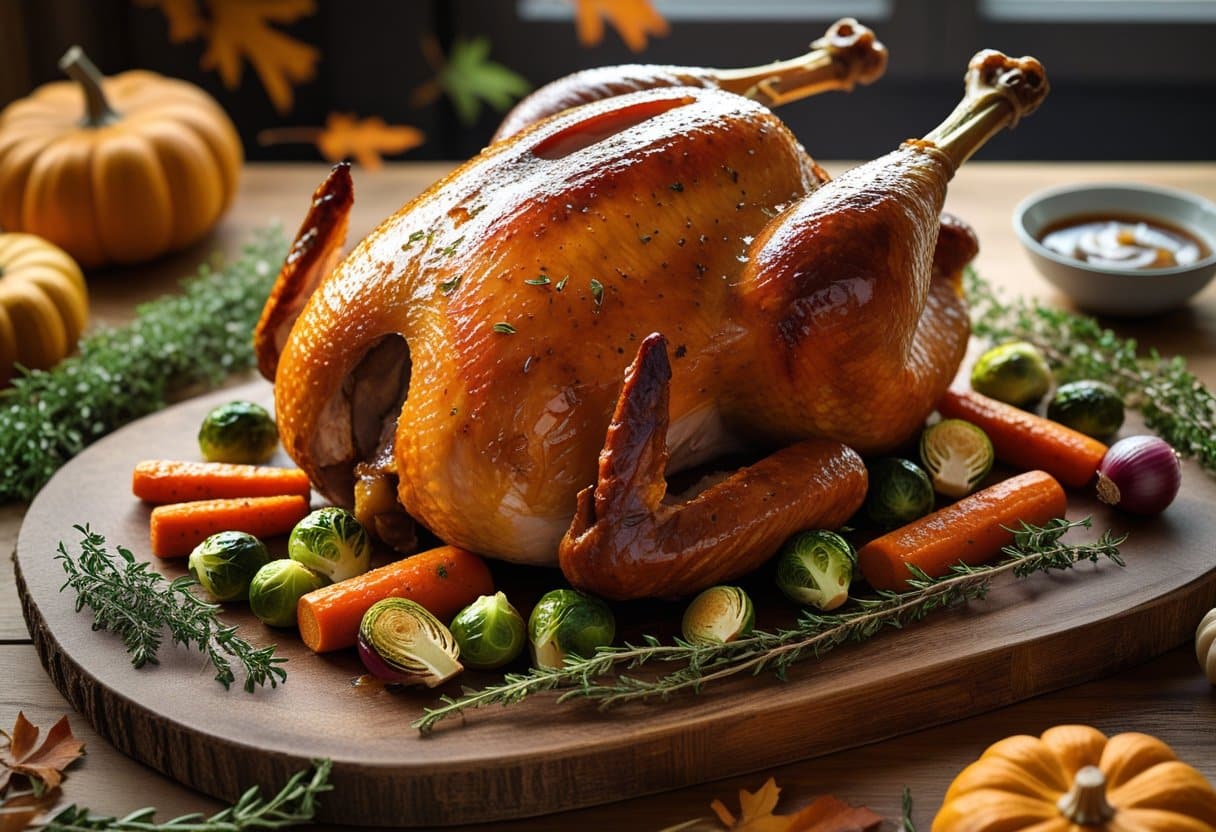
Preparing this turkey may seem tricky, but with clear steps, we can totally handle it—no culinary degree required. Brining in advance and careful glazing during cooking helps us achieve tender meat and a shiny, browned finish.
The glaze adds a subtle depth, making this turkey perfect for special dinners or holiday celebrations. It’s the kind of dish that makes you look like you know what you’re doing (even if you’re winging it).
Key Takeways
- We use a sweet and savory glaze to enhance the turkey’s flavor.
- Proper preparation and glazing result in juicy meat and crispy skin.
- Simple steps help us create a dish that looks and tastes impressive.
Key Ingredients for Bourbon-and-Brown-Sugar–Glazed Turkey
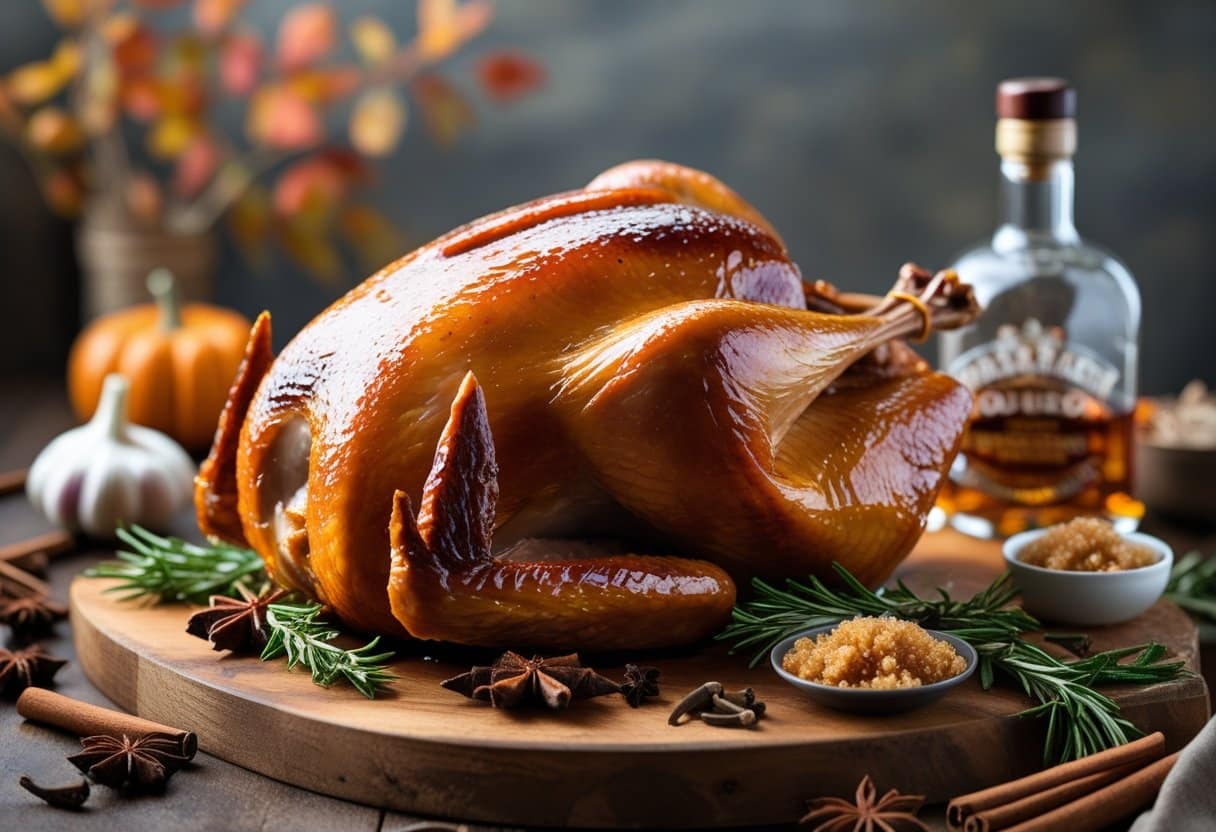
The success of this recipe hinges on picking the right turkey cut and balancing the bourbon’s flavor in the glaze. Brown sugar and paprika work together to amp up the taste.
Each component plays a specific role in making the turkey juicy, flavorful, and easy on the eyes.
Choosing the Right Turkey Cut
We recommend using turkey breast for this glaze recipe because it cooks evenly and soaks up all that sweet and tangy coating. Turkey breast is lean, so the glaze helps keep it moist during roasting.
If you use the whole bird, cutting it into parts lets you cook the breast separately for better results. The skin on the breast crisps up nicely with the glaze, and the flavors are absorbed deeply.
You might ask your butcher to prep the turkey breast ahead of time to save yourself some effort (and maybe a finger or two).
The Role of Bourbon in the Glaze
Bourbon adds a rich, smoky note that plays well with the turkey’s natural flavor. When simmered with brown sugar, bourbon reduces to a syrupy glaze that sticks like a dream to the skin.
Be careful with the amount of bourbon—too much and your turkey might taste like a wild night out. Simmering until thick is key.
For a non-alcoholic option, some recipes suggest substitutes, but nothing beats the real deal.
Importance of Brown Sugar and Paprika
Brown sugar is the MVP here, caramelizing during roasting to create a glossy, sticky coating. It balances the bourbon’s sharpness and helps the skin get golden and crispy.
Paprika adds a subtle warmth and a pop of color. It highlights the savory side and blends right in with the sweetness.
Together, these ingredients make a glaze that’s rich, complex, and still ridiculously easy to throw together.
| Ingredient | Function |
|---|---|
| Brown Sugar | Sweetness, caramelization, moisture lock |
| Bourbon | Smoky flavor, glaze thickness |
| Paprika | Mild heat, color enhancement |
| Turkey Breast | Lean meat ideal for glazing |
Step-by-Step Preparation
We focus on seasoning the turkey well, making the glaze with care, and arranging the bird for even roasting. These steps make sure the meat is tender and the skin shines with that rich bourbon and brown sugar glaze.
Dry Brine and Seasoning
First, we make a dry brine using kosher salt, black pepper, granulated sugar, and paprika. Rub it all over the turkey, including the legs.
Let the turkey chill uncovered for at least 12 hours (or up to 2 days if you’re a planner). This dries out the skin so it crisps up like a champ.
Paprika here adds a subtle smoky color and taste that sets the stage for the glaze.
Crafting the Bourbon and Brown Sugar Glaze
Next, we combine packed light brown sugar, bourbon, soy sauce, unsalted butter, and paprika in a small saucepan. Heat on medium, stirring until it thickens enough to coat a spoon—about 6 to 8 minutes.
Keep the glaze warm but don’t let it burn or turn to candy. This sticky glaze is going to make your turkey look like it belongs on a magazine cover.
The bourbon brings warmth and depth, while the brown sugar adds caramel notes, balanced by the paprika’s slight heat.
Prepping Turkey for Roasting
Before roasting, crank the oven to 425°F to get that golden-brown skin. Place the turkey on a wire rack in a rimmed baking sheet, and the legs on a separate sheet for even cooking.
After 35–40 minutes, lower the oven to 325°F. Roast the breast until it hits 100°–110°F, then start basting with the warm glaze every 10 minutes.
Keep turning the pan for even browning. Save some glaze for the legs and let the turkey rest after cooking to lock in juiciness.
Roasting and Glazing Techniques
To get the best flavor and texture, we need to nail the oven temperature, timing, and glaze application. These steps keep the turkey breast juicy and the glaze caramelized.
Temperature and Timing
Roast the turkey at 325°F (163°C) for even cooking. This moderate heat prevents the dreaded dry breast.
A 16-pound turkey takes about 3¾ to 4¼ hours. Check doneness with a meat thermometer—aim for 180°F (82°C) in the thickest part of the thigh (and don’t hit the bone unless you want a false alarm).
Keep the turkey loosely covered with foil for most of the roasting time. About 30 minutes before it’s done, remove the foil so the glaze can brown up and get sticky.
Applying the Glaze for Best Results
Start by spreading half the bourbon and brown sugar glaze under the skin of the turkey breast. This keeps the meat juicy and loaded with flavor.
Carefully separate the skin from the breast to rub the glaze directly on the meat—no need to be a surgeon, just gentle. Brush the rest of the glaze on the outside several times during roasting.
Frequent basting helps the glaze build into a thick, shiny coating. Go for several light coats instead of one big splash, or you’ll risk burning.
Serving and Storage Tips
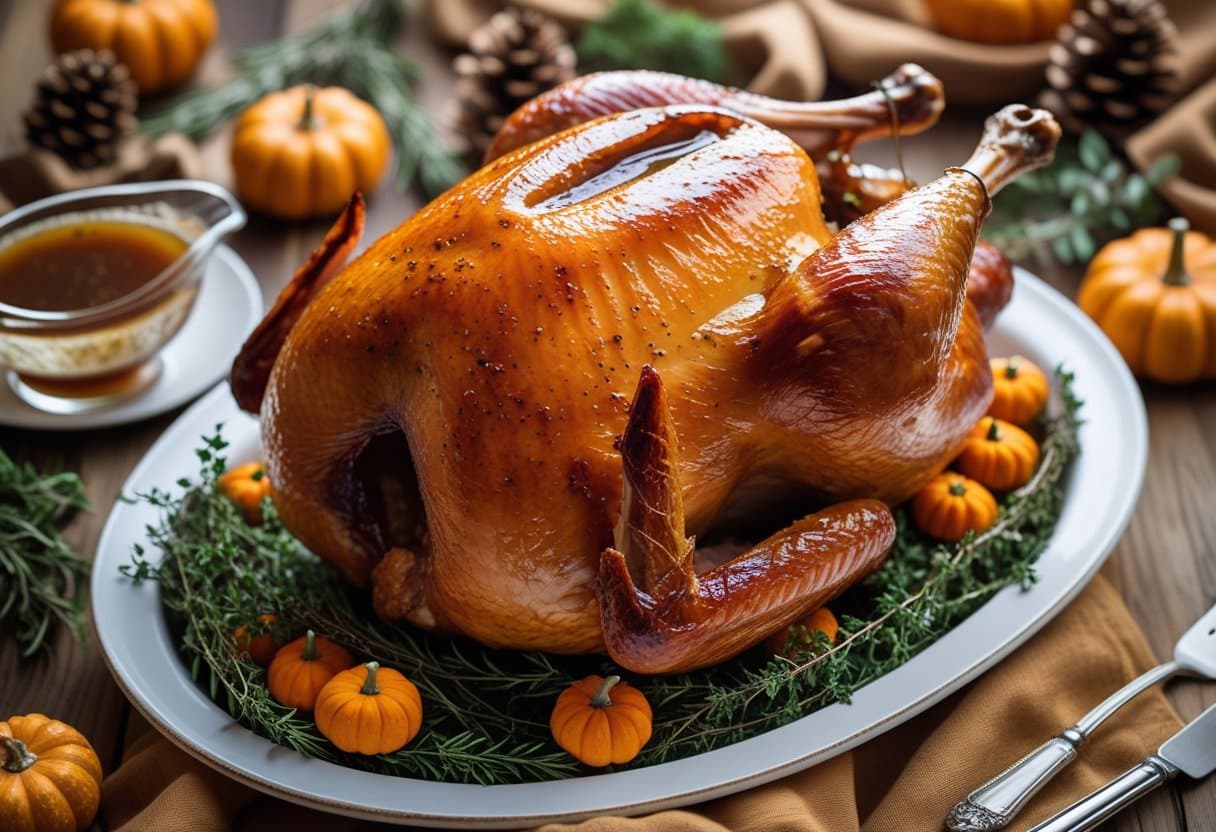
For the best taste and texture, carve your turkey right and store leftovers like a pro. This keeps the meat juicy and safe for late-night fridge raids.
Carving and Presentation
Let the turkey rest for at least 20 minutes before carving. This helps the juices settle, so your turkey doesn’t cry all over the cutting board.
Use a sharp knife to separate the legs and thighs from the body. Slice the breast against the grain in even pieces for maximum tenderness.
Don’t ditch all the skin—the bourbon and brown sugar glaze is pure gold. Arrange the slices on a platter, with dark meat on one side and breast meat on the other.
Brush any leftover glaze over the top for extra shine and flavor. Garnish with fresh herbs or orange slices if you’re feeling fancy (or just want to impress your in-laws).
Storing Leftovers Safely
We should cool leftover turkey within two hours of serving to prevent bacteria from throwing a party. Remove the meat from the bones and stash it in shallow, airtight containers so it cools down faster.
Label your containers with the date. Properly stored cooked turkey will last 3 to 4 days in the fridge.
If you want to save turkey for a rainy day (or just next month), toss it in the freezer for up to 4 months. Wrap the turkey tightly with plastic wrap and place it in freezer bags or containers to keep freezer burn at bay.
To reheat, thaw frozen turkey overnight in the fridge. Warm it slowly in the oven at 325°F (160°C), covered with foil.
Add a little broth or leftover glaze to keep things juicy. And remember, reheating turkey more than once is a no-no—your taste buds and stomach will thank you.