You want bold, smoky bacon wrapped around a hot dog, piled with beans, pico, mayo, mustard, and jalapeños — and you want the real Sonoran hot dog you find in Arizona.
We’ll show you what makes an authentic Sonoran hot dog and where to find the best classic versions across the state.
Walk up to the cart, take that first bite, and you’ll feel why this street food became a local icon.
We cover the simple ingredients, the proper bolillo-style roll, and tips for spotting places that stick to tradition so you get the true flavor every time.
Key Takeaways
- We explain what defines an authentic Sonoran hot dog.
- We list how to recognize traditional preparation and toppings.
- We point out what to expect from the full Arizona street-food experience.
The Fundamentals of Authentic Arizona Sonoran Hot Dogs
We focus on the exact ingredients, how the dog is built, and the history behind its rise in Arizona street food.
Readers will learn what makes a Sonoran hot dog different and which toppings and sauces matter most.
Signature Ingredients and Assembly
We start with a bacon-wrapped hot dog cooked until the bacon is crisp but not charred.
The frank is usually a beef or beef-pork blend.
Vendors often grill the bacon-wrapped hot dog on a flat top or plancha to get even browning.
The bun is a bolillo-style roll — slightly sweet, soft inside, and firm enough to hold beans and crema.
We slit the bolillo down the top, not the side, so toppings stay in place.
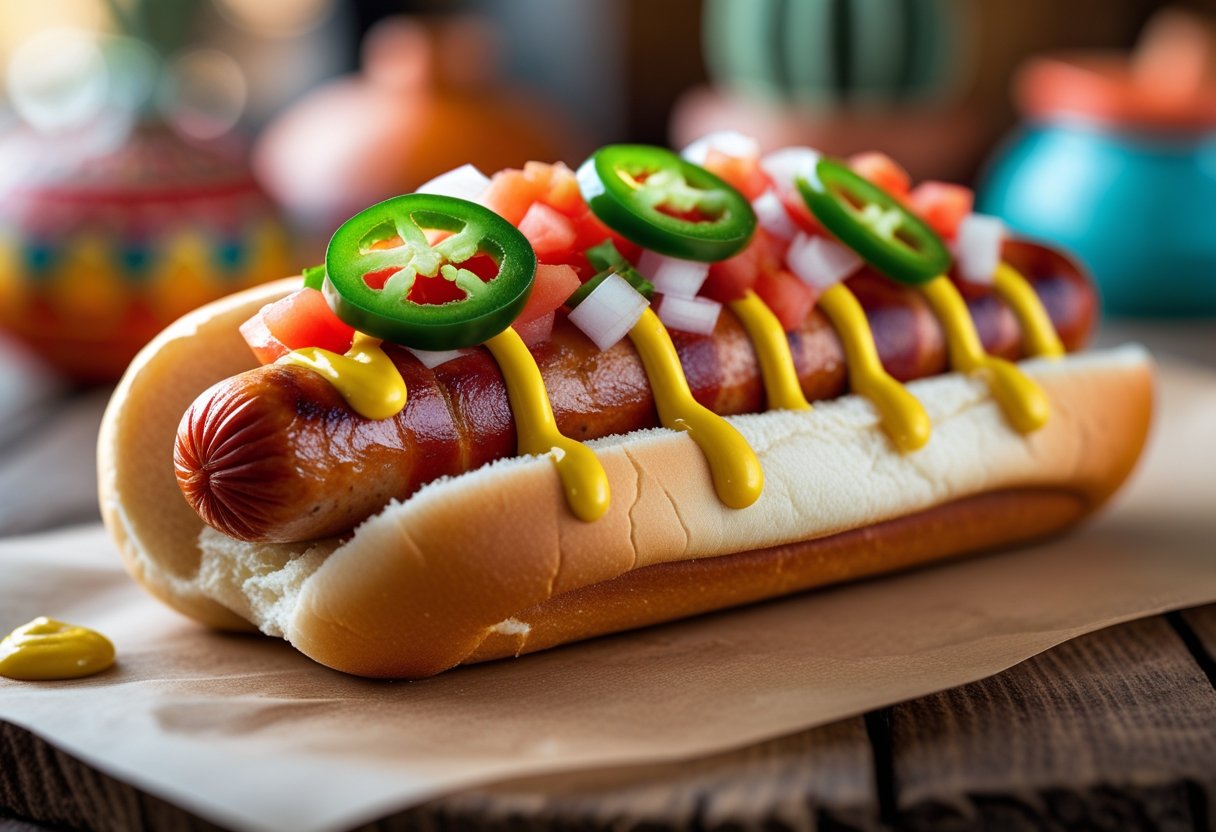
Assembly order matters: spread a spoonful of warm refried beans along the bun base, add the bacon-wrapped hot dog, pile on grilled onions and diced fresh tomatoes, then finish with zigzags of mayonnaise and mustard.
A light sprinkle of shredded cheese or queso fresco is common.
Origins and Cultural Evolution
We trace the Sonoran hot dog to Hermosillo, Sonora, where American-style hot dogs were adapted with local tastes.
The bacon-wrapped version became common in the late 20th century and moved north to Arizona through cross-border travel and vendors.
University nightlife and ballpark culture in Sonora helped the dog gain a late-night following.
By the 1980s and 1990s, stands and small restaurants in Tucson and Phoenix popularized the style.
Local chains and food trucks later spread variations across the state.
The dish reflects border culture: an American hot dog structure combined with Mexican ingredients like bolillo rolls, refried beans, and crema.
Each vendor adds small changes, but the core remains recognizable across Arizona.
Distinctive Toppings and Sauces
We treat toppings as essential, not optional.
Key items include warm refried beans, grilled onions, diced tomatoes, and pickled or fresh jalapeños for heat.
The beans add body; onions and tomatoes add texture and brightness.
Sauces define flavor balance.
Mexican crema or crema agria gives cool richness.
Mayonnaise and yellow mustard create the classic zigzag pattern.
Some vendors use salsa verde or a jalapeño sauce for tang and spice.
We often see shredded cheese or crumbled queso fresco for salt and creaminess.
Common variations add avocado, pico de gallo, or hot sauces like chipotle for smoke.
Still, the hallmark remains: bacon-wrapped hot dog in a bolillo bun with beans, onions, crema, and a touch of heat.
For an example of local history and where to try one, see the Arizona coverage on the Sonoran hot dog’s rise. (https://www.azcentral.com/story/entertainment/dining/2023/09/23/history-sonoran-hot-dog-arizona-mexico/70661529007/)
The Arizona Sonoran Hot Dog Experience
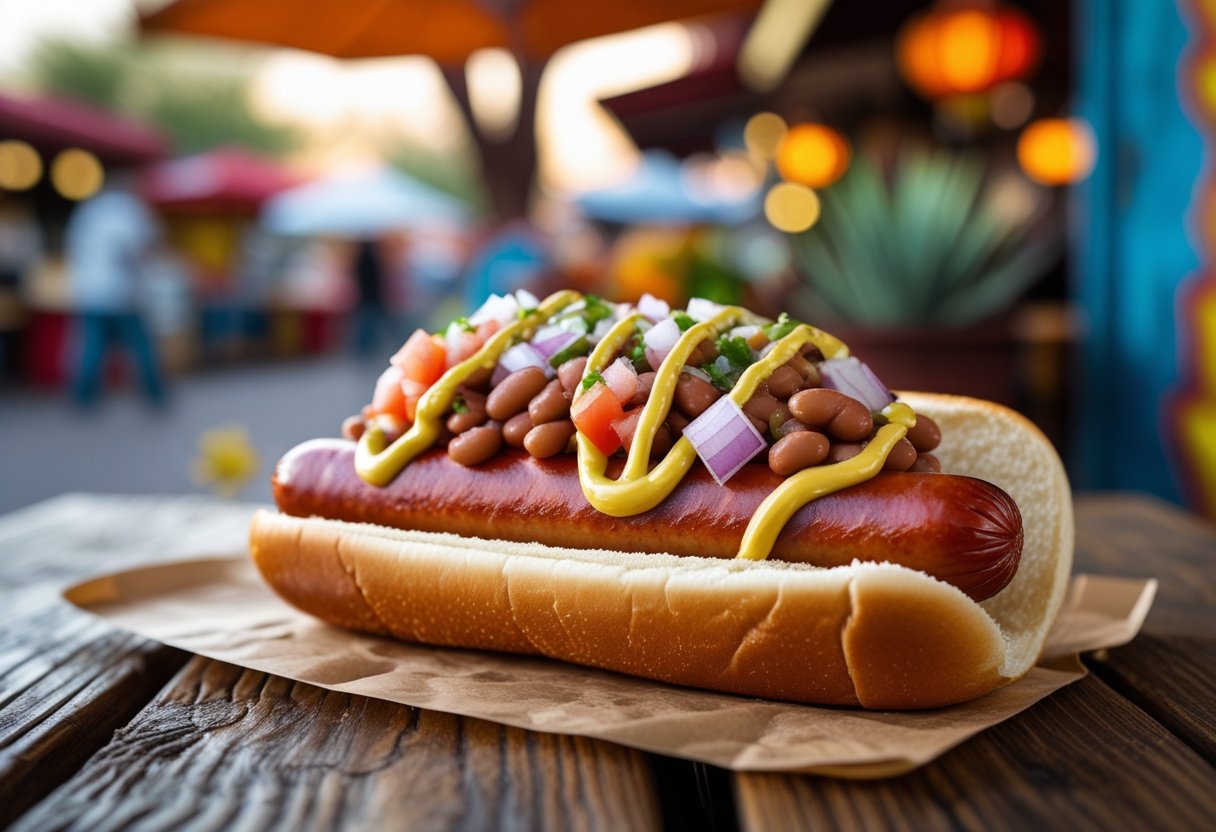
We look for places where bacon-wrapped franks meet soft bolillo buns, piled with beans, tomatoes, onions, mayo, mustard, and spicy jalapeños.
The right stand serves hot dogs fast, keeps toppings fresh, and has a steady local crowd.
Iconic Hot Dog Stands and Must-Visit Spots
We head to well-known stands and carts across Phoenix, Tucson, and Avondale for the best Sonoran hot dogs.
In Phoenix, spots like Lupita’s Hot Dogs and the many El Güero Canelo locations draw long lines for their classic builds and steamed buns.
In Tucson, BK Tacos and El Sinaloense Hot Dog Cart earn repeat visits for consistent bacon crisp and bright pico de gallo.
Mobile vendors such as Hot Dogs La Yaquesita in Avondale offer strong flavor with a tight, efficient service window.
What matters most is freshness: grilled bacon, warm buns, and chopped tomatoes and onions added right before serving.
Watch for places that keep beans warm, offer grilled jalapeños, and let you see them assemble your dog.
How to Spot an Authentic Sonoran Hot Dog
We judge authenticity by five clear markers: bacon-wrapped frank, bolillo-style bun (soft, slightly sweet), pinto beans layered under the dog, chopped raw onions and tomatoes, and zigzagged mayo and mustard on top.
A true stand often offers pickled or fresh jalapeños and house salsa.
Cash-friendly counters, simple menu boards, and a visible grill are good signs.
Avoid places that serve plain hot dogs with a slab of bacon on the side or use generic hot dog buns.
Authentic vendors steam or lightly toast the bolillo to hold the toppings.
If the stand lists a Sonoran hot dog recipe or displays regional names like El Güero Canelo or Lupita’s, they often keep tradition intact.
Variations and Local Innovations
We expect variation across neighborhoods.
Some vendors add cotija cheese for a salty finish or spoon extra pico de gallo on top.
Canelo’s-style shops sometimes offer local twists like chile sauces or different bean seasonings.
Regional carts may top dogs with green chile or swap pinto beans for refried beans in certain recipes.
Creative spots mix textures: a crisped bacon edge, creamy mayo, and the crumbly cotija or a squeeze of lime.
We see innovations sold as specials at stands that also run taco menus, including BK Tacos, where fusion with other street foods shows in sauces and garnishes.
These small changes keep the classic Sonoran hot dog familiar yet fresh.
Frequently Asked Questions
We cover the key parts, assembly steps, where to find top spots in Phoenix, and how the Sonoran dog differs from a regular hot dog.
We also explain classic sides and the dish’s origin in clear, specific terms.
What are the essential ingredients in a Sonoran hot dog?
We use a bacon-wrapped hot dog as the core.
A bolillo-style roll holds the dog and toppings without falling apart.
We add pinto beans (whole or lightly mashed), diced white onion, and diced tomatoes.
Mayonnaise and yellow mustard form basic sauces, and a jalapeño salsa or relish gives optional heat.
How do you properly assemble a Sonoran hot dog?
We steam or warm the bolillo roll and split it down the top so it forms a boat.
Place the cooked bacon-wrapped hot dog inside the warm roll.
We spoon a generous layer of pinto beans over the dog next.
Finish with diced onion and tomato, then zig-zags of mayonnaise, a line of mustard, and jalapeño salsa to taste.
Where can one find the best Sonoran hot dogs in Phoenix?
We find top vendors at street carts and small stands across Phoenix neighborhoods.
Tucson-style and Sonoran-style carts often cluster near busy intersections, markets, and late-night spots.
For examples of well-known local lists and recommendations, consult local food guides that track Sonoran hot dog vendors and their reputations.
Look for carts that wrap the dog in bacon, steam the bolillo, and pile on pinto beans and fresh toppings.
What distinguishes a Sonoran hot dog from a regular hot dog?
We wrap the frank in bacon and cook it until the bacon is crisp.
We use a bolillo roll instead of a standard split hot dog bun.
We add pinto beans, fresh diced onion and tomato, and a trio of sauces (mayonnaise, mustard, jalapeño salsa).
Those toppings create a layered, hearty sandwich rather than a simple frank with ketchup or mustard.
What are traditional side dishes to serve with Sonoran hot dogs?
We often serve roasted güero chiles on the side for extra flavor and mild heat.
Chips or fries pair well when we want a classic, casual combo.
We sometimes offer pickled jalapeños or a simple slaw to add crunch and acidity.
A cold soda or horchata balances the richness of the bacon and mayonnaise.
What is the history and origin of the Sonoran hot dog?
The Sonoran hot dog traces its roots to Hermosillo in Sonora, Mexico, where clever vendors started wrapping hot dogs in bacon back in the late 1980s.
Street vendors took the classic American frank and jazzed it up with local flavors like beans, crema, and chiles.
Eventually, the Sonoran dog made its way north into Arizona, becoming a street-food superstar in places like Tucson and Phoenix.
That cross-border journey is why you get such a tasty mashup of Mexican and American flavors in every bite.