You’ll taste Arizona in every crispy bite—a deep-fried burrito born from borderland kitchens that balances a crunchy shell with a warm, savory filling. If you want a simple, unmistakable way to enjoy Sonoran-style flavors, the chimichanga delivers on texture and comfort.
We’ll show you what makes the Arizona chimichanga distinct and worth trying.
You’ll learn quick history, key ingredients, and practical tips to make a perfectly crispy chimichanga at home. Our guide keeps steps clear, so you can skip the guesswork and get right to frying, topping, and savoring.
Key Takeaways
- Learn what sets the Arizona chimichanga apart and why it matters.
- Find clear, practical tips to make a crisp, well-stuffed chimichanga at home.
- Get answers to common questions so you can cook and enjoy chimichangas with confidence.
The Essence of Arizona Chimichangas
We focus on how chimichangas grew in Arizona kitchens, what makes them different from plain burritos, and the main ways cooks fill and fry them. Expect clear notes on history, texture, and popular fillings.
Origins and History in Arizona and Sonora
We trace the chimichanga to early 20th-century kitchens in Tucson and Phoenix, where Mexican and American cooking met. One long-told story credits Monica Flin of El Charro in Tucson with accidentally frying a burrito in the 1920s; another local claim points to Macayo’s in Phoenix for inventing a fried burrito during a menu experiment.
These stories show regional pride more than firm proof. The dish also reflects Sonoran and border cooking styles.
Tortillas, shredded meats, beans, and cheese moved across the border, and Arizona cooks adapted them by frying for crunch and longer shelf life. Chimichangas then spread through Sonoran-style restaurants and Tex‑Mex diners across the Southwest.
What Sets Chimichangas Apart From Burritos
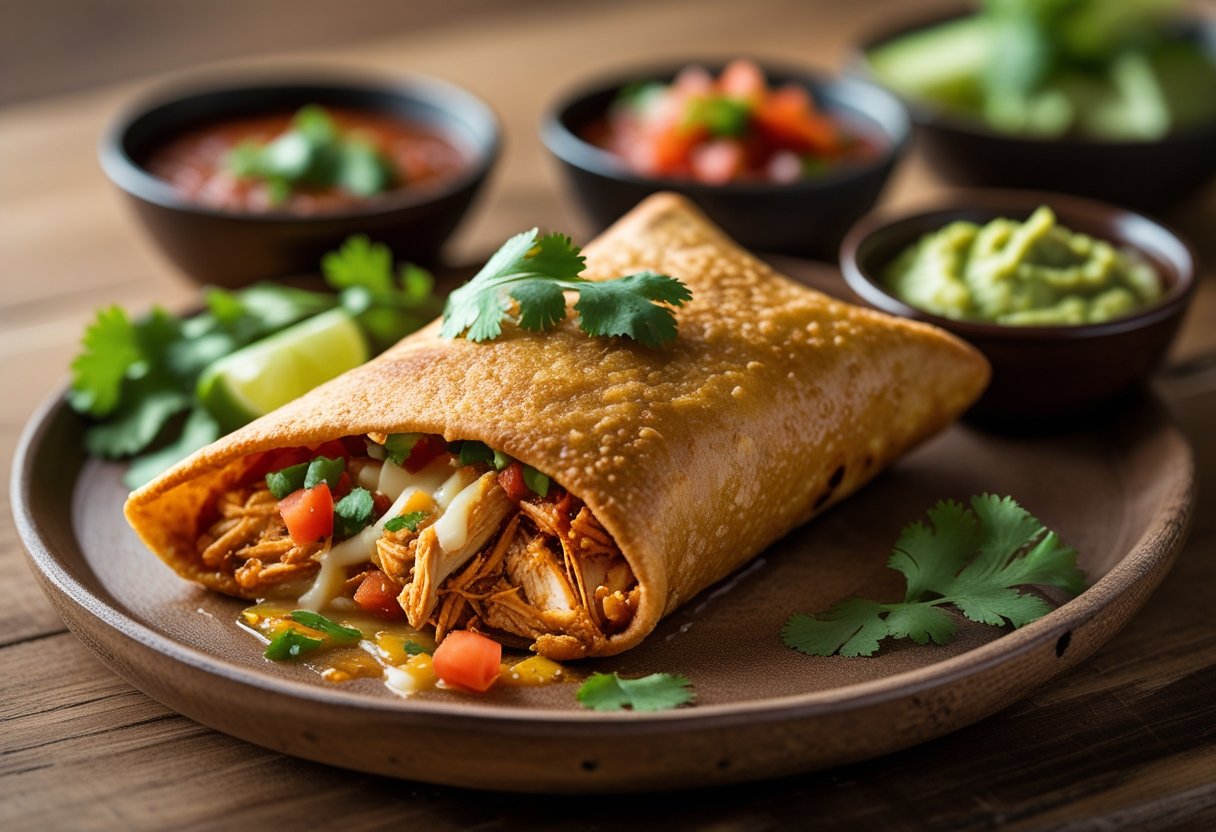
We define a chimichanga by two clear traits: deep-frying and a sealed wrap. A regular burrito is rolled and served soft; a chimichanga is tightly folded, sealed, and briefly deep-fried for a golden, crisp shell.
Frying changes texture and mouthfeel while keeping fillings warm. Sauce and toppings also differ.
Burritos often arrive with salsa or no sauce; chimichangas commonly come topped with red or green sauce, melted cheese, sour cream, and shredded lettuce. The frying step also concentrates flavors—meat juices and cheese meld while the tortilla crisps—making a fried burrito distinct in taste and presentation.
Variations: Chicken, Beef, and More
We list common chimichanga fillings and how they affect cooking:
- Chicken chimichanga: shredded rotisserie or stewed chicken mixed with salsa and cheese. It fries quickly and stays moist.
- Beef chimichanga: slow-cooked shredded beef or ground beef seasoned with cumin and chili. It gives a richer, beefy profile.
- Vegetarian options: refried beans, sautéed peppers, potatoes, and cheese. They hold together well during frying.
- Other variants: seafood, pork, or chorizo mixes appear on menus; some restaurants bake or air-fry for a lighter crust.
We recommend sealing the tortilla with a dab of egg wash or flour paste and frying at 350°F (175°C) for 2–4 minutes per side for even crisping. For those following a chimichanga recipe at home, baking at 400°F (200°C) for 15–20 minutes offers a less oily alternative.
For more on regional claims and stories, see an account of the chimichanga’s debated origin in Tucson (https://www.chowhound.com/1951771/who-invented-chimichangas/).
How to Make Authentic Crispy Deep-Fried Chimichangas
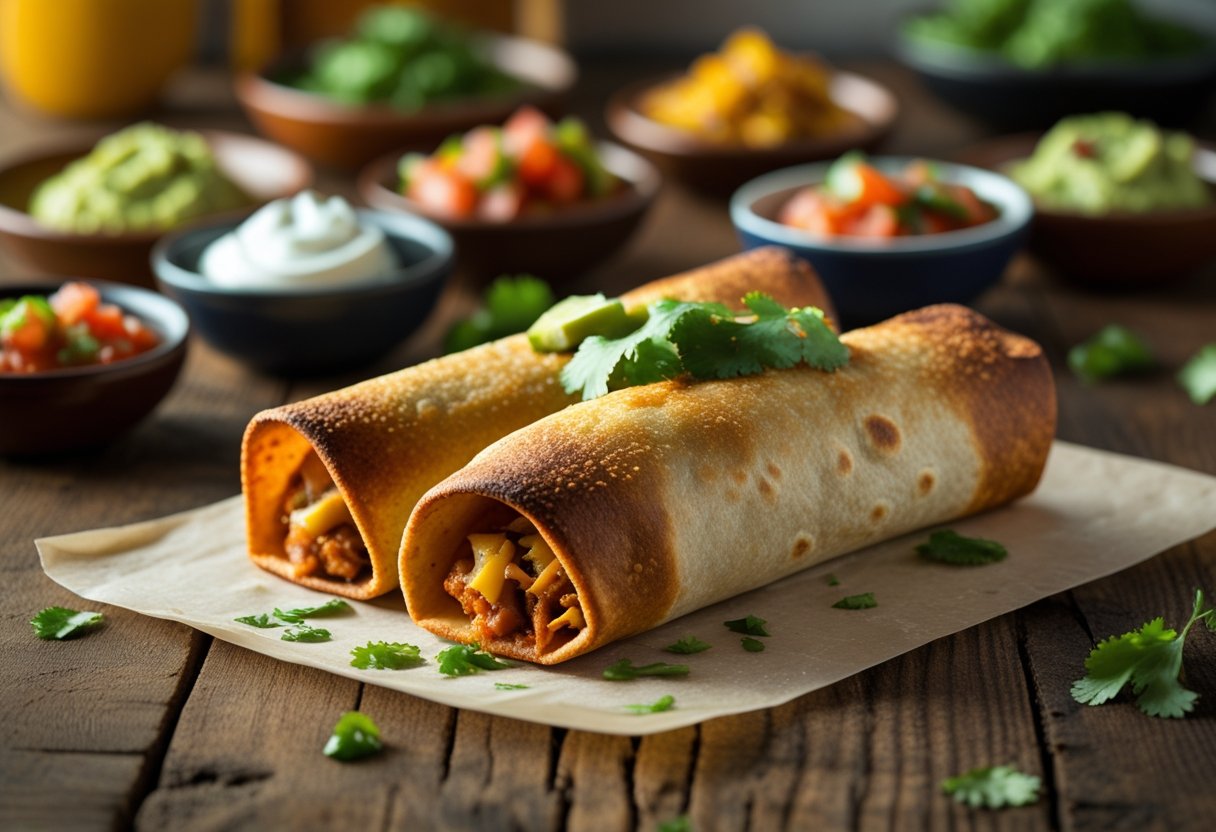
We focus on the right tortillas, a well-seasoned filling, and hot oil at the correct temperature to get a crisp shell and juicy interior.
Essential Ingredients: Tortillas, Fillings, and Cheeses
We use large flour tortillas (10–12 inch) so the filling folds without tearing. If you make tortillas at home, choose a soft flour tortilla recipe that yields pliable discs.
For fillings, shredded cooked chicken or slow-simmered beef work best. Mix meat with a few tablespoons of beef stock and a pinch of kosher salt to keep it moist.
Add a spoonful of refried beans for body and texture. For cheese, we prefer Monterey Jack for melt and mild flavor; crumble a bit of queso fresco for a fresh finish.
Include diced tomato or pico de gallo inside for brightness, but keep it drained so it won’t make the tortilla soggy. Use a thin layer of shredded lettuce and a dollop of guacamole or Mexican crema when serving, not inside before frying.
Step-by-Step Preparation and Frying Techniques
We build each chimichanga on a clean surface. Lay a large flour tortilla flat, spoon 1/3–1/2 cup of filling (meat + refried beans), sprinkle 1/4–1/2 cup Monterey Jack, and add a tablespoon of pico de gallo if desired.
Fold the sides in, roll tightly from the bottom, and secure with a toothpick if needed. Heat oil to 350–375°F (175–190°C) in a deep pot or fryer; use canola or vegetable oil.
Fry two at a time for 3–4 minutes, turning so all sides brown evenly. Drain on paper towels and let rest 1–2 minutes before removing toothpicks.
For a lighter version, brush with oil and bake at 425°F until golden, flipping once. Your oven will thank you for the break from all that deep-frying drama.
Serving Suggestions and Topping Ideas
We plate chimichangas with Mexican rice on the side and lime wedges for squeezing. Top with a drizzle of Mexican crema and a spoonful of guacamole or pico de gallo.
For extra richness, ladle warm beef stock–based sauce or a mild enchilada-style sauce over the chimichanga. Add shredded lettuce and a sprinkle of queso fresco for texture and contrast.
Serve with refried beans or a small salad. If desired, offer sour cream and hot salsa so diners can adjust heat and creaminess.
For reheating, crisp briefly in a 400°F oven to restore crunch. Leftovers never had it so good.
Frequently Asked Questions
We cover ingredients, frying technique, freezing rules, beef-specific choices, how chimichangas differ from burritos, and lighter cooking options. Each answer gives measurements, temperatures, or step-by-step tips you can use in the kitchen.
What are the essential ingredients for an authentic Arizona chimichanga?
We use a large, thin flour tortilla (10–12 inches) so it crisps evenly. The filling typically includes cooked shredded beef (or chicken), refried or whole beans, cooked rice, and a melting cheese like Monterey Jack.
We season the meat with salt, black pepper, cumin, and garlic; some recipes add chili powder or dried oregano. Serve with guacamole, sour cream, and a bright salsa for contrast.
For a Sonoran-style touch, use handmade flour tortillas and carne seca or machaca when available. See a concise background on the dish’s Arizona roots at Tucson’s chimichanga coverage (https://tucsonfoodie.com/2019/08/29/tucsons-iconic-chimichanga/).
How do you deep fry a chimichanga to achieve a crispy texture?
We heat neutral oil (vegetable or canola) to 350°F (175°C) and maintain that temperature. Use about 1–2 inches of oil in a skillet for shallow frying or a fryer basket for deep frying.
We roll the filled tortilla tightly, tucking in edges to avoid leaks, and place seam-side down into the hot oil. Fry 2–4 minutes per side until golden brown, turning once; drain on paper towels to remove excess oil.
Control oil temperature with a thermometer; too cool makes it greasy, too hot browns the shell before the interior heats. Remove chimichangas when internal temperature reaches around 160°F (71°C) for typical cooked fillings.
Can you deep fry a frozen chimichanga, and if so, how?
We can deep fry frozen chimichangas, but the oil technique differs to avoid undercooked centers. Start at a lower oil temperature (325°F / 163°C) and increase to 350°F / 175°C after several minutes.
Fry frozen chimichangas 6–8 minutes total, turning as needed, until exterior is deep golden and interior measures 160°F (71°C). Avoid crowds in the pan; one or two at a time keeps oil temperature steady.
Alternatively, thaw in the fridge overnight and fry as fresh for best texture and shorter cook time.
What distinguishes an authentic beef chimichanga recipe from other variations?
We prioritize flavorful, fully cooked shredded beef like barbacoa, carne asada, or machaca for texture and depth. Authentic versions use modest fillings—meat, beans, rice, and cheese—without overloading wet ingredients that cause sogginess.
We heat and season fillings before rolling so everything is hot inside after frying. Toppings stay simple: salsa, sour cream, and guacamole; some Arizona places keep it classic rather than smothering with sauce.
What are the differences between a chimichanga and a standard burrito?
We deep fry a chimichanga and serve it with a crispy exterior; a burrito is not fried and stays soft. Chimichangas usually aim for a rectangular or tightly rolled package that holds up to frying.
We often include the same fillings—meat, beans, rice, cheese—but chimichangas use drier, well-heated fillings to prevent steam or burst seams. Presentation can differ: chimichangas are often plated with garnishes and sauces, while burritos are commonly handheld.
Is it possible to create a healthier version of a chimichanga without deep frying?
We bake chimichangas brushed lightly with oil at 400°F (200°C) for 15–20 minutes. Flip them once for even browning—no one likes a tan on just one side.
Air frying at 375°F (190°C) for 10–12 minutes gives a similar crunch with less oil. Your taste buds won’t know the difference, but your arteries might send you a thank-you card.
We use lean shredded chicken, more beans and veggies, and lower-fat cheese to keep things light.
Serve with salsa and fresh guacamole instead of heavy cream-based toppings to cut fat without losing flavor. Your chimichanga, your rules!