You crave warm, crisp fried dough that melts with a smear of honey butter, and Utah scones deliver every time. These deep-fried scones — a version of fry bread beloved across Utah — give you a golden, airy outside and a soft, pillowy inside that pairs perfectly with sweet or savory toppings.
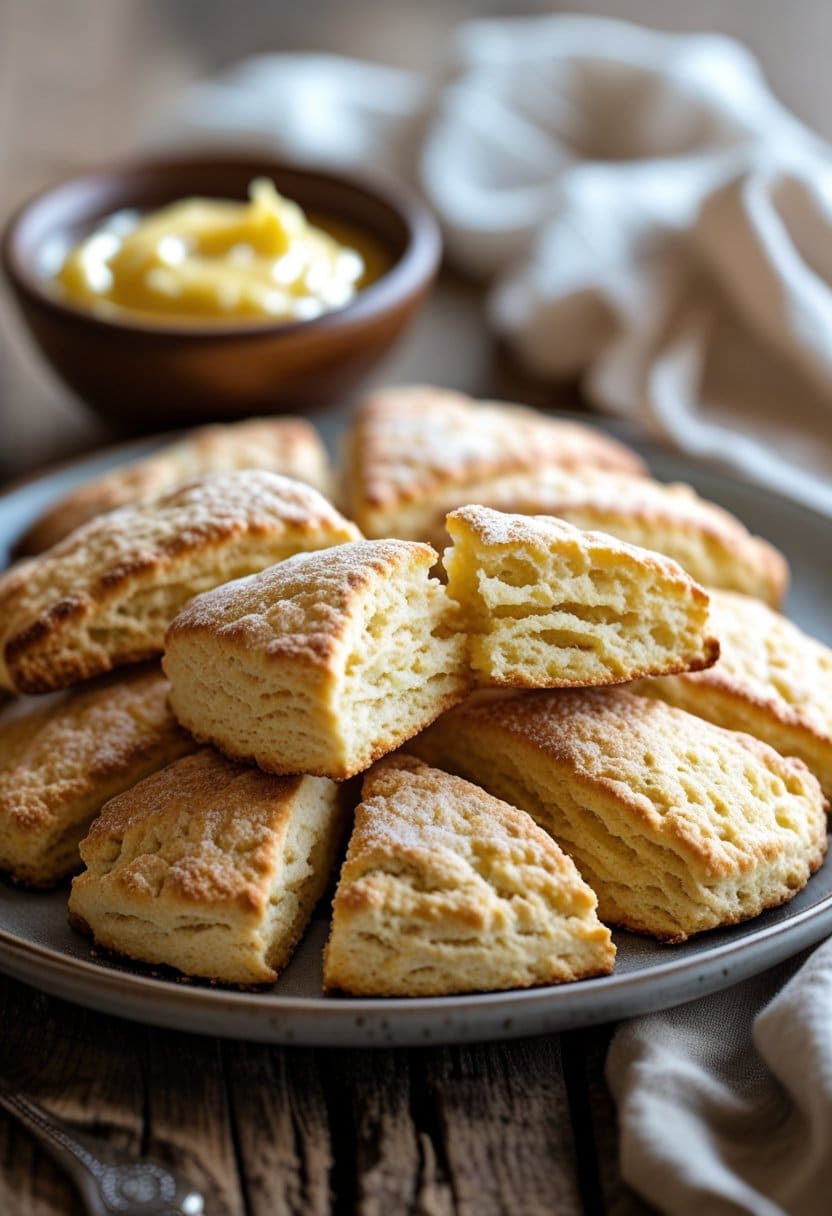
We’ll walk you through what makes Utah scones different from other fry bread. We’ll also show simple steps to fry them at home and share topping ideas that turn them into comfort food classics.
You’ll learn tips to get the right texture and quick fixes if the dough feels off. Soon you’ll be serving perfect scones for breakfast, a potluck, or a cozy snack.
Key Takeaways
- Utah scones are a fried, pillowy comfort food with a crisp outside and soft inside.
- You can make them at home with a few simple techniques and common ingredients.
- Honey butter and powdered sugar are classic toppings that elevate the scones.
Utah Scones vs. Frybread: History, Origins, and Key Differences
We look at where these breads come from and how they link to Native American foodways. Utah changed both the recipe and the name, so expect differences in cooking method, cultural meaning, and common toppings.
Regional Roots and Cultural Significance
We trace regional names and food habits to understand why the same dough appears under different labels. In Britain and much of Europe, a scone is a baked, crumbly tea pastry.
In the Mountain West, the word “scone” often means a flat, fried dough more like frybread. Utah scones grew popular at fairs, cafes, and home kitchens.
They appear as a breakfast or dessert item topped with honey butter, powdered sugar, or cinnamon. That local habit shaped how families and restaurants label the item.
The naming reflects practical memory: people use the familiar word “scone” for a round, single-serving dough item even when it’s fried.
Frybread, American Fry Bread, and Native American Influences
We acknowledge frybread’s deep and complex history among Native American communities. American fry bread emerged in the 19th century when Indigenous families received government rations of flour, sugar, and lard after forced relocations.
Frybread became a survival food and later a symbol of resilience and identity. This frybread is typically deep-fried to a crisp exterior and soft, airy interior.
It serves many roles: an everyday bread, a base for Navajo tacos, and a ceremonial or community food. The term “Native American fry bread” highlights both the dish’s origin and its cultural weight.
Many Native cooks and scholars stress honoring that history when we talk about frybread.
Utah’s Spin on Fried Scone Traditions
Utah adapted frybread into a local “scone” style with sweeter dough and specific service traditions. Utah scones often use a slightly sweet, yeast or baking-powder dough.
Vendors fry them until golden, then serve them with honey butter or powdered sugar, leaning into dessert-style presentation. Restaurants and cafes in Utah popularized the honey-butter pairing and lighter, fluffier texture compared with some traditional frybread.
In everyday practice, “Utah scone” can mean either a fried bread or a baked biscuit-like scone, depending on the shop. Understanding that local usage helps us order what we expect: sweet, fried treats in Utah shops, and baked pastries in classic tea service.
For more on the regional naming and how frybread influenced Utah scones, see this explanation of why Utah uses the word scone for fried bread.
How to Make Utah Scones: Recipe, Techniques, and Toppings
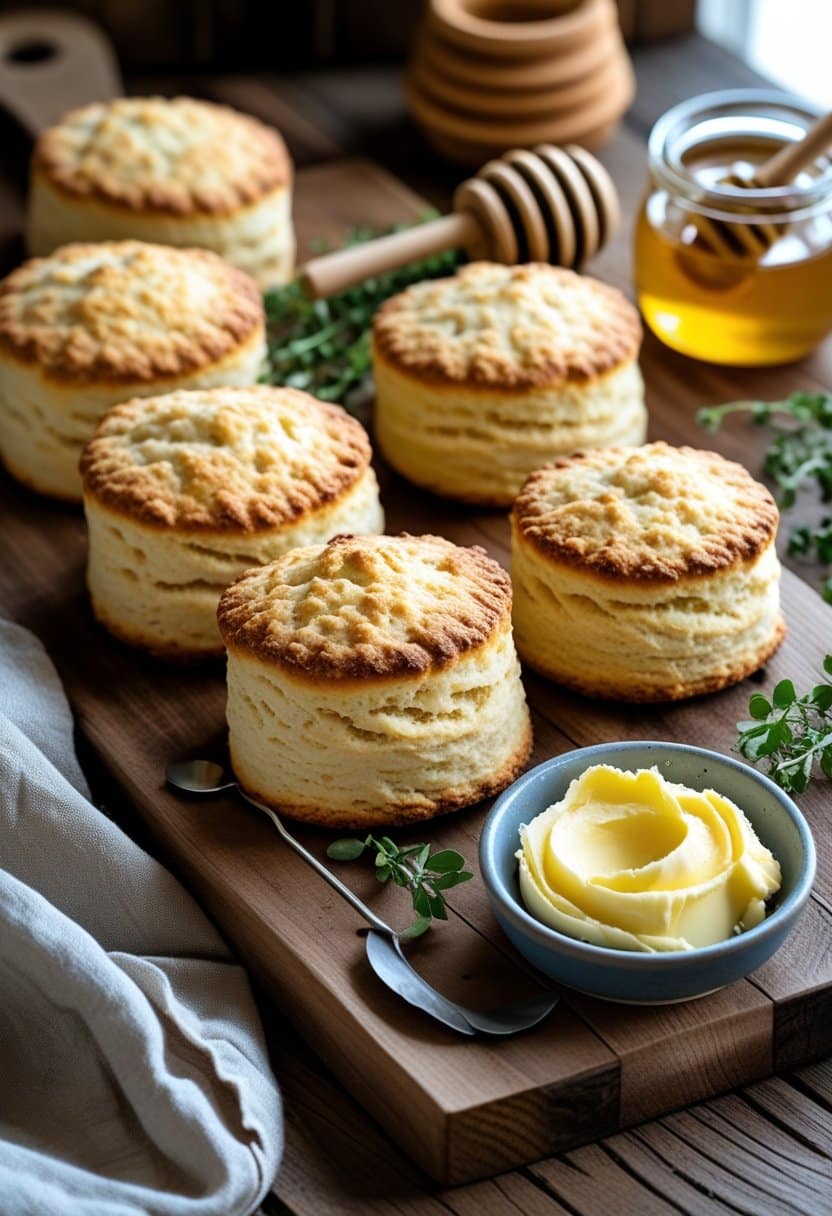
We’ll give a clear recipe and show the key techniques for light, puffy fried scones. You’ll learn which ingredients matter, how to mix and shape the dough, fry safely, and finish with classic honey butter or savory toppings.
Essential Ingredients for Classic Utah Scones
We use simple pantry items that create a soft interior and crisp exterior. Key dry ingredients: 3 to 4½ cups all-purpose flour, 1 tablespoon instant yeast (or active dry yeast proofed in ½ cup warm water at 110–115°F), 1½ teaspoons sugar, ½ teaspoon salt, and ¼ teaspoon baking soda.
Wet ingredients: 1 cup warm buttermilk (or 1 cup milk + 1 tablespoon vinegar), 1 large egg, and 3 tablespoons melted unsalted butter or oil to enrich the dough. For frying, choose a neutral oil with a high smoke point, like canola or vegetable oil, and heat to 360–375°F.
For finishing, powdered sugar, ground cinnamon, and honey butter (½ cup softened butter mixed with ¼ cup honey and 2 tablespoons confectioners’ sugar) make the classic toppings.
Step-by-Step Guide to Preparing the Dough
Start by combining yeast with warm water if using active yeast, then add it to the wet mix. In a large bowl, whisk the warm buttermilk, egg, melted unsalted butter, sugar, salt, baking soda, and the yeast mixture.
Add 2 cups of all-purpose flour and beat until smooth. Stir in more flour until a soft, slightly tacky dough forms.
Turn the dough onto a floured surface and knead 5–8 minutes until smooth and elastic. Place in a greased bowl, cover, and let rise until doubled, about 45–60 minutes.
Punch down, roll to a 16×8-inch rectangle, and cut into rectangles or squares. Let the cut pieces rest 30–60 minutes so they puff before frying.
Frying Techniques for Crispy and Fluffy Results
Keep oil between 360–375°F for an even crust and fully cooked center. Use a deep heavy pot or Dutch oven and a thermometer—no one wants a thermometer that’s just there for moral support.
Too-cool oil makes greasy scones, too-hot oil burns the outside. Fry small batches to avoid dropping the oil temperature.
Slide dough pieces in carefully. Cook 2–3 minutes per side until golden brown.
Drain on paper towels and transfer to a warm oven (200°F) if frying in batches. Check one scone by tearing it open—the interior should be airy and fully cooked.
Maintain oil temperature and adjust heat between batches. Frying is a little like babysitting: constant vigilance.
Popular Toppings: Honey Butter, Cinnamon, and Powdered Sugar
Make honey butter by beating ½ cup softened butter with ¼ cup honey and 2 tablespoons confectioners’ sugar until smooth. For cinnamon honey butter, add ½ to 1 teaspoon ground cinnamon.
Spread while scones are warm so the butter melts in. Dusting with powdered sugar or tossing scones in cinnamon-sugar (1 cup sugar + 1–2 teaspoons ground cinnamon) gives quick sweetness.
Serve plain with a generous pat of honey butter, or offer small bowls of honey, powdered sugar, and cinnamon so everyone customizes their scone.
Customizing and Serving: Savory Ideas and Navajo Tacos
Use fried dough as a base for savory toppings. For Navajo tacos, top warm scone with refried beans or chili, shredded lettuce, diced tomato, grated cheese, and a dollop of sour cream.
The fried scone adds crunch and chew that holds hearty toppings. For savory variations, fold in 1–2 teaspoons of herbs or garlic powder into the dough before frying, or serve with softened butter and flaky salt.
Keep plain scones wrapped briefly to stay soft, but always serve fried scones the same day for best texture. For more ideas, check out this Utah scones recipe with honey butter.
Frequently Asked Questions
What ingredients are required for traditional Utah scones?
Traditional Utah scones use all-purpose flour, a small amount of sugar, baking powder, salt, a bit of active dry yeast, whole milk, and melted butter.
Vegetable oil or another neutral oil is used for frying. Honey and powdered sugar are typical finishing ingredients.
How do Utah scones differ from other types of fry bread?
Utah scones use a slightly sweet, yeast-leavened dough that puffs and develops a chewy interior.
Other fry breads often rely on baking powder or no rising agent and tend to be more flat and savory.
Can you make Utah scones without using yeast?
Yes. You can make a quick version using baking powder instead of yeast for a faster result.
The texture will be less airy and slightly more biscuit-like than the yeast version.
What is the best way to achieve a crispy texture for fried scones?
Heat oil to about 350°F (175°C) so the outside browns quickly while the inside cooks through.
Fry in a single layer without crowding the pan and drain on paper towels to keep them crisp.
What are some common toppings and dips for Utah scones?
Honey butter, plain honey, and powdered sugar are classic choices that complement the sweet dough.
Savory options include melted butter or serving alongside eggs and bacon; jams and fruit preserves also work well.
Where can I find the best Utah scone dining spots nearby?
Start your hunt at local Utah diners and breakfast cafes. These spots often serve up the scone goodness you’re seeking.
Don’t forget to check out Native American fry bread vendors. Their take on scones is legendary.
Scan menus for words like “scones,” “fry bread,” or the magical “honey butter.” If you spot those, you’re in the right place.
And hey, a quick peek at recent reviews never hurts. You want your scones hot, fresh, and worthy of your taste buds.