You’ll love how Utah Navajo Tacos turn simple fry bread into a full meal that satisfies big appetites and simple cravings alike.
We’ll show you how to make crisp, pillowy fry bread and top it with savory, hearty fixings so you can serve a bold, comforting taco in every bite.
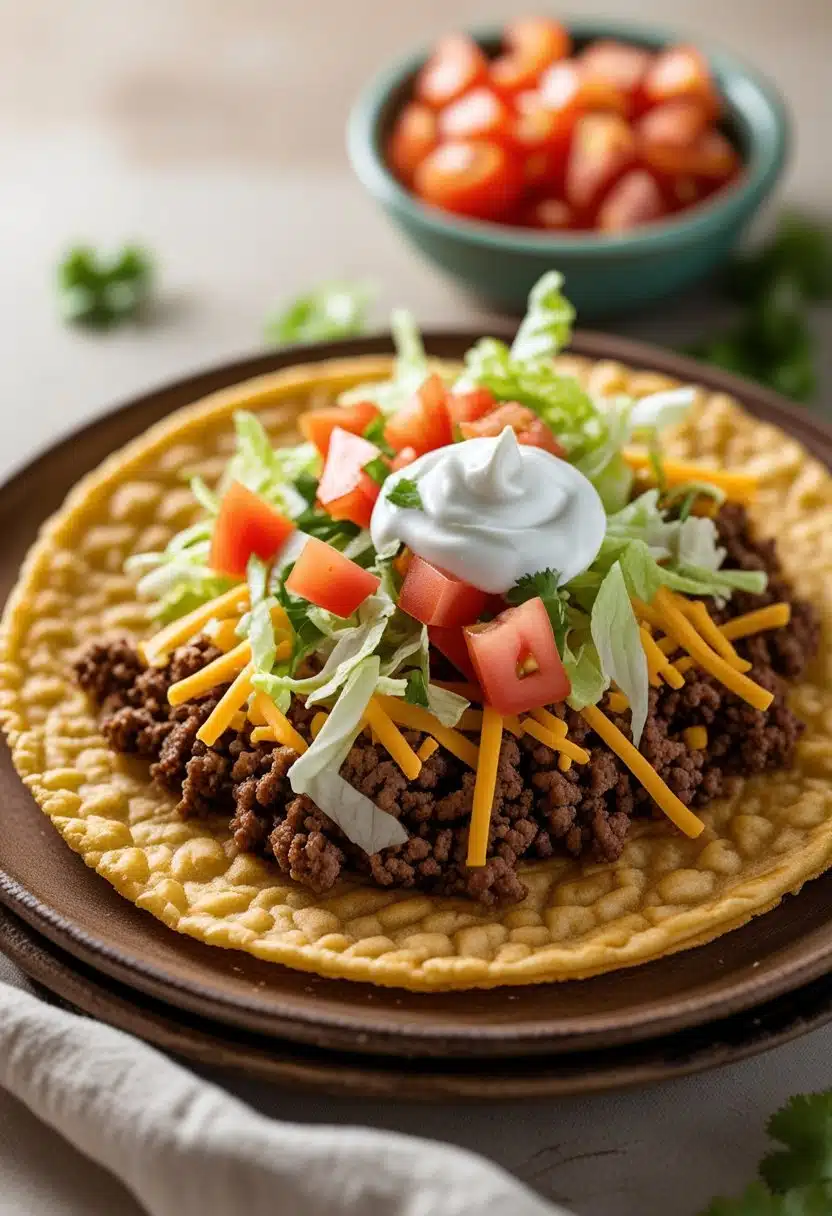
Follow our clear steps and practical tips to get the right fry bread texture.
We’ve got easy ideas for traditional and locally inspired toppings that work every time.
We make the process simple so you can cook confidently and enjoy a filling dish that brings people together.
Key Takeaways
- Learn a straightforward method for making authentic fry bread at home.
- Find reliable, hearty topping combinations that pair well with fry bread.
- Get quick answers to common questions about techniques and ingredient swaps.
Crafting Authentic Fry Bread for Navajo Tacos
We focus on a simple, reliable fry bread dough, the right flour, oil temperature, and quick options when time is tight.
These choices control texture, flavor, and how well the bread holds taco toppings.
Essential Ingredients and Bluebird Flour
We keep the ingredient list short: all-purpose flour, baking powder, salt, warm water, and a fat such as vegetable oil or lard.
Many Navajo cooks prefer a high-quality flour like Bluebird flour because it gives a consistent crumb and a golden color when fried.
If you can get Bluebird, use it; otherwise choose a strong all-purpose flour.
Measure 2 to 3 cups of flour per batch, 1 tablespoon baking powder, and 1 teaspoon salt.
Use 1 to 1 1/4 cups warm water and about 2 tablespoons fat folded into the dough.
These ratios yield a pliable dough that puffs and forms a crisp exterior without becoming greasy.
We weigh ingredients when possible for repeatable results.
We sift flour with baking powder and salt to mix evenly.
Resting the dough 20–30 minutes relaxes gluten and makes rolling easier.
Tips for Perfect Fry Bread Texture
We aim for bread that is golden and crisp on the outside, soft and slightly chewy inside.
Temperature control matters most: keep oil around 365–375°F (185–190°C).
Too cool and bread soaks oil; too hot and it browns before cooking through.
We shape disks about 5–7 inches across and 1/4 inch thick.
Thinner disks cook faster and get crispier; thicker disks give a softer interior.
Stretch gently from the center to create an even surface and a small pocket for puffing.
Drain fried pieces on a wire rack over paper towels to avoid steaming and sogginess.
Serve warm.
If oil smokes or breaks color, change it.
Reuse oil only once or twice for best flavor and safety.
Step-by-Step Frying Methods
We use shallow frying with 1–2 inches of oil in a heavy skillet for even heat.
Heat oil to 365–375°F, tested with a thermometer or by dropping a small dough scrap— it should sizzle and brown in about 1–2 minutes.
Fry one or two pieces at a time to avoid temperature drop.
Place dough carefully in hot oil and fry 1–2 minutes per side until golden and puffed.
Flip once using tongs.
Remove to a rack to drain and rest 30–60 seconds.
For larger batches, keep finished pieces on a low oven rack (200°F) to stay warm without steaming.
We recommend a neutral oil with a high smoke point, such as canola or sunflower.
Use a heavy cast-iron or stainless pan to hold steady heat.
Avoid overcrowding: it causes oil temperature to drop and yields greasy fry bread.
Time-Saving Alternatives and Variations
We offer quick options when time is short.
For a faster dough, use 2 cups self-rising flour and 3/4–1 cup water; skip measuring baking powder and salt separately.
This yields a workable Indian fry bread in about 15–20 minutes from start to finish.
For a lighter result, use 1/4 cup plain yogurt in place of some water; the acidity tenderizes the dough.
For a whole-grain twist, swap up to 30% of flour for whole-wheat, but expect a denser texture.
If frying is not possible, try baking: brush disks with oil and bake at 450°F for 8–10 minutes, flipping once.
They won’t puff the same, but they work for taco toppings.
We keep a printable recipe card with weights and timings on hand for consistent results.
Hearty Fillings and Classic Fixings
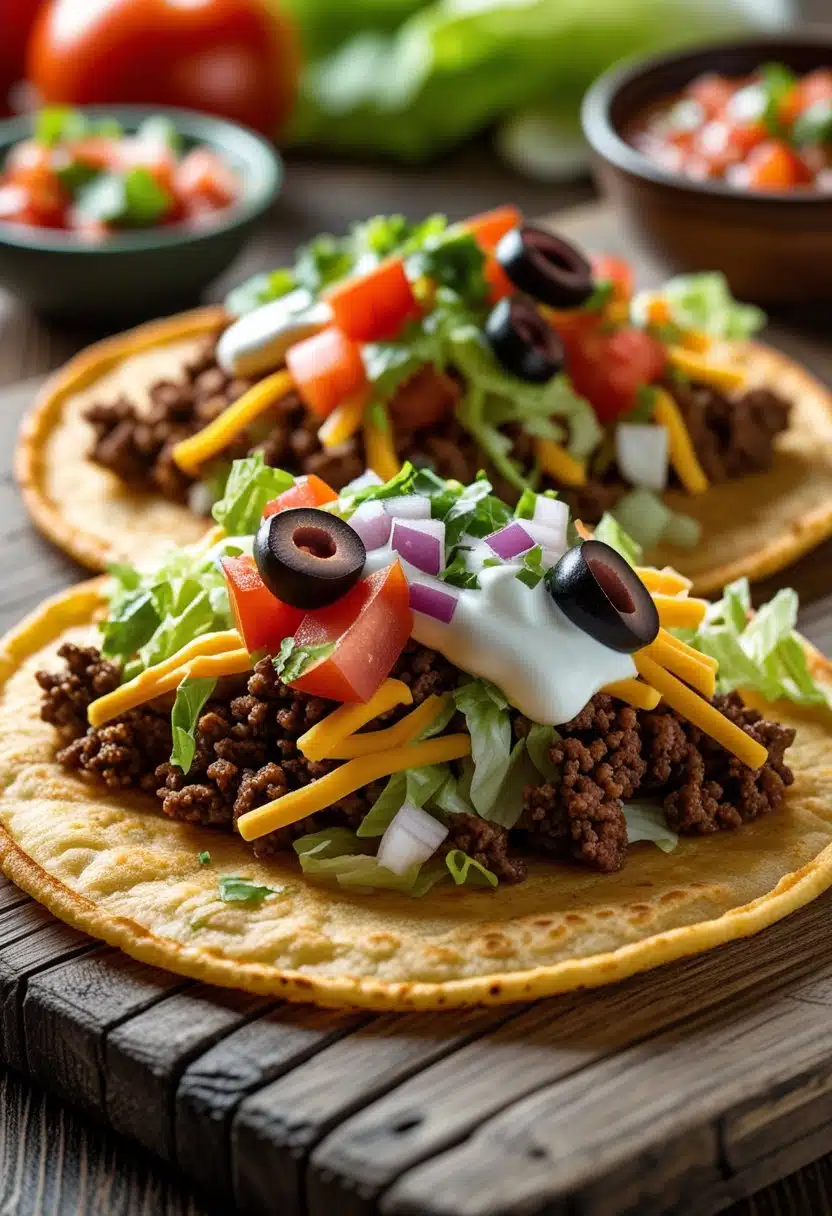
We focus on bold, savory taco meat, creamy beans, crisp vegetables, and a few sauces that balance heat and freshness.
These choices make fry bread tacos easy to build, serve, and customize for a crowd.
Seasoned Ground Beef and Bean Mixtures
We start with 1 pound of ground beef browned with a diced onion and 1 tablespoon oil.
We add 2 teaspoons chili powder, 1 teaspoon cumin, ½ teaspoon garlic powder, ½ teaspoon salt, and ¼ teaspoon black pepper to create a classic taco seasoning profile.
For texture and stretch, we fold in a 15-ounce can of pinto or dark red kidney beans, drained and rinsed, and a 14.5-ounce can of petite diced tomatoes, drained.
We simmer the mixture 8–10 minutes so flavors meld and excess liquid reduces.
For a milder style like Utah Navajo tacos, we stir in a 4-ounce can of mild diced green chilies.
This filling holds well on fry bread and reheats without drying.
Fresh Vegetable Toppings and Sauces
We keep toppings fresh and layered.
Shredded lettuce and diced tomatoes add crunch and acidity.
Thinly sliced red onion, sliced black olives, and diced avocado bring salt and cream.
For bright heat, we offer pico de gallo and lime wedges.
We include shredded cheddar cheese and sour cream for cooling richness.
A simple sauce mix—equal parts sour cream and mild salsa—works well.
If we want smoky flavor, we mix a little chipotle powder into the sour cream.
Store toppings separately so fry bread stays crisp until serving.
Building a Taco Bar for Serving
We set up stations so guests assemble fry bread tacos their way.
Arrange warm Indian fry bread on one tray and place the seasoned ground beef and beans in a heated pan or slow cooker.
Offer bowls for shredded cheddar, shredded lettuce, diced tomatoes, and sliced olives within arm’s reach.
We label bowls and provide small spoons for pico de gallo, mild diced green chilies, and sour cream.
Include plates and napkins, and a stack of warm fry bread wrapped in a towel to keep them soft.
A small cooler with bottled drinks and lime wedges completes the setup for casual gatherings.
Southwestern Flair and Modern Twists
We add regional flavors without changing the core fry bread taco.
For a Southwestern kick, sprinkle crumbled cotija or add pickled jalapeños.
We swap half the ground beef for chorizo for deeper spice.
For lighter options, we use black beans and grilled corn tossed with lime and cilantro.
We try modern twists like a taco salad served in torn fry bread cups or drizzling a cilantro-lime crema over each taco.
When we want a smoky-sweet finish, we top with grilled pineapple salsa.
These small changes keep the dish familiar while adding fresh interest for our guests.
Frequently Asked Questions
We answer the most common questions about toppings, fry bread technique, a simple recipe, history, regional differences, and where to eat Navajo tacos in Utah.
Each answer gives clear, specific steps or facts you can use right away.
What are the traditional toppings for Navajo tacos?
Traditional savory toppings include seasoned ground beef or mutton, cooked pinto or black beans, shredded lettuce, diced tomatoes, grated cheddar or a melting white cheese, and chopped onions.
Salsas, sour cream, and sliced jalapeños are common additions.
For sweet versions, people use honey or powdered sugar on plain fry bread.
How do you make authentic Indian fry bread for Navajo tacos?
Mix 2 cups all-purpose flour, 1 tablespoon baking powder, 1 teaspoon salt, and 1 cup warm water; stir until a soft dough forms.
Let the dough rest 20–30 minutes, divide into six pieces, flatten each to about 6–8 inches, and fry in 1–2 inches of hot oil (about 350°F) until golden, flipping once.
Can you provide a simple recipe for Navajo tacos?
Brown 1 pound ground beef with 1 small diced onion, drain, then stir in 1 tablespoon chili powder, 1 teaspoon cumin, 1/2 teaspoon salt, and 1/4 cup water; simmer 5 minutes.
Top one piece of hot fry bread with a scoop of the meat, 1/3 cup cooked beans, shredded lettuce, diced tomato, and 1/4 cup shredded cheese.
Serve immediately.
What is the origin of fry bread in Navajo cuisine?
Fry bread developed after the Navajo people received government rations of flour, lard, and sugar during the 19th century relocations.
Navajo women adapted those rations into a simple fried dough that became a lasting food tradition across the community.
Is there a difference between Oklahoma Indian Tacos and Navajo Tacos?
Both use fried bread as the base, but Oklahoma Indian Tacos often use fry bread shaped flatter and may feature different spice mixes or pressure-fried textures.
Navajo tacos typically reflect Navajo seasoning styles and topping choices, such as mutton in places where that meat is traditional.
Where can I find the best Navajo tacos near me?
Check out community fairs, powwows, and those magical roadside stands in southeastern Utah and near the Navajo Nation for the real deal.
If you’re feeling adventurous, local diners and food trucks in Utah towns close to Monument Valley and San Juan County are also great spots to score a tasty Navajo taco.