Winter in Utah calls for warm, simple meals that taste like home. You’ll love how the sweet butternut and nutty acorn squash blend into a smooth, cozy soup using easy pantry spices and basic roasting or simmering methods.
We’ll show you a clear, reliable recipe that delivers a rich, creamy soup every time.

Follow our step-by-step approach and you’ll finish with a bowl that balances sweetness, savory depth, and a hint of fall spices. We’ll point out key ingredient swaps, quick cooking shortcuts, and tips to make the soup silky without heavy cream.
Key Takeaways
- Use roasted or simmered squash plus simple spices for deep, balanced flavor.
- Small technique changes create a creamy texture without heavy cream.
- Clear steps and ingredient options make the soup easy to repeat.
Butternut & Acorn Squash Soup: Key Ingredients and Preparation
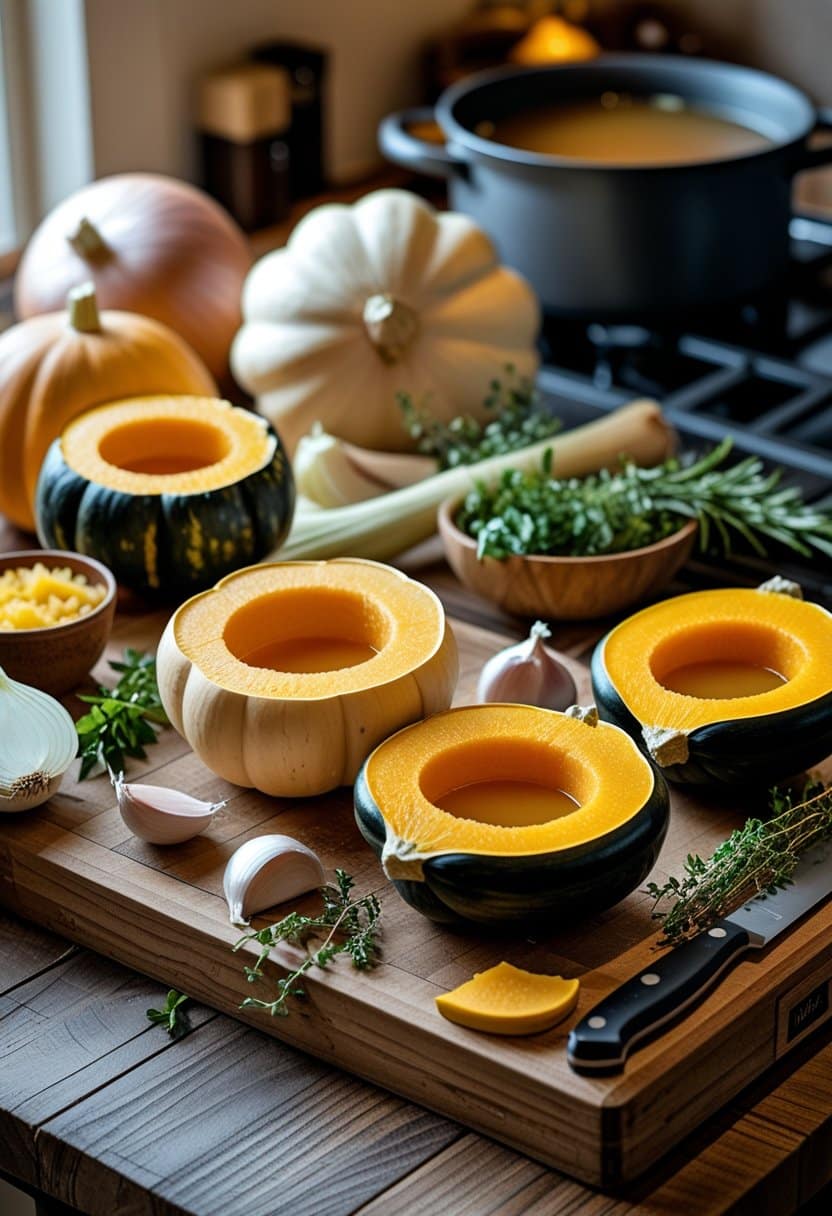
We focus on two winter squashes, a few aromatic vegetables, and simple pantry spices. Roasting the squash first, building flavor with sautéed aromatics, and finishing with a creamy element gives the best texture and depth.
Why Butternut and Acorn Squash Make the Perfect Pair
Butternut squash brings dense, sweet flesh and smooth texture that becomes silky when blended. Acorn squash adds a slightly nuttier, earthier note and lighter body that keeps the soup from becoming overly sweet.
We roast both halves cut-side down to concentrate flavor and caramelize sugars. Roasting time is 35–50 minutes at 400°F (200°C) depending on size.
Test with a fork; flesh should be fork-tender throughout. When we combine roasted butternut and acorn squash in one pot, we get a full-bodied base that blends to a creamy, stable emulsion without needing much cream.
This makes the recipe flexible for dairy or plant-based finishes. Your taste buds will thank you, and your lactose-intolerant friends will too.
Selecting and Prepping Seasonal Squash
Choose firm squash with matte skin and no soft spots. For butternut, pick a uniform beige color and one that feels heavy for its size.
For acorn, look for deep green with an orange patch where it sat on the ground. Wash and dry the squash, then cut off stem ends.
For safety, create a flat base by trimming a thin slice from the bottom. Halve lengthwise, scoop seeds, and reserve them for roasting if you’re feeling adventurous.
Brush cut surfaces with olive oil and season with salt and pepper before roasting. Place cut-side down on a rimmed baking sheet lined with parchment for even roasting.
If time is short, microwave for 2–3 minutes to soften the skin before cutting. Your fingers will thank you.
Essential Flavor Boosters: Herbs, Spices, and Garnishes
Start with a classic mirepoix: diced onion, carrot, and celery sautéed in butter or oil until soft. Add garlic toward the end to avoid burning.
We use thyme and a small pinch of nutmeg to enhance natural squash sweetness. For a savory boost, simmer with a parmesan rind or add a splash of soy sauce or miso for umami.
For heat, a pinch of cayenne or smoked paprika works well. Finish with heavy cream, coconut milk, or pureed cashews for creaminess.
Garnish ideas: toasted pumpkin seeds (pepitas) for crunch, a drizzle of high-quality olive oil for richness, and chopped chives or fried sage for freshness. A swirl of yogurt or crème fraîche adds contrast and makes your bowl look extra fancy.
Recommended Tools and Equipment for the Best Results
A sharp chef’s knife and sturdy cutting board make prepping safe and fast. A large rimmed baking sheet or two provides even roasting and prevents steaming.
Use a heavy pot or Dutch oven for sautéing and simmering; it retains heat and gives steady simmer control. For blending, an immersion blender is fast and safe.
A high-speed blender works too—blend in batches and vent the lid to release steam (unless you want to redecorate your kitchen in squash). Optional but helpful: a spoon or ice-cream scoop for removing seeds, a fine-mesh sieve for extra-smooth soup, and a silicone spatula to scrape bowls.
These small tools speed the process and improve texture when making acorn and butternut squash soup.
Step-by-Step: Crafting Your Seasonal Comfort Soup
We focus on caramelizing squash, building warm aromatics, and finishing a smooth, balanced soup ready for bold toppings like toasted pumpkin seeds or crispy sage. Follow tight roasting times, careful blending, and simple seasoning checks.
Roasting Squash for Rich, Sweet Flavor
We roast both butternut and acorn squash to deepen sweetness and add a light char. Peel and cube butternut; halve acorn, scoop seeds, and roast cut-side down for 30–40 minutes at 425°F (220°C).
Toss cubes or halves with 1–2 tablespoons olive oil, 1/2 teaspoon salt, and a pinch of black pepper so edges brown without burning. We also roast whole garlic cloves and a chopped onion on the same sheet to build the base.
Check tenderness with a fork — squash should mash easily and edges should caramelize. If you want smoky notes, broil for 1–2 minutes at the end.
Reserve any roasted juices on the pan; they add flavor when we deglaze the pot. Waste not, want not!
Blending and Finishing Techniques for Creamy Texture
Transfer roasted squash, onion, and garlic to a pot and add 3 cups stock (vegetable or chicken) plus a splash of cream or coconut milk for richness. Warm gently and use an immersion blender until silky.
Blend in short bursts, stirring between, to avoid hot splatters and to watch texture. For extra silkiness, push the soup through a fine-mesh sieve with a spatula or use a high-speed blender in batches.
Adjust thickness: add stock for a thinner soup or simmer uncovered to reduce and thicken. Season in stages — taste after blending, then add 1/2 teaspoon ground cinnamon or a small grate of nutmeg, and salt to balance sweetness.
Finish with a teaspoon of acid, such as lemon juice or apple cider vinegar, to brighten flavors. Your soup will thank you, and so will your taste buds.
Serving Suggestions and Creative Toppings
Serve the acorn and butternut squash soup warm, ladled into bowls with contrasting textures. Top with toasted pumpkin seeds for crunch and a drizzle of olive oil or coconut cream for shine.
Crisp fried sage or rosemary adds herbal aroma and color. For heartier bowls, add roasted chickpeas or shredded roasted acorn squash chunks on the side.
Offer crusty bread or a grilled cheese with sharp cheddar. For a lighter option, swirl in plain yogurt and sprinkle smoked paprika.
Label toppings on the table so guests can customize their bowl. Soup bars: not just for cafeterias anymore!
Frequently Asked Questions
We cover specific spice choices, dairy-free swaps, a clear vegan path, slow-cooker steps, how to get ultra-smooth texture, and the main roasting mistakes to avoid. Each answer gives practical tips you can use when making our Utah-style butternut and acorn squash soup.
What are the key spices to enhance the flavor of Butternut and Acorn Squash Soup?
We use warm spices that bring out the squash’s natural sweetness without masking it. Nutmeg and cinnamon add warm depth; a small pinch of cayenne or smoked paprika brings balance with gentle heat.
We also favor savory herbs for contrast. Fresh or dried thyme and sage give woodsy notes, while a bit of ground black pepper brightens the final bowl.
Can you use coconut milk as a base for Butternut and Acorn Squash Soup?
Yes. Full-fat canned coconut milk adds richness and a smooth mouthfeel while keeping the soup dairy-free.
Start with 3/4 to 1 cup for a pot serving 6–8, then adjust to taste. Use neutral vegetable broth as the liquid backbone before adding coconut milk at the end.
Heat gently after adding coconut milk to avoid breaking the texture. No one wants split soup.
Is there a vegan variation of Butternut and Acorn Squash Soup?
We make a simple vegan version by using vegetable broth and coconut milk instead of chicken stock and cream. Roast the squash, sauté aromatics, blend, then finish with coconut milk or blended soaked cashews for creaminess.
For extra umami, simmer a parmesan rind substitute like a piece of kombu or a splash of tamari, but don’t add animal products. Top with toasted pepitas or crispy chickpeas for texture.
How can I adapt Butternut and Acorn Squash Soup for a slow cooker?
We roast the squash first to concentrate flavor, then add it to the slow cooker with sautéed onions, carrots, celery, spices, and 4–6 cups of broth.
Cook on low for 4–6 hours or high for 2–3 hours until vegetables are very tender. Blend the cooked mix with an immersion blender, then stir in coconut milk or cream.
If the soup is too thick, thin with extra hot broth before serving. Your slow cooker just became your new best friend.
What is the secret to achieving a creamy texture in Acorn Squash Soup?
Roasting until the flesh is very tender and caramelized is the first key step. That concentrates sugars and softens fibers so blending yields a silkier result.
Second, blend thoroughly with a high-powered blender or immersion stick for 2–3 minutes. For extra silk, pass the blended soup through a fine-mesh sieve or add a small amount of blended soaked cashews or coconut milk.
Are there any common pitfalls to avoid when roasting squash for soup?
Don’t under-roast the squash. If it’s not fully tender, your soup might end up grainy and uneven—nobody wants that.
Roast cut-side down on a lined sheet at 400°F until a fork slides in easily. Avoid overcrowding the pan, or your squash will steam instead of roast.
Give those pieces some personal space. Season before roasting, and be sure to scrape any delicious browned bits from the pan into your soup base for extra flavor.