You can bring a taste of Montana to your kitchen with a simple, sturdy pasty that fits any meal. These hand pies started as honest miner food, packed with meat, potatoes, and onions.
They still deliver a full, satisfying bite that travels well and warms up easily. Traditional ingredients and a flaky crust make pasties a reliable, tasty meal for lunch, dinner, or even a midnight snack (we won’t tell).
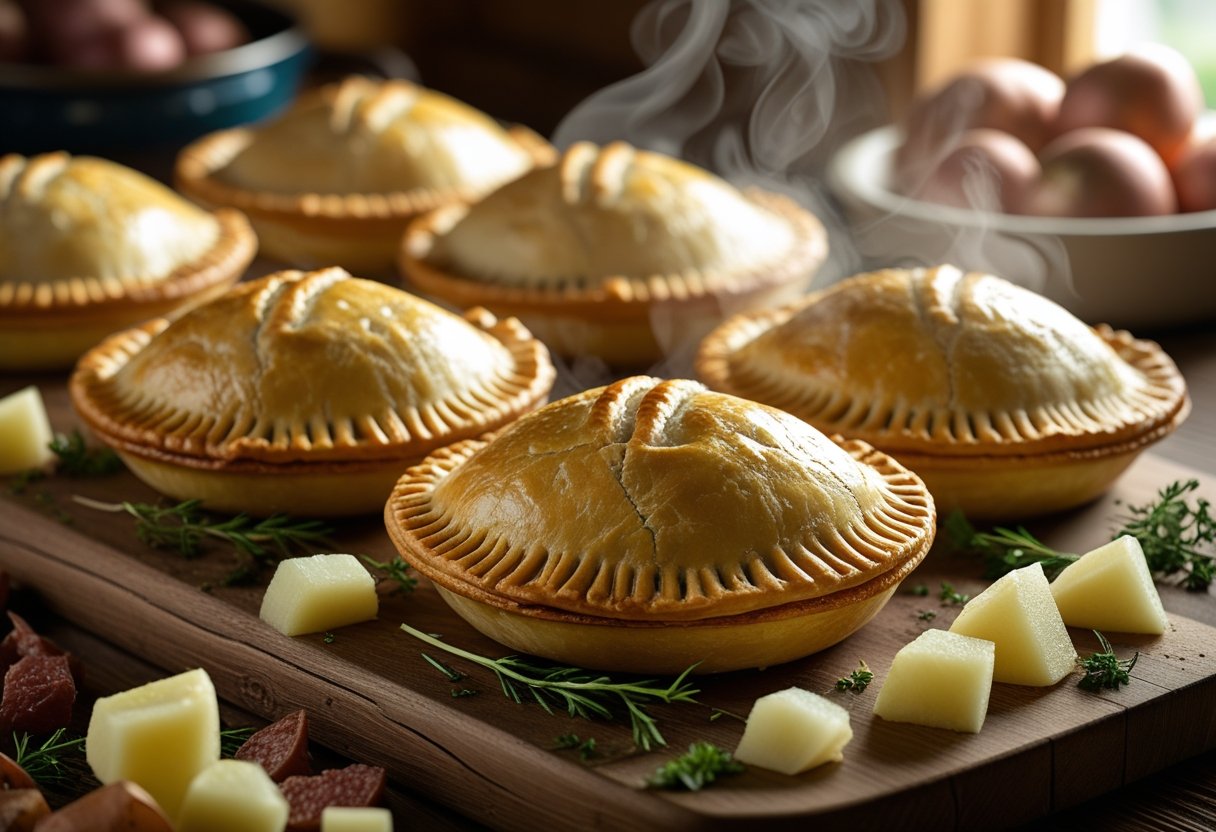
We’ll walk through the history behind the dish and the basic filling and crust you need. There are also easy variations you can try at home.
Along the way, you’ll find practical tips for shaping, sealing, and baking pasties so they hold together and taste great every time. No more exploding hand pies—unless you’re into that kind of drama.
Key Takeaways
- Pasties are a portable, hearty meal built from simple ingredients.
- Traditional methods focus on a solid crust and a balanced meat-and-vegetable filling.
- Easy recipes and tips help you make consistent, tasty pasties at home.
Traditional Montana Pasties: History, Ingredients, and Methods
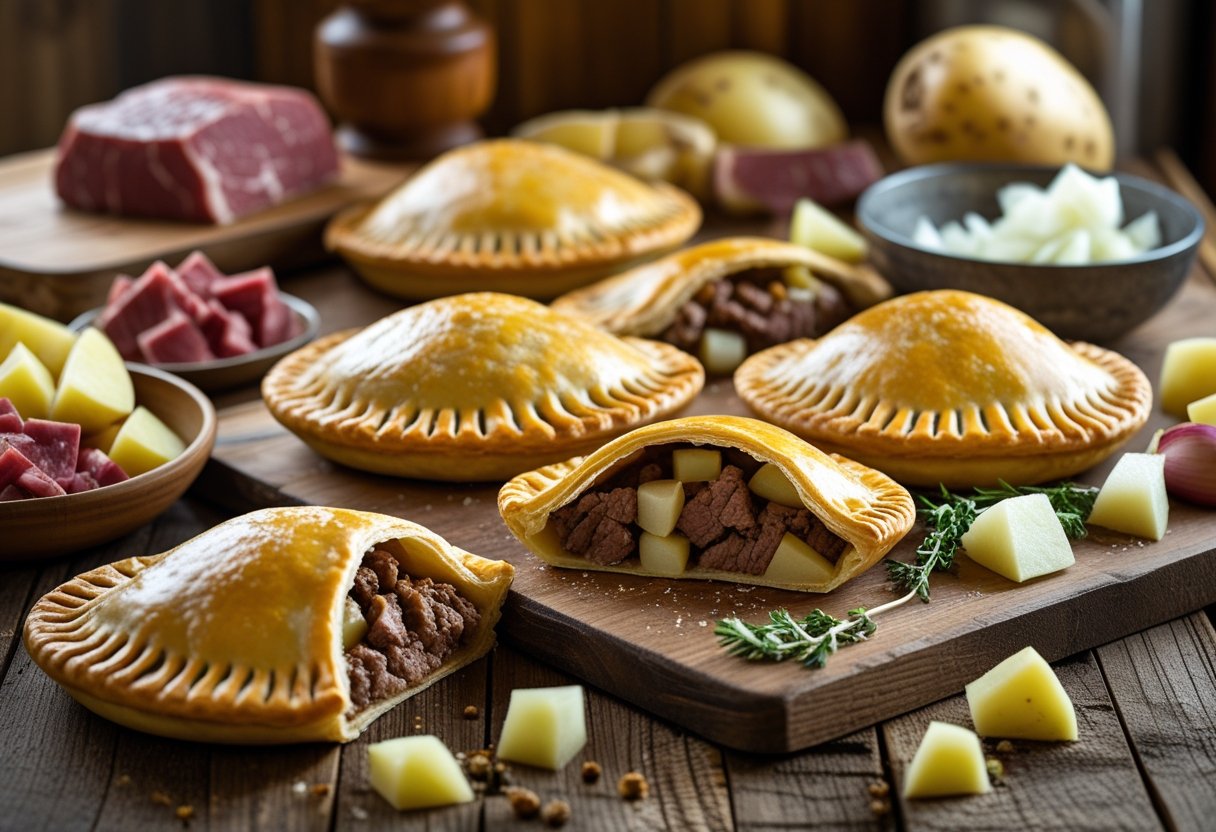
We outline how pasties became part of Montana life and what goes into a classic Butte pasty. Here’s how to make them well, with origins, key ingredients, and reliable methods that produce a sturdy, flavorful hand pie.
Origins in Butte, Montana and Cornish Mining Tradition
We trace the pasty’s arrival to Butte through Cornish miners who came in the late 1800s and early 1900s to work copper mines. They brought the Cornish pasty, a folded meat pie designed for a miner’s lunch.
The thick crimped edge gave miners a clean handle; some even tossed that crust after eating. Families and boarding houses in Butte kept the practice alive, turning the pasty into a town staple.
Local identity grew around the pasty because it fit mining life: portable, filling, and cheap. By 1900, Butte’s bakeries and homes made pasties with regional tweaks, like adding rutabaga.
The dish linked immigrant cooks to a shared meal that matched Montana’s work rhythms. Nothing says “team building” like everyone eating the same meat pie.
Essential Ingredients: Meat, Vegetables, and Pastry
We use simple, sturdy ingredients that hold up when baked and carried. Traditional fillings pair ground or diced beef with diced potato and onion.
Rutabaga often appears in older recipes for texture and a mild cabbage-like flavor. Seasoning stays modest: salt, pepper, and sometimes a splash of broth.
The pastry needs to be tough enough to act as a handle. We prefer a flaky shortcrust made with cold fat and minimal water.
Sizes vary—historic pasties could be large, but modern Butte pasties are usually handheld. For vegetarian versions, we swap meat for hearty mushrooms or root vegetables while keeping the same pantry spices.
Classic Preparation Methods and Tips
First, cut meat and vegetables into uniform small pieces so they cook evenly. Par-cooking dense vegetables like potato or rutabaga by briefly boiling helps ensure the filling finishes cooked without overbaking the crust.
Assemble on a rolled round of dough, place filling off-center, fold into a half-moon, and crimp the edge tightly to seal juices. Bake on a sheet at a high temperature until the crust is golden and the filling reaches a safe internal temperature.
Let the pasty rest so juices set; that prevents soggy crusts. For authenticity, we avoid heavy gravies inside and serve the pasty warm or slightly cool—just like miners in Butte preferred.
For more on Butte’s pasty history, see this piece on the Story of Pasties in Montana.
Making the Perfect Pasty: Recipes, Variations, and Serving Suggestions
We show exact ingredients, basic steps, and smart swaps so you can make sturdy pasties that hold together and taste great. Try the filling ideas and pick a serving style that fits breakfast, lunch, or a hearty dinner.
Traditional Montana Pasties Recipe
We use a simple dough and a raw-meat filling so the pasty cooks evenly and stays moist. For dough: 3 cups all-purpose flour, 1 tsp salt, 1 cup cold lard or shortening, 3/4–1 cup very cold water.
Cut fat into flour until pea-sized crumbs form, stir in water until it holds, then chill 30 minutes. For filling: 1.5 lb coarse ground beef (or pasty meat mix), 2 cups peeled diced potatoes, 1 cup diced onion, 1 cup diced rutabaga or turnip, 1 tsp salt, 1/2 tsp black pepper.
Mix gently; do not precook. Assembly: divide dough into 8 rounds ~7–8″ diameter.
Place 1 cup filling on each half, moisten edge, fold and crimp. Brush with beaten egg if desired.
Bake at 400°F (200°C) for 35–45 minutes until crust is golden and interior registers 165°F. Many Montana and Cornish pasty recipes follow this raw-filling method for convenience and miner-style heartiness.
Popular Pasty Variations and Creative Fillings
We keep texture important: balance meat, firm veg, and a bit of gravy. Classic Cornish pasties use beef, potato, rutabaga, and onion—a template for variations.
Vegetarian: replace beef with seasoned lentils and mushrooms; add grated carrot and swede.
Seafood: flaked white fish with cream sauce, peas, and parsley for a softer filling.
Spiced: use diced lamb, cumin, and chopped spinach for a Mediterranean twist.
Mini pasties: use smaller rounds and 20–25 minute bake time for hand-held snacks.
Tips: cut ingredients uniformly for even cooking; don’t overfill; leave a thick crimp so juices stay sealed. For dough stability, blind-bake small tartlets or add an egg wash to strengthen crust.
Best Ways to Serve and Enjoy Meat Hand Pies
We serve pasties hot, warm, or reheated; each method changes texture and flavor. Fresh from the oven they have a crisp crust and steamy filling.
Let them rest 5–10 minutes before eating to avoid burns (your tongue will thank you). Serving ideas:
- Traditional: with ketchup or brown gravy on the side.
- Sandwich style: split and add mustard, pickles, or sharp cheddar.
- Soup pairing: serve with a bowl of beef stew or split pea soup for a fuller meal.
Storage and reheat: cool completely, wrap, and freeze up to 3 months. Reheat from frozen at 375°F for 30–40 minutes, or thaw and bake 20 minutes.
For quick heat, use a 350°F oven to keep crust crisp; microwaving makes crust soft but works in a pinch (we won’t judge). For more background on Cornish and regional pasty styles, see an authentic Upper Michigan pasty recipe.
Frequently Asked Questions
We cover the exact ingredients, step-by-step filling prep, historical origins in Butte, local shops known for pasties, common recipe variations, and how cocktail pasties differ from full-size pasties.
What ingredients are needed to make traditional Montana meat pasties?
We use ground beef or cubed beef, diced potatoes, and chopped onions as the base.
Seasonings usually include salt and black pepper; some recipes add a little butter or beef broth for moisture.
For the crust, we use all-purpose flour, cold butter or shortening, salt, and ice water.
How do I prepare the filling for a hearty Montana pasty?
We cut potatoes and onions into small, uniform pieces so they cook evenly with the meat.
We mix raw meat, potatoes, onions, salt, and pepper in a bowl and spoon the mixture onto the uncooked pastry; the filling cooks inside the crust while baking.
Some cooks add a splash of beef broth or a pat of butter to keep the filling moist; do not overfill to ensure proper sealing.
What is the history behind Montana’s meat hand pies?
We trace the pasty to miners who brought the dish from Cornwall to mining towns like Butte.
Miners favored pasties because they were portable, filling, and could stay warm in a tin lunchbox.
Local tradition in Butte included marking pies with initials so miners could tell which pasty belonged to them. For more on the pasty’s role in Montana mining culture, see this brief history of the beef pasty (https://www.distinctlymontana.com/brief-and-tasty-history-beef-pasty).
Where can I find the best pasties in Butte, Montana?
We recommend checking long-standing bakeries and pasty shops in Butte known for maintaining the tradition.
Local favorites often mentioned include family-run shops and historic pastry houses that still sell warm pasties by the slice.
For examples of Butte pasty spots and local descriptions, read an exploration of Butte’s pasties (https://southwestmt.com/blog/exploring-buttes-pasties/).
Are there any variations to the classic Montana pasty recipe?
We see variations that swap beef for ground pork, lamb, or diced venison.
Vegetable additions like rutabaga, carrots, or celery appear in some family recipes.
Some cooks serve pasties with gravy, while others keep them plain and slightly warm.
How do cocktail pasties differ from traditional-sized pasties?
We make cocktail pasties much smaller—bite-sized or appetizer portions.
Traditional pasties are usually full handheld meals, so you won’t need to unhinge your jaw for the cocktail version.
Cocktail versions often have a higher ratio of crust to filling.
They also cook faster, which is great if you’re impatient or just really hungry.
These mini pasties let hosts offer pasty flavor without committing guests to a full meal.
They may use slightly different fillings or seasoning to suit party tastes.