Tofu katsu curry is a satisfying plant-based twist on a classic Japanese favorite. It pairs crispy, golden tofu cutlets with a rich, flavorful curry sauce, served over fluffy rice.
This recipe is hearty, comforting, and easy to prepare. Perfect for weeknight dinners or whenever you’re craving something filling and delicious.
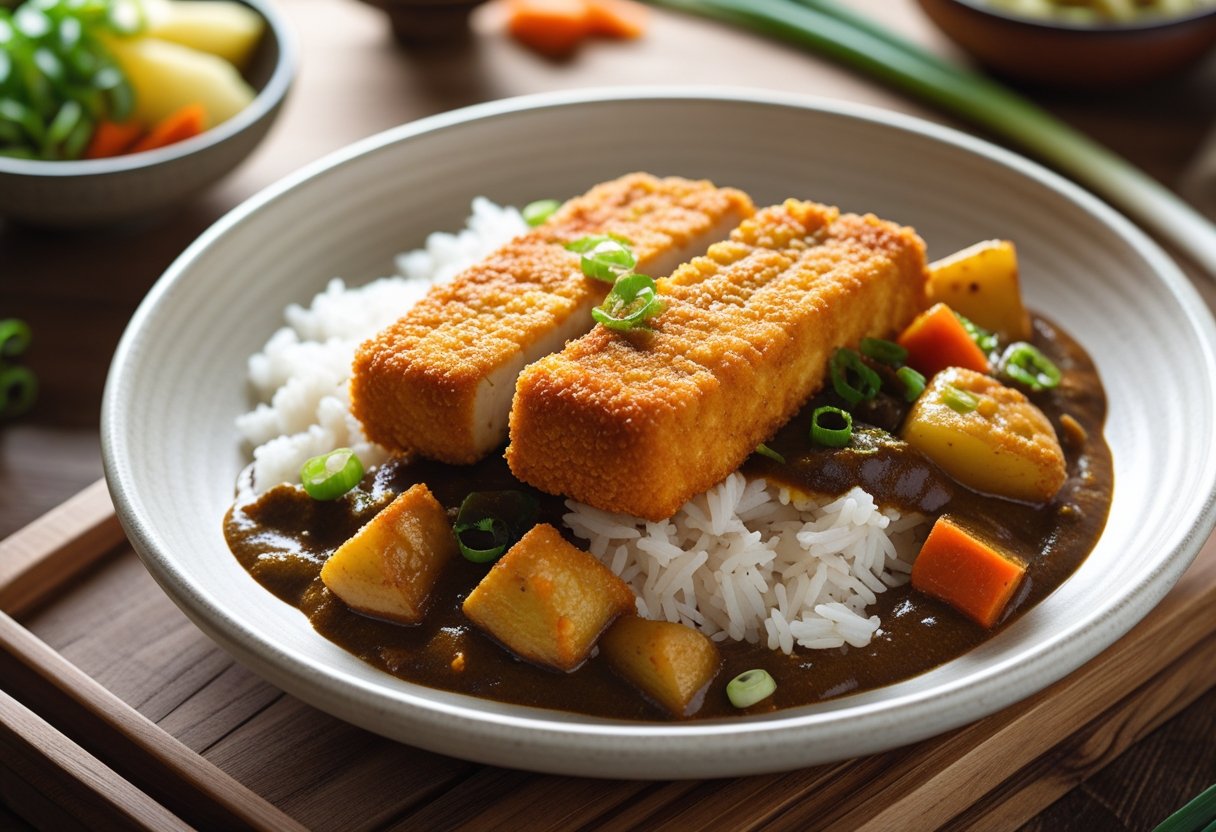
The beauty of tofu katsu curry is how it combines textures and flavors without relying on meat. The tofu provides a meaty texture that holds up well to the crispy breading, while the curry sauce adds warmth and depth.
We’ll guide you through making each component from scratch. Soon, you’ll be enjoying this well-loved dish at home.
By preparing the curry ahead of time and using firm tofu for the katsu, we can keep things straightforward but impressive. You’ll have a restaurant-quality meal in under an hour, with the option to bake or air fry the tofu if you’re feeling healthy (or just want to save some oil).
For a detailed recipe and tips, check out this vegan tofu katsu curry recipe.
How to Make Tofu Katsu Curry
Making tofu katsu curry starts with picking the right tofu and prepping it for that irresistible crispy texture. We focus on getting the tofu firm and dry, then coating it well for frying.
It’s important to balance crispiness and flavor in every step. That’s the secret to a satisfying vegan tofu katsu curry.
Essential Ingredients
For tofu katsu, we use extra-firm or firm tofu because it holds its shape best. You’ll also need panko breadcrumbs for a light, crispy coating.
Cornflour or all-purpose flour helps the breadcrumbs stick, and plant-based milk or a vegan egg replacement is used as the wet batter. Other essentials include sunflower oil or any neutral oil for frying, and soy sauce to season the tofu before breading.
For the curry, we use vegetables like potatoes and carrots, along with a flavorful curry roux or store-bought curry cubes. These ingredients come together to create the classic katsu curry dish.
Preparing and Pressing the Tofu
First, we drain the tofu and press it to remove as much water as possible. A tofu press makes this easier, but you can also wrap the tofu in a clean cloth and press it under a heavy object for 10 to 15 minutes.
This step is vital to help the breading stick and prevent sogginess during frying. For a firmer texture, we like to freeze the tofu overnight and thaw it before cooking.
Freezing changes the tofu’s texture, making it chewier and better for cutting into slabs. After thawing, we press the tofu again for extra dryness.
Then we cut the tofu into thick slabs, about 1/2 to 3/4 inch thick. Season both sides with soy sauce, salt, and pepper.
Breading and Cooking the Tofu Katsu
Set up a breading station with three bowls: one with flour or cornflour, one with plant-based milk or vegan egg, and one with panko breadcrumbs. First, coat each tofu slab lightly with flour to help the batter stick.
Next, dip the tofu in the plant-based milk or vegan egg substitute. Finally, press the tofu slabs firmly into the panko breadcrumbs, ensuring an even and thick layer of crumbs.
This step is key to getting a crunchy crust. For cooking, heat sunflower oil in a pan to about 350ºF (180ºC).
Fry the tofu slabs gently until they turn golden brown and crispy on both sides, usually 3-4 minutes per side. Avoid flipping too early to keep the coating intact.
Once cooked, the tofu katsu is ready to be paired with the rich Japanese curry and warm rice. Get ready for some serious comfort food!
Serving and Customizing Your Tofu Katsu Curry
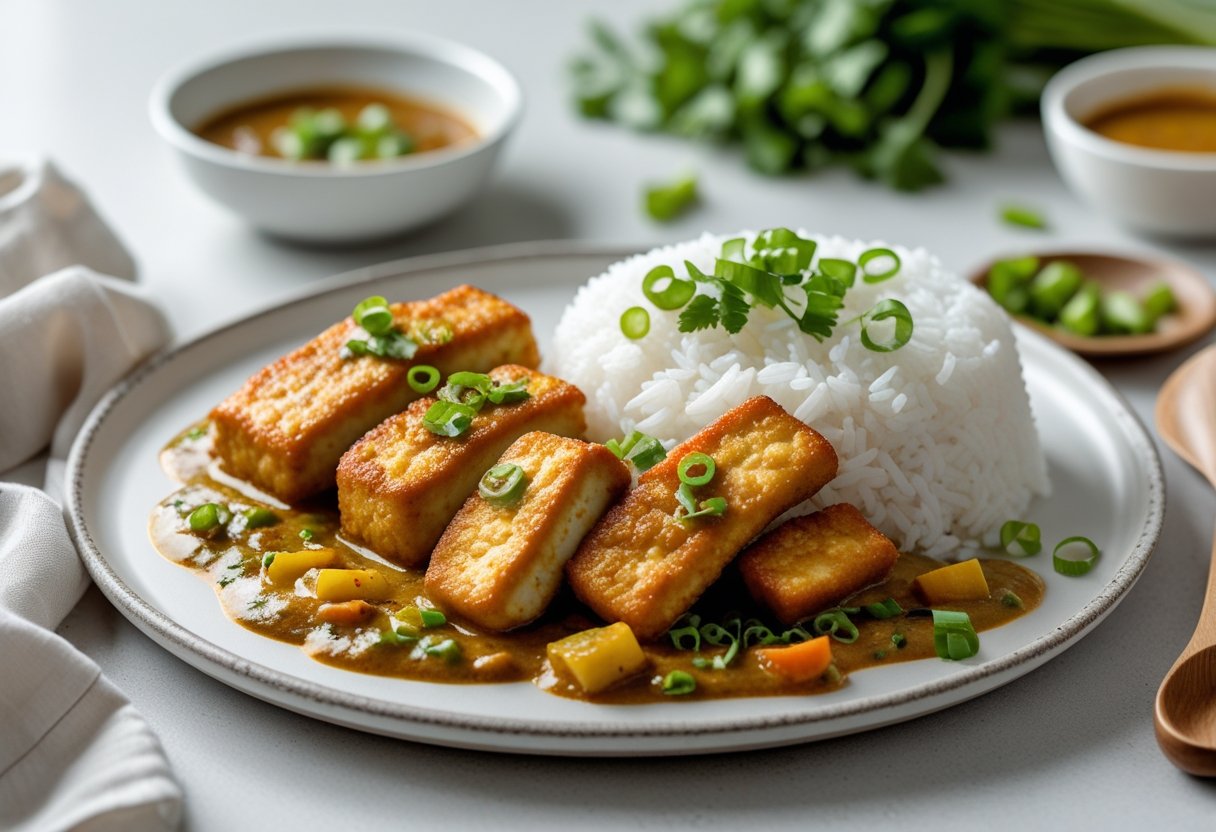
Tofu katsu curry shines when each part balances well—crispy tofu, rich sauce, and the right sides. We focus on making a flavorful Japanese curry sauce, picking the best rice and sides, and adding toppings that boost taste and texture.
Proper storage tips keep leftovers fresh and tasty. (But let’s be honest, there probably won’t be any.)
Making the Japanese Curry Sauce
We start by sautéing onions, garlic cloves, and grated root ginger to build a strong flavor base. Adding diced carrots gives the sauce natural sweetness and texture.
Next, we mix in curry powder and ground turmeric for warmth and depth. Vegetable stock softens the mix into a thick sauce.
To enrich the flavor, we can stir in a splash of coconut milk, which adds creaminess and balances the spices. Simmering the sauce lets the flavors meld into a rich Japanese-style curry that is smooth, slightly sweet, and comforting.
Rice and Side Dish Options
For rice, we usually choose Japanese short-grain sushi rice because it’s slightly sticky and holds the curry well. If you want a lighter option, quinoa or cauliflower rice work nicely.
These add texture and make the meal healthier. Good side dishes balance the richness of the curry.
A simple shredded cabbage salad with sesame dressing offers freshness. Quick cucumber pickles with rice vinegar bring acidity that cuts through the curry’s heaviness.
These elements keep the meal well-rounded and enjoyable.
Toppings, Garnishes, and Storage Tips
We jazz up our plate with finely chopped spring onions and a sprinkle of toasted sesame seeds. These add a fresh, crunchy contrast.
Adding fukujinzuke, a bright red Japanese pickle, gives a sweet, tangy burst that refreshes the palate between bites. It’s like a flavor party in your mouth, and everyone’s invited.
To keep tofu katsu crispy, we serve curry sauce on the side instead of pouring it over the tofu. For leftovers, we store tofu, curry, and rice separately—everyone gets their own room.
Reheating tofu in an air fryer or toaster oven helps bring back the crunch. The curry, meanwhile, can gently warm up on the stove or in the microwave.
For more about making authentic tofu katsu curry, check out how to serve tofu katsu curry like a pro.