Southern collard greens with smoky ham have been a staple in Southern cooking for generations. This classic side dish is known not just for its rich, comforting flavor but also for its tradition as a symbol of good luck and prosperity.
Slow-cooked with smoked ham hocks, garlic, and onions, collard greens become tender and flavorful. They’re an essential addition to any Southern meal—plus, they make you look like you know what you’re doing in the kitchen (bonus points).
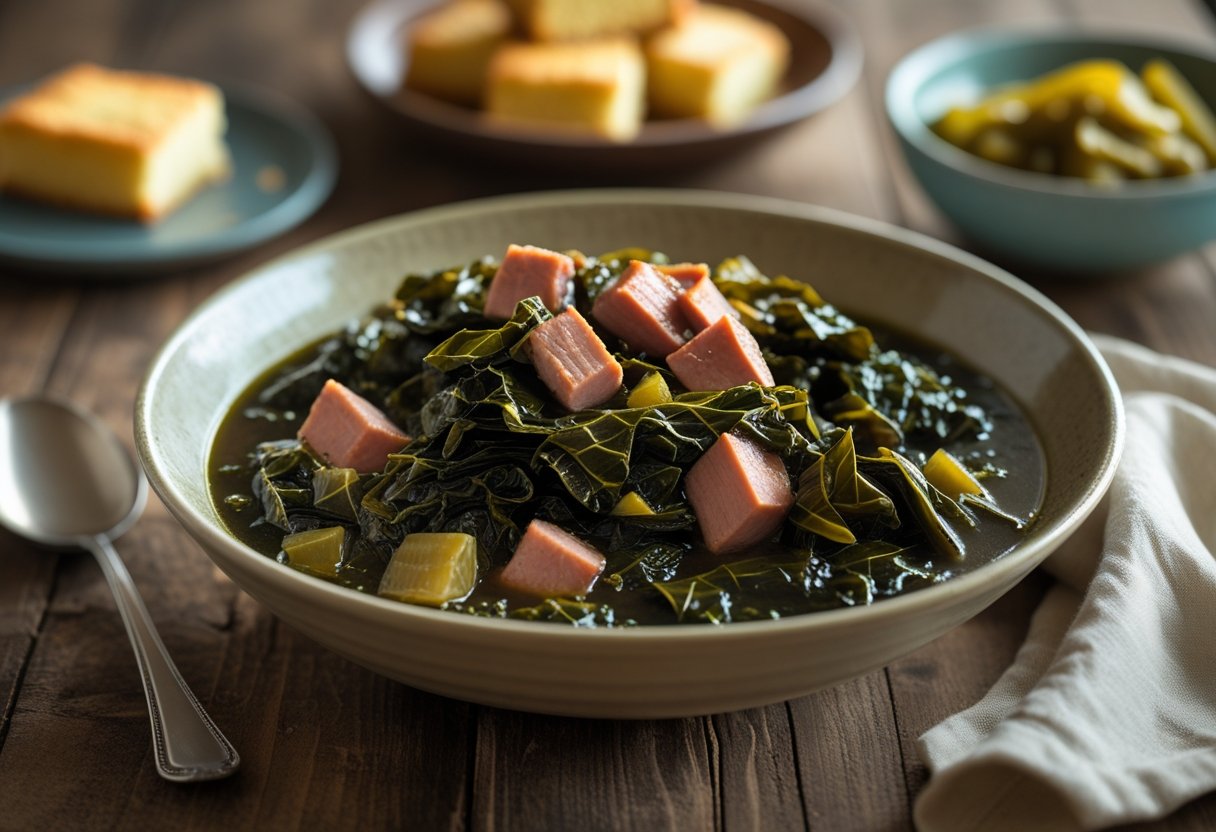
We love how the smoky meat infuses every bite, turning simple greens into a soulful dish that pairs perfectly with classic Southern entrees. The balance of savory, slightly tangy vinegar, and a hint of sweetness brings out the deep, lasting flavor that keeps everyone coming back for more.
Whether you’re looking to honor tradition or just want a hearty, delicious side, this recipe fits the bill. It’s easy to prepare, packed with rich flavors, and carries a bit of Southern history we can all appreciate.
Learn how to make this beloved dish your own. Let’s get cookin’!
Southern Collard Greens with Smoky Ham: Tradition & Flavor
Southern collard greens with smoky ham have deep roots in soul food and Southern recipes. The dish balances rich tradition, key ingredients, and special cooking techniques that create its well-loved flavor.
Understanding its origins and essential components helps us appreciate why it holds a key place at many family and holiday tables. Plus, it’s a great excuse to eat more greens (your grandma would approve).
Origins and Cultural Significance
Collard greens have long been a staple in Southern cooking and soul food traditions. These leafy greens were valued for their hardiness and nutrition, especially during colder months.
They became a symbol of good luck and prosperity, often served on New Year’s Day alongside black-eyed peas. The use of smoked ham hocks to cook the greens started as a way to add flavor using affordable cuts of meat.
This practice turned humble collards into a rich dish infused with smoky, savory notes. Over time, this combination became a cherished comfort food and a symbol of Southern hospitality across generations.
Essential Ingredients for Authentic Flavor
The core of a true southern collard greens recipe includes fresh collard greens, smoked ham hocks, onions, garlic, and broth. Fresh collards offer the best texture and flavor, while smoked ham hocks bring the classic smoky taste that defines the dish.
Onions and garlic add savory depth to the broth, known as pot liquor, which is prized for its richness. Apple cider vinegar and hot sauce are common finishing touches.
They brighten the dish, balancing the bitterness of the greens and enhancing overall flavor. Using low-sodium chicken broth helps the flavors blend without overpowering the greens and meat.
| Ingredient | Purpose |
|---|---|
| Fresh collard greens | Main vegetable, tender when cooked |
| Smoked ham hocks | Smoky flavor, rich meatiness |
| Onion and garlic | Aromatics, build flavor base |
| Chicken broth | Cooking liquid, creates pot liquor |
| Apple cider vinegar | Adds brightness, balances bitterness |
| Hot sauce | Enhances heat and flavor |
The Role of Smoky Ham and Meat Alternatives
Smoked ham hocks are the traditional choice for flavoring Southern-style collard greens. Their slow simmering releases smoky, meaty richness that permeates the greens and broth.
The ham meat is shredded and returned to the pot, adding texture and substance. For those avoiding pork, smoked turkey wings or legs serve as excellent substitutes.
They still provide a smoky flavor and a protein boost. Thick-cut bacon or smoked pork neck bones are other alternatives that keep the soul food spirit alive while adapting to different tastes or diets.
Choosing the right meat is crucial because it shapes the dish’s character. Whether ham hocks or alternatives, careful slow cooking allows us to savor authentic Southern collard greens with depth and warmth.
Step-by-Step Guide to Classic Southern Collard Greens
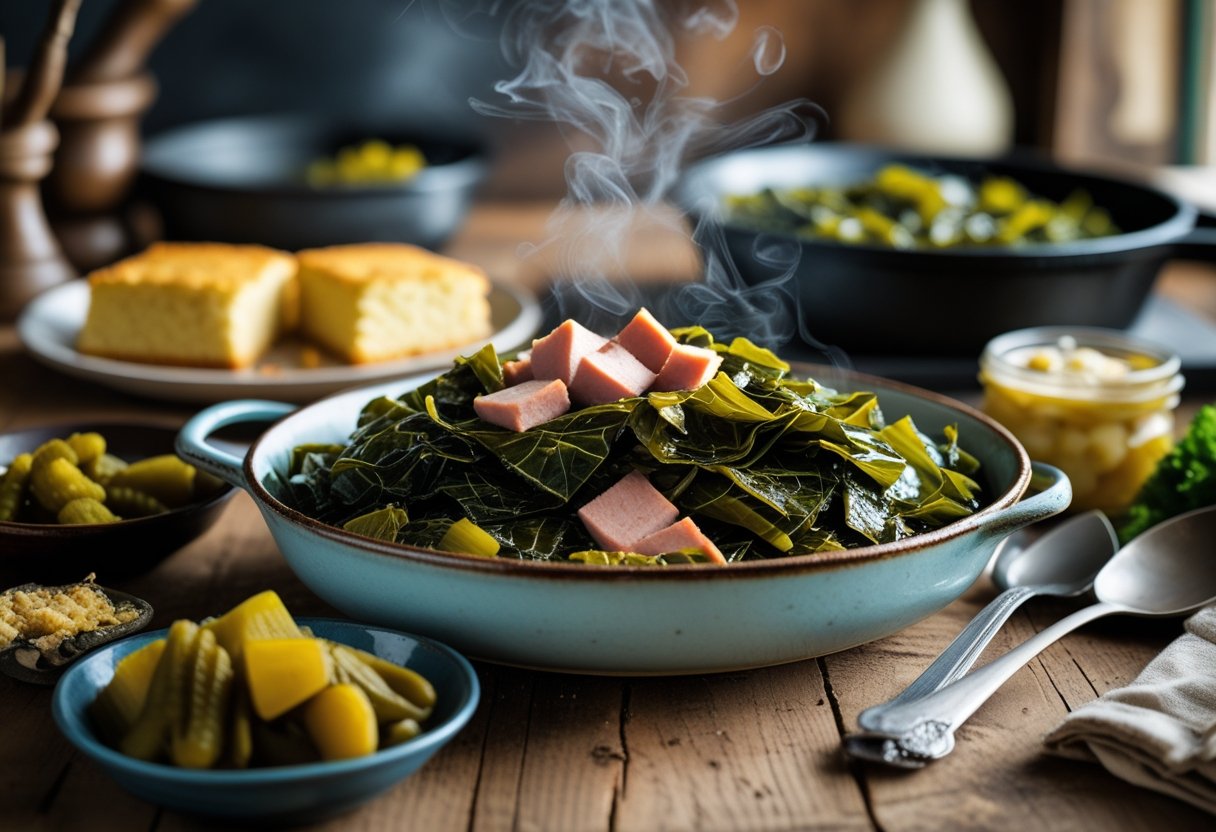
To make Southern collard greens just right, we focus on cleaning and prepping fresh greens thoroughly. Building a rich smoky broth called pot likker and seasoning carefully is also key.
Cooking them low and slow brings out the best flavor and tender texture. Balancing bitterness with sweetness and acidity is the secret to a perfect pot.
How to Trim and Clean Collard Greens Properly
The first step is to wash the fresh collard greens well. We remove any dirt or grit by rinsing the leaves under cold running water.
It’s important to peel off and discard the thick, tough stems because they take longer to cook and make the dish bitter. Next, we chop the leaves roughly into manageable pieces.
This keeps their texture tender but prevents them from falling apart. If you want to mix it up, mustard greens, turnip greens, or kale can be prepared the same way.
Proper washing and trimming keep the final dish clean, tender, and free from sandy bits. No one wants a side of grit with their greens.
Building Pot Liquor and Developing Smoky Depth
Pot liquor, or pot likker, is the flavorful broth that results from simmering collard greens with smoky ingredients. We start by crisping thick-cut bacon or cooking smoked ham hocks in a heavy-bottomed pot or Dutch oven to render the fat.
This creates a rich base. Then we sauté diced onions and minced garlic in the drippings to build aroma.
Adding chicken broth and water ensures plenty of liquid for slow cooking. Seasoning with bay leaf, brown sugar, salt, black pepper, and smoked paprika deepens the flavor.
For extra smoke, a small splash of liquid smoke does the trick. This broth carries all the seasoning into the greens as they soften.
Simmering and Finishing with Traditional Seasonings
After adding the collard greens to the seasoned pot liquor, we bring everything to a simmer. Covering the pot and cooking on low heat for 1.5 to 2 hours helps the greens become tender without turning mushy.
Stir occasionally to prevent sticking. Towards the end, we adjust flavor with apple cider vinegar or lemon juice to brighten the dish.
Red pepper flakes add warmth and a mild kick. Crumbled cooked bacon can be stirred back in for texture and flavor.
This slow cooking extracts nutrients and creates that classic Southern collard green taste with a smoky, savory finish. Serve it up with cornbread and prepare for happy faces around the table!
Tips for Balancing Bitterness and Achieving Tender Greens
Collard greens naturally have a bit of bitterness, but don’t worry—we can fix that. A touch of brown sugar or even a pinch of regular sugar can help tame those harsh flavors.
Acid from apple cider vinegar or lemon juice brightens things up and smooths out the taste. It’s like giving your greens a little spa day.
Cooking slowly at low heat is the secret to breaking down those stubborn fibers and getting the leaves nice and soft. Boiling or blasting them with high heat? That’s a surefire way to end up with tough, stringy greens—nobody wants that.
If your greens are still too bitter after all your hard work, just add a little more sugar or vinegar at the end. With some patience and a dash of seasoning, you’ll have tender, tasty greens that hit all the right notes.