Salmon rice bowls are a simple, delicious way to enjoy a balanced meal packed with fresh flavors and good nutrition. They combine tender salmon, fluffy rice, crisp vegetables, and a flavorful sauce for a dish that’s easy to prepare.
This recipe fits well into busy schedules because it doesn’t take long to cook but still feels special.
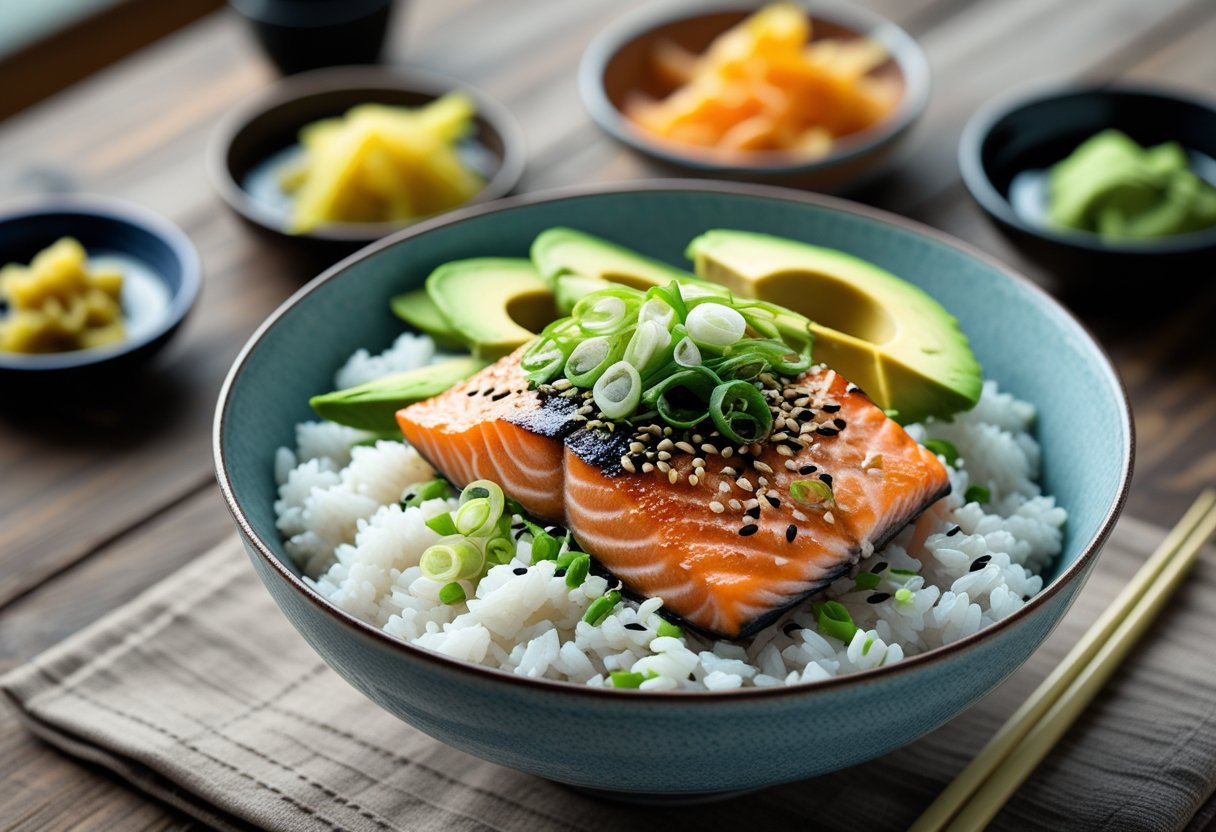
We like how versatile salmon rice bowls are. You can customize the ingredients based on what you have, swapping out rice types or adding different veggies.
The layers of texture and taste make every bite interesting, from the rich salmon to the creamy avocado and crunchy slaw.
In this post, we’ll guide you through making salmon rice bowls with straightforward steps and tips. Whether you want a healthy weeknight dinner or a fresh idea for meal prep, this recipe has your back.
For detailed instructions and variations, check out this Salmon Rice Bowls recipe.
How to Make Salmon Rice Bowls
Making salmon rice bowls is all about fresh, well-chosen ingredients and clear cooking steps. We focus on picking the right salmon and rice, preparing a tasty marinade and sauce, and assembling everything for maximum flavor.
Essential Ingredients and Substitutions
For our salmon rice bowls, we use skinless salmon fillets cut into cubes for even cooking. The marinade blends soy sauce, honey, sriracha, grated ginger, and garlic for a sweet and spicy kick.
For a gluten-free option, swap soy sauce with tamari or coconut aminos.
Steamed rice forms the base. We prefer fluffy jasmine rice, but brown rice, quinoa, or even cauliflower rice are great substitutes if you want to mix things up.
Toppings add texture and freshness. Common choices include avocado, edamame, cucumber, shredded carrots, and sesame seeds.
Adding shredded cabbage or fresh herbs like cilantro and green onions works well too.
The spicy mayo sauce combines Japanese mayo or regular mayo, sriracha, grated ginger, sesame oil, and soy sauce to complement the salmon’s marinade.
Step-by-Step Cooking Instructions
First, pat dry the salmon fillets and cut them into roughly 1 ½ inch cubes. Toss the salmon cubes in the marinade and let them sit for 20 to 30 minutes to soak up all that flavor.
Next, preheat the oven to 400°F. Line a baking sheet with parchment paper and spread the marinated salmon cubes evenly.
Bake for 8 to 10 minutes, then broil for 1 to 2 minutes to crisp the edges without turning your salmon into fish jerky.
Meanwhile, steam your choice of rice until fluffy. Jasmine rice usually takes about 15 minutes; brown rice takes longer, so plan accordingly.
To prepare spicy mayo, whisk together mayo, sriracha, grated ginger, sesame oil, and soy sauce. Once the salmon and rice are ready, assemble each bowl with a base of rice, topped with baked salmon, fresh veggies, avocado slices, and a generous drizzle of spicy mayo.
Choosing Salmon and Rice Types
When picking salmon, look for fresh, center-cut fillets without the skin. Skinless salmon soaks up the marinade better and is less likely to make you wrestle with your dinner.
Cubing the salmon ensures quick, even cooking—a win for weeknights or meal prep.
Rice choice changes up the texture and flavor. White jasmine rice is classic for its aroma and softness.
Brown rice adds fiber and chewiness, while quinoa brings protein and a different vibe. Cauliflower rice is a low-carb alternative for anyone counting carbs or just feeling adventurous.
For sushi-style bowls, try sushi rice seasoned with rice vinegar and sugar. Coconut rice creates a sweet, fragrant base that pairs well with spicy salmon.
Customizing and Serving Salmon Rice Bowls
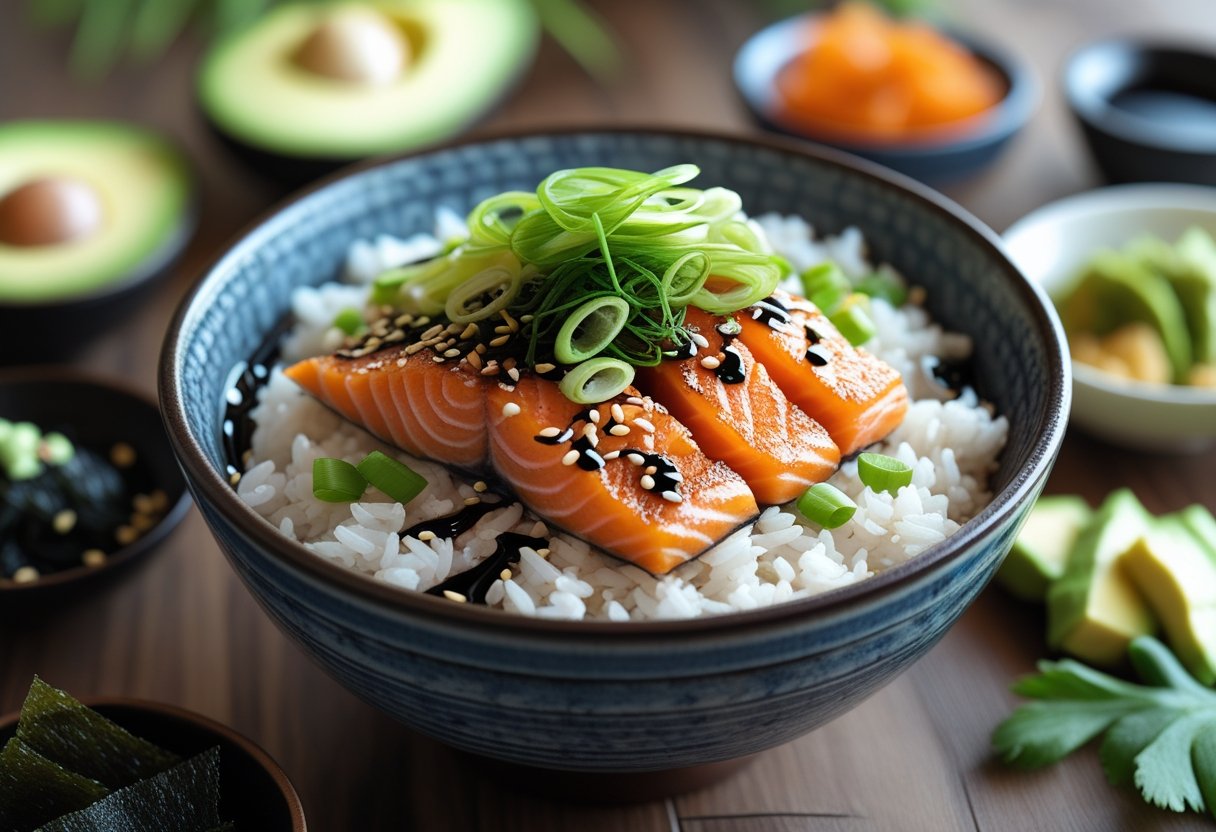
We can tailor salmon rice bowls to fit different tastes and needs by changing toppings, flavors, and even how we store and serve them. This flexibility makes the dish perfect for quick meals or more creative dining.
Using fresh vegetables, herbs, and varied bases keeps things interesting.
Toppings and Flavor Variations
We like to mix fresh veggies like shredded cabbage, carrots, and edamame for crunch and color. Adding creamy avocado or sweet mango gives a nice contrast.
Fresh herbs like cilantro or green onions brighten flavors. For sauces, try spicy mayo, soy-sesame dressing, or a squeeze of lime.
Seaweed strips add umami, while red onion slices give a sharp bite. Changing the rice base is another great option.
Using coconut rice adds subtle sweetness, or brown rice can make it more filling. This way, every bowl is unique and suited to your cravings.
Meal Prep Tips and Storage
Salmon rice bowls are perfect for meal prep because they hold up well when stored properly. Cook the salmon and rice in advance and store them in airtight containers to keep things fresh.
Keep veggies separate until serving to avoid sogginess. Raw shredded cabbage or carrots can be prepped ahead and added later.
Avocado is best sliced fresh to avoid browning. For best results, store bowls in the fridge and eat within 3 days.
Reheat the salmon gently to keep it moist and delicious. This method saves time while keeping meals tasty and balanced.
Creative Serving Ideas
Serving salmon rice bowls can be as simple or as fancy as you want. For a laid-back meal, just pile everything into bowls and dig in with chopsticks or forks.
Trying to impress guests? Serve salmon over a bed of coconut rice, then top it off with fresh herbs and lime wedges.
Add a side of pickled veggies or a small seaweed salad for extra flair. You can even wrap the components in large lettuce leaves for a crunchy, hands-on twist.
These bowls are flexible, so feel free to play around with different presentations while keeping all that deliciousness and nutrition intact.