If you’re looking for a simple way to boost your breakfast with more protein, these bagels made with Greek yogurt and self-rising flour are a great option. This recipe uses just two main ingredients to create a soft, high-protein bagel without the need for yeast or long rising times.
It’s quick, easy, and healthy—perfect for busy mornings or meal prep. Plus, you don’t need to be a professional baker (or own a bagel-shaped hat) to pull these off.
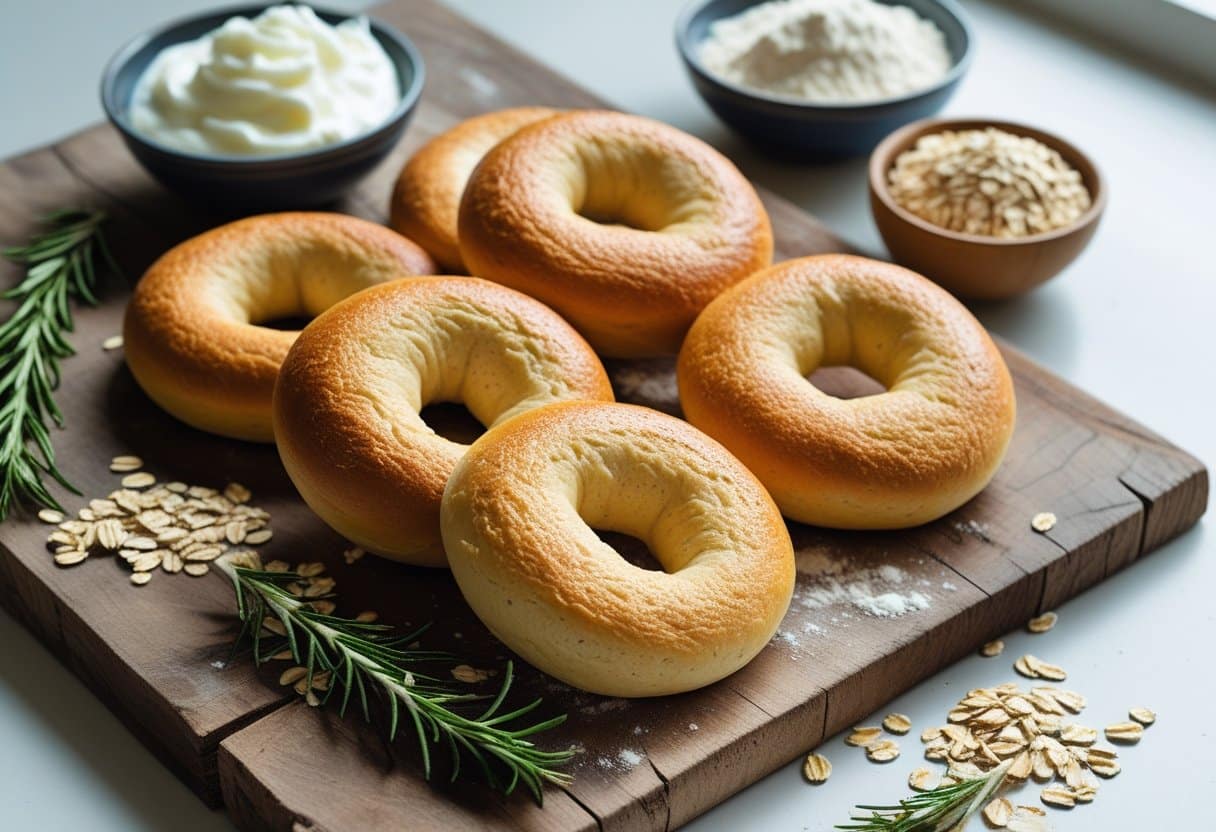
These bagels are light, fluffy, and have a slightly tangy flavor from the Greek yogurt. Using self-rising flour means the bagels get a nice rise without extra steps.
They’re easy to customize with your favorite seasonings or toppings, so you can suit any taste or diet. Making these bagels at home gives you more control over ingredients and nutrition compared to store-bought options.
Whether you want a protein-packed snack or a balanced breakfast, this recipe fits right into a healthy lifestyle with minimal fuss. For more details, check out the full recipe for protein bagels made with Greek yogurt and self-rising flour.
How to Make Protein Bagels with Greek Yogurt and Self-Rising Flour
Making protein bagels with Greek yogurt and self-rising flour is simple and quick. We use basic ingredients and straightforward steps to create soft, chewy bagels packed with protein.
Precise mixing, shaping, and baking techniques help achieve the best texture and flavor. You don’t need a PhD in bagel-ology—just a bowl and some enthusiasm.
Essential Ingredients and Recommended Substitutes
The main ingredients for this protein bagel recipe are Greek yogurt and self-rising flour. Greek yogurt provides moisture, protein, and helps with the dough’s texture.
We suggest full-fat or nonfat Greek yogurt based on preference. Self-rising flour contains both flour and baking powder, which makes the dough rise without yeast or extra leavening agents.
If you don’t have self-rising flour, you can make a substitute by blending 1 ½ cups all-purpose flour with 1 ½ teaspoons baking powder and ½ teaspoon salt. For gluten-free options, replace self-rising flour with gluten-free flour blends or almond flour.
Adding unflavored protein powder or whey protein powder boosts protein content further. Optional toppings include everything bagel seasoning, sesame seeds, or poppy seeds.
You can also experiment with alternatives like chia seeds or pumpkin seeds for extra nutrition. The bagels are basically a blank canvas—get creative!
Step-by-Step Mixing and Shaping Instructions
Start by combining 1 cup of Greek yogurt with 1 ½ cups of self-rising flour in a large bowl. Mix until the dough begins to come together.
If using protein powder, add it now and stir well. The dough should be slightly sticky but firm enough to knead.
Lightly flour a surface and knead the dough for 2-3 minutes until smooth. Divide the dough into 4 equal parts.
Each piece is rolled into a log, and the ends are joined to form a ring shape—the classic bagel form. Place the shaped bagels on a baking sheet lined with parchment paper, leaving space between them.
If the dough feels too sticky, add a small amount of flour gradually, taking care not to dry it out. This keeps the bagels tender and not brick-like (unless you’re into that).
Egg Wash and Topping Techniques
To achieve a golden crust, whisk one egg for an egg wash. Lightly brush this over each bagel before baking.
The egg wash helps toppings stick better and adds a shiny finish. Top the bagels generously with your choice of seasoning.
Everything bagel seasoning offers a mix of sesame seeds, poppy seeds, garlic, and onion flakes for classic flavor. Alternatively, sprinkle just sesame seeds, poppy seeds, or try cinnamon sugar for a sweet variation.
You can also lightly press the toppings into the dough to help them stay during baking. No one wants a topping avalanche in the oven.
Baking Process and Texture Tips
Preheat the oven to 375°F (190°C). Bake the bagels for 20-25 minutes or until they turn golden brown and feel firm to the touch.
Baking times vary slightly depending on the oven and bagel size, so check toward the end. For a slightly crispier crust, bake an additional 5 minutes.
Let the bagels cool on a wire rack before eating to avoid a doughy texture inside. The finished bagels should be soft and chewy—a solid alternative to store-bought versions.
Store these high-protein Greek yogurt bagels at room temperature for up to 3 days or freeze them for longer. Reheat by toasting or warming gently to maintain their texture.
Serving, Storage, and Healthy Variations
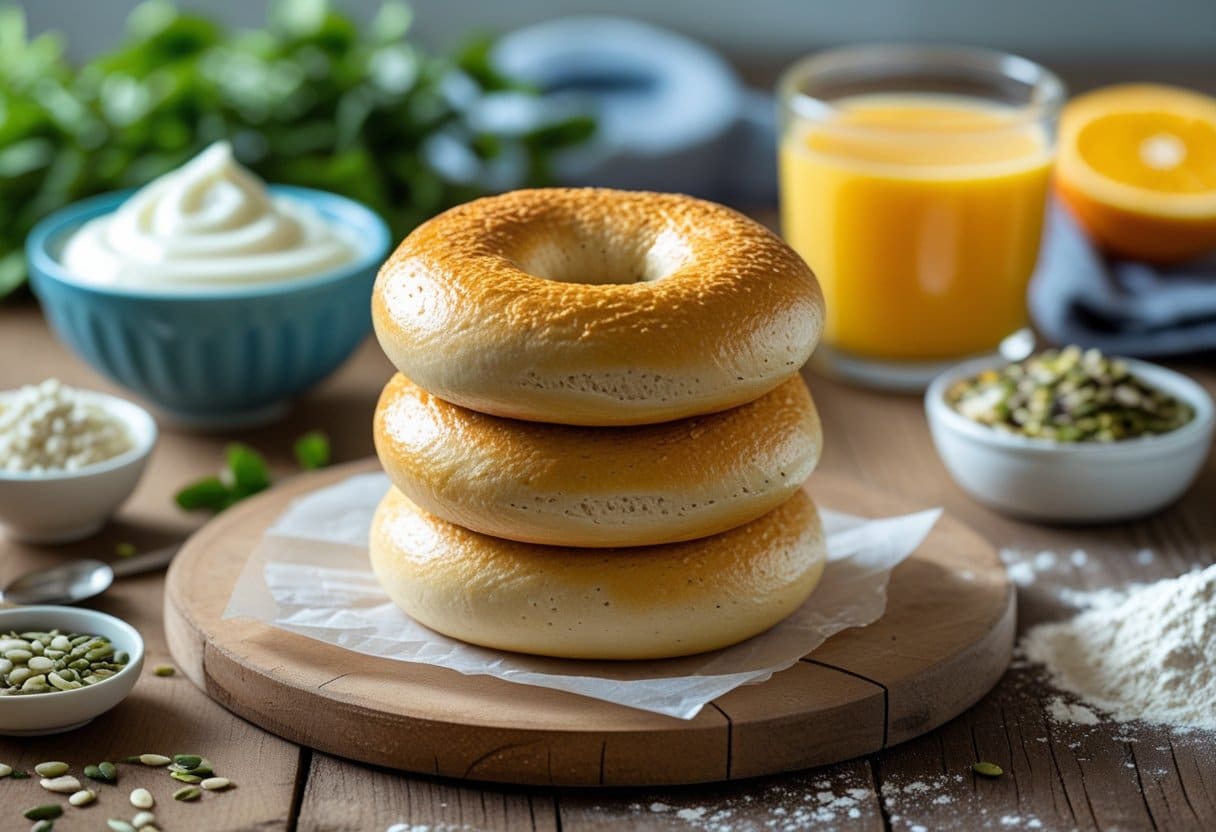
Homemade protein bagels can be enjoyed in a bunch of tasty ways. There are tons of options for toppings and meal ideas that fit your healthy lifestyle.
Proper storage and reheating also help keep the texture and flavor just right. No one likes a soggy bagel, after all.
Creative Toppings and Flavor Ideas
Customize your bagels with both sweet and savory toppings. For a classic touch, cream cheese with a sprinkle of kosher salt or poppy seeds works well.
Adding peanut butter and banana slices makes for a healthy snack or breakfast option. For a sweeter twist, try spreading butter with brown sugar or mixing the dough with chocolate chips for cinnamon raisin style bagels.
Savory fans can sprinkle sunflower seeds, garlic powder, or even cheddar cheese on top before baking. Boost protein by adding unflavored protein powder to the dough.
For gluten-free options, swap regular flour with gluten-free flour. Using bread flour helps make bagels chewier, if you’re all about that classic bite.
Serving Suggestions for Breakfast and More
Homemade protein bagels are perfect for breakfast sandwiches with scrambled eggs, avocado, or cheese. They work as a base for a quick healthy breakfast or a filling lunch.
Pair sliced bagels with a bowl of savory cottage cheese or enjoy them alongside soup or salad for a light dinner. Making mini bagel bites is another fun way to serve at gatherings or snacks.
These bagels are soft yet chewy and hold up well to toppings and spreads. The higher protein content helps keep you full longer, making them great for meal prep or post-workout meals.
Storage, Freezing, and Reheating Best Practices
To keep bagels fresh, store them in an airtight container at room temperature for up to 2 days. If you need more time, freezing is your friend.
Let your bagels cool completely before tossing them into a freezer-safe bag. This helps prevent any accidental ice sculptures from forming.
When you’re ready for a bagel fix, slice the frozen bagels in half. Toast them for 2-3 minutes or pop them in an air fryer at 300ºF for a few minutes.
This brings back that magical combo of a soft inside and crispy outside. Avoid the microwave unless you enjoy rubbery bread (no judgment).
If your leftover bagels are feeling a bit damp, bake them open-faced for 5-7 minutes. This dries out the crumb without turning the crust into a rock.