In Wyoming, slow-roasted prime rib is all about deep beefy flavor, a crisp crust, and a silky au jus made from those glorious drippings. We’ll show you how to get that tender, perfectly pink center and whip up a rich au jus that’ll make you want to lick your plate (we won’t judge).
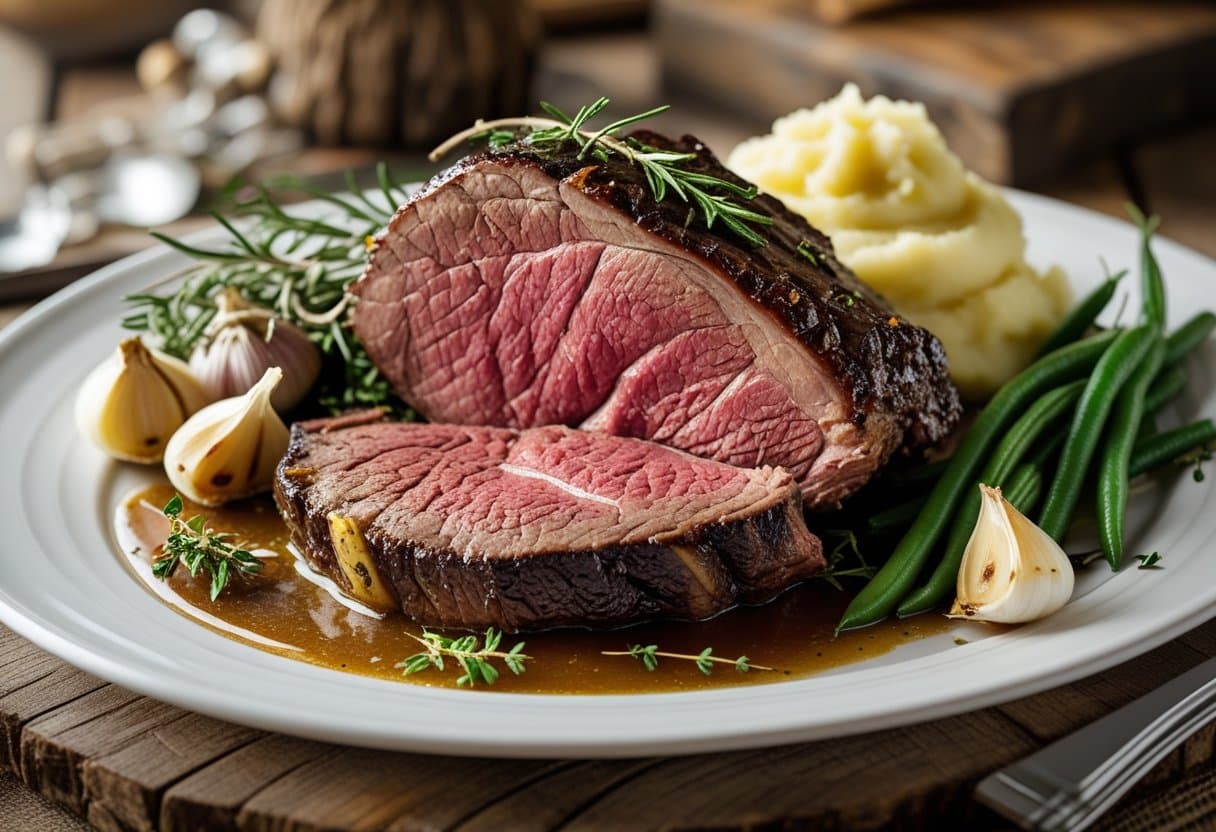
You’ll get simple steps you can use at home or when you’re planning a special meal in Wyoming. We’ve also got tips for timing, seasoning, and resting so your roast stays juicy all the way through.
Plus, we’ll point you to classic spots around the state where this steak dinner really shines. We’ll even help you serve it up with confidence (and maybe a little swagger).
Key Takeaways
- Learn the basics for a tender, slow-roasted prime rib.
- Master an easy au jus that makes the beef sing.
- Find out where to score the best prime rib in Wyoming.
Prime Rib Au Jus: Wyoming’s Signature Steak Experience
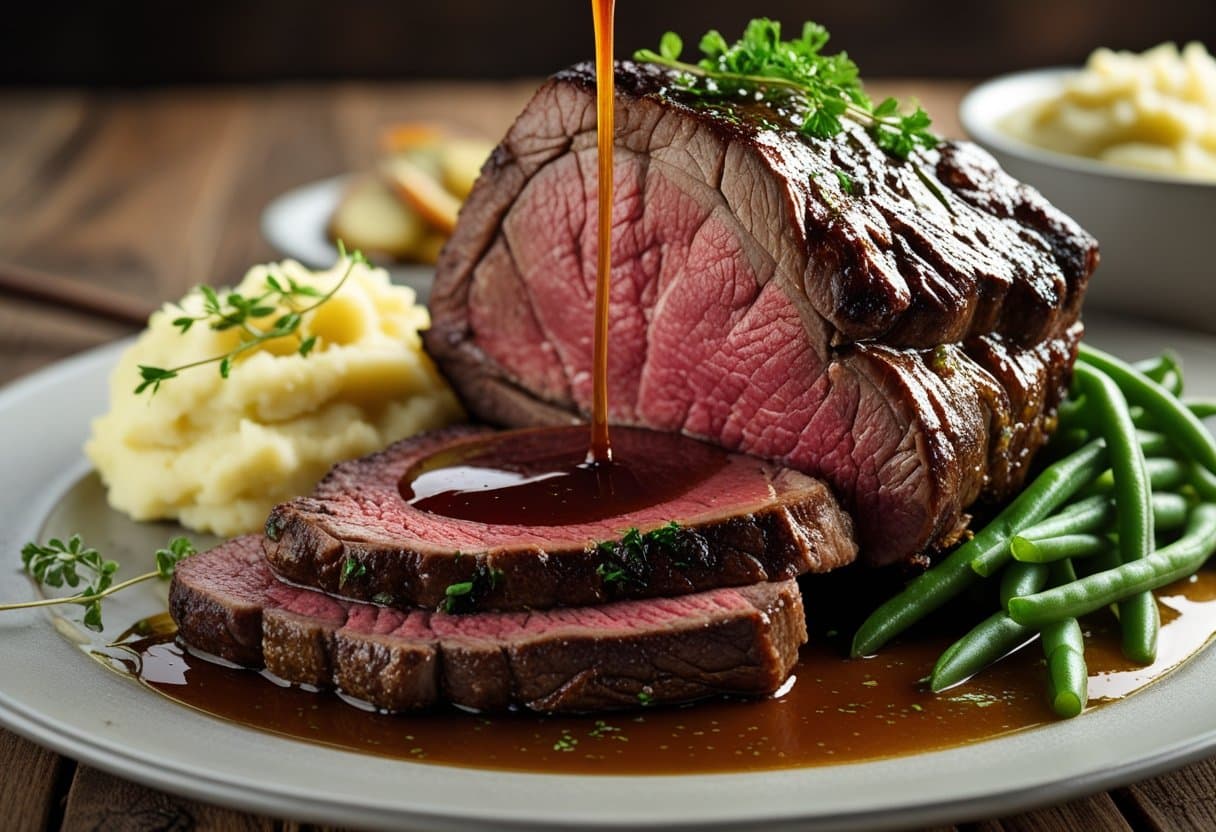
We’re all about big, honest flavors: slow-roasted prime rib, silky au jus, and that warm, pink center. The way you cook, rest, and use those drippings can make or break your meal.
What Sets Wyoming Prime Rib Apart
Wyoming prime rib usually comes from well-marbled standing rib roasts raised on wide-open ranches. We love cuts with a fat cap and plenty of marbling—that fat melts during roasting and gives the meat a buttery mouthfeel.
Smaller herds and the cool high plains mean muscle texture stays tight but the flavor is all there. Roasts between 6–12 pounds are just right for family-style feasts.
We trim to leave a thin fat cap and season simply: lots of salt, cracked black pepper, and garlic. Let the beef flavor do the talking and those rich base drippings make your au jus shine.
Traditional Slow-Roasting Techniques
We roast low and slow—think 225–275°F—so the meat cooks gently and stays tender. Start fat-side up so it self-bastes as it cooks.
A probe thermometer is your best friend: set it to 125–130°F for medium rare, then pull the roast and let it rest for 20–30 minutes. Carryover heat will finish the job.
After the slow roast, crank the heat to 425–500°F for 8–12 minutes to get that perfect crust. Always roast on a rack in a pan to catch those precious drippings for your au jus.
The Importance of Au Jus
Au jus is the magic sauce—pan drippings, beef broth, and just a touch of seasoning. Strain the drippings, then deglaze the pan with broth or red wine to get all those tasty browned bits.
Simmer briefly to concentrate the flavor, and add a splash of Worcestershire or soy sauce if you want a little extra umami. The goal: a clear, savory jus that soaks into every bite of prime rib.
For sandwiches, go a little richer. For plated dinners, keep the jus clean and balanced so it highlights the beef, not hides it.
Ideal Doneness: Achieving Medium Rare Perfection
Medium rare is the sweet spot for prime rib. Aim for 125–130°F before resting and 130–135°F after.
Let the roast rest before slicing so the juices stay put and your au jus doesn’t run all over the cutting board. Slice against the grain in 1/4–1/2 inch cuts for max tenderness.
If you’ve got folks who want it more done, give them the thinner end slices. Save the prime center for the true believers.
Where to Enjoy Prime Rib Au Jus in Wyoming
We’re talking about proven spots, honest reviews, and how to pick a prime rib dinner that fits your taste and budget. Expect chophouses with slow-roasted cuts, review highlights, and what to look for in a great steak dinner.
Notable Chophouses and Steakhouses
Wyoming has steakhouses where prime rib is the main event. In Cheyenne, The Albany serves up slow-roasted prime rib in a historic setting—locals love the old-school vibe and classic prep.
Gillette’s The Prime Rib Restaurant & Wine Cellar pairs steaks with a solid wine list and a cozy dining room that’s great for date night. In Riverton, Roasted Bean & Cuisine does a Friday night prime rib special that’s perfect for families and your wallet.
Look for solid roasting technique, perfect doneness, and au jus that tastes like beef—not just salt. That’s what separates a real chophouse from a forgettable steak joint.
Local Restaurant Review Highlights
Reviews often rave about tenderness, seasoning, and service. The Albany gets props for its tender prime rib and classic sides, while Gillette’s Prime Rib Restaurant is loved for big portions and great wine.
Look for places that get consistent praise—especially for temperature control. Medium-rare should be pink and juicy, not gray and sad.
Atmosphere and service matter too: warm plates, prompt au jus refills, and servers who know their horseradish from their elbow. Check reviews to find the right vibe for your night out.
Selecting the Best Prime Rib Dinner
Go for slow-roasted, bone-in prime rib for the best flavor. Ask if they cook to order or slice from a pre-carved roast—the former usually means juicier results.
Check the au jus: beefy and lightly reduced is best, not salty or gloopy. Classic sides like horseradish, baked potato, or creamed spinach are a good sign the kitchen knows what’s up.
Pay attention to price and portion size. See if sides are included and whether reservations are needed. Recent reviews will clue you in on whether a spot still delivers the goods.
Frequently Asked Questions
We’ve got you covered on roasting temps, timing, resting, and easy au jus methods (with or without wine). You’ll even get tips for making au jus ahead, using a packet, and leveling up your sauce game.
What is the best way to slow-roast a prime rib for authentic Wyoming flavor?
Start with a bone-in standing rib roast—3–4 ribs will feed 6–8 people. Trim off extra fat but leave a 1/4–1/2 inch cap, then season with kosher salt and cracked black pepper at least 2 hours before cooking (overnight in the fridge is even better for flavor and crust).
Roast low and slow at 225–250°F until the internal temp is 115–120°F for medium-rare. Then blast it at 450–500°F for 10–15 minutes to get that beautiful brown crust.
Rest the roast uncovered or loosely tented for 20–30 minutes before carving so the juices don’t run for the hills.
How can I make a flavorful au jus for my prime rib without using wine?
Collect those pan drippings and get rid of extra fat with a separator or by chilling and skimming. Deglaze the roasting pan with 2 cups of low-sodium beef stock (plus a bit more if needed), scraping up all the browned bits.
Add a smashed garlic clove and a sprig of rosemary or thyme, then simmer for 8–12 minutes. Strain, taste, and season with salt and pepper. For extra oomph, reduce more or add a splash of Worcestershire.
What are some tips for creating a simple yet delicious au jus to accompany prime rib?
Always separate the fat from your drippings for a clear, balanced jus. Deglaze with beef stock and really work those browned bits—they’re flavor gold.
Simmer gently until the flavor is just right, then strain. If it’s too weak, reduce further or stir in a bit of beef concentrate or demi-glace. Keep it thin—au jus should pour, not plop.
Which store-bought au jus mixes are recommended for prime rib dinners?
Go for mixes with simple ingredients and low sugar. Look in grocery or butcher specialty sections for brands with beef extract, stock powder, and real flavors.
If you need a quick fix, pick a packet labeled “au jus” or “beef jus” (not brown gravy). Use it as a base and jazz it up with real pan drippings or a splash of beef stock for that authentic roast flavor. For a step-by-step, check out this guide.
How can I use red wine to enhance the flavor of my prime rib au jus?
Deglaze your roasting pan with 1/2 to 1 cup of dry red wine, then add 1.5–2 cups of beef stock. Use a full-bodied red like Cabernet or Merlot, but let the wine play a supporting role.
Simmer until the alcohol cooks off and the sauce reduces a bit, about 8–12 minutes. Taste and adjust with salt or a splash of Worcestershire, then strain before serving. Cheers to a next-level au jus!
Can I prepare au jus ahead of time, and if so, what’s the best method for doing so?
You can make au jus up to three days in advance and stash it in the fridge. Just pour it into a sealed container and let those pan drippings chill out.
Once the fat solidifies, skim it off like a pro. When you’re ready to serve, reheat gently and splash in some fresh stock if things are looking a bit thick.
If you want to go full-on meal prep mode, freeze your au jus in airtight containers for up to three months. When the craving hits, thaw it in the fridge overnight.
Reheat slowly on the stove, and give it a good whisk to bring everything back together.