Paella is a classic Spanish dish that brings together simple ingredients into a flavorful meal. Whether you prefer the traditional Valencian style with chicken and rabbit or the seafood version loaded with shrimp and mussels, the key to a great paella is using the right rice, saffron, and fresh ingredients to build layers of taste.
We enjoy making paella because it’s as much about the cooking process as the final dish. It’s a meal meant to share, often cooked in a wide, shallow pan that lets the rice cook evenly and form a tasty crust at the bottom called socarrat.
In this post, we’ll walk through both the Valenciana and seafood recipes, highlighting the essential steps and tips to make paella at home. Whether you have a large group or just want to try something new, paella offers a festive, satisfying experience. For more details on traditional ingredients, check out this Valencian seafood paella guide.
Fundamentals of Paella Valenciana and Seafood Paella
To make an authentic paella, we focus on specific ingredients and tools. The choice of proteins, vegetables, and rice shapes the flavor and texture. Using the right pan and rice is just as important to achieve the classic socarrat, the crispy bottom layer.
Essential Ingredients for Paella Valenciana
Paella Valenciana highlights local ingredients from the Valencia region. The main proteins are chicken and rabbit. Sometimes, snails are added for a traditional touch.
Vegetables play a key role. We include green beans and peas to add color and fresh flavor. Tomato and saffron provide the base for the rich taste and golden color.
For seasoning, olive oil and salt are essential. The dish calls for water or vegetable stock. These ingredients give us the unique, hearty taste that defines paella Valenciana.
Key Ingredients in Seafood Paella
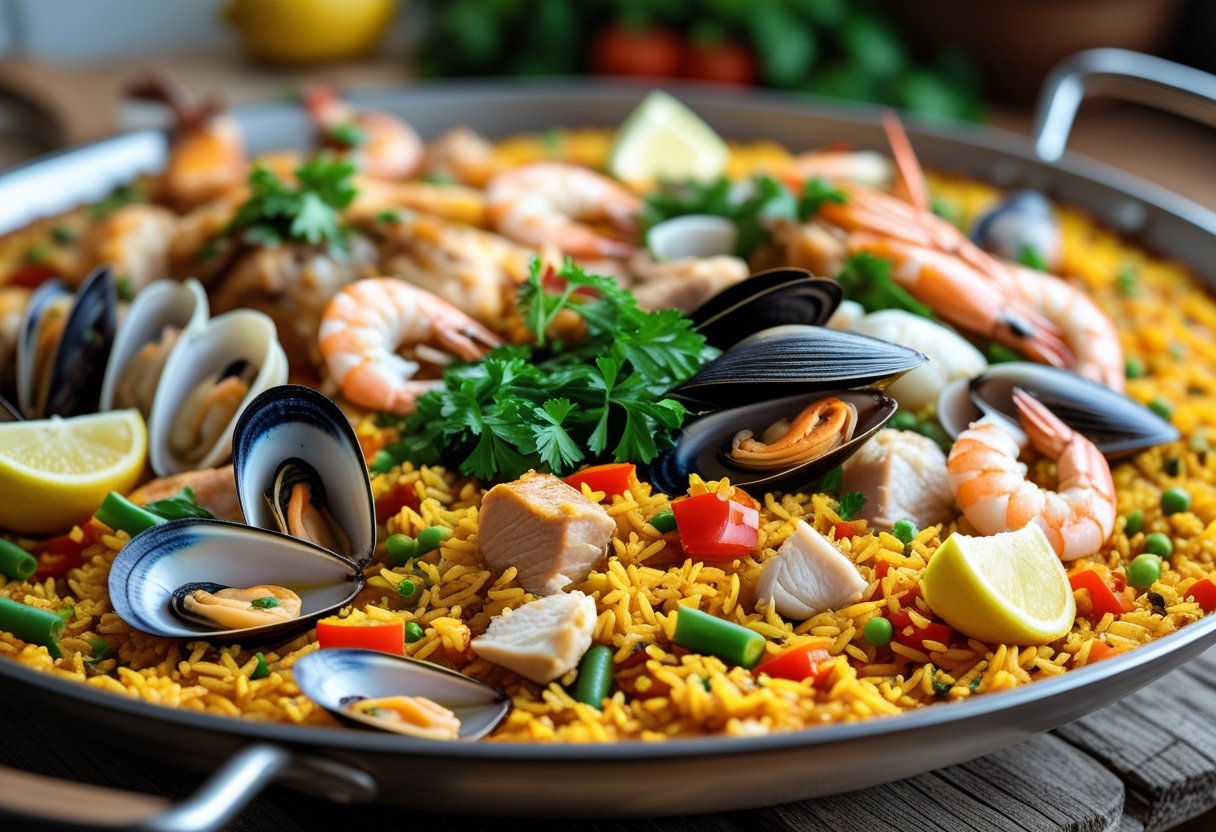
Seafood paella relies on a variety of shellfish and fish. We use shrimp or prawns, mussels, squid, and clams. These ingredients bring a fresh, oceanic flavor.
Unlike the meat-based Valenciana, seafood paella focuses on light, briny tastes with less emphasis on vegetables. Tomatoes and saffron still play important roles for seasoning and color.
Sometimes, fish fillets are added. We make sure to keep the seafood tender by cooking it just right. The mix of textures—from firm squid to soft mussels—is one of the dish’s highlights.
Choosing the Right Rice and Pan
The rice is the heart of paella. We always use Bomba rice or sometimes Calasparra rice. These types absorb liquid well without getting mushy. They help create the perfect texture.
The pan matters a lot. We use a wide, shallow paella pan made of carbon steel. Its shape spreads rice evenly and helps form the prized socarrat. The size of the pan depends on the number of people we serve.
- 4 people: 22-inch (56 cm) pan
- 6 people: 30-inch (76 cm) pan
- 8 people: 36-inch (91 cm) pan
Using the right equipment makes the cooking process smoother and the dish more authentic.
Step-by-Step Cooking Techniques and Serving Tips
We will focus on crafting rich flavors with careful preparation of base ingredients, cooking the rice just right, properly adding seafood, and presenting the dish traditionally. Each step is key for an authentic paella experience.
Preparing Sofrito and Building Flavors
The sofrito is the heart of our paella’s flavor. We begin by heating olive oil in the pan over medium heat. Next, we finely chop onions, garlic cloves, and red bell peppers. These go into the oil and cook slowly until soft and fragrant.
Tomato or tomato puree is added after the vegetables have softened. This adds acidity and depth. We season it with smoked paprika or regular paprika and a pinch of salt, stirring to combine well.
Saffron is soaked in a small amount of hot stock or white wine to release its color and aroma. We add this later with the rice. The sofrito should be thick and rich, as it coats the rice and enhances every bite.
Rice Cooking Method and Achieving Socarrat
Short-grain rice, such as bomba, is essential for absorbing liquids without becoming mushy. After the sofrito and meats are cooked, we add the rice and stir lightly, coating each grain with the oil and sauce.
We pour in warm stock, infused with saffron, covering the rice evenly. At this stage, we avoid stirring to let the rice absorb the liquid naturally. Cooking at medium-high heat, we watch for the liquid to reduce until almost gone.
To get the socarrat—the crispy caramelized crust at the pan’s bottom—we raise the heat for the last few minutes but must be careful not to burn. The socarrat adds crunch and deep flavor, prized in Valencian paella.
Seafood and Garnish Preparation
For seafood paella, we use fresh shrimp, mussels, clams, or squid. Shrimp stock or seafood-flavored broth can boost the taste. We add seafood at different cooking stages to avoid overcooking.
Shrimp often goes in last, as it cooks quickly. Clams and mussels are added earlier to allow shells to open and release juices. A splash of white wine enhances the marisco flavors.
To finish, we garnish with lemon wedges for a fresh zing. Adding parsley or sliced red bell peppers on top brightens the dish visually and tastes. These garnishes also complement the rich seafood and rice.
Traditional Serving and Presentation
Paella is best served straight from its wide, shallow pan, showcasing its colorful layers. The socarrat should be visible at the edges, a sign of proper cooking.
We place the pan on the table and let guests serve themselves, often using flat plates to display the paella’s vibrant colors.
Lemon wedges are served on the side to squeeze over the paella. It often pairs well with a fresh green salad and crusty bread.
Sharing paella this way honors its communal roots and brings a sense of occasion to the meal.