Olive oil and rosemary might seem like oddball ingredients for gelato, but trust us—they work some serious magic together. The creamy base gets a subtle bitterness from olive oil and a fragrant kick from rosemary, resulting in a sophisticated treat that’s anything but your typical scoop.
This dessert is perfect for anyone looking to shake up their dessert game with something surprisingly easy to make at home.
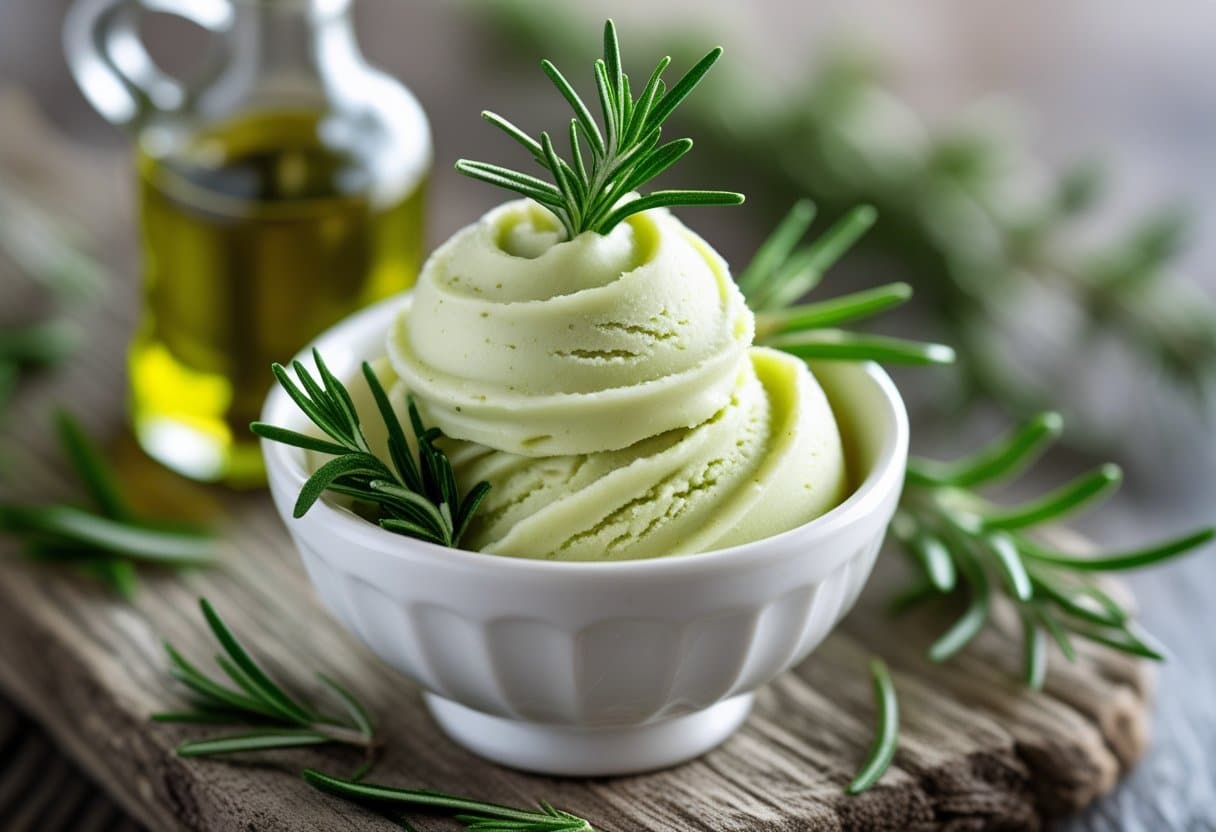
The process blends traditional Italian gelato methods with the herbal aroma of rosemary and the smooth texture olive oil provides. It’s a refreshing way to enjoy gelato, especially in warmer months when lighter, herb-infused flavors hit the spot.
We’ll guide you through the basics and share tips to get the perfect balance in every scoop.
Key Takeaways
- Olive oil and rosemary add a unique twist to creamy gelato.
- The recipe balances herb and oil flavors for a smooth, fresh taste.
- This gelato is easy to make and great for warm weather enjoyment.
Making Olive Oil Rosemary Gelato at Home
Creating olive oil rosemary gelato starts with choosing the right ingredients and nailing the flavor balance. Each step shapes the final texture and flavor that makes this gelato refreshingly different.
Choosing High-Quality Olive Oil and Ingredients
The quality of olive oil is the star of the show here, so go for a fruity extra virgin olive oil instead of a bitter or peppery one. This keeps the flavor smooth and mild, letting the creamy base shine.
For the custard, use whole milk and heavy cream for richness and silkiness. Fresh, high-quality eggs provide structure and thickness, while a touch of vanilla extract rounds things out.
Granulated sugar sweetens the deal, and a pinch of sea salt helps balance everything and brings out the olive oil’s subtle fruity notes.
Rosemary Infusion and Balancing Flavors
Infusing rosemary is a delicate art—too much and your gelato tastes like a pine forest, too little and it’s just “olive oil gelato.” Gently heat whole milk with fresh rosemary sprigs and let it steep just enough to get a floral, pine-like hint.
After cooling and straining out the rosemary, mix the infused milk with egg yolks and sugar to start the custard. The olive oil joins the party after the base is smooth and thickened to keep its flavor bright and fresh.
Taste as you go! If the rosemary is flexing too hard, add a bit more milk or cream to mellow it out. A light sprinkle of sea salt on top before serving brightens the herbal and olive oil notes.
Step-By-Step Gelato Preparation
Start by whisking egg yolks with sugar until they’re pale and frothy—think “I just saw a ghost” pale. Heat the rosemary-infused milk until it simmers, then slowly pour it into the yolks while whisking like your life depends on it.
Return the mixture to the pan and cook gently, stirring until it thickens into a custard that coats the back of a spoon. Strain it to keep things smooth and avoid any surprise scrambled eggs.
Once cooled, whisk in the heavy cream, olive oil, and vanilla extract. Chill the mixture in the fridge for a few hours, then churn in an ice cream maker until it turns into dreamy gelato.
After churning, pop it in the freezer for 1-2 hours to firm up. Patience, grasshopper.
Serving and Finishing Touches
Let the gelato soften at room temperature for a few minutes before serving. This brings out its creamy texture and deepens the flavors.
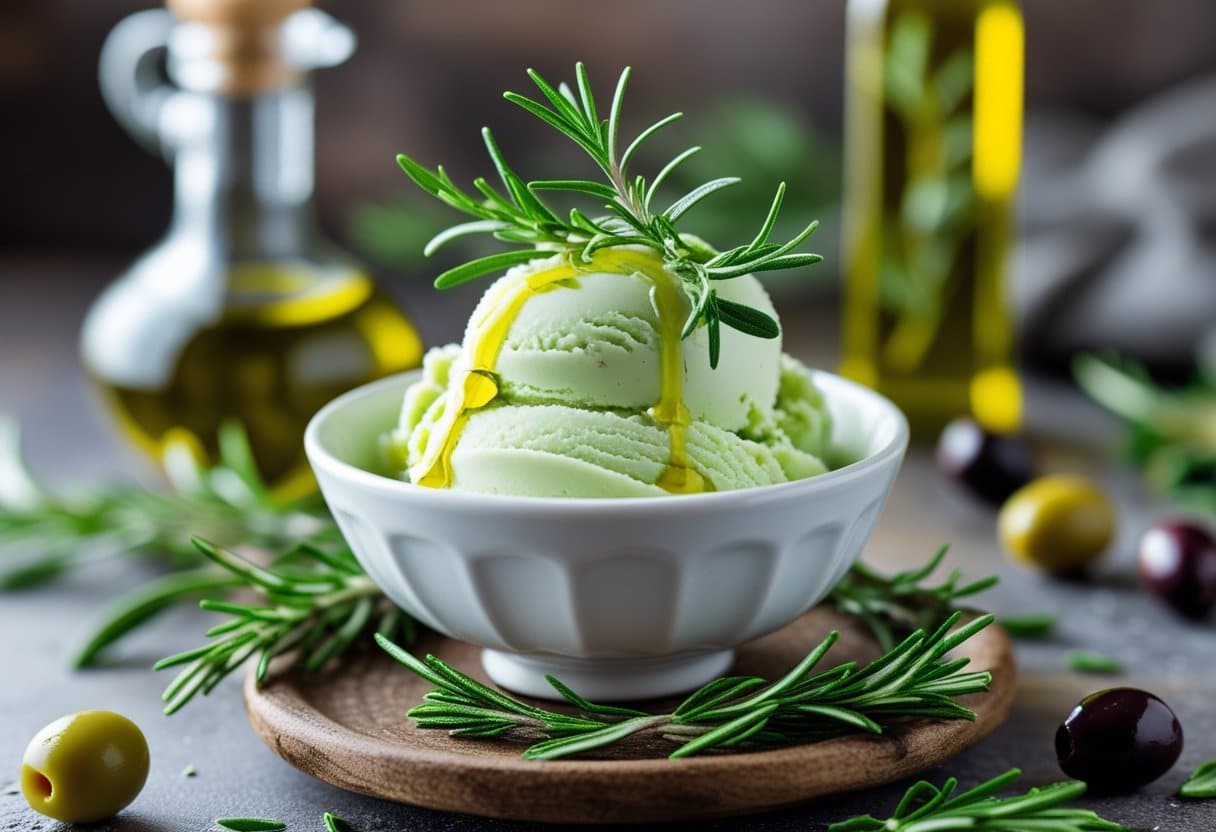
A final drizzle of high-quality olive oil on top enhances the fruity notes. Add a pinch of sea salt or a few fresh rosemary leaves for extra flair.
For color and crunch, toss on some fresh berries or lemon zest. Small bowls or cones keep the focus on the gelato’s unique herbal and olive oil flavors.
Tips, Variations, and Serving Suggestions
We can improve the creamy texture, extend the shelf life, and safely store our olive oil rosemary gelato. Small tweaks in ingredients and prep create fun flavor twists. Clever serving ideas can balance the gelato’s rich, savory notes and make you look like a dessert genius.
Texture Enhancements and Storage Advice
An ice cream maker is your BFF for achieving that classic gelato texture—smooth and creamy, no icebergs allowed. Make sure the sugar fully dissolves when heating the milk base for a silky mouthfeel.
Want extra creaminess? Add a smidge of tapioca starch or cornstarch. After churning, layer the gelato with thin ribbons of rosemary-infused olive oil or strawberry jam before freezing for bonus flavor.
Store gelato in a shallow, airtight container to keep it fresh. Freeze overnight to firm it up, but let it sit at room temp for 5-10 minutes before serving so you don’t break a spoon.
Alternative Flavor Twists
Olive oil rosemary gelato loves company. A pinch of sea salt intensifies the olive oil’s fruitiness, while crushed pistachios or candied citrus zest add crunch and zing.
For a sweeter side, swirl in fruit jams like strawberry or fig just before freezing. Want a different texture? Swap mascarpone with ricotta for a lighter, slightly grainy vibe.
Feeling adventurous? Use basil instead of rosemary for a fresh, aromatic twist that plays well with the olive oil.
Pairings and Presentation Ideas
Serve olive oil rosemary gelato with simple shortbread or olive oil cakes for a dessert plate that’ll have people singing “That’s Amore.” Drizzle extra virgin olive oil over each scoop for a glossy finish.
A sprinkle of flaky sea salt on top adds a subtle contrast to the creamy sweetness. Fresh herbs or edible flowers give it that “I totally planned this” look.
For a summer treat, plop a scoop on grilled peaches or stone fruits—this combo makes both the gelato and the fruit taste even better.
More tips and recipes for making olive oil gelato are available at Honest Cooking.
Frequently Asked Questions
We focus on using fresh rosemary to get its flavor into gelato without overpowering it. Olive oil brings the smooth and creamy texture, and sweeteners like honey must be balanced.
There are ways to adapt the recipe for dietary needs or make soft serve versions. Recipes inspired by pro kitchens offer clear steps to follow.
How can I incorporate rosemary into homemade gelato?
Steep fresh rosemary sprigs in warm milk or cream before mixing them with the other ingredients. This releases the herb’s essential oils without making the flavor too strong.
Strain out the rosemary after heating to keep the gelato smooth.
What are the best techniques for infusing olive oil into ice cream?
Use high-quality extra virgin olive oil with a fruity, slightly peppery taste. Add the olive oil after cooking the custard base to preserve its smooth flavor.
Mix it in gently to keep the gelato creamy.
What is the optimal amount of honey to use in olive oil ice cream?
Replace light corn syrup with an equal amount of honey for natural sweetness. About 2 tablespoons of honey per quart of gelato mix gives balance without clashing with the rosemary or olive oil.
Can I make a dairy-free version of rosemary gelato?
Absolutely. Use lactose-free milk or plant-based milks like almond or oat milk to maintain creaminess.
Adjust the fat content, maybe with coconut cream, to get the right texture.
Is it possible to create a soft serve variant of olive oil-based ice cream?
Definitely! After preparing the gelato base, use an ice cream maker with a soft serve setting for a scoopable, silky treat.
Olive oil adds extra creaminess, making soft serve smooth and easy to serve.
What are the steps to create the rosemary ice cream featured on Masterchef?
Start by heating milk with rosemary and sugars. Your kitchen will smell like a fancy spa at this point.
Next, temper egg yolks with the hot mixture. This just means slowly adding the hot milk to the eggs so you don’t end up with scrambled eggs.
Cook the mixture until it thickens a bit. Strain out the rosemary, because nobody wants a mouthful of twigs in their dessert.
Add cream and a splash of olive oil. Chill everything overnight so the flavors get to know each other.
Finally, churn in an ice cream maker until it’s creamy and irresistible.
If you want more inspiration, check out the rosemary and olive oil ice cream from The Wanderlust Kitchen.