If you’re looking for a comforting dish that’s both hearty and full of rich flavors, moussaka is a perfect choice. It’s a classic Greek recipe made by layering roasted eggplant, tender potatoes, a spiced meat sauce, and a creamy béchamel topping.
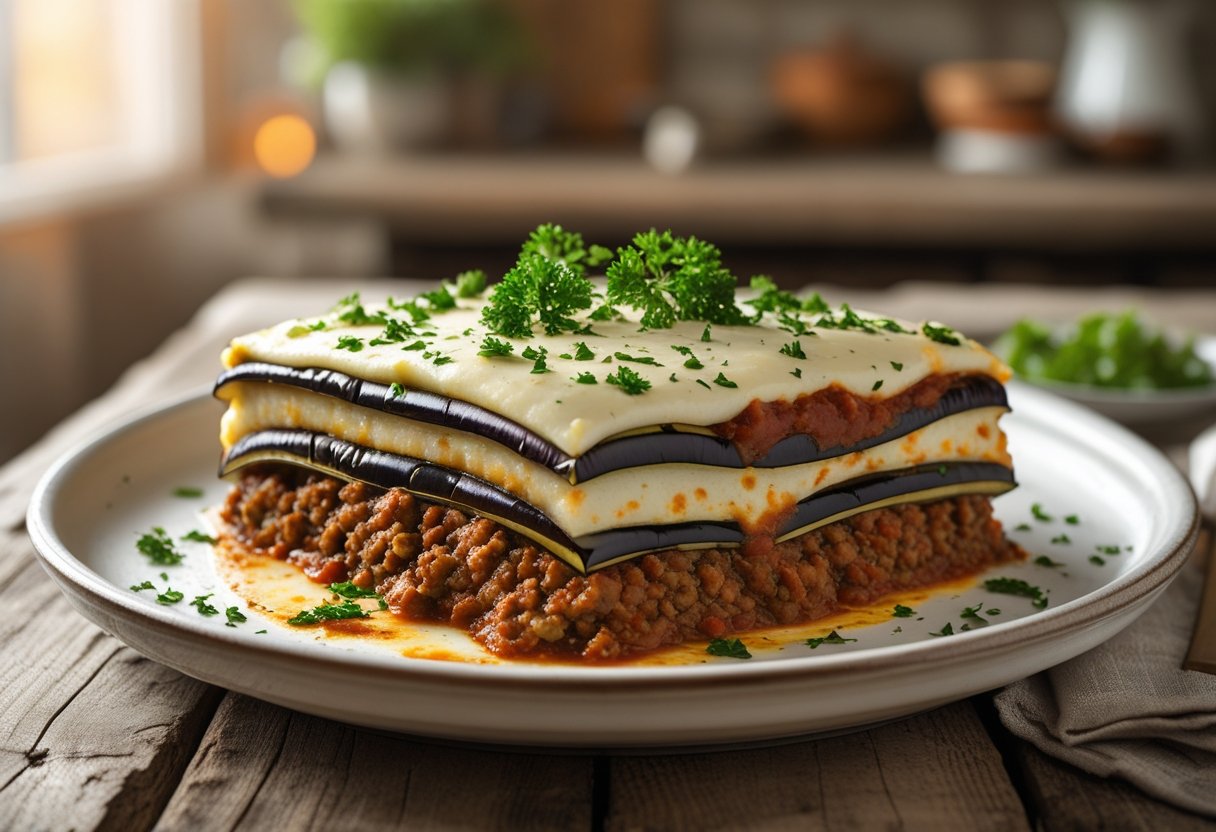
I love how the different layers come together to create something warm and inviting. The roasted vegetables and meaty sauce make it filling, while the béchamel adds a smooth, creamy finish.
Cooking it might seem like a lot of work, but with clear steps, it’s easier than you think to make a homemade version that tastes amazing. This recipe is great for family dinners or when you want to impress friends with a Mediterranean comfort food favorite.
Key Takeways
- Moussaka combines roasted veggies, meat sauce, and creamy béchamel in layers.
- The dish offers a warm, comforting meal perfect for family dinners.
- Clear steps make preparing moussaka manageable and rewarding.
Traditional Ingredients and Layers
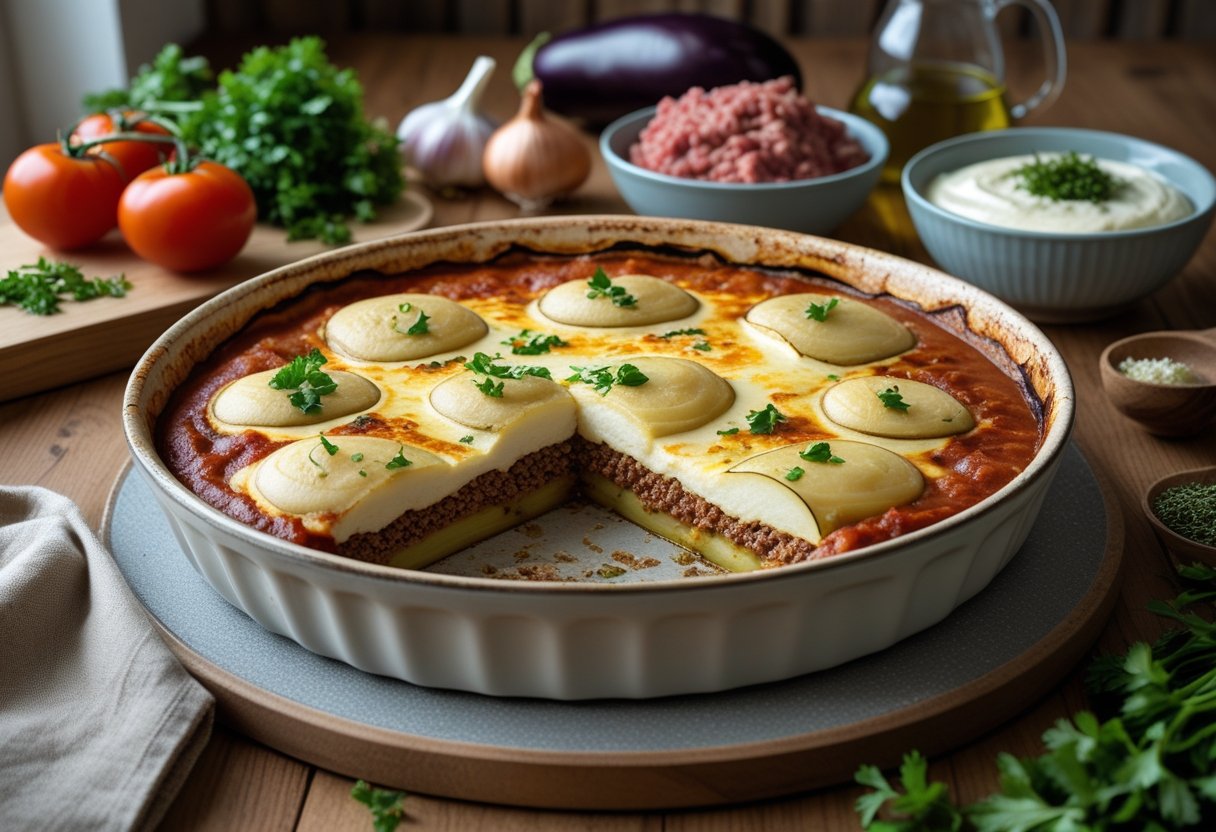
Moussaka is all about carefully chosen ingredients that work in harmony. Each layer plays a key role, from the silky eggplant to the hearty meat sauce.
The creamy topping ties everything together with its smooth texture and subtle spices. Let me take you through the main components and how I prepare them for the best result.
Choosing and Preparing Eggplant
Eggplant is the star vegetable in moussaka. I always use firm, medium-sized eggplants.
To avoid bitterness and sogginess, I slice them thinly and sprinkle salt on the pieces. Then, I let them sit for about 30 minutes.
This step draws out moisture and bitterness, making the eggplant sweeter and lighter when cooked. After salting, I pat the slices dry with a paper towel to remove excess water.
For cooking, I prefer roasting the eggplant with olive oil instead of frying. Roasting keeps them tender without soaking up too much oil.
This method also keeps the eggplant layers neat and well-defined when assembling the moussaka.
Potatoes and Other Vegetables
Potatoes form the base layer and add a mild, creamy texture under the rich toppings. I slice about three big potatoes into even rounds and lightly bake or roast them with olive oil.
This way, they cook through without becoming mushy. Sometimes, zucchini can be included as an extra vegetable, thinly sliced and roasted like the eggplant.
However, the classic recipe focuses on just potatoes and eggplants. Both vegetables need to hold their shape after baking so the layers stay firm.
I make sure to lightly season the potatoes with salt and pepper before cooking. This adds flavor without overpowering the rest of the dish.
Using olive oil for all the vegetables adds that authentic Mediterranean taste.
Rich Meat Sauce: Beef and Lamb Options
The meat sauce is what gives moussaka its deep, savory flavor. Traditionally, I use ground lamb because it has a rich, slightly gamey taste that complements the spices perfectly.
If lamb is hard to find, lean ground beef is a great substitute. Both work well, but lamb with the right seasoning really shines.
I start by sautéing finely chopped onions and garlic in olive oil until soft. Then, I brown the ground meat until no pink is left.
Next, I add crushed tomatoes or canned tomatoes, along with tomato paste for a thicker sauce. Spices like cinnamon, nutmeg, allspice, and black pepper bring warmth and complexity.
A splash of red wine deepens the flavor even more. I simmer the sauce for 30 to 40 minutes, letting it reduce and thicken.
Bay leaves and oregano round off the bouquet of flavors.
Classic Greek Béchamel Sauce
The béchamel sauce is the creamy white topping that makes moussaka so rich and satisfying. My preferred recipe uses cornstarch instead of all-purpose flour for a lighter texture, but the classic version is made by whisking flour and butter until smooth.
I gently heat whole milk in a saucepan, then stir in a mixture of melted butter and flour to thicken the sauce. Once thickened, I remove it from heat and beat in egg yolks and a pinch of nutmeg for subtle spice.
Parmesan cheese or Kefalotyri adds a salty, sharp flavor to the sauce. The combination creates a silky, luscious layer that browns beautifully in the oven.
This sauce seals the flavors inside and gives the dish its classic golden crust. For anyone wanting a gluten-free option, the cornstarch béchamel is a perfect substitute with no loss of creaminess or taste.
For more details, visit this authentic Greek moussaka recipe.
Step-by-Step Guide to Making Moussaka
Making Moussaka is easier than you might think if you follow each step carefully. You’ll prepare the eggplants and potatoes so they’re tender and flavorful.
Then, you’ll cook a rich meat sauce with good seasoning. Finally, you’ll make a creamy béchamel sauce and put everything together in a baking dish before baking it all to golden perfection.
Preparing the Eggplant and Potato Layers
Start with large eggplants and firm potatoes. I slice both into even pieces about 1 cm thick.
Salting the eggplant slices and letting them rest for 30 minutes helps remove any bitterness. After rinsing and drying, you can bake or shallow fry them.
I prefer baking because it’s lighter. Drizzle olive oil, season with salt and pepper, and bake at 180°C (350°F) for about 20 minutes until they start to brown.
For potatoes, peel and slice, then rinse to remove excess starch. You bake these the same way as eggplants.
Potatoes form a sturdy base in the baking dish and add nice texture and balance to the dish.
Cooking and Seasoning the Meat Sauce
The meat sauce is the heart of Greek Moussaka. I usually use a mix of lamb and beef, but you can stick with just beef if you want a milder taste.
I start by cooking onions and garlic in olive oil until soft. Then I add the meat and brown it well.
Next, I add tomato paste, red wine, chopped tomatoes, and spices like cinnamon and oregano. The key is to let the sauce simmer on low heat until it thickens.
It should be thick enough that it won’t soak through the layers. Taste and adjust the salt and pepper to get the flavor just right.
Making and Assembling the Béchamel
The béchamel sauce gives Moussaka its creamy top layer. It’s important to get the thickness right—it should be thick like custard to hold on top of the meat sauce.
Melt butter in a pan and whisk in flour until you get a smooth paste. Gradually add warm milk while whisking constantly.
Cook over low heat until the sauce thickens. Off the heat, I add grated cheese, salt, a pinch of nutmeg, and egg yolks.
Whisk quickly to combine the eggs so they don’t scramble. This rich sauce will set firmly when baked.
Layering and Baking the Moussaka
I use a deep baking dish around 20×30 cm (8×12 inches) and at least 8 cm deep to hold all the layers.
Start by layering the potatoes as the base.
Then add half the eggplants in a single layer.
Spoon the thick meat sauce evenly on top.
Cover it with the remaining eggplants.
Pour the béchamel sauce over everything, spreading it to cover all the layers.
Top with a sprinkle of grated cheese.
Bake in a preheated oven at 180°C (350°F) for about 1 hour until the top turns golden brown and bubbly.
Let it cool for a bit before cutting into squares.