You’ll love how Montana elk brings deep, clean flavor to a bowl of chili without feeling greasy or heavy.
This rustic elk chili gives you a hearty, lean wild-game meal that’s simple to make and perfect for cold nights or game-day crowds.
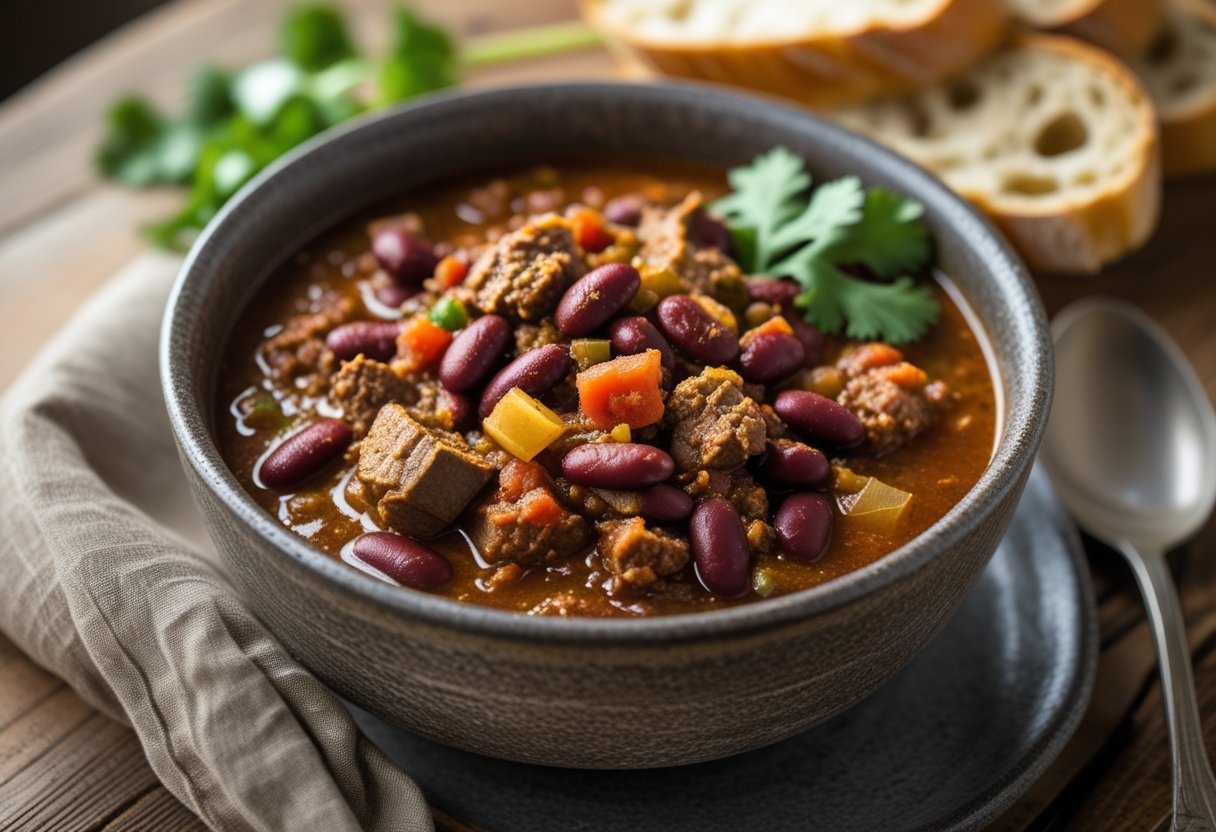
We’ll walk you through choosing the right elk, balancing spices, and using slow simmering to build rich flavors.
Expect tips on texture, smart swaps if you don’t have elk, and quick serving ideas that make the dish feel homey and special.
Key Takeaways
- Elk chili delivers lean, robust flavor with a comforting texture.
- Simple cooking steps and spice choices create deep, layered taste.
- Easy serving tips and swaps help you adapt the recipe to any meal.
Montana Elk Chili: The Ultimate Wild Game Comfort Dish
We aim for a hearty, well-balanced chili that highlights elk’s lean, slightly sweet flavor while staying rich and comforting.
Key points: choose the right cut, build layers of savory depth, and balance heat with smoke and acidity.
What Sets Montana Elk Chili Apart
Montana elk meat is leaner and milder than beef, so we treat it gently to keep the chili tender and flavorful.
We often use ground elk or coarsely chopped venison; both brown quickly and absorb spices well.
To avoid dryness, we add a small amount of bacon or pork fat during searing.
That fat gives the chili a richer mouthfeel without masking the elk’s character.
We favor long, slow simmering in beef broth to break down meat fibers and meld flavors.
Acidity from crushed tomatoes and a splash of vinegar brightens the pot.
Beans—pinto, black, or kidney—add body and make the chili hearty enough for a main course.
Choosing and Preparing Elk Meat
Start with ground elk or freshly trimmed chunks of venison.
If using packaged ground meat, smell and look for a deep red color and minimal liquid.
For a bolder texture, we grind steak trimmings or coarsely chop roast.
When meat seems too dry, we mix in 3–4 ounces of diced bacon per pound of elk or 1–2 tablespoons of neutral oil.
Season the meat lightly with salt and black pepper before browning.
Brown in batches over medium-high heat to develop a fond on the pan; don’t crowd the meat.
Deglaze with a cup of beef broth to lift the browned bits into the chili for extra depth.
Remove excess fat if it becomes greasy, but leave enough to carry spice flavors.
Flavorful Ingredient Essentials
We build the chili on a base of sautéed onion and garlic, then add diced bell peppers for sweetness and texture.
Use one large yellow onion and one red or green bell pepper for color balance.
Crushed tomatoes (28–30 oz) give body and acidity; combine with 2–3 cups beef broth for a rich simmer base.
Beans are flexible: we add a mix of kidney beans and black beans for varied texture and fiber.
A typical ratio is one 15-16 oz can each.
Seasoning staples are chili powder, smoked paprika, and ground cumin.
For smoky depth, add 1–2 teaspoons smoked paprika.
We often include 1 tablespoon chili powder and 2 teaspoons cumin per pound of meat, then adjust.
Optional: a tablespoon of tomato paste deepens umami.
Fresh cilantro at the end brightens the bowl.
Cheese and diced onion make good toppings.
Balancing Spices and Seasonings
We aim for a clear spice profile: warm chili heat, smoky undertones, and measured heat from cayenne.
Start with 1 tablespoon chili powder and 1 teaspoon smoked paprika per pound of meat.
Taste after an hour of simmering and add 1/4–1/2 teaspoon cayenne for a controlled kick.
Use salt in stages—about 1 teaspoon per pound to start—then fine-tune.
Black pepper adds sharpness; 1/2 teaspoon per pound is typical.
If the chili tastes flat, a teaspoon of sugar or a splash of apple cider vinegar will lift flavors.
For deeper savory notes, stir in a tablespoon of Worcestershire or a teaspoon of soy sauce.
Keep spices balanced so the elk and aromatics (onion, garlic, bell peppers) remain distinguishable.
Suggested quick reference:
- Meat: 1–2 lb ground elk + 3–4 oz bacon optional
- Aromatics: 1 large onion, 3–4 garlic cloves, 1 bell pepper
- Liquids: 28 oz crushed tomatoes + 2–3 cups beef broth
- Beans: 1 can kidney + 1 can black beans
- Spices: 1 Tbsp chili powder, 2 tsp cumin, 1–2 tsp smoked paprika, 1/4–1/2 tsp cayenne, salt/black pepper to taste
We adjust quantities to taste and cooking time.
Cooking Techniques, Serving, and Toppings
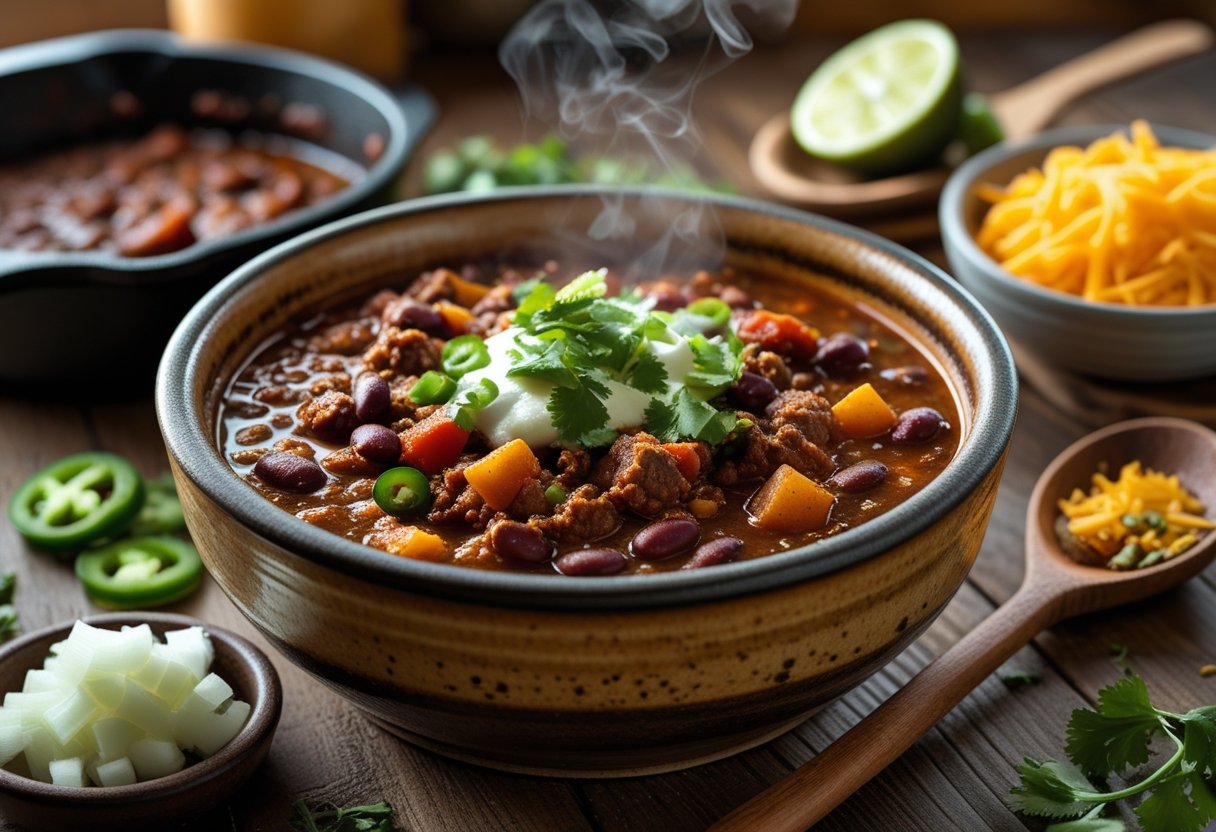
We focus on slow, even heat, bold finishing flavors, and simple sides that match the rustic richness of the chili.
Follow practical steps for simmering, pick side dishes that stand up to elk’s lean meat, and choose toppings that add fat, acidity, and texture.
Simmering Elk Chili in a Dutch Oven
We brown ground elk in batches to avoid steaming and preserve a deep, savory crust.
Use a heavy Dutch oven so heat distributes evenly; set it over medium-high to brown, then lower to a gentle simmer.
Deglaze with a splash of beer or broth to lift browned bits into the sauce.
We add aromatics — onion, garlic, and spices — early so flavors meld.
Since elk is very lean, we stir in a tablespoon of oil or a little bacon or chorizo for mouthfeel.
Maintain a low simmer for 60–120 minutes, uncovered or partially covered, until liquid reduces and chili thickens.
Stir occasionally and skim excess fat or foam.
If the chili is too thin, mix 1 tablespoon of flour or masa harina with cold broth and whisk in to thicken.
For a deeper finish, finish with 1–2 tablespoons of tomato paste and simmer 10 more minutes.
We cool slightly before serving; flavors improve after resting.
Serving Suggestions and Side Dishes
We serve elk chili with warm, slightly sweet cornbread to balance the spice and add tender crumb.
Cornbread can be skillet-baked with a crisp edge to contrast the chili’s texture.
For starch options, offer steamed white rice or hefty jalapeño-cheddar biscuits so guests can spoon chili over.
A simple shredded lettuce and tomato salad adds fresh crunch and acidity.
Roasted sweet potatoes or baked russet wedges work well when we want a heartier plate similar to a classic deer chili meal.
For gatherings, set up a serving station with bowls of shredded cheddar cheese, sour cream, and chopped cilantro so guests build their plates.
Provide sturdy bowls and thick spoons to handle the chili’s chunky texture.
Toppings and Garnishes for a Finishing Touch
We use shredded sharp cheddar for melting richness and a tangy dollop of sour cream to tame heat.
Sprinkle chopped cilantro last for a bright herbal lift that cuts through the savory meat.
Other useful toppings: diced raw onion for bite, sliced jalapeños for heat control, and crushed tortilla chips for crunch.
For a smoky note, offer small amounts of smoked paprika or a drizzle of rendered bacon fat.
Fresh lime wedges add acidity when squeezed over the bowl.
Keep a small tray of optional mix-ins — chopped green onion, chopped cilantro, grated cheddar, sour cream — so everyone customizes their bowl.
These simple choices round out the lean elk and create a classic, satisfying wild-game chili experience.
Frequently Asked Questions
We cover ingredient choices, cooking methods, serving ideas, nutrition, and adjustments for different cookware and meats.
Expect clear steps for using ground elk, a slow cooker, Dutch oven, and tips comparing elk to bison.
What ingredients are needed for making Montana elk chili?
We use 1–1.5 lb ground elk or cubed elk stew meat as the protein base.
Typical vegetables include one diced onion and 1–2 cloves garlic, plus canned tomatoes (14–16 oz) and a mix of pinto and black beans if you like beans.
Spices matter: chili powder, cumin, and salt are basic, and optional chipotle powder or extra chili powder adds heat.
Add beef or game broth (2–4 cups) to build body, and 1 tablespoon flour or cornmeal can thicken if needed.
Can you prepare Montana elk chili in a slow cooker?
Yes. Brown the elk and sauté onions and garlic first for better flavor.
Transfer meat and the rest of the ingredients to the slow cooker and cook on low for 6–8 hours or on high for 3–4 hours.
If using cubed elk, brown the cubes and add a little extra liquid and a longer cook time so the meat becomes tender.
Stir in thickeners or fresh herbs in the last 30 minutes to preserve texture and flavor.
What are some recommended side dishes to serve with elk chili?
Cornbread pairs well, especially Mexican-style or skillet cornbread.
Rice or plain steamed white rice makes the chili stretch and soaks up sauce.
Grated cheddar, diced onions, cilantro, and sour cream make good toppers.
A simple green salad or roasted vegetables balance the richness.
Is elk chili considered a healthy dish?
Elk is leaner than beef and lower in saturated fat, so chili made with elk tends to be lower in fat.
Beans add fiber and plant protein, while tomatoes provide vitamin C and lycopene.
Watch sodium in canned beans, tomatoes, and broth; choose low-sodium versions to control salt.
Portion size and toppings like cheese or sour cream will change the calorie and fat totals.
How do you adapt a traditional elk chili recipe for a Dutch oven?
Brown the elk and cook the onions over medium heat in the Dutch oven to develop fond.
Add tomatoes, beans, broth, and spices, bring to a simmer, then cover and cook over low heat or in a 325°F oven for 1.5–2 hours.
If using cubed elk, sear the cubes first and allow longer, low-and-slow cooking until the meat is fork-tender.
Finish on the stovetop to adjust thickness, and scrape the bottom often to incorporate browned bits into the sauce.
What are the differences between bison and elk chili?
Bison and elk are both lean meats, but bison tends to have a slightly sweeter, beef-like flavor. Elk, on the other hand, brings a mild gamey note to the party.
Both meats appreciate a little help from added fat, like oil or a bit of bacon, to keep your chili from turning into sawdust. Browning the meat first is always a good idea.
Cooking times are about the same, but cubed elk can be a bit more stubborn and might need a longer braise than bison. Smoky or spicy seasonings are your best friends here—they work wonders with either meat and add some serious depth.