
Medovik is a traditional Russian honey cake known for its delicate, thin layers and creamy sour cream frosting. It is made by baking multiple thin honey-flavored cake layers and stacking them with a smooth, tangy frosting that softens the cake as it chills.
This process gives the dessert a unique texture and rich flavor.
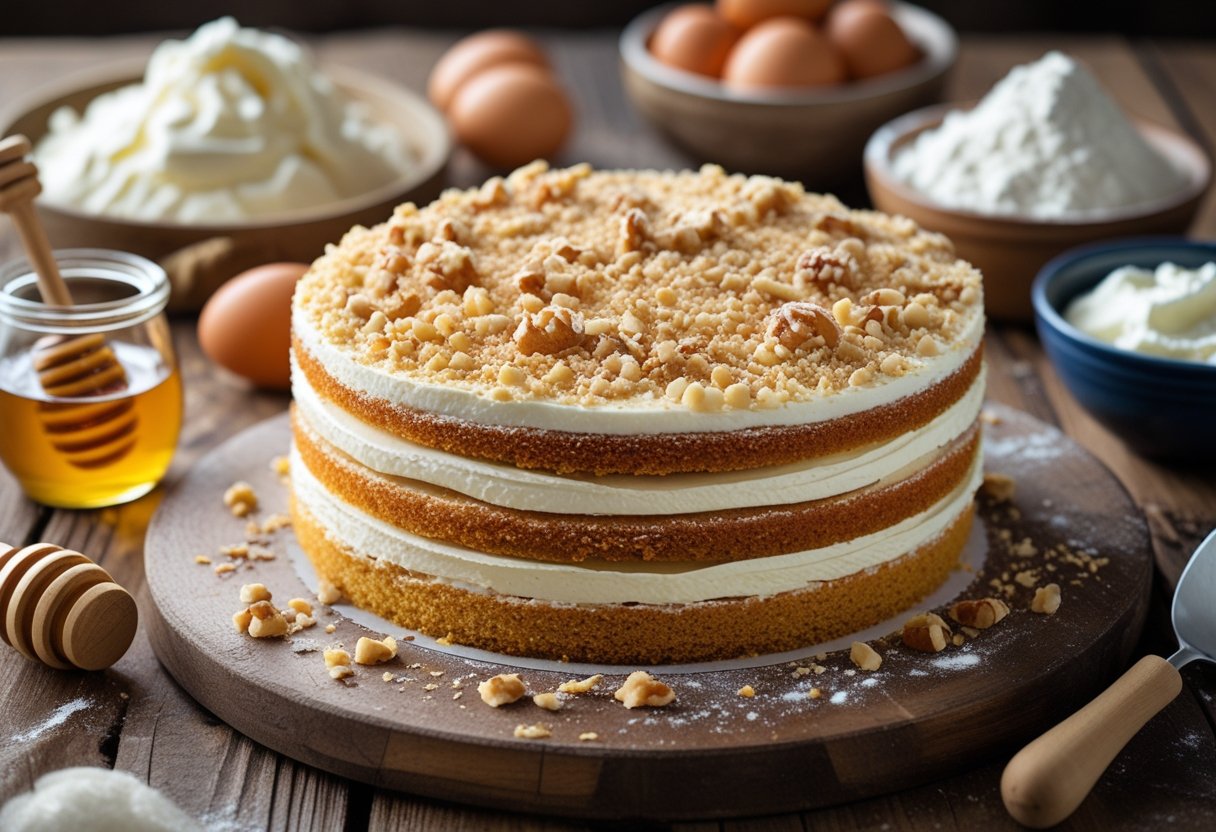
The cake is often made with simple ingredients like honey, eggs, sugar, flour, sour cream, and powdered sugar, making it accessible for home bakers.
Its balance of sweet honey and tangy cream offers a subtle but satisfying taste that stands out from typical desserts.
Easy to assemble yet impressive in appearance, Medovik is perfect for special occasions or when a homemade treat is desired.
Readers will find clear steps and tips to make this layered cake come together smoothly and with great results.
For more detailed guidance, refer to the 8-Layer Honey Cake Recipe (Medovik).
Medovik Recipe Overview
Medovik is a layered honey cake made with simple ingredients that work together to create a tender texture and balanced sweetness.
The sweetness comes mainly from honey and sugar, while the creamy filling adds moisture and richness.
Each layer is baked thin and stacked carefully to build a soft, multi-layered dessert.
Understanding the role of each ingredient and the layering technique helps in making an authentic Medovik.
The balance between honey’s flavor and the cream filling defines the cake’s unique taste.
Key Ingredients and Their Roles
The main ingredients in Medovik include all-purpose flour, eggs, sugar, honey, sour cream, and baking soda or baking powder.
Flour forms the structure of the thin cake layers.
Eggs add richness and help bind the dough, while sugar sweetens and supports browning during baking.
Honey is the star flavor, providing distinct sweetness and aroma.
It also helps keep the cake layers moist.
Baking soda or baking powder acts as a leavening agent, making the layers tender but not overly fluffy.
Sour cream is used in the filling to add acidity, balancing the sweet honey flavor.
Butter often enriches the dough for softness and flavor.
Chopped nuts can be added between layers for texture but are optional.
Traditional Cake Layers Explained
Medovik’s cake layers are very thin, often baked one at a time to get the right crispness.
Each layer is a honey biscuit made from a dough that includes honey, flour, sugar, eggs, and sometimes baking soda or powder.
The dough is rolled out thinly and baked briefly until golden.
These layers are soft but hold their shape, allowing the cake to stack without collapsing.
The texture is tender, not cake-like or bread-like.
This thin layering creates a delicate balance with the creamy filling, giving the overall cake a light, melt-in-the-mouth quality.
The Importance of Honey and Sour Cream
Honey provides Medovik’s defining flavor.
It is responsible for a warm sweetness and a unique floral aroma not matched by regular sugar.
The honey also helps keep the cake layers soft and moist while giving them a slight chewiness.
Sour cream is vital in the filling and frosting, adding tanginess to contrast honey’s sweetness.
It also makes the cream rich and smooth without overpowering the layers.
Mixing sour cream with ingredients like whipping cream, cream cheese, or condensed milk creates various creamy textures, but the sour cream’s sharpness is the key.
Choosing the Right Frosting
Medovik frosting usually involves sour cream or a sour cream-based mixture.
Sour cream frosting is traditional because its mild acidity cuts through the richness of the cake layers.
Some versions mix sour cream with whipped cream, cream cheese, or even sweetened condensed milk for different textures and sweetness levels.
Butter or softened cream cheese may be added for stability and body.
The frosting should be creamy but not too thick, allowing it to coat each layer evenly.
The frosting also helps the cake layers soften over time, as the moisture from the cream soaks into the honey biscuits, improving the cake’s texture after resting.
Step-by-Step Instructions for Medovik
The process of making Medovik involves carefully preparing thin honey-infused cake layers, baking them to the right texture, mixing a creamy frosting, and assembling the cake so the flavors blend well.
Each step requires attention to detail to achieve the cake’s delicate balance of sweet and tangy.
Preparing the Cake Dough
To start, eggs and honey are beaten together until the mixture is light and slightly foamy.
This incorporates air, which helps give the layers a tender texture.
Then, baking soda dissolved in vinegar is added to activate leavening.
Next, sifted all-purpose flour is mixed into the wet ingredients slowly.
This creates a smooth batter without lumps.
It is important not to overmix, as too much gluten development can make the layers tough.
The batter should be thin and spreadable to produce the paper-thin honey cake layers typical of the Russian honey cake.
Baking and Shaping the Layers
The cake batter is spread very thinly on parchment paper-lined baking sheets.
About 1/2 cup of batter per layer is measured to keep the layers even in thickness and size.
Each layer bakes at 350°F (175°C) for about 7 minutes.
The layers should turn golden but not brown.
Overbaking can dry them out.
Once cooled, the rectangular layers are trimmed using a plate as a guide to make even, round cake layers.
Leftover scraps are baked until dry, then crushed to be used as cake crumbs for decoration.
Making the Frosting
The frosting combines sour cream and Cool Whip or whipped cream to create a creamy, tangy balance that offsets the honey sweetness.
Full-fat sour cream is preferred for its consistency and richness.
Both ingredients are mixed thoroughly until smooth and even.
This mixture must be ready at room temperature or thawed completely to spread easily between the cake layers and coat the outer cake.
Optional additions like finely chopped nuts can be mixed in or sprinkled between layers for extra texture.
Assembling and Decorating the Cake
Assembly involves layering the cake circles with generous but thin spreads of frosting between each one. The goal is even coverage without overpowering the delicate cake layers.
After stacking all layers, the entire cake is covered with frosting on the sides and top. Pressing the crushed cake crumbs onto the frosting adds a rustic finish and hides any imperfections.
The assembled Medovik must chill in the refrigerator for at least one hour. This resting period softens the layers and allows the flavors to meld.