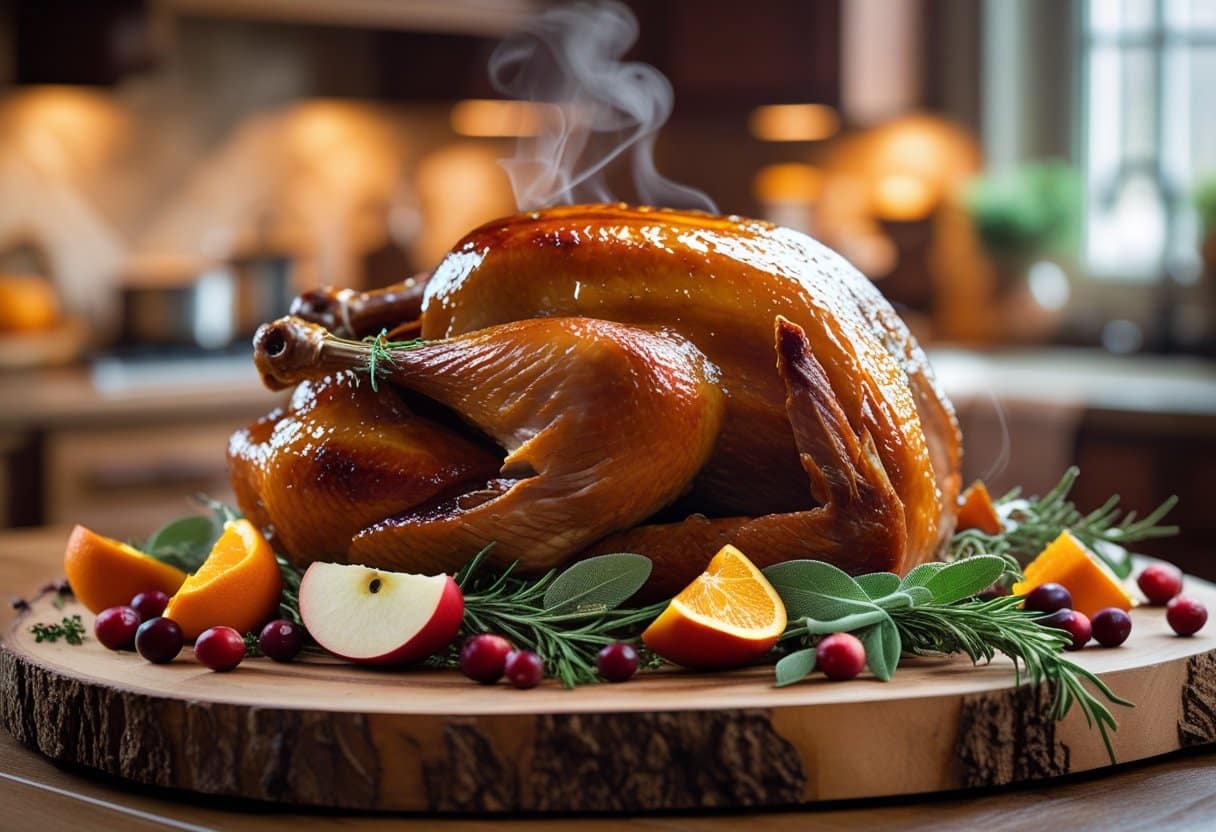
If you want a turkey that’s juicy, flavorful, and has a beautiful golden glaze, a maple-glazed roast turkey is a perfect choice.
This recipe uses a simple maple syrup glaze that adds a sweet, savory touch to the tender turkey meat, making it great for special dinners or holiday meals.
The glaze helps create a crispy skin while keeping the meat moist inside.
Roasting the turkey with a maple glaze is straightforward and doesn’t require complicated steps or hard-to-find ingredients.
We’ll guide you from seasoning the turkey to roasting it to the right temperature, ensuring you get the best results.
By following a few easy tips, you can impress your guests with a turkey that stands out at the table.
This recipe balances sweetness and seasoning to bring out the natural taste of the turkey.
Key Takeaways
- Using a maple glaze enhances both the flavor and texture of the turkey.
- Proper roasting techniques help keep the turkey juicy and browned.
- Simple ingredients and clear steps make this recipe easy to follow.
Essential Ingredients and Equipment
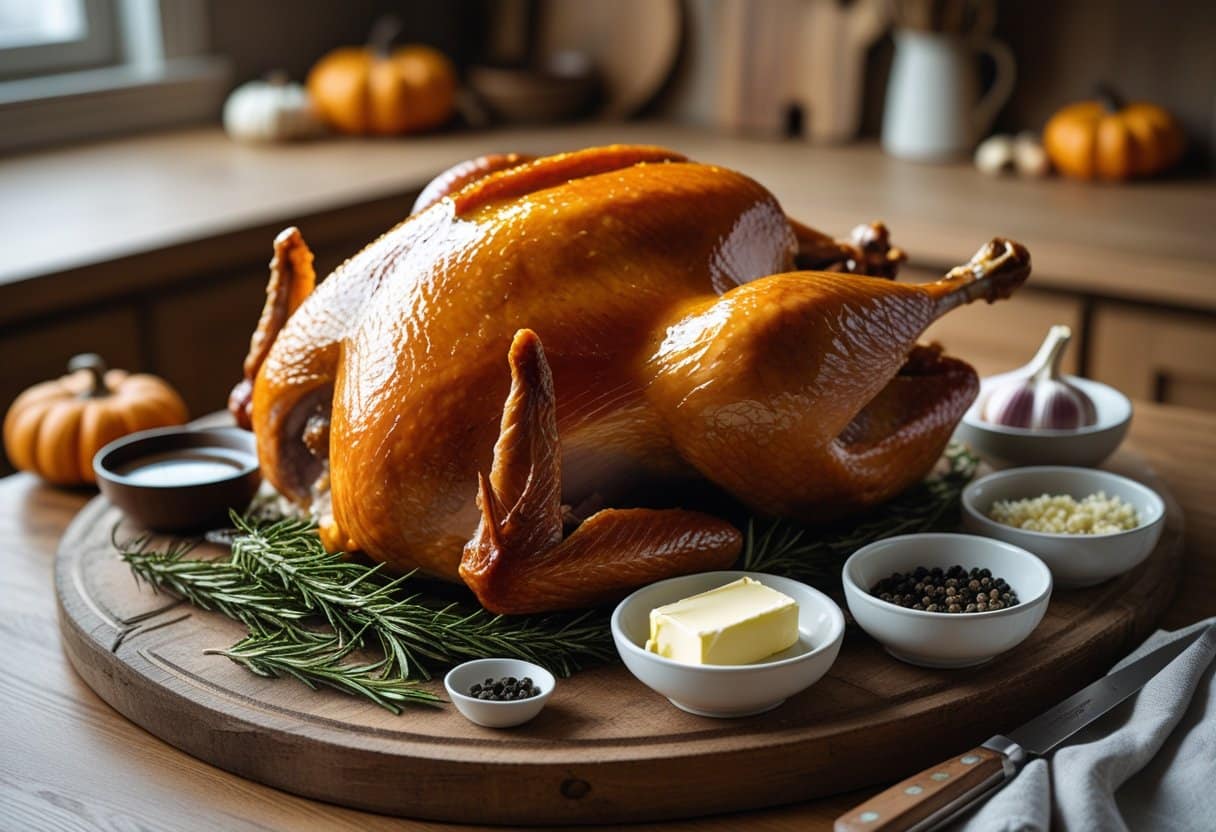
To make a successful maple-glazed roast turkey, we focus on precise ingredients that bring out balanced flavors.
Essential tools help us cook the bird evenly and safely.
Key Ingredients for Maple-Glazed Roast Turkey
A whole turkey around 12 to 16 pounds works best for our recipe to feed a family or small group.
The maple glaze is made from pure maple syrup combined with unsalted butter to create a rich, sweet, and savory coating.
We use kosher salt and black pepper to season the turkey thoroughly.
To build layers of flavor, garlic powder and onion powder add a subtle depth.
Fresh garlic cloves and chopped onions go inside the cavity to infuse the meat as it roasts.
For acidity and balance, adding lemon and apple pieces to the cavity helps keep the meat moist and aromatic.
A splash of apple cider vinegar in the glaze can provide a tangy contrast to the sweetness.
Fresh Herbs and Aromatics for Flavor
Fresh herbs are essential for a vibrant aroma and earthiness in the turkey’s taste.
We use a bundle of fresh thyme, rosemary, and sage.
Inside the turkey, we add bay leaves along with the herb bundle.
This mix slowly releases its flavor during roasting.
We also prepare an herb butter by mixing softened unsalted butter with finely chopped rosemary and sage to rub under the skin.
This adds richness and enhances the herb essence directly to the meat.
Must-Have Tools and Cookware
Using the right equipment improves the cooking process and final result.
A sturdy roasting pan with a roasting rack allows heat to circulate evenly around the turkey.
The rack keeps the bird elevated so the skin crisps nicely.
A meat thermometer is critical for checking the internal temperature, ensuring the turkey reaches 165°F in the thickest part for safe, juicy meat.
For clean, precise service, we recommend a sharp carving knife.
A baking rack can be useful for resting the carved slices, keeping them warm and preventing sogginess by letting air flow underneath.
These tools combined support a smooth roasting and serving experience.
For a full ingredient list and detailed steps, see the maple-glazed roast turkey recipe at jmrecipes.com.
Step-by-Step: Preparing and Roasting Your Maple-Glazed Turkey
To make a perfectly roasted turkey with a rich maple butter glaze, we need to carefully prepare the bird.
We’ll create and apply the glaze, season thoughtfully, and manage the roasting process with attention to temperature.
Each step plays a key role in achieving juicy meat and a flavorful, caramelized skin.
Thawing, Cleaning, and Prepping the Turkey
First, we make sure the turkey is fully thawed, ideally in the refrigerator for several days.
This prevents uneven cooking.
Once thawed, we remove the packaging and take out any giblets or neck from the cavity.
We pat the turkey dry with paper towels, inside and out.
Dry skin helps the glaze stick and browns better in the oven.
Next, we tuck the wing tips under the bird to avoid burning.
To prepare for glazing, we gently loosen the skin over the breast by sliding our hand between the skin and meat.
This lets us apply the maple butter glaze under the skin for deeper flavor.
Making and Applying the Maple Butter Glaze
Our maple butter glaze combines softened unsalted butter with pure maple syrup, fresh or dried thyme, salt, and black pepper.
Mixing these creates a smooth, rich glaze.
We carefully lift the skin over the breasts and rub some glaze directly onto the meat.
Then, we spread the remaining glaze all over the outside of the turkey, making sure to cover legs and wings.
This glaze will caramelize and create a beautiful golden crust during roasting.
The sugars in the maple syrup help produce a crispy and flavorful skin while keeping the meat moist beneath.
Stuffing and Seasoning with Citrus and Aromatics
To add extra flavor, we can stuff the turkey cavity with fresh herbs like parsley and thyme.
This infuses subtle herbal notes from the inside out.
We also often add citrus wedges, like orange or lemon slices, inside the cavity.
The citrus releases aromatic oils that brighten the taste and balance the glaze’s sweetness.
In the roasting pan, we create a bed with quartered onions, chopped carrots, and celery.
These vegetables add moisture and flavor to the pan drippings, which can be used later for gravy.
Roasting and Monitoring Oven Temperature
We preheat the oven to 325°F (160°C).
The turkey goes breast-side up on the veggie bed in a large roasting pan.
We insert an instant-read thermometer into the thickest part of the breast without touching bone.
Roasting takes about 2 to 2.5 hours for a 12-14 pound bird, but we always rely on the internal temperature reaching 165°F (75°C) to confirm doneness.
Every 30 minutes, we baste the turkey with pan drippings to keep it juicy and enhance the maple glaze’s shine.
Once out of the oven, the turkey rests for 20-30 minutes to allow juices to redistribute before carving.
Tips for Achieving Juicy, Golden Turkey
To get a juicy, golden roasted turkey, we need to focus on key cooking steps.
Proper basting, resting, and carving help keep the meat tender.
Paying attention to moisture and flavor ensures each bite is enjoyable.
Avoiding common cooking mistakes makes the process smoother—and saves you from turkey-related heartbreak.
Basting, Resting, and Carving
Basting with a maple glaze or pan juices every 30 minutes helps build a flavorful, golden skin without drying out the meat.
We should be careful not to open the oven too often, which can cause heat loss.
Once the turkey reaches 165°F on a meat thermometer, we take it out and let it rest for at least 20 minutes.
Resting allows the juices to redistribute, making the turkey moist when carved.
Using a sharp carving knife, we cut against the grain to keep the meat tender and easy to eat.
Carving carefully also preserves the juices inside each slice.
Ensuring Moist, Flavorful Meat
Brining before roasting adds flavor and moisture.
A dry brine or simple salt water soak enhances tenderness without overpowering the turkey’s natural taste.
Roasting at a steady 325°F keeps the cooking slow and even.
We want the skin crisp and the inside juicy, so slow roasting is key.
Stuffing the turkey with aromatic ingredients like onion and apple helps infuse the meat with subtle flavors.
Combining this with a maple butter glaze creates a sweet, savory balance.
Using a meat thermometer to check internal temperature ensures the turkey is safely cooked without over-drying.
Troubleshooting Common Issues
If the turkey skin isn’t crisp, it’s often because the bird was too wet before roasting.
Patting the skin dry with paper towels before cooking prevents this.
For dry meat, check the cooking time and temperature.
Overcooking dries out the turkey quickly.
Using a thermometer and removing the bird immediately when done helps.
If the glaze burns, simmer it until thick but still pourable before basting.
Applying glaze in the last hour of roasting protects it from burning.
For more tips (and to avoid turkey-related stress), see this maple glazed turkey guide.
Serving Ideas and Leftover Inspiration
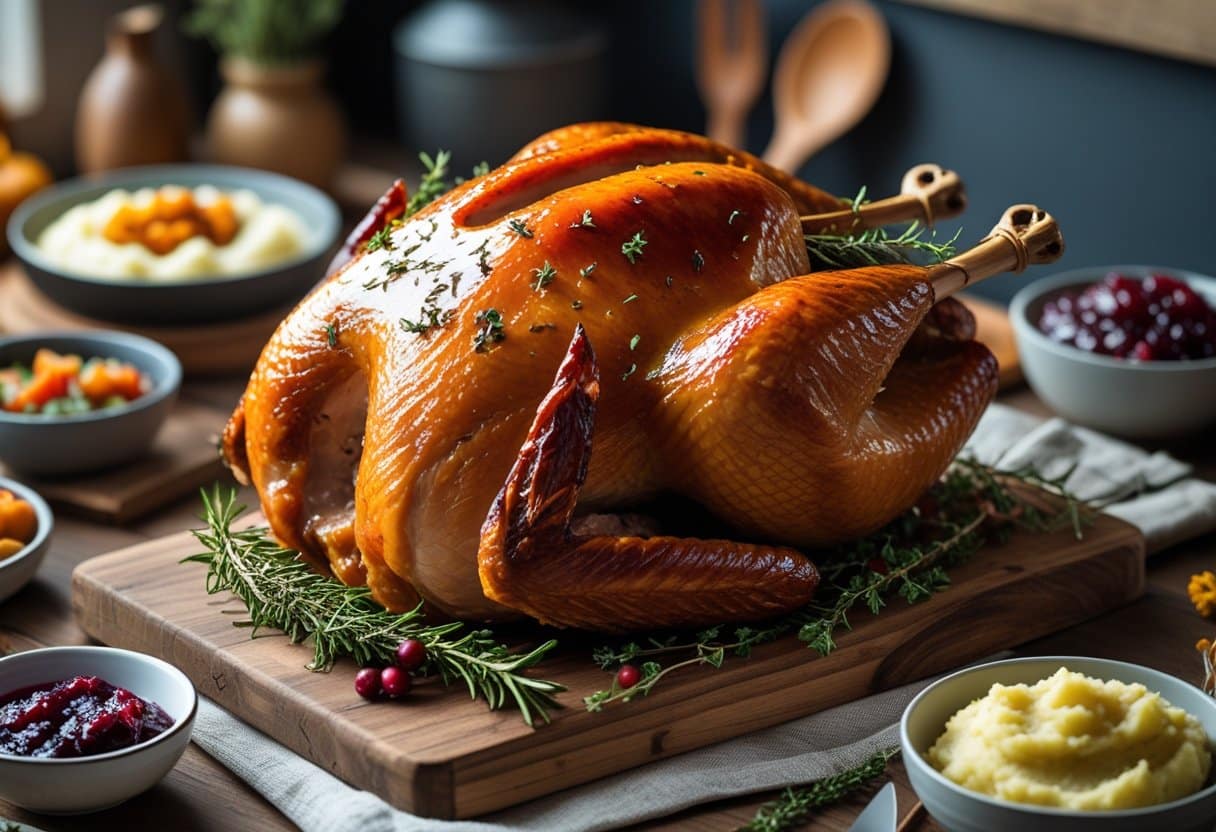
Preparing a maple-glazed roast turkey gives us a rich, juicy centerpiece to build around.
Pairing it with classic sides, making a smooth homemade gravy, and finding smart ways to use turkey leftovers helps us stretch every bit of flavor from our Thanksgiving feast.
Perfect Sides for Thanksgiving Dinner
We like pairing our turkey with mashed potatoes, which soak up all the maple glaze and gravy flavors.
A creamy sweet potato casserole adds a touch of sweetness to balance the savory taste of the turkey.
Green bean casserole is a must for its crunch and earthiness.
Roasted Brussels sprouts with crispy bacon bring a smoky note that complements the maple glaze.
Soft dinner rolls round out the meal perfectly, ideal for soaking up leftover gravy and juices.
These side dishes add texture and color while enhancing the turkey’s juicy, sweet-savory profile.
Making Gravy and Using Pan Drippings
We use the pan drippings left after roasting to make a homemade gravy that ties the meal together.
First, we skim excess fat from the juices and melt butter in a saucepan.
Next, we whisk in all-purpose flour to form a roux and cook it until golden.
Adding chicken broth or vegetable broth slowly, we stir until smooth and thickened.
Finally, a splash of maple syrup echoes the glaze’s sweetness, and salt and pepper adjust seasoning.
This rich gravy pours easily over both turkey and sides, boosting flavor and moisture.
Creative Dishes for Turkey Leftovers
Leftover turkey is perfect for transforming into new meals. We love turkey soup made by simmering turkey bones with vegetable broth, fresh herbs, and whatever veggies are hiding in your fridge.
Turkey sandwiches with thick slices on crusty bread and a smear of cranberry sauce are a classic move. If you’re feeling adventurous, toss turkey into pasta casseroles or salads with fresh or roasted veggies for a dinner that feels brand new.
For more ideas on leftover turkey recipes, check out 40 Best Leftover Turkey Recipes to Make After Thanksgiving.