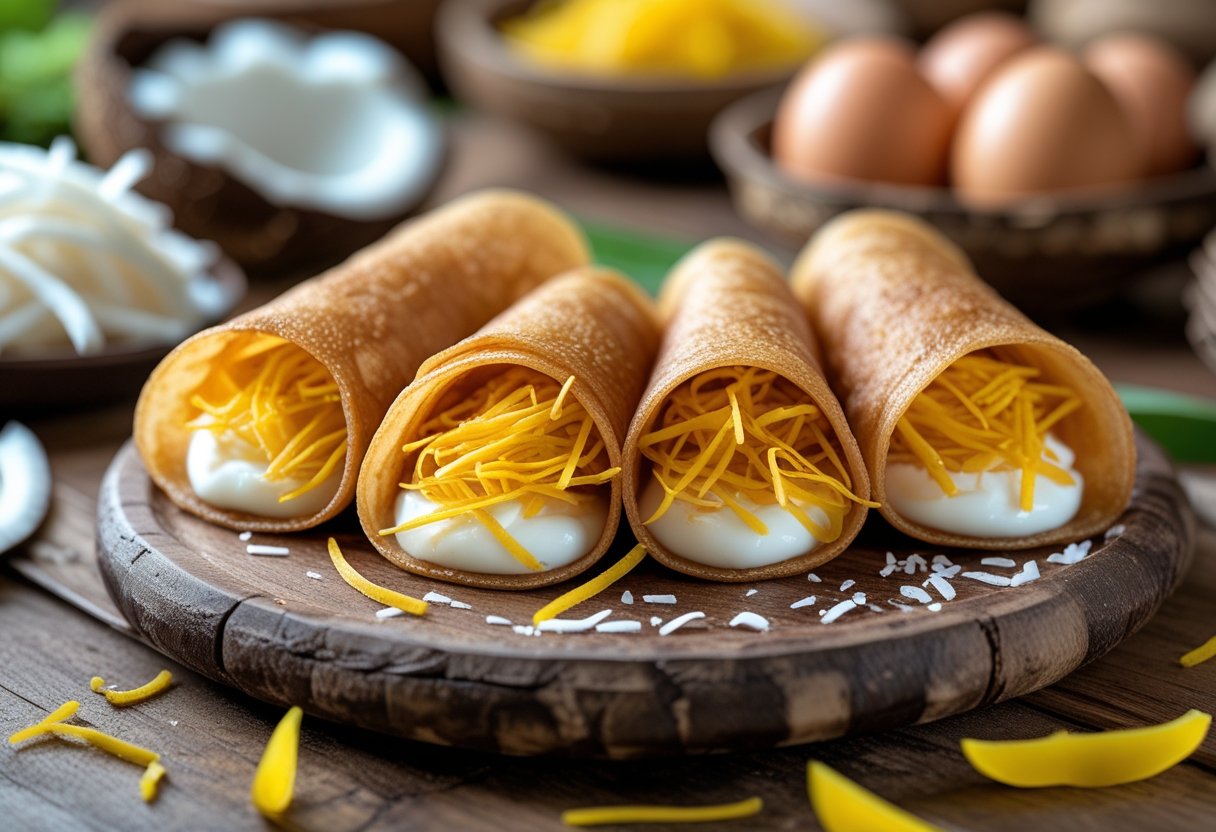
Khanom Buang, or Thai crispy pancakes, is a beloved street food that’s been making Thais smile for centuries. These thin, crispy crepes are filled with a mix of sweet or savory toppings, creating a bite that’s a party of flavors and textures.
This dessert stands out because of its delicate shell paired with creamy fillings like shredded coconut, egg yolk threads, or spiced shrimp.
You’ll spot Khanom Buang everywhere in Bangkok and other Thai cities, usually served up hot by street vendors. It’s a must-try for anyone who wants to taste authentic Thai cuisine—and maybe get a little powdered sugar on their shirt.
Key Takeaways
- Khanom Buang is a crispy Thai pancake with sweet or savory fillings.
- It’s a popular street food found all over Thailand.
- The mix of textures and flavors is a true reflection of Thai culinary heritage.
Khanom Buang Fundamentals
Khanom Buang is a one-of-a-kind Thai dessert with a rich backstory, specific ingredients, and a texture that’s all its own. It’s all about the sweet and savory fillings tucked inside a thin, crispy shell made mostly from rice flour.
Understanding these details helps us appreciate how this traditional snack fits into Thai cuisine and culture.
Origins and Cultural Significance
Khanom Buang dates back to the Ayutthaya period, making it one of the oldest Thai desserts still around. It kicked off as a street food favorite in central Thailand, especially in bustling Bangkok.
Over the years, it’s become a symbol of Thai culinary creativity, turning simple ingredients into a treat that packs a punch. This dessert reflects Thai culture by balancing sweet and salty tastes—because why choose just one?
Vendors sell Khanom Buang at markets and festivals, where it’s both a snack and a slice of tradition. It’s more than food; it’s a crunchy connection to Thailand’s history and social customs.
Traditional Ingredients and Their Roles
The base of Khanom Buang is a thin batter made mostly from rice flour and mung bean flour, sometimes with a cameo appearance by sugar and eggs. These flours give the crepe its signature crispy texture.
Some recipes sneak in a bit of all-purpose flour, but rice flour is the MVP for authenticity. For toppings, the pancake usually has two personalities: a salty filling with a creamy base, chopped shrimp or shredded coconut, pepper, and coriander; and a sweet topping starring shredded egg yolk threads called Foi Thong.
Palm sugar and egg whites are used to create the cream filling, adding a little luxury to every bite. All these ingredients team up to make the signature taste of Khanom Buang.
| Ingredient | Role |
|---|---|
| Rice flour | Gives the crispy thin shell |
| Mung bean flour | Adds structure and softness |
| Sugar | Sweetens the batter |
| Eggs | Binds the mixture |
| Palm sugar | Sweetens the cream filling |
| Shrimp/Coconut | Provides salty topping flavor |
| Foi Thong (egg yolk threads) | Adds a sweet, decorative topping |
Unique Characteristics of the Crispy Shell
The crispy shell is Khanom Buang’s claim to fame. It’s super thin and brittle—think of it as the potato chip of pancakes, thanks to rice flour and a perfectly balanced batter.
Making it involves heating a pan until it’s hotter than a Bangkok summer, then quickly swirling in the batter so it cooks lightning fast.
This shell’s texture is a crunchy contrast to the soft, creamy fillings inside. It’s sturdy enough to hold the toppings but light enough to shatter with a bite.
That delightful crunch is what makes Thai crispy pancakes a standout on any street food tour.
For more on this treat, check out a detailed recipe and cultural background.
Making and Enjoying Khanom Buang
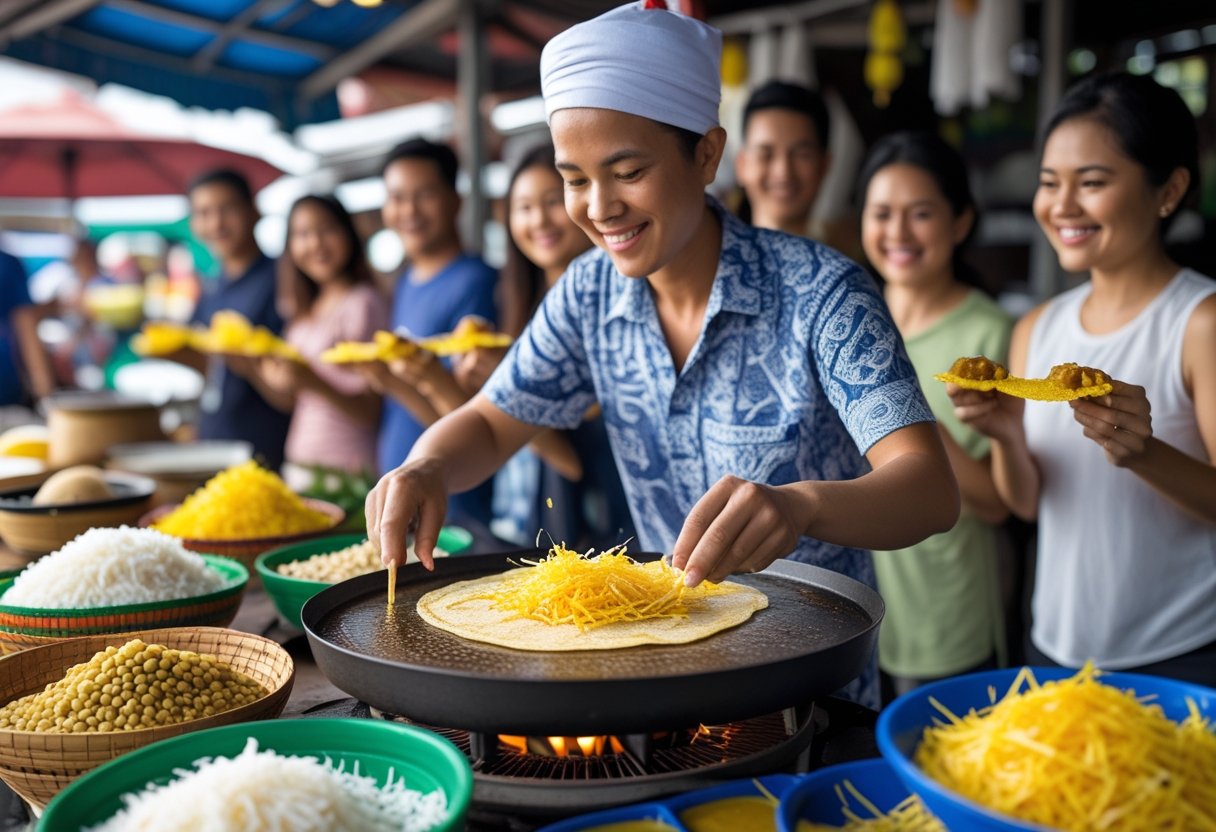
To whip up Khanom Buang, you’ll need the right tools and ingredients to create that perfect crispy shell and those flavorful fillings. The process involves making a delicate batter, mastering the meringue, and picking toppings that hit the sweet and savory notes.
Essential Equipment and Tools
A non-stick skillet or crepe pan is non-negotiable for getting the batter to spread evenly and crisp up. You’ll want a small ladle or spoon for swirling the batter in thin, circular motions.
A spatula comes in handy for folding the crepes without turning them into modern art. For the meringue, grab a whisk or electric mixer.
Cooling racks help keep your pancakes crisp and ready for their close-up. Good tools make the process smoother and help you nail that thin, lacy pancake shell.
How to Make the Batter and Shell
The batter is a mix of rice flour, mung bean flour, coconut milk, water, egg, and salt. Start by mixing the flours for the right crispness, then whisk the wet ingredients separately before combining for a silky batter.
Pour the batter in a thin circle on a hot skillet (medium-high is your friend). Cook just one side until the edges curl and the surface is golden.
The shell should be crisp but still willing to fold without a fight. Letting the batter rest for 15-20 minutes before cooking gives you extra points for texture.
Getting the pan temperature and pouring technique right is the secret handshake of Khanom Buang making.
Preparing the Meringue and Fillings
For the sweet meringue filling, whip egg whites (or meringue powder with water) until stiff peaks form—think fluffy clouds, but tastier. Sometimes, a little food coloring is added for that classic pop of color.
For sweet toppings, cook shredded coconut with palm sugar until it’s soft and fragrant. Spread the meringue over the hot crepe first, then top with the coconut mixture.
Savory fillings feature chopped dried shrimp and scallions, with a dash of pepper and fish sauce. Add both types of fillings while the crepe is still warm so the flavors can mingle.
The combo of fluffy meringue and rich coconut or salty, spiced shrimp is what makes Khanom Buang a flavor adventure.
Toppings: Sweet vs. Savory Variations
Khanom Buang comes in two camps: sweet and savory. Sweet toppings usually include meringue, coconut cooked in palm sugar, and foi thong—those golden egg yolk threads that look fancy and taste even better.
Savory toppings bring in chopped dried shrimp or minced pork with scallions, coriander, and a little pepper. Fish sauce or salt keeps things interesting.
Some sweet versions add a dollop of creamy coconut custard, while savory ones might get a sprinkle of cilantro or fried shallots.
Just remember: toppings go on while the shell is still warm, then fold and serve. The contrast of crunchy shell and soft fillings is why Khanom Buang is a street snack legend.
Feeling creative? Mix and match fillings, but always keep the balance of texture and taste that makes this dish sing. For more inspiration, check out this Khanom Buang guide.
Frequently Asked Questions
Khanom Buang features a crisp, thin batter that creates a delicate shell. The fillings juggle sweet and salty flavors—egg yolk threads or shrimp with cream, anyone?
This dessert is a street and market favorite across Thailand, and you can totally make it at home without needing a culinary degree.
How do you make the batter for Thai crispy pancakes?
The batter is a blend of rice flour, mung bean flour, sugar, and eggs. Mix the dry ingredients, then add water (with or without red limestone paste) slowly.
Blend for about 10 minutes until smooth. Your arm workout for the day—done!
What are the traditional fillings for Khanom Buang?
Traditional fillings start with a whipped cream base, then get topped with either sweet or salty goodies. Sweet toppings use Foi Thong (egg yolk threads boiled in syrup).
Salty toppings often have chopped shrimp cooked with pepper, coriander, sugar, and fish sauce, though shredded coconut is also a popular twist.
Where can one find Khanom Buang for sale in Thailand?
Khanom Buang is everywhere—Bangkok’s street markets, night markets, and food courts. Hot tip: check out Terminal 21 Food Court or the city’s floating markets for a crispy fix.
Can you suggest an easy recipe for making Khanom Buang at home?
Make the batter as above and heat a non-stick pan until it’s ready for action. Pour small amounts to form thin pancakes, cook until crisp, then add whipped egg white cream and your choice of sweet or salty toppings.
Fold and serve right away—preferably before your family eats them all.
How is the texture of a Khanom Buang different from other Thai pancakes?
Khanom Buang’s shell is super thin and crispy, unlike other Thai pancakes that might be soft or fluffy. The crunchy shell with soft cream inside is what makes it so crave-worthy.
What are some common variations of Khanom Buang found in Thai cuisine?
Besides shrimp and Foi Thong, you’ll also spot toppings like shredded coconut or chopped candied fruits. Some modern versions get creative and swap these out for other fun ingredients.
But don’t worry, the crispy pancake and creamy filling are always the stars of the show.
For more details on traditional ingredients and cooking tips, check out this Khanom Buang recipe guide.