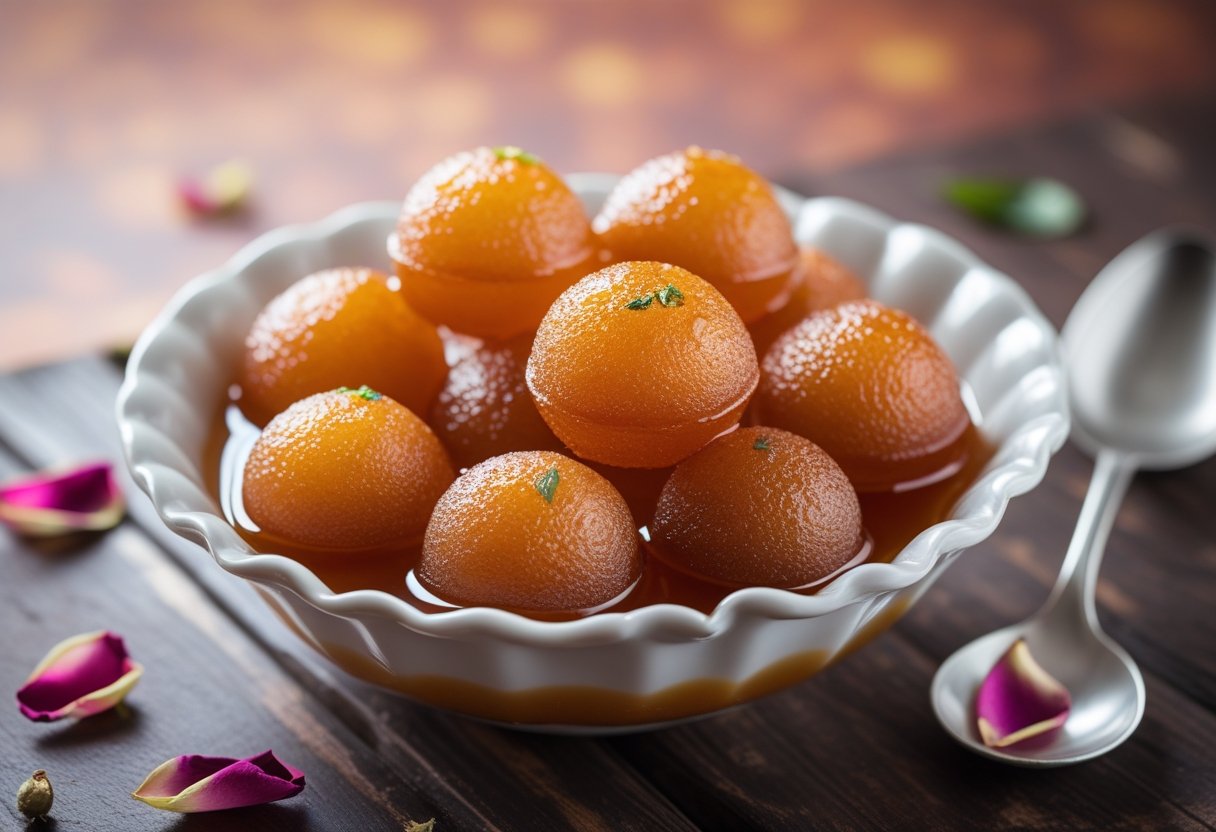
Gulab Jamun is a classic Indian dessert made of soft, fried milk dough balls soaked in a fragrant sugar syrup flavored with rose water and cardamom. It’s famous for its rich taste and melt-in-the-mouth texture, making it a go-to at festivals, celebrations, and pretty much any time someone has a sweet tooth.
This sweet has deep roots in Indian culture and history. It blends traditional ingredients like khoya or milk powder with spices and syrup to create a unique flavor that’s hard to resist.
Whether served warm or at room temperature, gulab jamun is simple yet delicious. Let’s dive into how it’s made, why it’s so beloved, and how you can whip up a batch at home.
Key Takeaways
- Gulab jamun is made from milk solids fried and soaked in flavored sugar syrup.
- It holds a special place in Indian celebrations and everyday life.
- Making gulab jamun involves simple ingredients but careful preparation.
What Is Gulab Jamun?
Gulab Jamun is a sweet treat known for its rich flavor and soft texture. It consists of small, deep-fried milk balls soaked in a warm, fragrant sugar syrup.
The syrup often includes rose water and cardamom, giving the dessert its signature aroma and taste. Basically, it’s like a hug for your taste buds.
Meaning and Etymology
The name “Gulab Jamun” comes from two distinct words. “Gulab” is Persian for “rose water,” highlighting the floral essence in its syrup.
“Jamun” refers to an Indian fruit, a small dark purple berry similar in size and shape to the sweet itself. This combo of words brings together the dessert’s look and flavor—and gives a nod to the Persian influence on Indian cuisine.
The dessert got its start during the Mughal era, evolving from Middle Eastern sweets that hitched a ride to India. History never tasted so good.
Cultural Significance and Occasions
Gulab Jamun holds a special place in Indian culture. It’s the MVP at weddings, festivals like Diwali and Eid, and just about any celebration where joy (and sugar) is required.
Serving this dessert is a sign of respect and hospitality for guests. Its presence at big events makes it a symbol of joy and togetherness.
There are tons of regional variations across India, each with its own twist. No matter where you are, though, Gulab Jamun is always welcome at the party.
Key Characteristics
Gulab Jamun is made from milk solids (traditionally khoya), mixed with flour and cardamom. The dough is shaped into small balls and deep-fried until golden brown.
These milk balls are then soaked in a warm sugar syrup infused with rose water and more cardamom. The inside is soft and spongy, while the outside has a slight crisp.
The syrup makes the sweet juicy and aromatic. This combo of textures and scents is what makes Gulab Jamun a legend among Indian desserts.
How to Make Gulab Jamun: Ingredients and Methods
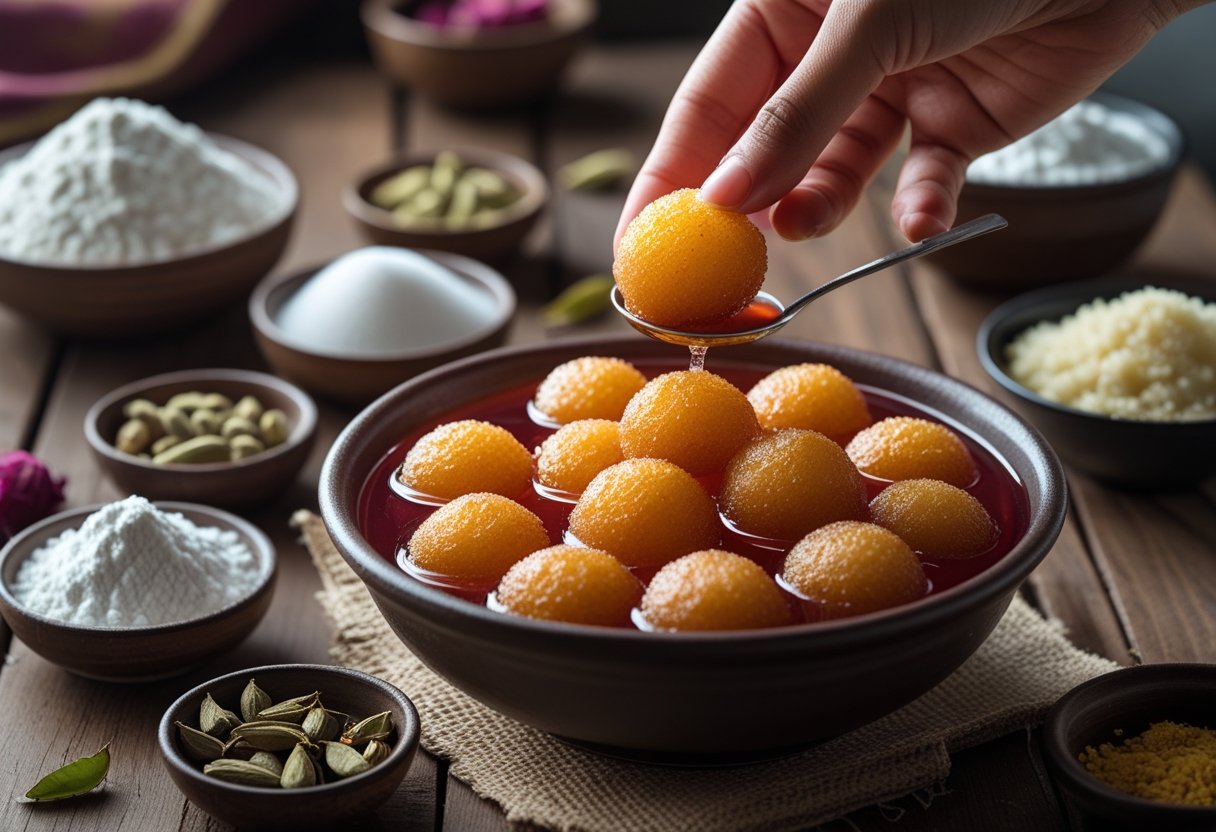
Making gulab jamun is all about the right ingredients and a little patience. The dough’s texture and syrup prep are key for those soft, juicy milk balls.
Let’s break down what you need and how to avoid turning your dessert into a kitchen disaster.
Traditional vs. Modern Ingredients
Traditionally, gulab jamun is made with khoya (mawa), which is milk solids created by slowly reducing milk. It’s rich, creamy, and the OG ingredient.
Khoya is often freshly grated or bought from Indian stores, sometimes frozen. In modern recipes, milk powder steps in as a handy substitute.
Mix milk powder with water or milk to form the dough. This is perfect when khoya is nowhere to be found, but you’ll want to measure carefully.
Other essentials include:
- All-purpose flour (maida) to bind the dough
- Baking powder or baking soda for a bit of fluff
- Cardamom powder and saffron for flavor
- Ghee or oil for deep frying
The sugar syrup is a mix of sugar, water, rose water (or lemon juice for balance), and cardamom. Saffron is optional, but it does make things fancy.
Step-by-Step Preparation
Tips for Soft Gulab Jamun
- Use grated khoya for a smooth dough.
- Don’t over-knead, or you’ll get rock-hard gulab jamuns (nobody wants that).
- Adjust water and flour depending on your khoya or milk powder’s moisture.
- Fry on medium-low heat—patience pays off.
- Shape balls evenly and keep them crack-free.
- Soak fried balls in warm (not hot) syrup for the best results.
- Go easy on the baking powder—too much and your gulab jamuns could fall apart in the oil. Not ideal.
Serving and Storage Suggestions
Serve gulab jamun warm, at room temp, or chilled—whatever floats your dessert boat. To reheat, just microwave them in syrup for a few seconds.
Try these serving ideas:
- With rabdi (sweet condensed milk), topped with almonds or pistachios
- Rolled in desiccated coconut or nut powder after draining syrup
- Drizzled with chocolate sauce for a fusion twist
For storage:
| Storage Method | Duration | Notes |
|---|---|---|
| Room temperature | 1-2 days | Keep covered to prevent drying |
| Refrigerator | Up to 2 weeks | Airtight container is best |
| Freezer | Up to 4 months | Thaw in fridge before serving |
For more details, check out this gulab jamun recipe.
Frequently Asked Questions
Gulab Jamun is made using a few key ingredients that give it its unique texture and flavor. Various versions have specific differences, including color, taste, and method of preparation.
What are the essential ingredients for making Gulab Jamun?
The main ingredients for Gulab Jamun include milk solids called khoya or milk powder, flour or semolina as a binder, and a leavening agent like baking soda. The syrup is made from sugar, water, rose water, and cardamom for flavor.
Ghee or oil is used for frying to give a rich taste.
How does Kala Jamun differ from Gulab Jamun?
Kala Jamun is a darker, almost black variation of Gulab Jamun. It’s fried longer at a lower temperature, which caramelizes the sugars and gives it a chewier texture and more intense flavor.
Sometimes Kala Jamun is stuffed with nuts for extra richness. It’s basically gulab jamun’s edgier cousin.
What is the traditional method to prepare Gulab Jamun using milk powder?
With milk powder, you mix it with flour, baking soda, and ghee. Add lukewarm milk gradually to form a soft dough.
Shape into balls, fry until golden, and soak in warm sugar syrup with cardamom and rose water. This method is popular because it’s easy and uses ingredients you probably already have.
How would you describe the taste and texture of Gulab Jamun?
Gulab Jamun is very sweet with floral notes from rose water and a warm kick from cardamom. The inside is soft and spongy, melting in your mouth, while the outside is a tad firmer from frying.
It’s basically a sugar-soaked cloud with a hint of spice.
Can you explain the difference between Lal Mohan and Gulab Jamun?
Lal Mohan is another name for Gulab Jamun in some regions. Sometimes it refers to slight variations in size, syrup consistency, or color.
Both are milk-based fried dough balls soaked in syrup, but Lal Mohan might be a family or local recipe with its own twist. The differences are minor and mostly regional.
Which region or city is renowned for its version of Gulab Jamun?
West Bengal is famous for its version called Pantua. This sweet treat is similar to Gulab Jamun but made with fresh cheese (chenna) and khoya, and sometimes sports a different shape.
North India came up with Kala Jamun, which is just as delicious but a bit darker and mysterious. Many cities throughout India have their own unique takes on the dessert, reflecting local tastes and ingredients.
You can find variations across the country, each with its own twist. Basically, Gulab Jamun is living its best life in every region!