Crêpes are a beloved French dish enjoyed worldwide. They’re ultra-thin pancakes made from a simple batter of flour, eggs, milk, and butter, cooked lightning-fast on a hot pan.
French crêpes come in two main types: sweet ones for dessert or breakfast, and savory ones often filled with cheese, meats, or veggies. Talk about versatile!
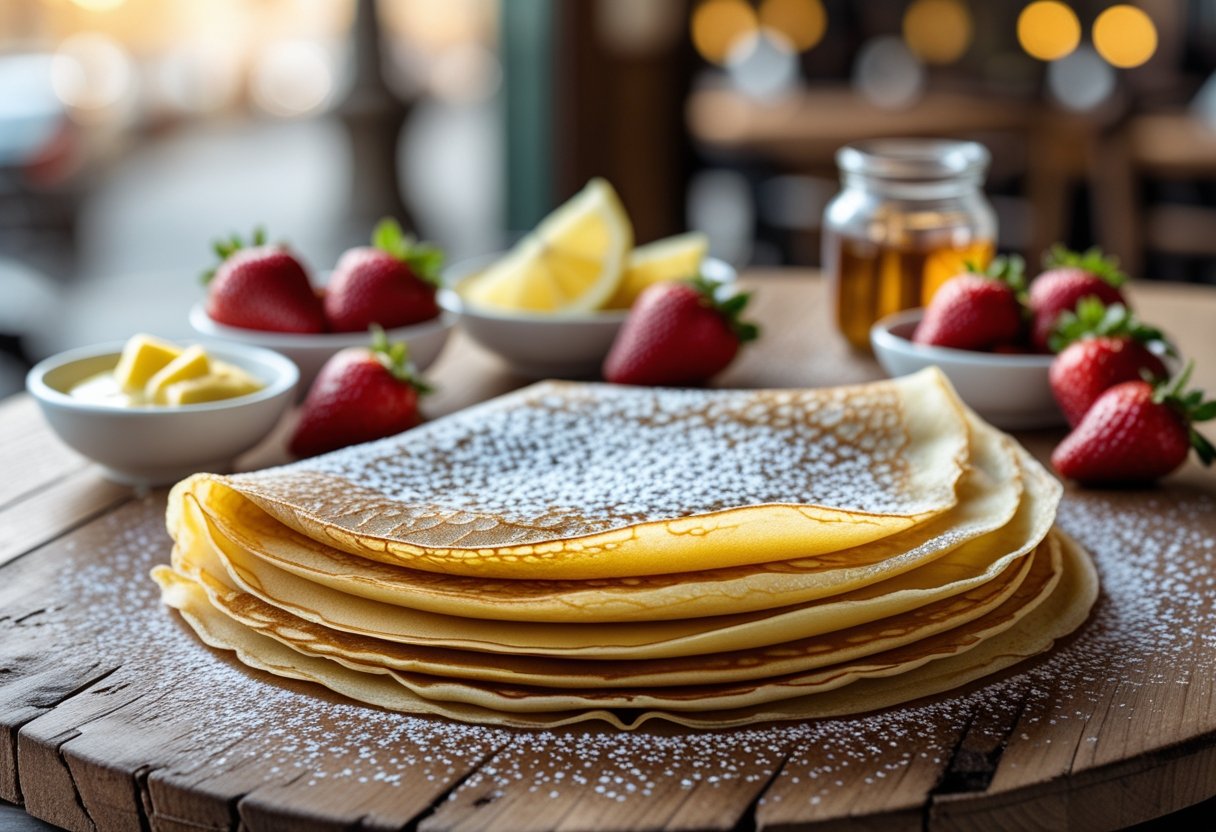
These crêpes have a special place in French culture, especially on February 2nd during La Chandeleur, or “The Day of the Crêpes.” On this day, eating crêpes is basically a national sport.
The round, golden crêpes symbolize the sun and the changing seasons. It’s food with a side of symbolism—delicious and meaningful.
Key Takeaways
- Crêpes are thin French pancakes that can be sweet or savory.
- They play a key role in French cultural celebrations like La Chandeleur.
- Classic recipes are simple and adaptable for many different fillings.
Classic French Crêpes and How to Make Them
Making classic French crêpes is all about simple ingredients and a little technique. The key is perfect batter consistency, even cooking, and using the right tools.
Sweet or savory, crêpes are basically a blank canvas for your culinary creativity.
Essential Ingredients for Authentic French Crêpes
For authentic French crêpes, you’ll need pantry basics: all-purpose flour, eggs, milk, unsalted butter, a pinch of salt, and a little sugar. Flour gives structure, while eggs add richness and help bind everything together.
Milk thins out the batter for that classic paper-thin texture. Unsalted butter adds flavor and keeps things from sticking—nobody likes a stubborn crêpe.
Sugar is low-key in classic recipes but can be adjusted for sweeter or more savory vibes.
Here’s a simple shopping list:
- 2 cups all-purpose flour
- A pinch of salt
- 1 tbsp sugar
- 3 large eggs
- 2½ cups whole milk
- 50g unsalted butter (melted)
This combo makes thin, tender crêpes that are ready to be filled with whatever your heart (or stomach) desires.
Step-by-Step Crêpe Recipe
Start by mixing flour, salt, and sugar in a bowl. Crack the eggs into the center, then slowly whisk in the milk—no lumps allowed!
Let your batter chill for at least an hour. This gives the flour time to hydrate and the flavors to mingle.
Before you cook, stir in the melted butter. Heat up your French crêpe pan and give it a light grease.
Pour in about 3 tablespoons of batter and swirl it around for maximum thinness. Cook each side briefly—about 40 seconds on the first side, then 30 on the flip.
Repeat until you’ve used up all the batter. Stack your crêpes on a warm plate to keep them cozy and prevent sticking.
Sweet and Savory Serving Ideas
Crêpes are basically the Swiss Army knife of food. For sweet options, try fresh fruit, whipped cream, lemon juice with sugar, or a generous smear of chocolate spread.
Savory crêpes (aka galettes) shine with fillings like ham and cheese, sautéed mushrooms, or spinach. Herbs, creamy sauces, or even a runny egg take things to the next level.
You can serve crêpes for brunch, lunch, dinner, or dessert—no judgment here.
Essential Tools for Perfect Crêpes
A French crêpe pan is your best friend here. Its shallow sides (about 24 to 26 cm wide) make flipping a breeze.
Even heat is crucial for quick, golden crêpes. For a pro move, use half a potato on a fork dipped in oil to grease the pan—seriously, it works!
A thin spatula helps with those nerve-wracking flips. With these tools, you’ll be a crêpe master from the first to the last.
For more tips, check out this classic French crêpe recipe.
French Traditions and Cultural Significance
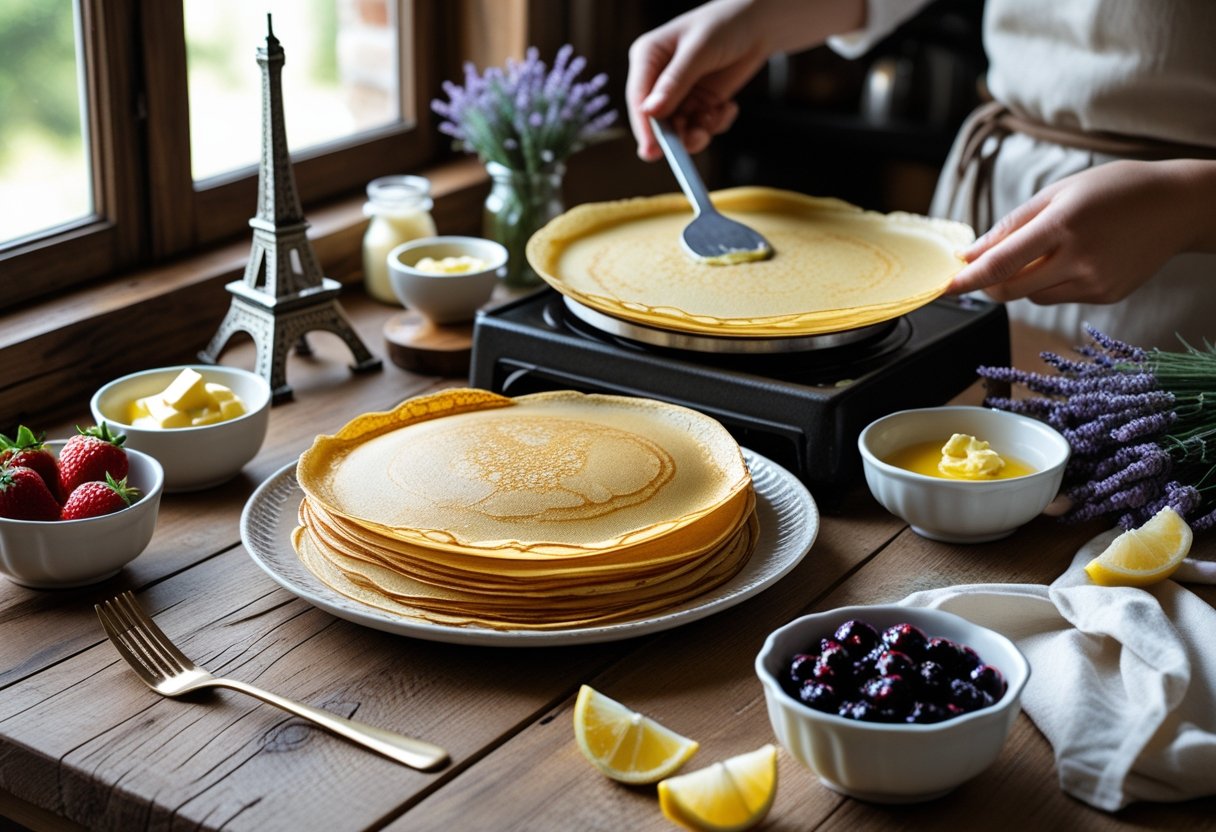
Crêpes are woven into French culture, especially during holidays and celebrations. They’re more than just tasty treats—they represent hospitality, community, and a sprinkle of good luck.
These traditions make eating crêpes feel like a celebration, even on a random Tuesday.
La Chandeleur and Candlemas
La Chandeleur, or Candlemas, is celebrated on February 2nd. On this day, making and eating crêpes is basically mandatory across France.
It marks the midpoint between winter and spring, symbolizing light and hope. If you can flip a crêpe in the air while holding a coin in your other hand, legend says you’ll have good luck (and maybe a little extra cash) for the year.
Families and friends gather to share crêpes, filling homes with warmth and buttery aromas. This tradition dates back to the 5th century and is still going strong—because who wouldn’t want an excuse to eat more crêpes?
Learn more about La Chandeleur at tastesfood.com.
Galette des Rois and Seasonal Customs
Another tasty tradition is the Galette des Rois, or King’s Cake, eaten in early January for Epiphany. While it’s not a crêpe, it shares the spotlight as a festive French pastry.
The Galette des Rois usually hides a tiny figurine called a “fève.” Whoever finds it in their slice is crowned king or queen for the day—no royal duties required.
This custom brings people together during the holiday season. Both the Galette and crêpes show how French traditions use delicious food to mark special moments.
More on this custom at theflavorexperts.com.
The Role of Crêpes in French Celebrations
Crêpes pop up at weddings, birthdays, and all sorts of gatherings. They’re a symbol of hospitality—because nothing says “welcome” like a stack of warm crêpes.
Sweet or savory, there’s a crêpe for every occasion and every taste bud. In many regions, sharing crêpes is a sign of friendship and good vibes.
Making crêpes together is a social event in itself. In Brittany, for example, crêpe-making parties are practically a regional sport.
Crêpes are more than food—they’re a way to connect, celebrate, and keep traditions alive. Dive deeper into these customs at crepesmagiques.com.
Frequently Asked Questions
We get a lot of questions about crêpes—how to make them, what to fill them with, and where to find the best ones in France. Here are the answers to the most common queries.
How do you make traditional French crêpes?
Traditional French crêpes are made with wheat flour, eggs, milk, sugar, salt, and melted butter. Let the batter rest for at least 30 minutes for perfect, tender crêpes.
Cook in a lightly buttered pan, pouring in a small ladle of batter. Each side cooks for about 1 to 2 minutes until golden.
You’ll end up with soft, flexible crêpes ready to be rolled, folded, or devoured immediately. For details, see this traditional French crêpe recipe.
What is the difference between sweet and savory crêpes in France?
Sweet crêpes use white wheat flour and often have sugar in the batter. Fillings include chocolate, fruit, or the classic sugar and lemon.
Savory crêpes, or galettes, usually use buckwheat flour for a darker color and nuttier taste. Fillings range from cheese and ham to eggs and veggies—Brittany-style!
Which region in France is famous for its crêpes?
Brittany, in northwest France, is the crêpe capital. They pioneered buckwheat galettes and have been flipping crêpes for centuries.
While crêpes are loved all over France, Brittany is where the magic began.
What are some popular fillings for crêpes in France?
Sweet fillings: sugar and lemon, chocolate spread, jam, fresh fruits, and whipped cream. Savory fillings: ham and cheese, eggs, mushrooms, and smoked salmon.
Sometimes, crêpes get flambéed with Grand Marnier (fancy, right?) or filled with creamy cheeses. Pair with wine or champagne for extra flair.
Where can I find the best crêpes in France?
Head to Brittany’s cozy crêperies for the real deal. Paris and other cities also serve up excellent crêpes—just look for places where they’re made fresh to order on traditional pans.
Bon appétit!
Is there a specific etiquette to follow when eating crêpes in France?
Crêpes are often eaten with a fork or with your hands, depending on how they’re served. If you go the hands-on route, fold or roll your crêpe neatly unless you want to wear your dessert.
Some families have a quirky tradition for La Chandeleur: flipping crêpes while holding a coin for good luck. And of course, crêpes pair delightfully with a glass of wine or cider—just don’t forget to actually eat the crêpe while you’re savoring the drink.