You’ll love how this classic Utah funeral potatoes recipe turns simple ingredients into a warm, cheesy casserole that brings people together.
We give you an easy, crowd-pleasing method that yields creamy hash browns, melted cheddar, and a crunchy buttery topping every time.
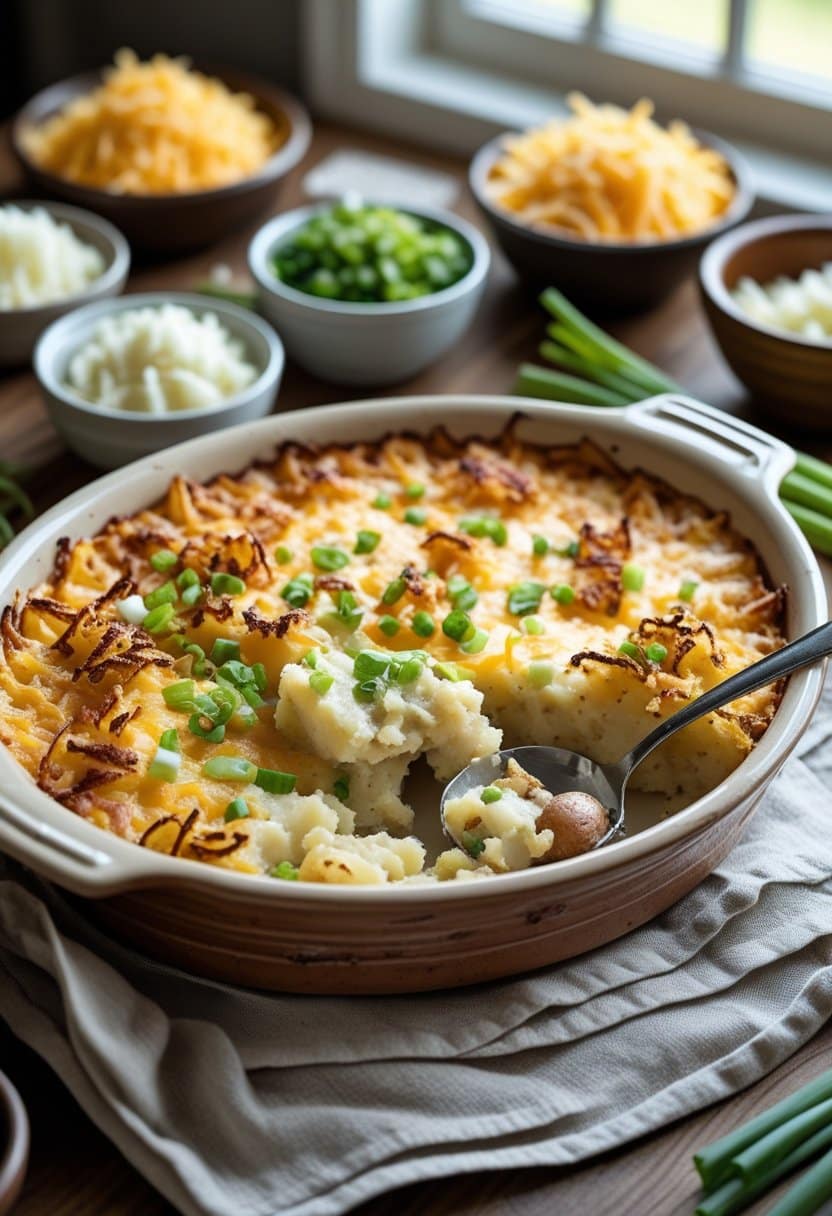
Follow our clear steps and you’ll be serving a dish that fits potlucks, holidays, or a cozy family dinner.
We share practical tips on ingredients, timing, and a few small swaps so the casserole bakes up golden and satisfying.
Key Takeaways
- A simple mix of frozen hash browns, sour cream, cheese, and a crunchy topping makes reliable comfort food.
- Small ingredient choices and technique tweaks lift flavor and texture.
- The recipe works well for make-ahead, feeding a crowd, or home-style holiday menus.
Essential Ingredients and What Makes Utah Funeral Potatoes Special
This dish depends on a few simple choices that define texture, flavor, and ease: a rich, cheesy sauce; the type of potato you use; creamy dairy like sour cream and butter; and a crunchy topping.
Each part pulls its weight to make the casserole comforting and crowd-ready.
The Signature Cheesy and Creamy Base
We build the base from cheese, milk, and a thickener for a smooth, clingy sauce.
Sharp cheddar brings bright, tangy flavor and melts well; we often grate it fresh to avoid anti-caking agents that can make the sauce grainy.
Many recipes fold in cream of chicken soup or cream of mushroom soup to speed up prep and add body, but a roux of flour and butter with milk gives better control over thickness.
We mix cheese into the sauce off the heat to prevent separation.
A good ratio keeps the casserole saucy without being soupy: about 2 cups shredded cheddar for a 9×13 with 1 to 1.5 cups of milk plus a binder like 1 cup sour cream or one can of cream soup.
This keeps each potato coated and helps the topping stick.
Frozen Hash Browns vs. Fresh Potatoes
We usually use frozen shredded hash browns for convenience and consistency.
Frozen shredded potatoes thaw evenly and release less liquid than diced fresh potatoes, so the bake time is predictable and the texture stays creamy.
Plain, unsalted shredded hash browns work best; seasoned packs can throw off salt and flavor balance.
Using fresh potatoes—shredded or diced—gives a fresher potato flavor but needs extra steps: blanching, parboiling, or drying to remove excess starch and moisture.
Fresh diced potatoes also take longer to cook through.
For large gatherings or potlucks, frozen hash browns save time and give reliable results.
Key Role of Sour Cream and Butter
Sour cream and butter are essential for richness, mouthfeel, and stability.
We add sour cream to give tang and fat that smooths the cheese sauce and prevents it from becoming greasy when it cools.
Full-fat sour cream keeps the sauce from breaking and adds a slightly tangy note that balances sharp cheddar.
Butter appears in two roles: in the sauce (often melted into a roux) and mixed into the topping.
In the sauce, butter helps emulsify and carry flavor.
In the topping, melted butter coats cornflakes or crackers so they brown evenly and crisp.
Use unsalted butter if you want precise seasoning control.
Cornflake and Alternative Crunchy Toppings
The crunchy topping defines the final bite.
Cornflake crumbs mixed with melted butter and grated Parmesan give a golden, crisp layer that contrasts the creamy interior.
We crush flakes to coarse crumbs to keep texture; fine dust will go soggy quickly.
Alternatives include crushed potato chips, Ritz crackers, panko, or kettle chips.
Potato chips add salt and potato flavor; panko gives airy crunch but needs more butter to brown.
For a classic Utah-style finish, cornflakes or crushed chips are common.
Sprinkle green onions over the finished casserole for color and a fresh bite, but add them after baking to keep their texture.
For a homemade approach, we sometimes swap canned cream of chicken for a simple homemade cream of chicken base made from a roux plus chicken broth and milk.
This delivers fresher flavor and less sodium.
Step-by-Step Method and Serving Tips for Cheesy Funeral Potatoes
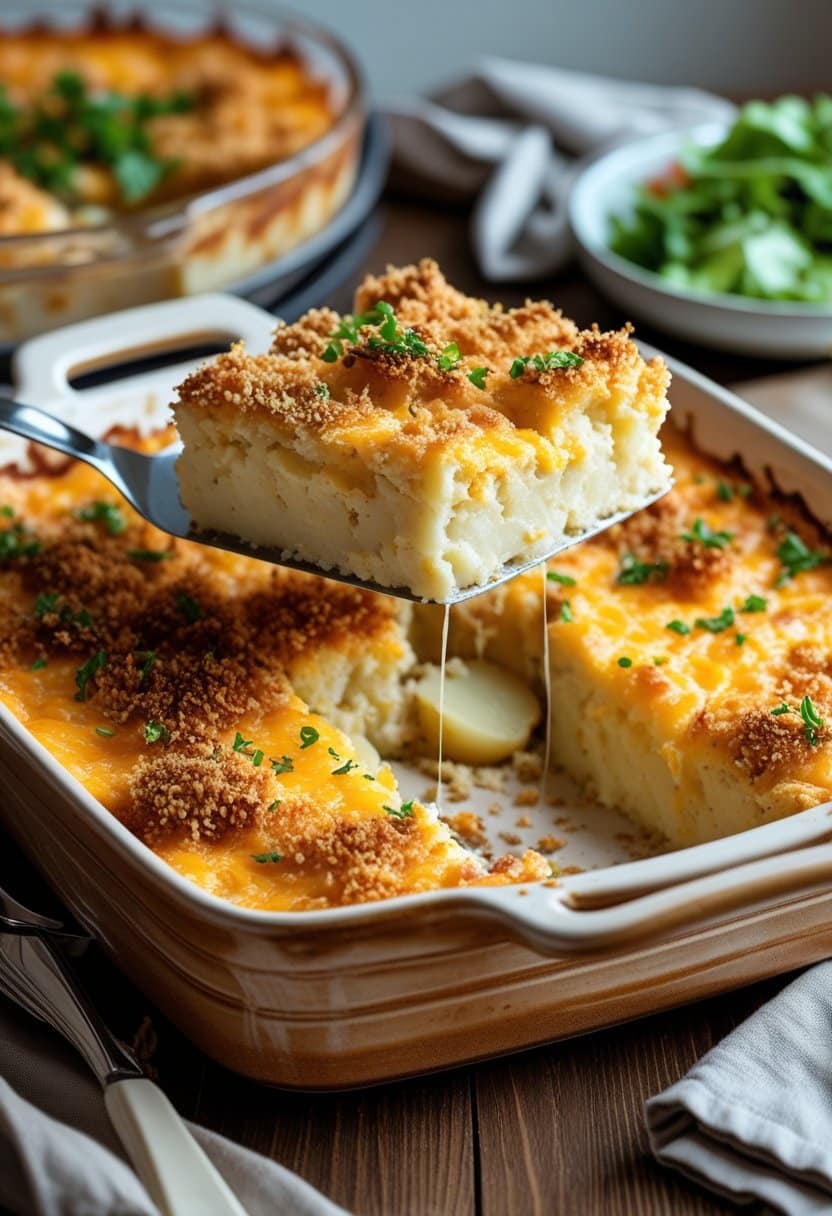
We focus on clear steps to mix, bake, and top the casserole and practical tips for texture, flavor, and saving leftovers.
Follow each part to get creamy, cheesy potatoes with a crisp topping every time.
How to Make Funeral Potatoes: Preparation and Baking
We start by gathering ingredients and preheating the oven to 350°F (175°C).
Thaw 32 oz frozen shredded hashbrowns in the refrigerator overnight or spread them on a tray for 30 minutes to remove excess ice.
Drain any water by pressing between paper towels.
In a large bowl, combine 2 cups sour cream, one 10.5-oz can cream of chicken soup (or homemade white sauce), 1/2 cup melted unsalted butter, 2 cups shredded sharp cheddar, 1/2 cup diced onion, 1 tsp salt, and 1/2 tsp black pepper.
Fold in the drained hashbrowns until evenly coated.
Spread the mixture into a greased 9×13-inch baking dish.
For topping, toss 3 cups crushed potato chips or cornflakes with 2 tbsp melted butter and sprinkle evenly.
Bake uncovered at 350°F for 45–50 minutes until bubbly and golden.
Let rest 10 minutes before serving to firm up for cleaner scoops.
Tips for Best Texture and Flavor
We control moisture by fully thawing and draining hashbrowns; excess water makes a soggy casserole.
Use shredded cheese that you grate yourself for better melt and flavor.
Unsalted butter lets us adjust salt precisely; add 1/4 tsp more salt at a time if needed.
We balance creaminess and structure by not overmixing.
Folding ingredients gently keeps pockets of cheese and prevents a gluey texture.
For extra flavor, stir in 1/2 cup cooked bacon or 1/2 cup diced ham.
A tablespoon of chopped chives or 2 tbsp chopped green chiles adds brightness without overwhelming the classic taste.
If using homemade white sauce, whisk 4 tbsp butter with 1/4 cup flour, then slowly add 1 cup milk and 1 cup chicken broth until thick.
Season with garlic powder and salt.
This replaces canned soup and gives a cleaner, fresher flavor.
Serving Suggestions and Pairings
We serve funeral potatoes as a hearty side with baked ham, roast turkey, or grilled chicken.
The creamy, cheesy profile pairs well with tangy or acidic dishes that cut richness, like a simple green salad with vinaigrette or steamed green beans with lemon.
For potlucks, keep the casserole warm in a slow cooker set to low after baking.
Offer pickles, coleslaw, or a bright potato salad nearby for contrast.
Potato salad with a vinegar-based dressing works particularly well since it adds a different potato texture and bright flavor.
Garnish with fresh chives or chopped parsley for color and mild onion flavor.
For a brunch spread, place scrambled eggs, sliced fruit, and biscuits beside the casserole.
We slice into squares and serve with a spoon to keep portions tidy.
Storing and Enjoying Leftover Funeral Potatoes
We cool the casserole to room temperature, then refrigerate leftovers within two hours in an airtight container for up to 3 days.
To freeze, assemble without topping, wrap tightly, and freeze up to 3 months.
Thaw overnight in the fridge before baking with fresh topping.
To reheat, cover with foil and warm in a 350°F oven for 20–30 minutes until heated through.
For a crisp top, remove foil for the last 5–8 minutes.
Microwave portions for quick reheats, but texture will be softer.
Leftover squares also work cold or room temperature as a hearty addition to a picnic or served alongside a tangy potato salad for contrasting textures.
Frequently Asked Questions
We list exact ingredients, topping swaps, cheese choices, potato options, regional twists, and spice tips to help you make true-to-style funeral potatoes.
Each answer gives clear measures or simple swaps so you can cook with confidence.
What are the essential ingredients for a traditional Utah funeral potatoes casserole?
A classic recipe uses thawed frozen hash browns (about 30–32 oz for a 9×13), 1 can (10.5 oz) cream of chicken soup, 2 cups sour cream, and 2 cups shredded cheddar cheese.
You also need about 1/2 cup chopped onion, 1 stick (8 tbsp) butter, salt, and pepper.
The crunchy topping is traditionally cornflakes or crushed crackers.
How can you make funeral potatoes without using corn flakes for the topping?
Crushed butter crackers like Ritz make a crunchy, buttery top that browns well.
You can also use panko mixed with melted butter, crushed potato chips, or seasoned breadcrumbs for similar texture and flavor.
What cheeses work best to achieve the classic funeral potatoes cheesy flavor?
Sharp cheddar gives the classic, tangy, melty flavor we expect.
For a milder, creamier profile, mix in Monterey Jack or Colby.
A small amount of pepper jack adds heat if we want a spicy note.
Can real potatoes be substituted for frozen hash browns in funeral potato recipes?
Yes.
Use about 4–5 cups of peeled, grated, or finely diced cooked potatoes to match a 30-oz bag of hash browns.
Parboil diced potatoes first so they finish baking at the same time as the casserole and stay tender.
What are some variations of the funeral potatoes recipe found in different regions or cookbooks?
Some versions swap cream of chicken soup for cream of mushroom or celery to suit vegetarians.
Others add cooked bacon, diced ham, or steamed broccoli to turn the side into a main-dish casserole.
Toppings vary from cornflakes to crackers, panko, or chips depending on family or regional preference.
Which spices are recommended to enhance the flavor of cheesy funeral potatoes?
Try adding 1 teaspoon of smoked paprika and 1 teaspoon of garlic powder for some warm, savory vibes.
A pinch of cayenne or black pepper brings a gentle kick, while a dash of onion powder amps up the savory goodness.