If you’ve never tried chicken tagine with preserved lemons and green olives, you’re missing out on a flavor party in your mouth. This recipe is all about bold, tangy, and salty notes coming together like they were made for each other.
It’s a simple way to turn a regular weeknight dinner into something that feels like a special occasion without needing a million fancy ingredients.
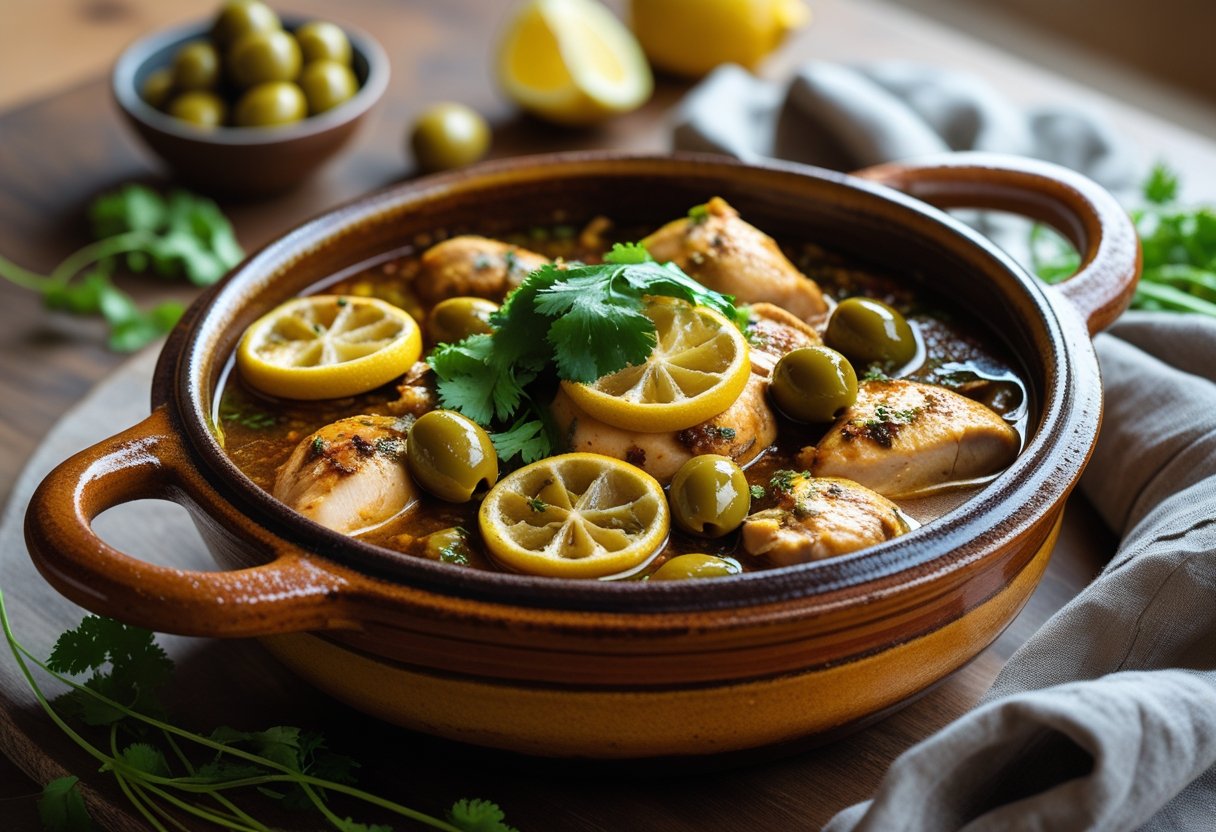
We love how the preserved lemons add a zing that brightens the whole dish. The olives bring a salty punch that keeps every bite interesting.
Cooking it low and slow makes the chicken so tender, it practically falls off the bone. And yes, your kitchen will smell amazing while you wait.
If you think this sounds like a dish only professional chefs can pull off, think again. This recipe is easy enough for us amateurs who just want great food without the fuss.
Ready to bring some Moroccan magic to your dinner plate? Let’s dive in!
How to Make Chicken Tagine with Preserved Lemons and Green Olives
Making this chicken tagine means juggling spices, citrus, and a whole lot of flavor. We’ll coax tender chicken from a marinade bursting with ingredients like preserved lemons and green olives.
Then we cook it low and slow in either a tagine, Dutch oven, or whatever trusty pot we have on hand. It’s about layering tastes and keeping it moist, juicy, and irresistibly tangy.
Essential Ingredients for the Ultimate Moroccan Flavor
Let’s start by gathering the all-stars. You’ll want free-range chicken thighs for juicy, flavorful meat.
The twist? Preserved lemons—these salty, pickled gems pack a punch you just can’t fake with plain lemon juice. Alongside, we add a mix of green olives (or a combo with black olives), which bring a salty tang that balances the citrus.
Spices are the heart of the party: ground cumin, coriander, turmeric, sweet paprika, black pepper, cinnamon, and ground ginger. They create that warm, aromatic Moroccan vibe.
Fresh onions and garlic bring sweetness and depth. For moisture and richness, drizzle good-quality olive oil and add some chicken stock.
If you want to get fancy, throw in a pinch of saffron for color and aroma. Fresh flat-leaf parsley at the end brightens everything up.
Marinating the Chicken: Spicing Things Up
This is where the magic starts. We combine our chicken thighs with chopped preserved lemon flesh, a handful of minced garlic, diced onions, and the spice mix from cumin to cinnamon.
Toss in some chopped parsley and a splash of lemon juice for extra zing. Marinate overnight, if you have the patience.
If you’re in a rush, even a couple of hours helps. The saltiness from the lemons and olives means we use just a half teaspoon of salt or less in the marinade to avoid a salty catastrophe.
Mix it all well so every piece gets coated. Your chicken is now ready for its flavor transformation.
Cooking Methods: Tagine, Dutch Oven, or Whatever’s in Reach
Got an actual tagine? Lucky you! It’s the traditional slow cooker with a cone-shaped lid that traps steam and keeps everything juicy.
We drizzle olive oil in the base, arrange marinated chicken and onions inside, scatter olives and reserved lemon rind, add a little chicken stock, then cover and simmer gently for over two hours.
No tagine? No worries. A Dutch oven or heavy-bottomed casserole works perfectly.
We use the same method: start on the stovetop to brown the chicken lightly, then transfer to a low oven or keep simmering on low heat. Feel free to use a heat diffuser on the stovetop to protect delicate clay tagines from cracking.
Bringing It All Together: Simmering and Serving Like a Pro
Simmer time means patience. Keep the heat low to avoid drying out the chicken.
After about 90 minutes, turn the chicken pieces so both sides soak in the sauce. The tagine or pot fills with a savory stew of olives, preserved lemon rind, and aromatic spices.
When it’s done, the juices should be rich and slightly thickened. We let it rest for 10-15 minutes—because good things come to those who wait.
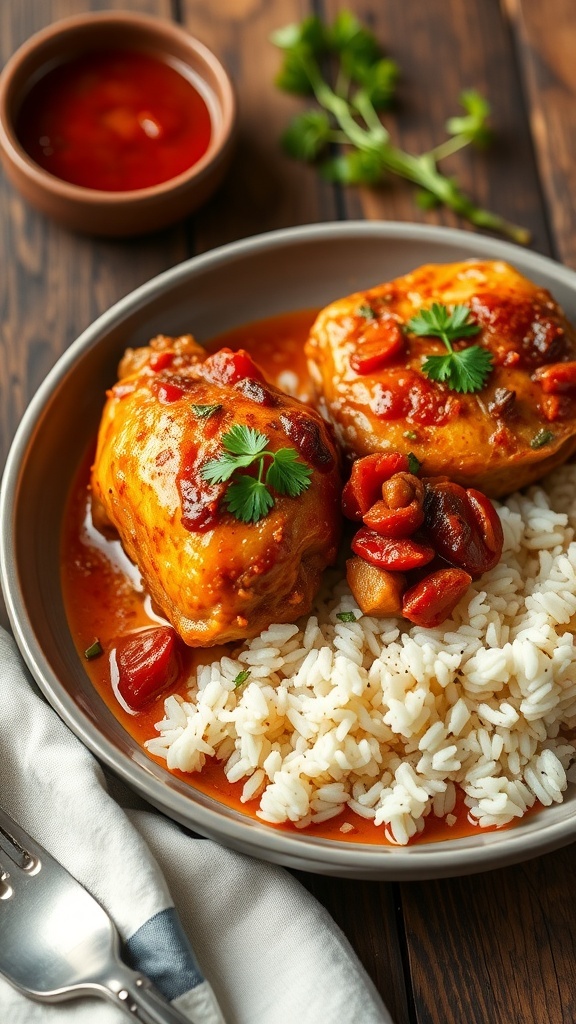
Serve straight from the pot with fluffy couscous, rice, or warm Moroccan bread to scoop up every last drop. A final sprinkle of fresh parsley adds color and freshness.
For a little extra kick, harissa on the side never hurts!
Serving Suggestions, Nutrition, and Tagine Tips
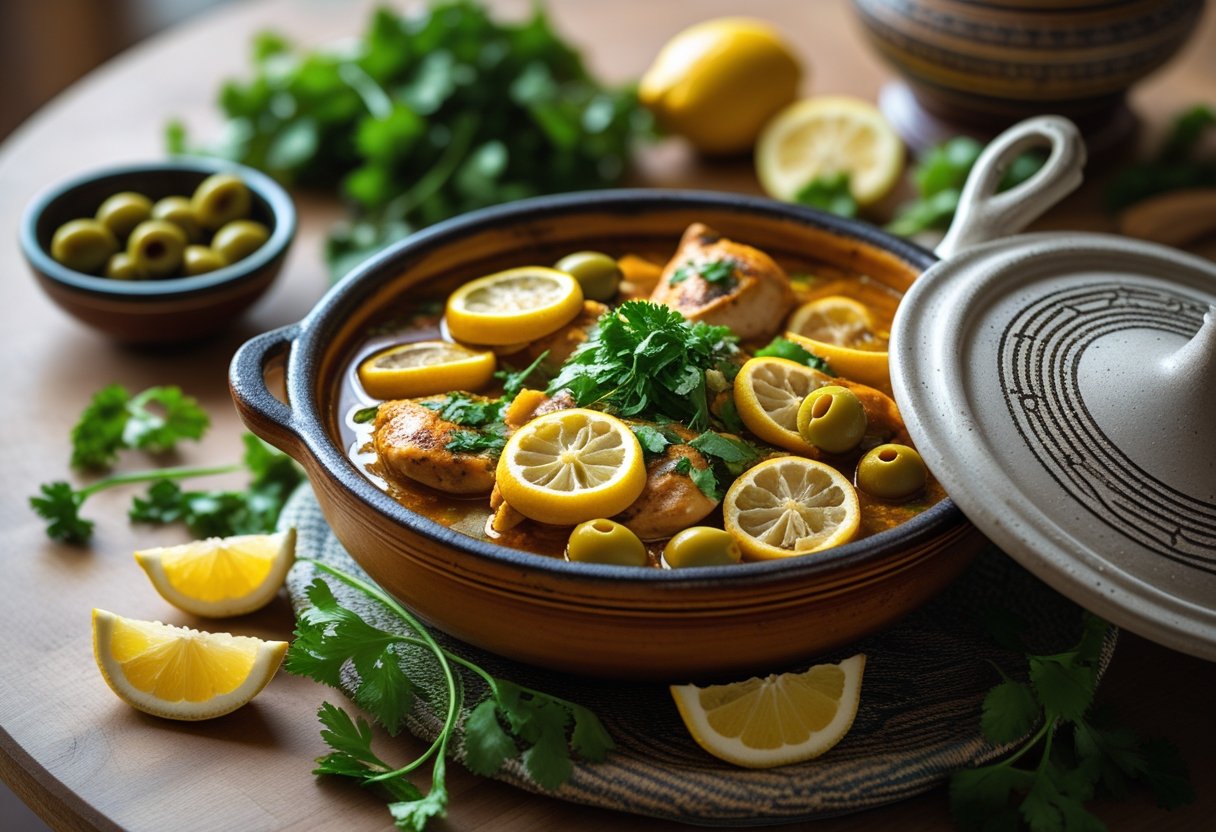
When you’re digging into a flavorful Moroccan chicken tagine with preserved lemons and green olives, the right side dishes and a few cooking tips can turn this meal from “meh” to “magnifique.” Plus, knowing what you’re eating and how to keep that tagine magic alive makes the experience even better.
Sidekicks for Chicken Tagine: Couscous, Rice, and Friends
Couscous is the classic buddy for chicken tagine, and for good reason. Its light, fluffy texture catches all the saucy goodness from the tagine.
If you want to switch things up, try serving with fragrant basmati or jasmine rice—they soak up flavors beautifully too. Don’t forget a sprinkle of fresh parsley or cilantro on top.
It adds a pop of green that brightens the whole plate. For extra crunch, toss in roasted almonds or pine nuts.
Bread lovers, grab some warm, crusty bread—it’s excellent for sopping up sauce. With these side dishes, we get a mix of textures and tastes that make each bite more exciting.
A Healthier Tagine: Nutritional Benefits and Power Moves
Our chicken tagine isn’t just delicious, it packs some punch nutrition-wise. Chicken offers a solid dose of protein, helping fuel our muscles and keep hunger at bay.
The olives bring healthy fats, which are good for your heart and add richness to the dish. Preserved lemons give a citrusy zing without added sugar.
The blend of spices like turmeric, cumin, and cinnamon adds antioxidants that support your health quietly but powerfully. For a wellness boost, we can use less oil or swap it for extra-virgin olive oil to keep fats healthy.
Adding a side of steamed greens or a fresh salad fills our plates with fiber and vitamins. This Moroccan chicken tagine meal is a well-rounded delight.
Moroccan Roots and Home Kitchen Hacks
Moroccan chicken tagine traditionally cooks in a tagine pot, a magical clay vessel that locks in steam and flavors. But if you don’t own one, no worries.
A heavy Dutch oven or casserole works just fine. We just need to cook low and slow so the chicken becomes melt-in-your-mouth tender.
Preserved lemons might sound exotic, but you can find them in many international markets—or make your own at home with lemons, salt, and patience. Don’t skip them; they’re the secret flavor kick that makes this tagine iconic.
For those worried about timing, marinate chicken for at least 15 minutes to let the spices work their magic. Adding olives and preserved lemon slices in the last 10 minutes keeps them bright and flavorful, not mushy.
With these tips, we can bring the taste of North African cooking right to our kitchen without breaking a sweat. For a step-by-step approach, check out this detailed chicken tagine with preserved lemons and olives.
Frequently Asked Questions
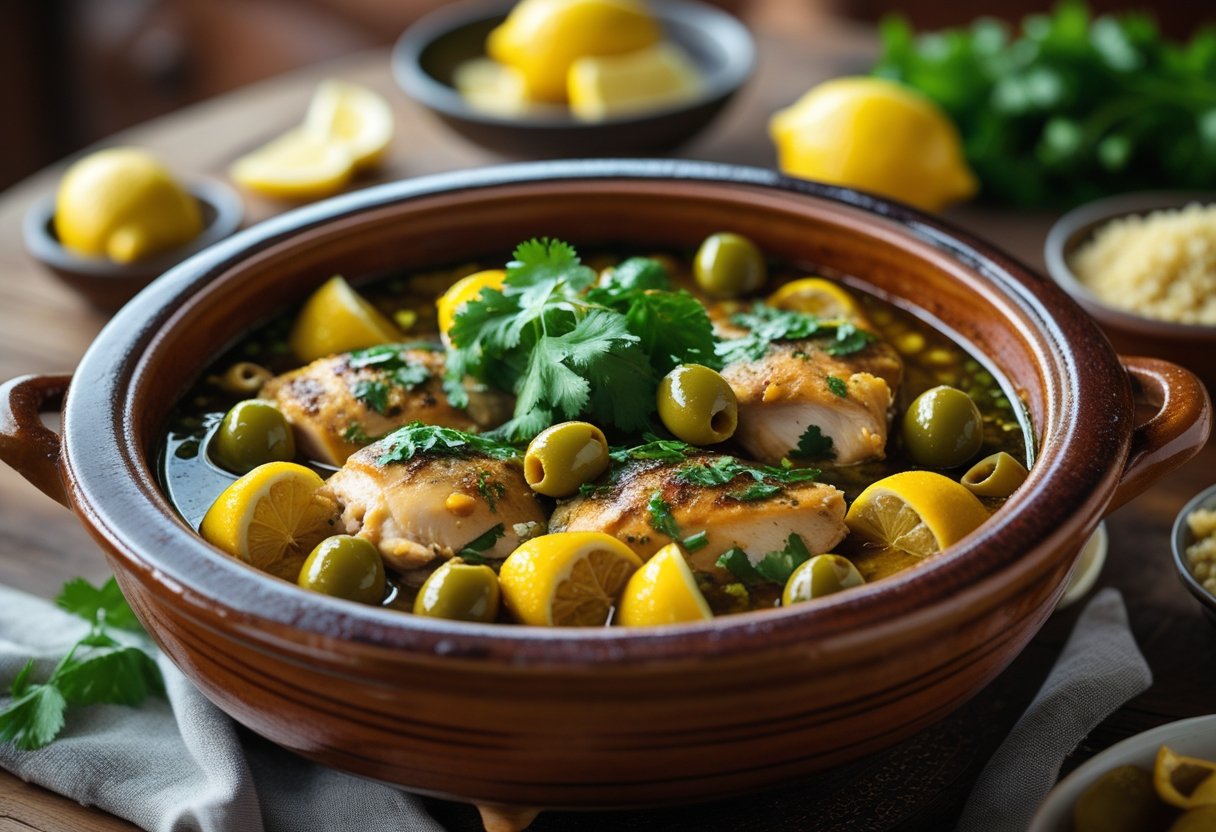
We’ve all had those kitchen moments where things get a little wild. From juggling the right spices to keeping the chicken juicy, there’s a lot to think about when making a chicken tagine with preserved lemons and green olives.
Let’s dive into some common questions and keep us out of cooking trouble.
What’s the secret to not turning my kitchen into a disaster zone when attempting a chicken tagine?
First off, don’t underestimate the power of prep. Chop, measure, and lay out your ingredients before you start.
Using a tagine or any pot with a lid helps keep splatters to a minimum. And please, invest in a heat diffuser if you’re using a clay tagine on the stove—it’s like the superhero keeping your pot from cracking and your countertop from catching fire.
How do I prevent my Moroccan chicken tagine from tasting like my last failed cooking experiment?
Marinating overnight is our best friend here. Let those spices soak deep into the chicken.
Also, watch your salt—olives and preserved lemons pack a punch and can turn your tagine into a salt lick if you’re careless. Using fresh herbs, like cilantro and parsley, at the end keeps the flavors bright and alive.
Can I use a regular pot, or must I sell my soul for an authentic tagine pot?
Good news! You don’t need to sell your soul or pawn a kidney. A heavy pot with a tight lid works fine.
You can even cook it in the oven with a baking dish. The authentic tagine pot does add some magic by keeping the dish moist, but you’ll get delicious results without it.
Do I really need preserved lemons, or can I trick the dish with something less fancy?
Preserved lemons are the heart of the flavor. Sure, lemon zest or juice can patch things up in a pinch, but they can’t match that bright, salty tang preserved lemons bring.
If you want the real deal, making your own preserved lemons is worth it. Otherwise, grab a jar from a specialty store to keep your tagine legit.
How do I dodge dry chicken disaster in my tagine?
Low and slow wins this race. Cooking over low heat lets the chicken stay juicy and tender.
Keep an eye on cooking time and check the internal temperature. Some people swear by flipping the chicken halfway through to get even cooking and browning.
What magic does Ottolenghi sprinkle to make his chicken tagine dance with flavor?
Ottolenghi’s secret is all about layering spices and balancing brightness with richness. He often grabs warm spices like cinnamon and ginger, then adds a splash of preserved lemon juice and plenty of olives.
Fresh herbs jump in at the end, along with a touch of heat from harissa. The result? A chicken tagine that could probably win a dance-off.