Chicken souvlaki is one of those simple dishes that always feels like a little celebration on a plate. It’s basically juicy, marinated chicken skewers grilled to perfection and served with fresh veggies, pita bread, and a cool tzatziki sauce.
I love how it’s quick to make but still packed with those bright, Mediterranean flavors that keep me coming back for more.
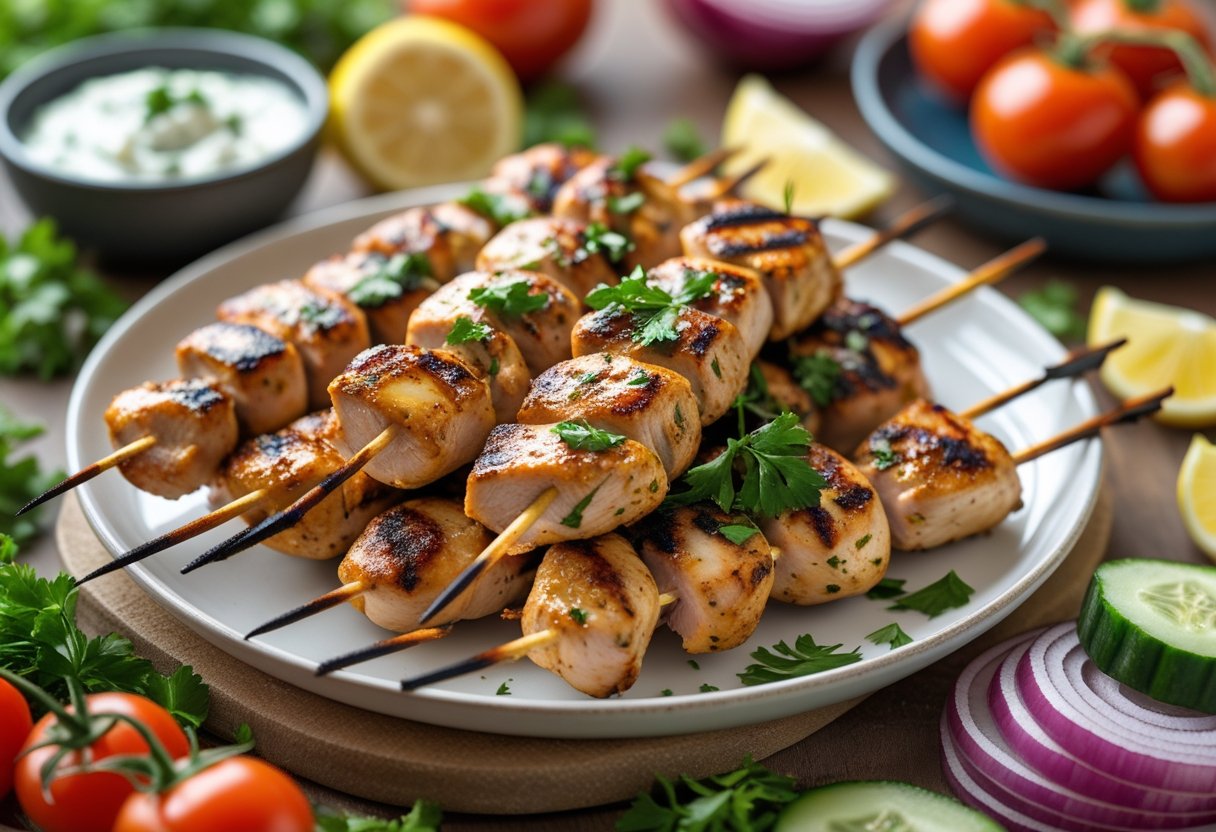
Whenever I’m short on time but want something tasty and satisfying, chicken souvlaki is my go-to. The marinade with lemon, garlic, and oregano gives the chicken a fresh kick.
Grilling it brings out just the right amount of smoky char. Plus, it’s super adaptable, so you can add your favorite sides or tweak ingredients without losing that authentic feel.
What Is Chicken Souvlaki?
Chicken souvlaki is a simple yet flavorful dish that’s all about marinated chicken grilled on skewers. It’s got deep roots in Greek cooking, features distinct differences from other dishes like gyros, and has plenty of tasty modern spins.
The way it’s prepared and served really shows off the best of Greek flavors.
Greek Origins and Cultural Significance
Chicken souvlaki goes way back in Greek history, evolving from the ancient tradition of grilling meat on skewers over open flames. The word “souvlaki” actually means “skewer” in Greek, which tells you how central that cooking method is.
It’s a popular street food in Greece, and a staple you’ll find in homes, tavernas, and festivals. Chicken became a common choice because it’s affordable, tender, and cooks quickly.
For Greeks, souvlaki is more than just food—it’s a social experience, often enjoyed with family or friends alongside fresh pita and tzatziki sauce.
Difference Between Souvlaki and Other Greek Dishes
Souvlaki is all about those grilled chunks of meat on a skewer, usually chicken, pork, or lamb. It’s different from gyros, which uses sliced meat cooked on a vertical rotisserie.
Compared to kebabs, souvlaki specifically refers to the Greek style of skewered meat with a particular seasoning mix involving olive oil, lemon juice, garlic, and oregano. The key is simple, fresh flavors with minimal ingredients.
Also, souvlaki is usually smaller in portion size and served with pita and sides, while dishes like moussaka or stifado are cooked casseroles or stews.
Popular Varieties and Modern Adaptations
While chicken souvlaki traditionally uses breast or thigh meat marinated in olive oil, lemon, garlic, and herbs, you’ll find plenty of tasty twists today.
Some variations splash in red pepper flakes or spicy peppers for a kick. Vegetarian versions swap chicken for halloumi cheese, portobello mushrooms, or tofu, keeping that grilled skewer vibe intact.
Cooking methods have evolved, too. Besides grilling, many bake their souvlaki for convenience and consistent results.
Serving styles vary—from the classic pita wrap with onions, tomato, and tzatziki to plated meals with rice, roasted vegetables, and feta.
For a detailed dive into chicken souvlaki’s traditional flavors and preparation, check out this comprehensive guide.
Essential Ingredients for Chicken Souvlaki
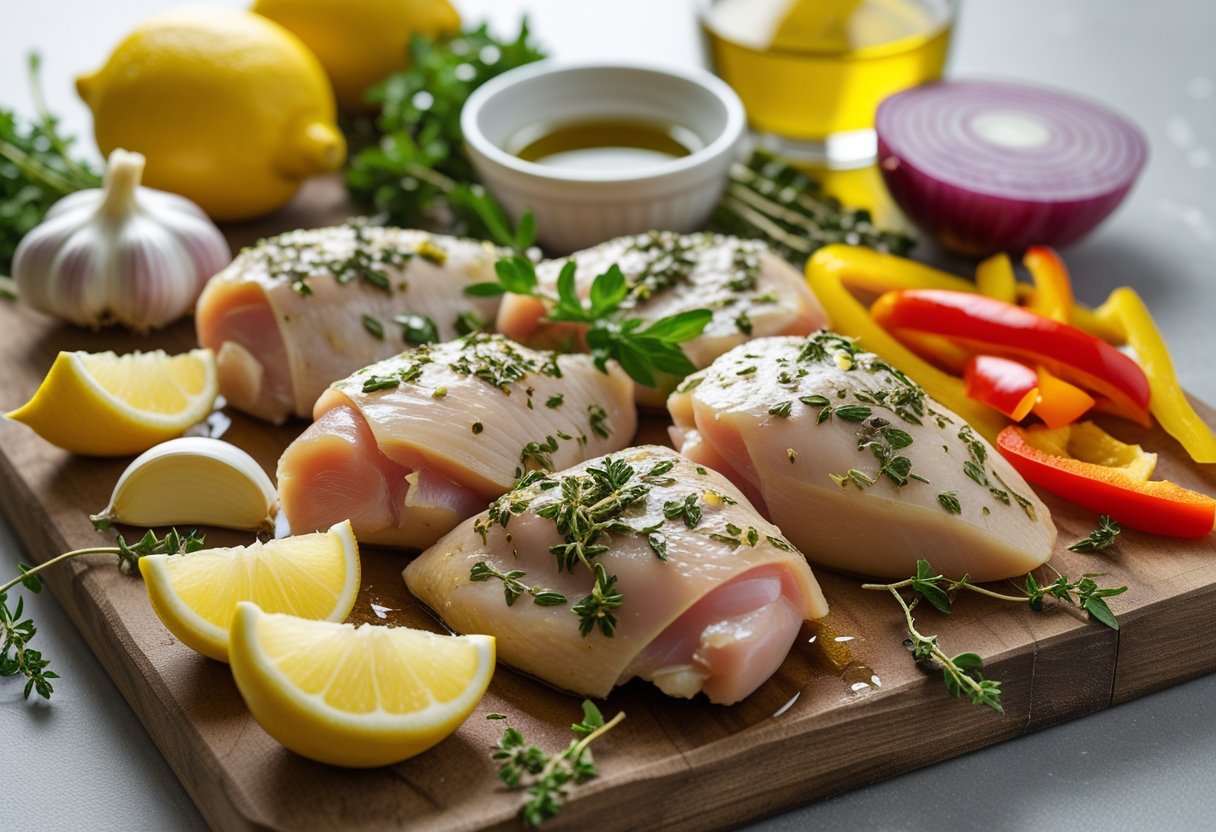
To get that perfect balance of flavor and tenderness in chicken souvlaki, you need to focus on a few key ingredients. Fresh, well-prepared chicken combines with a marinade full of herbs and spices, and topping it off with quality olive oil makes all the difference.
Choosing the Best Chicken
For chicken souvlaki, I always go with boneless, skinless chicken breasts. They’re lean and cook up juicy when cut into evenly sized cubes—about 1½ inches works best.
Trimming off excess fat helps avoid flare-ups on the grill and keeps the flavor clean. A good tip is to pat the chicken dry before marinating.
That way, the marinade sticks better and the chicken gets a nice char. While some recipes use thigh meat, I prefer breast because it grills quickly and holds onto marinades made from lemon juice and herbs like oregano and rosemary really well.
Key Flavorings and Spices
The marinade is where chicken souvlaki gets its classic kick. I mix extra virgin olive oil with fresh lemon juice to create a bright, tangy base.
To that, I add plenty of minced garlic for punch. Dried oregano is a must—it’s the signature herb here.
I like throwing in a teaspoon each of sweet paprika and black pepper for a little warmth and depth without overpowering the other ingredients. A hint of dried rosemary rounds it out with an earthy touch.
Salt is essential, of course, but I keep it balanced so it enhances rather than dominates.
Picking the Perfect Olive Oil
I always use extra virgin olive oil for my marinade. Its rich flavor and smooth texture really boost the taste of the chicken.
Since olive oil helps tenderize the meat, it’s a key ingredient that you shouldn’t skimp on. Look for a fresh, fruity bottle—not too bitter or peppery.
A good olive oil not only supports the marinade but also helps the chicken brown beautifully on the grill. In my experience, a high-quality olive oil paired with lemon juice makes the flavors pop without needing complicated seasonings.
If you want to see exact ingredient amounts and details, I recommend checking out this chicken souvlaki recipe with all the specifics laid out clearly.
How to Make Authentic Chicken Souvlaki
Making authentic chicken souvlaki comes down to three key things: a flavorful marinade that really soaks into the meat, the right way to skewer and grill the chicken for even cooking, and a few simple tricks to keep the chicken juicy and tender.
Preparing the Souvlaki Marinade
The marinade is where the magic starts. I always use olive oil, fresh lemon juice, garlic, and a mix of fresh herbs like oregano, thyme, rosemary, and parsley.
Adding lemon zest gives it an extra punch. Make sure to whisk all the ingredients well so the flavors blend nicely.
Then toss in your chicken pieces, ideally cut into 1 to 1½-inch cubes for even cooking. Marinate for at least an hour, but if you have time, an overnight soak in the fridge really deepens the flavor.
Just don’t go over 24 hours or the acid might start breaking down the meat too much.
Skewering and Grilling Techniques
I soak wooden skewers in water for at least 30 minutes before use to prevent burning on the grill. Thread the marinated chicken onto the skewers, leaving a little space between pieces to allow heat circulation and even cooking.
For grilling, I heat my outdoor grill to medium-high (around 400°F or 200°C). Clean and oil the grates well, which helps avoid sticking.
Grill the skewers for 8 to 10 minutes, turning every couple of minutes so all sides get a nice char and cook through. Keep an eye on flare-ups—if you get flames, move the skewers to indirect heat until they reach the right internal temperature of 165°F (74°C).
Tips for Juicy Grilled Chicken
To keep the chicken juicy, I avoid over-marinating and don’t overcrowd the grill. Patting the chicken slightly dry before skewering prevents excess moisture that could cause steaming instead of grilling.
Resting the skewers for a few minutes after grilling lets the juices redistribute, so you get tender, flavorful bites. Also, cutting the chicken into uniform pieces helps them cook evenly, so no part ends up dry or undercooked.
Lastly, serving with a squeeze of fresh lemon and creamy tzatziki really brightens the flavors and complements the grilled chicken perfectly.
For detailed tips and recipes, you can check this authentic Greek chicken souvlaki recipe.
Serving and Enjoying Chicken Souvlaki
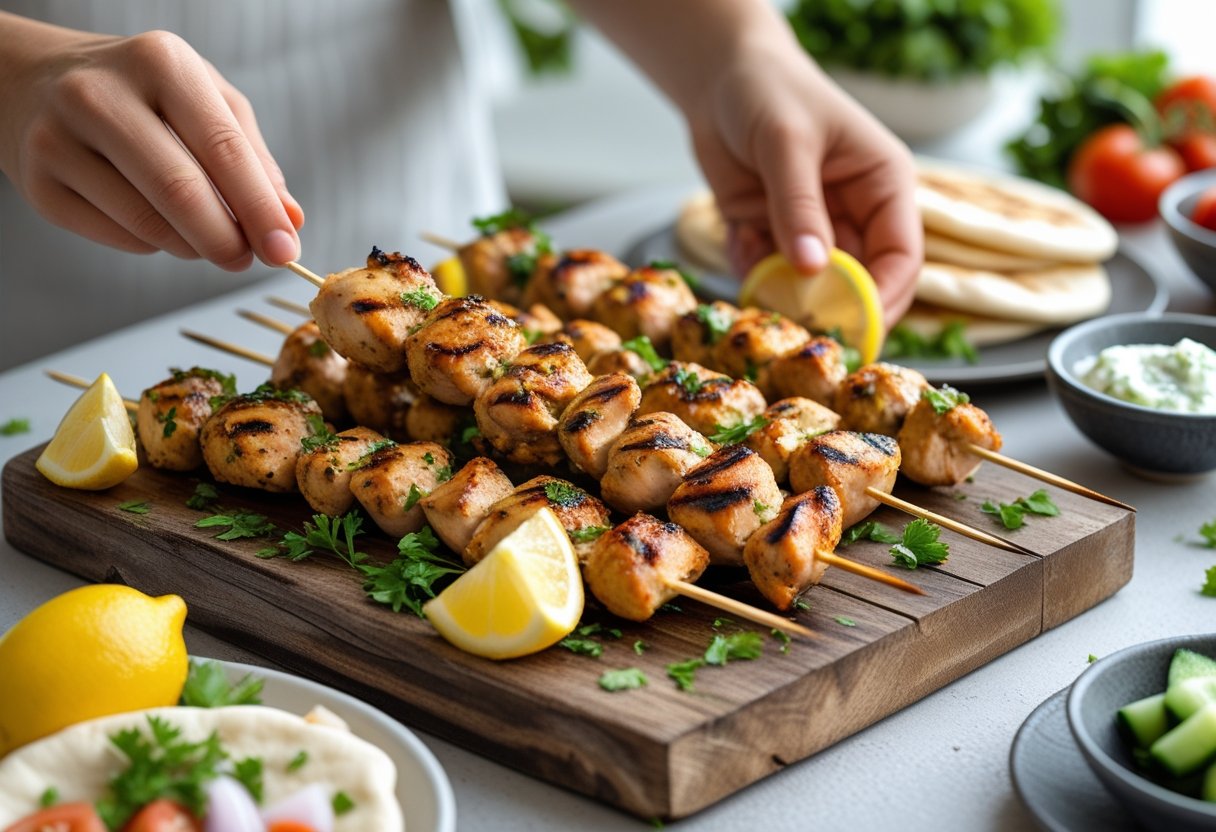
When it comes to enjoying chicken souvlaki, the toppings, sides, and even what you do with leftovers can totally change the experience. I like to keep things fresh with vibrant sauces and classic Greek sides.
But sometimes, mixing it up with leftovers turns into a great new meal.
Toppings and Sauces
Tzatziki sauce is a must-have for me. Its cool cucumber, garlic, and yogurt combo balances the lemony grilled chicken perfectly.
I usually add slices of red onion and a handful of chopped fresh parsley on top too. A drizzle of lemon and olive oil dressing, known as ladolemono, really brings out the flavors.
Kalamata olives add a briny kick that’s a nice contrast. And don’t forget warm, soft pita bread to wrap everything up—it’s the perfect vessel for all the tasty bits.
Classic Sides and Pairings
Greek salad is my go-to side. It’s a simple mix of cucumbers, tomatoes, red onion, and bell peppers tossed with oregano and olive oil.
Sometimes I add orzo salad on the side—a little pasta with fresh herbs and lemon really rounds out the meal. Hummus makes a creamy side that pairs nicely with the grilled meat and veggies.
For a bit of crunch and extra flavor, keftedes (Greek meatballs) work great alongside the chicken souvlaki. I like to sprinkle them lightly with cinnamon for a warm, exotic touch.
Creative Ways to Serve Leftovers
Leftover chicken souvlaki doesn’t have to be just reheated.
I often chop the meat and add it to a grain bowl with cucumber, olives, and tzatziki.
Another option is to stuff pita pockets with the warmed-up chicken, a bit of hummus, and fresh parsley for a quick lunch.
If I’m feeling adventurous, I make a chicken souvlaki wrap with grilled veggies and a squeeze of lemon.
You can also toss the chunks through a salad with a cinnamon spiced dressing to switch up the flavors.