Ché is a popular Vietnamese category of sweet drinks, puddings, and dessert soups enjoyed across the country. It includes a wide range of flavors and textures, from refreshing iced drinks made with beans and jellies to warm bowls of glutinous rice balls in ginger syrup.
The variety is nearly endless, with ingredients like mung beans, tapioca, fruit, coconut cream, and more.

This dessert can be served hot or cold and is often sold in markets, shops, or made at home. Each type of ché is named based on its main ingredient, making it easy to explore and enjoy different combinations.
Whether you want something light and fruity or a rich, creamy pudding, ché offers a dessert for every mood and season.
Key Takeaways
- Ché is a broad category covering sweet Vietnamese drinks and puddings.
- It can be served hot or cold, with many ingredient options.
- Each variety is named after its main ingredients for easy identification.
Understanding Ché: Definition, Types, and Serving Styles
Ché is a versatile element of Vietnamese cuisine that blends sweet flavors with a variety of textures. Its forms range from drinks to puddings and soups, adapting to local tastes and ingredients found across Vietnam.
The ways people enjoy ché also shift with the seasons and regions, making it a deeply connected part of Vietnamese culture.
What Is Ché and Its Place in Vietnamese Cuisine
Ché is not just a single dessert but a broad category in Vietnamese cuisine. It includes sweet beverages, soups, and puddings made from ingredients like beans, jellies, fruits, and coconut milk.
This sweet concoction often stands out at street stalls, family gatherings, and festivals throughout Vietnam. In cities like Ho Chi Minh City and Hanoi, ché varies widely but maintains its role as a beloved treat.
It reflects the country’s culinary creativity and history, connecting people with local flavors and traditions. Ché is also an accessible dessert, offering something for everyone—whether you prefer warm or cold sweets.
Types of Ché: Drinks, Soups, and Puddings
Ché fits into three main types based on texture and serving style:
The mix of ingredients and textures in these types shows why ché holds such a special place in Vietnamese sweet cuisine.
Hot vs. Cold Ché: Regional and Seasonal Preferences
Ché’s temperature often depends on the climate and region. In the hot south, like Ho Chi Minh City and the Mekong Delta, cold ché with crushed ice and coconut milk is common.
It offers a refreshing break from the tropical heat. In northern cities such as Hanoi, people enjoy warm ché during cooler months and festivals.
Hot ché varieties, like those with ginger or mung beans, provide comfort and warmth. Seasons also influence how ché is served.
During the Lunar New Year in Vietnam, warm, fragrant bowls of Ché Trôi Nước are popular. Meanwhile, summer calls for icy, fruity versions to cool down.
This balance between hot and cold styles highlights ché’s adaptability and deep ties to Vietnamese life and culture.
For more details, see this guide to Vietnamese sweet soup.
Signature Ché Varieties and Ingredients
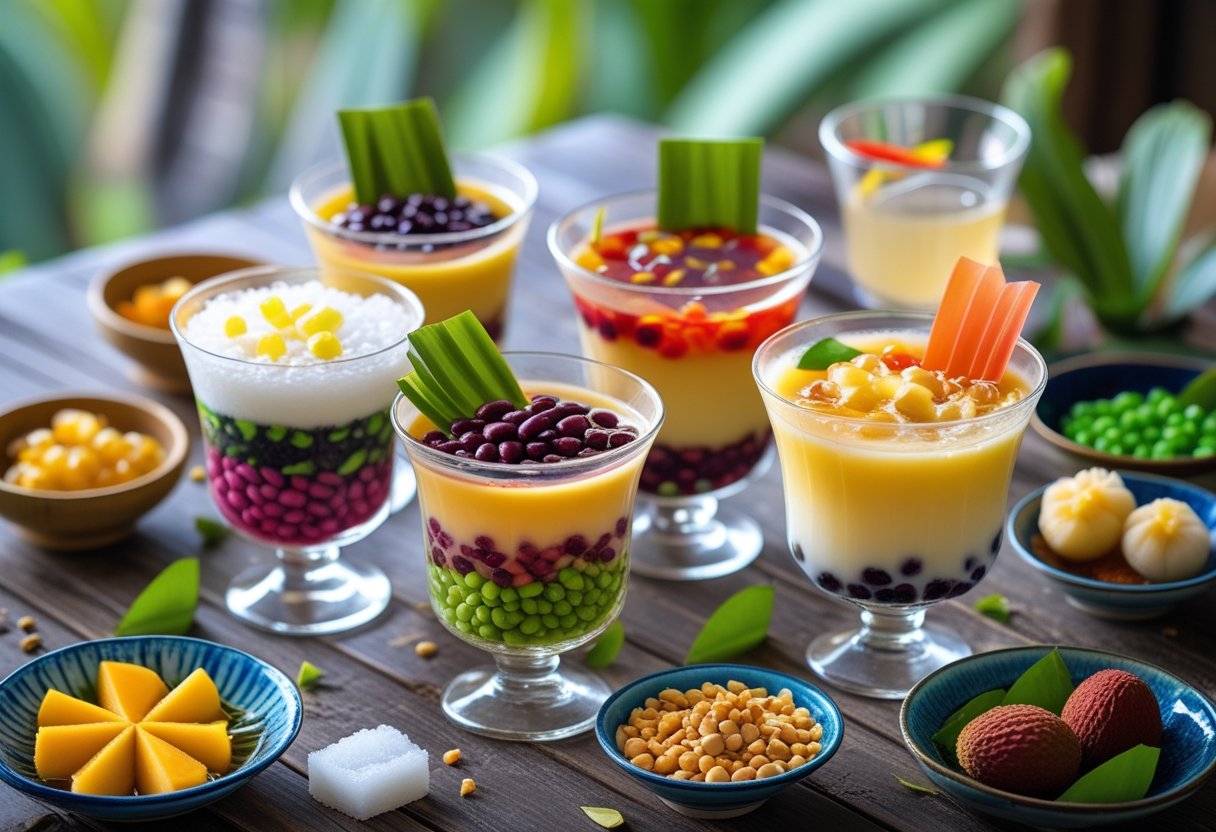
Ché offers a wide range of flavors and textures shaped by its many ingredients and regional twists. From colorful layered treats to warm, sweet soups, the variety is impressive.
Understanding the common recipes and what goes into them helps us appreciate this dessert’s depth.
Popular Ché Varieties Across Vietnam
Some ché types are staples that represent Vietnam’s diverse regions. Chè Ba Màu is a classic three-color dessert with layers of red beans, yellow mung bean paste, and green pandan jelly called bánh lọt, all topped with coconut milk and crushed ice.
It showcases the South’s love for bold sweetness and texture. Chè Thái is a southern favorite, a rich fruit cocktail with jackfruit, longan, lychee, and durian mixed in coconut milk.
In contrast, the North offers subtler options like Chè Trôi Nước, served warm with glutinous rice balls filled with mung bean paste in a ginger syrup.
Other popular choices include Chè Bắp (sweet corn pudding), Chè Cốm (green rice flake), Chè Chuối (banana and tapioca pudding), and Chè Khoai Môn (taro). These varieties reveal the dessert’s adaptability and cultural role throughout Vietnam.
Core Ingredients: Beans, Starches, and Jellies
Beans form the foundation of many ché recipes. We see mung beans in Chè Đậu Xanh, red kidney beans in Chè Đậu Đỏ, black beans in Chè Đậu Đen, and black-eyed peas.
They add creaminess or texture when boiled soft. Starches like glutinous rice, sticky rice, and tapioca pearls create chewy or pudding-like consistencies.
Tapioca appears as pearls or strips (bánh lọt), often tinted with pandan for flavor and color. Jellies also play a key role.
Grass jelly (sương sáo) offers a slightly bitter balance, while agar-agar jelly adds firmness and contrast. Basil seeds provide a slippery texture.
Coconut milk or cream ties these ingredients together, delivering richness and sweetness.
Fruits and Flavorings in Ché
Fruits brighten many ché preparations, contributing natural sweetness and aroma. Tropical fruits such as mango, jackfruit, lychee, pomelo, durian, and longan are common, especially in southern-style ché like Chè Thái or Chè Xoài (mango Ché).
Flavorings like pandan leaf extract infuse ché with a fresh, grassy note. Ginger syrup sweetens and warms desserts like Chè Trôi Nước.
The use of coconut milk or cream brings a creamy texture and keeps the dessert rich. These elements combine to create varied experiences, whether chilled with crushed ice or served warm.
Many of these ingredients are readily found in Vietnamese grocery stores, making homemade ché recipes accessible to us.
For more on the diversity and ingredients of ché, see this detailed guide.
Frequently Asked Questions
We use a wide range of ingredients like beans, fruits, tapioca, and coconut cream to create different types of ché. Many recipes include unique combinations of grains, jellies, and tubers that give each dessert its own texture and flavor.
What ingredients are commonly used in preparing traditional Vietnamese chè?
Traditional chè often includes mung beans, black-eyed peas, kidney beans, and tapioca pearls. Fruits like mango, longan, and jackfruit are also popular.
Coconut milk or cream usually adds richness. Other ingredients include glutinous rice, lotus seeds, taro, pumpkin, and various jellies made from agar or grass.
Sweeteners like sugar or palm sugar are essential to balance flavors.
How do you make Vietnamese coconut jelly dessert?
To make coconut jelly dessert, we dissolve agar powder or gelatin in water and mix it with coconut milk. Once combined, the mixture is heated until it thickens.
After cooling, it sets into a firm jelly that can be cut into cubes or shapes. Sometimes, small pieces of fruit or pandan leaf extract are added for extra flavor.
What are the different types of chè available in Vietnam?
Chè varieties cover both sweet soups and puddings. Popular options include chè đậu đen (black bean), chè đậu đỏ (red bean), chè khoai môn (taro), and chè xoài (mango).
There are also mixed versions like chè thập cẩm, which combines multiple beans, jellies, and fruits. Some chè are served warm; others are enjoyed cold or with ice.
Can you explain the preparation of Che Thai?
Che Thai is a sweet fruit soup that features a mix of tropical fruits such as jackfruit, lychee, and mango. These fruits are combined with coconut milk and syrup.
We serve it chilled with bits of jelly or tapioca for texture. It’s inspired by a Thai dessert but with more diverse fruit choices in the Vietnamese version.
What distinguishes chè from other Vietnamese desserts?
Chè is unique because it includes sweet soups, drinks, and puddings all under one name. Unlike solid desserts, chè can be liquid or semi-liquid.
Its versatility allows it to be served hot, warm, or cold. The use of varied beans, tubers, fruits, and coconut cream creates many textures and flavors not found in other desserts.
How does the three-flavor Vietnamese dessert vary from other chè variations?
The three-flavor chè, or chè ba màu, is basically a colorful party in a glass. It brings together green mung beans, white black-eyed peas, and red azuki beans.
Other chè desserts might go wild with one main ingredient or toss in a whole bunch of extras. Chè ba màu keeps it classy with just three, showing off both its looks and its taste.