Borscht is a traditional soup made primarily from beets, known for its deep red color and rich, earthy flavor. It often includes ingredients like beef, cabbage, potatoes, and fresh dill, creating a hearty and warming dish.
The key to a great borscht recipe is balancing the sweetness of beets with a touch of acidity, usually from vinegar or lemon juice, and finishing with a dollop of sour cream.
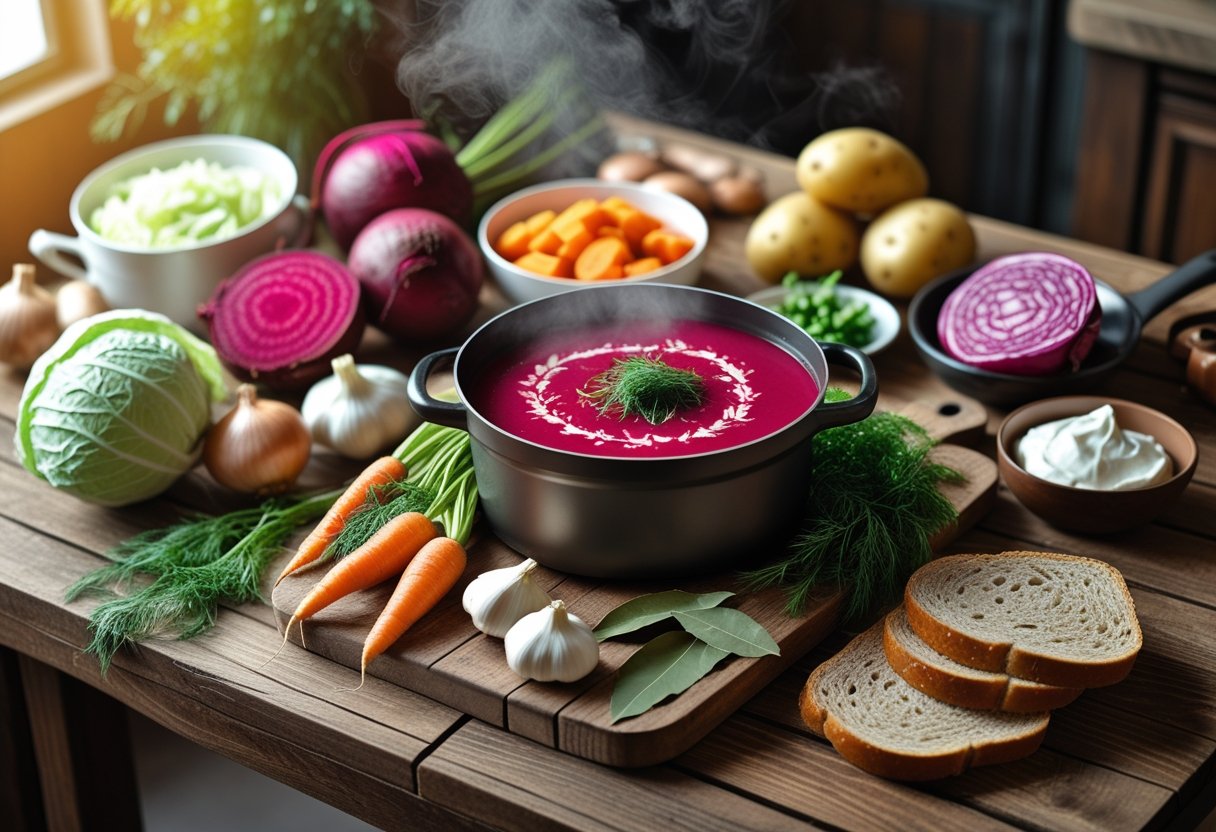
This soup is popular in many Eastern European countries and is especially loved for its comforting qualities on cold days. Borscht can be made with or without meat and sometimes includes roasted vegetables to add extra depth of flavor.
Essential Ingredients and Variations
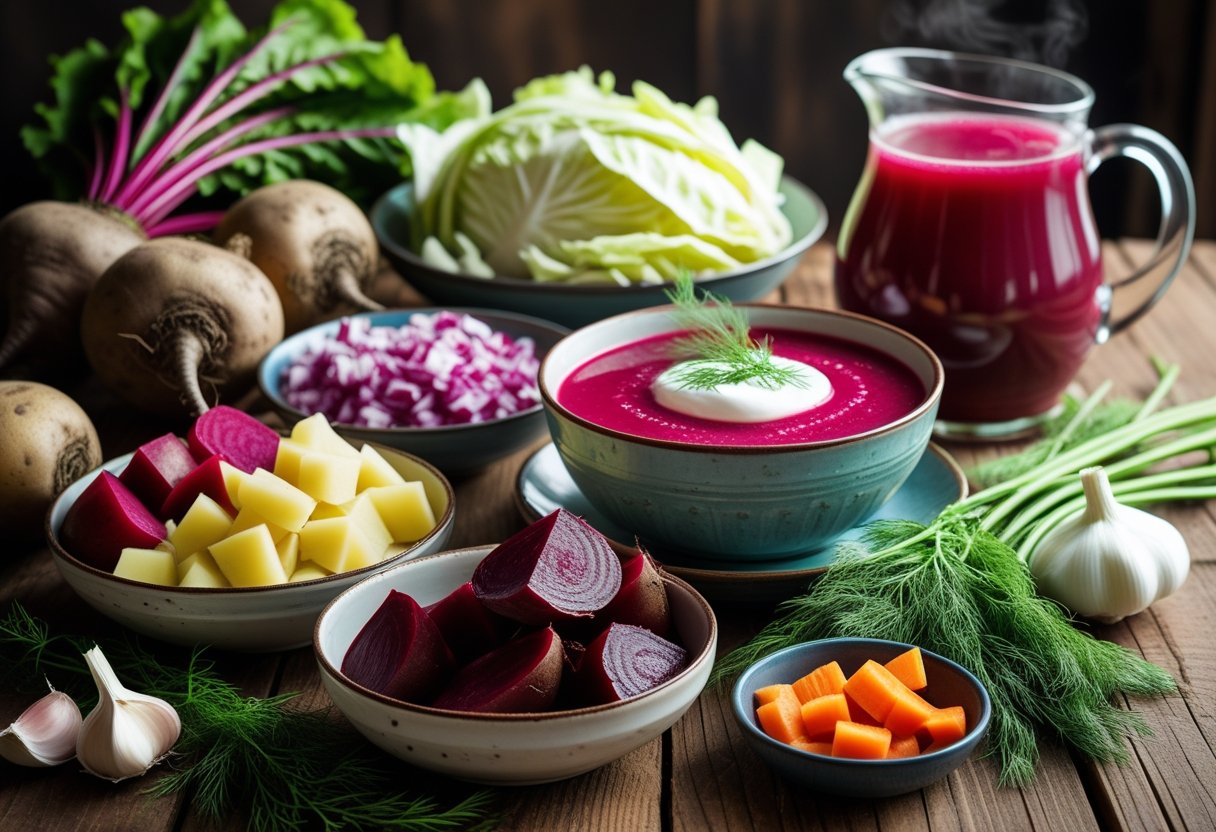
Borscht relies on a balance of fresh vegetables, flavorful broth, and specific seasonings to create its distinctive taste. Variations often depend on local ingredients, dietary preferences, and regional traditions, making each version unique.
Key Vegetables for Borscht
The main vegetable in borscht is beets, which give the soup its vibrant red color and sweet, earthy flavor. Both raw shredded and roasted beets are common, with roasting enhancing sweetness.
Potatoes add heartiness and soften the texture, while cabbage—usually green or white—provides a mild crunch and subtle sweetness. Carrots, onions, celery, and garlic form the aromatic base.
These are usually sautéed in vegetable oil, butter, or sunflower oil to develop richness before being added to the broth. Some recipes include tomatoes, either canned diced tomatoes or tomato paste, to boost acidity and depth.
Fresh herbs like dill and parsley are standard garnishes, imparting bright, fresh notes. Black pepper (freshly ground or whole peppercorns) adds gentle heat and seasoning.
Choosing the Right Broth and Proteins
The choice of broth shapes the overall flavor of borscht. Beef broth or bone broth made from beef bones and short ribs provides a rich, savory foundation for classic beef or pork sausage versions.
Some cooks use beef stew meat to intensify the hearty taste. Chicken broth offers a lighter, more delicate base for versions that include chicken or prefer a milder taste.
Vegetable broth creates a neutral, vegan- and vegetarian-friendly option while letting the vegetables shine. Proteins vary widely.
Traditional Ukrainian borscht often includes beef or pork, but vegetarian borscht replaces meat with extra root vegetables or beans for protein. Some recipes add smoked meats like kielbasa for smoky complexity.
Regional and Dietary Variations
Regional borscht recipes reflect local produce and customs. Ukrainian borscht typically features meat, potatoes, cabbage, and often a vinegar or lemon juice splash for acidity.
Russian varieties may be clear and lighter or thick with meat and beans. Eastern European versions sometimes use a special sauté mix called zazharka, made of onions, carrots, and tomato paste cooked in oil or butter, adding a caramelized base.
Vegan and vegetarian borscht versions focus on vegetable broth, omitting meat and dairy. These may use apple cider vinegar instead of red wine vinegar and often include legumes or mushrooms for texture.
Accompaniments vary too. Sour cream is a classic topping but plant-based alternatives are common with vegan borscht.
Borscht is often served with fresh herbs and homemade bread or pampushky, Ukrainian garlic rolls.
Step-by-Step Method for Making Borscht
Making borscht involves careful preparation of fresh ingredients, controlled cooking times, and attention to seasoning. Proper techniques ensure the soup develops a rich flavor and appealing texture.
Preparation and Cooking Techniques
First, the beets are often peeled and shredded or roasted to deepen their flavor. Roasting enhances sweetness and adds an earthy depth.
Next, aromatics like onions, carrots, and celery are sautéed in olive oil to build a flavorful base. Meat, if used, is seared for rich taste before simmering with broth.
Beef broth is common for a classic borscht recipe, but vegetable broth works for vegetarian versions. After adding beets, potatoes, cabbage, and tomatoes, the soup simmers slowly, usually for 1 to 3 hours, allowing flavors to meld.
Vinegar or lemon juice is added near the end to balance the natural sweetness of the beets. Salt, pepper, and optional sugar adjustments perfect the taste.
Keeping the soup from boiling vigorously preserves vegetable textures and color.
Serving Suggestions and Garnishes
Borscht is traditionally served hot in bowls, often with a dollop of sour cream or plain yogurt to add creaminess and mild tang. Fresh chopped dill or parsley sprinkled over the top provides contrast and brightness.
Accompanying the soup with homemade rye or sourdough bread complements its hearty flavors. Polish variations may include small mushroom-filled dumplings called uszka.
Some prefer a clear beet broth by straining out the solids before serving. Adding a wedge of lemon or a splash of vinegar at the table allows each person to customize acidity.
This soup pairs well with simple side salads or pickled vegetables to balance richness.
Storing and Freezing Borscht
Borscht stores well in airtight containers in the refrigerator for up to 3 days. It often tastes better the next day as the flavors meld.
To reheat, warming gently on low heat helps keep vegetables tender and avoids breaking down the soup.
For longer storage, borscht freezes effectively. It should be cooled completely before transferring to freezer-safe containers.
Leave headspace as the liquid will expand during freezing. To thaw, move the soup to the refrigerator overnight and reheat slowly.
Avoid freezing sour cream toppings. Add fresh dollops after reheating.
Properly stored frozen borscht can last up to 3 months.