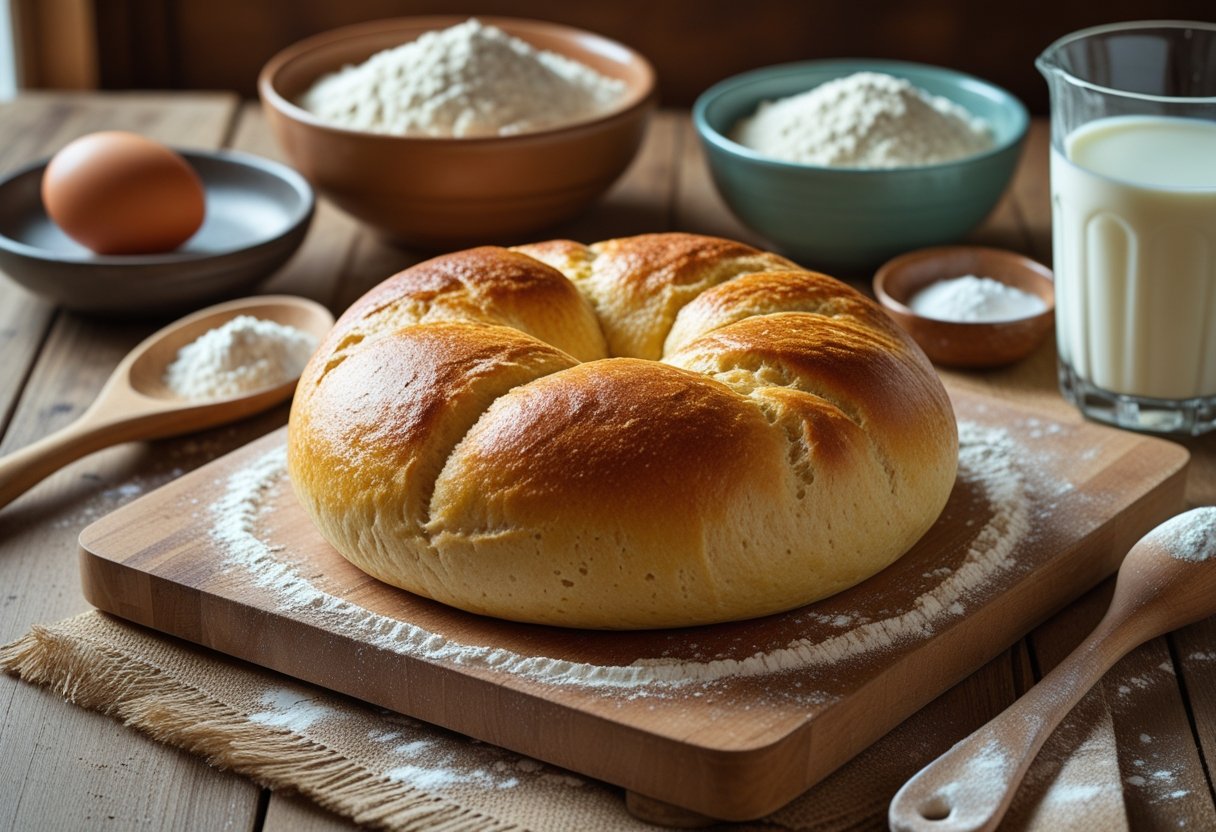
Bannock is a simple and tasty bread that has been enjoyed for generations. It’s easy to make with just a few basic ingredients like flour, baking powder, salt, water, and some butter or oil for cooking.
You can fry or bake bannock, and either way, it turns out soft inside with a nice golden crust outside.
This bread is more than just food—it connects us to history and culture. Bannock was originally brought here by Scottish settlers, but Indigenous communities made it their own by adapting the recipe.
Today, it remains a comforting and versatile staple that we can enjoy any time, whether at home or around a campfire.
We’re excited to share how to make bannock with you, along with some tips and ways to add your own twist. Whether you want a quick snack or a hearty side, bannock is a great choice for all of us to learn and enjoy together.
Key Takeaways
- Bannock is made with simple ingredients and can be fried or baked.
- It has a rich cultural history shaped by many communities.
- We can easily customize bannock to fit different tastes.
How to Make Bannock Bread
Making bannock bread is simple and requires only a few key ingredients. We’ll guide you through everything you need, how to mix the dough just right, and the best ways to cook it.
Bannock can be baked, fried, or even cooked over a campfire, giving you lots of options to enjoy this tasty bread.
Essential Ingredients for Bannock
The basic bannock recipe uses a few simple ingredients. Here’s what we usually have on hand:
| Ingredient | Typical Amount | Notes |
|---|---|---|
| All-purpose flour | 2 cups | You can mix with whole wheat flour for a nuttier taste. |
| Baking powder | 1 tablespoon | Helps the bannock rise and stay fluffy. |
| Salt | 1/2 teaspoon | Adds flavor, don’t skip! |
| Water or Milk | About 3/4 cup | Milk or buttermilk makes it richer, water keeps it simple. |
| Fat (lard, melted butter, or oil) | 2-3 tablespoons | Needed for frying or in the dough for softness. |
You can add extras like raisins, dried fruit, or grated cheese to mix things up. Using baking soda with an acid like buttermilk or lemon juice can replace baking powder if needed.
The key is to keep ingredients flexible but balanced.
Step-by-Step Bannock Recipe
First, we mix the dry ingredients: flour, baking powder, and salt. It’s important to combine these well so the leavening spreads evenly.
Next, we add about 3/4 cup of cold water or milk. Using our hands or a fork, we slowly mix this into a soft, slightly sticky dough.
If it feels dry, we add a little more liquid, but not too much. We gently knead the dough just 4-5 times on a floured surface.
Over-kneading makes the bread tough, so we keep it light and easy. Then, we shape the dough into a flat round about 1 inch thick.
That way, it cooks through evenly whether we fry or bake it.
Tips for Perfect Bannock Texture
To get a good bannock texture, don’t knead too much. The dough should be slightly rough, not smooth like bread dough.
Using baking powder or baking soda well helps the bannock rise and stay fluffy inside. If it feels dense, check that you haven’t added too much flour or overworked it.
When cooking, a golden brown crust means it’s almost done. Tap the surface—it should sound hollow.
That’s a good sign the inside is cooked. Adding a bit of fat in the dough or frying in oil or lard helps create a crisp outside and soft inside.
Common Cooking Methods: Baked, Fried, and Campfire
Bannock can be fried in a skillet, baked in the oven, or cooked over an open campfire. Fried bannock uses a cast-iron skillet with oil like canola or vegetable oil.
It cooks quickly, about 5-7 minutes each side, and has a crispy exterior. Baked bannock goes in a 400°F oven for 20-25 minutes.
It has a softer crust and an even texture, perfect for serving with soup or stew. For campfires, dough is rolled around a clean stick and held over coals, not flames.
This method takes longer but adds a smoky flavor worth trying when outdoors. Each way changes the bannock’s texture and taste, so we can pick what suits us best.
For more on bannock techniques and recipes, explore this detailed bannock recipe guide.
Bannock Variations and Cultural Significance
Bannock holds a special place in many Indigenous communities and Canadian cuisine. It connects us to history and culture while offering room for creativity in how it’s made and enjoyed.
From traditional recipes to new twists, bannock adapts to different tastes and occasions.
Traditional Bannock in Indigenous Culture
Traditional bannock was often made by Indigenous groups using simple ingredients like flour, water, and fat. It was usually unleavened bread, cooked over an open fire or baked in ashes.
This made bannock easy to carry and cook while hunting or traveling. For First Nations and Métis peoples, bannock became a vital food during tough times, especially when other traditional foods were limited.
The bread reflects resilience and survival, often called “Indigenous bread.” It’s a symbol of home and family, frequently shared during gatherings and cultural ceremonies.
Bannock’s preparation methods varied—some fried it in animal fat, others baked it or cooked it on sticks. It was a flexible bread, fitting the needs of different lands and peoples.
Modern Bannock Twists and Popular Add-Ins
Today, many of us add new flavors to bannock to suit our tastes. Sweet bannock often includes sugar, cinnamon, or berries, while savory versions might have herbs, cheese, or even garlic.
Some make pan-fried or oven-baked bannock, depending on preference. We can easily adjust recipes to be gluten-free or use whole wheat flour for a healthier option.
Adding dried fruit or spices gives bannock a fresh, tasty boost while keeping its traditional heart. Modern bannock brings families together in new ways.
It’s common to serve it warm with butter and jam for breakfast or alongside savory dishes for dinner. It’s a bread that welcomes innovation while honoring its roots.
Scottish Roots and Regional Bannock Styles
Bannock’s roots trace back to Scottish settlers who brought a type of flatbread named bannock to North America. The Scottish version was originally made with oats and cooked on griddles.
Indigenous bakers adapted these recipes, mixing European flour and ingredients with their own cooking styles. This led to distinct regional bannocks across Canada, each with unique flavors and methods.
Some northern Indigenous groups make bannock without baking powder and cook it over open flames. Others bake it in ovens—no rules, just tasty bread.
These variations show how bannock carries history from both Indigenous and settler cultures. If you’re feeling adventurous (or just hungry), try exploring the different styles to find your own favorite.
For more in-depth information, check out the history and cultural importance of bannock in The History and Cultural Significance of Bannock in Canada.