Avocado raw salad dressing is a simple way to add creamy texture and rich flavor to any salad without using dairy or heavy oils. This dressing combines fresh avocados with herbs and citrus for a healthy, vegan option that is both nutritious and delicious. It’s perfect for those who want a smooth dressing that enhances the natural taste of their veggies.
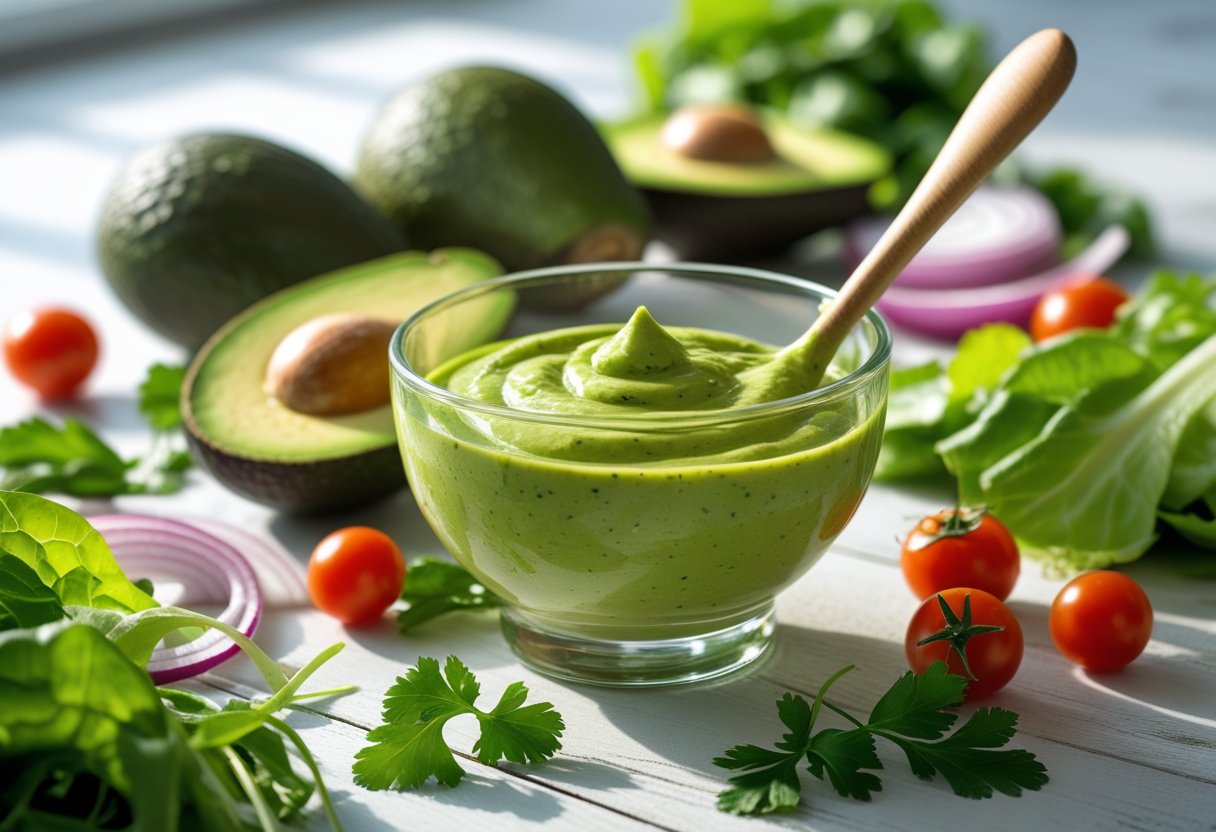
We appreciate how quick it is to prepare, using just a few whole ingredients blended together. Beyond taste, avocado adds good fats and important nutrients that benefit heart health and support the immune system. This makes it a smart choice for anyone focused on wholesome eating.
Whether you’re dressing leafy greens, wraps, or even using it as a dip, this avocado raw salad dressing fits many meals. We’ll share the recipe and explain why this dressing is a great addition to your kitchen routine, boosting both flavor and nutrition. For more details, see the full Avocado Raw Salad Dressing Recipe.
Essential Ingredients and Preparation Methods
To make a flavorful raw avocado salad dressing, we focus on selecting ripe avocados, using fresh citrus juice for brightness, and balancing herbs and seasonings for the right taste. Each ingredient plays a crucial role in creating the perfect creamy texture and vibrant flavor.
Choosing the Right Avocados
We start with ripe avocados, which are essential for a smooth, creamy dressing. The Hass variety is preferred because of its buttery texture and rich flavor. When choosing avocados, look for ones that yield slightly to gentle pressure but are not too soft or mushy.
Cutting the avocado into small pieces before blending helps the dressing come together evenly. Using both avocado oil and olive oil can enhance creaminess and add healthy fats. Avoid unripe avocados, which tend to be bitter and make the dressing less smooth.
Role of Citrus: Lime Juice and Lemon Juice
Citrus juice is vital for adding acidity that brightens the dressing and prevents the avocado from browning. We use freshly squeezed lime juice or lemon juice interchangeably depending on what we have on hand. Both juices provide a tangy flavor, but lime juice brings a sharper zest while lemon juice offers a slightly sweeter note.
Adding about 3 tablespoons of lime or lemon juice balances the richness of the avocado without overpowering it. Fresh juice is better than bottled since it maintains a cleaner flavor and preserves the dressing’s vibrant green color.
Herbs and Seasonings for Flavor Balance
Herbs and spices complete the dressing with layers of flavor. Cilantro is common for its fresh, citrusy notes, but parsley or dill can be great alternatives if we want a milder or more herbal taste.
Garlic adds a pungent kick; freshly minced garlic works best, but garlic powder is a good substitute for a softer flavor. Salt, preferably kosher or sea salt, and freshly ground black pepper bring out the natural flavors and help balance the creaminess.
We often add a pinch of salt gradually to get the seasoning just right. The combination of olive oil or avocado oil, garlic, herbs, salt, and pepper is what turns simple ingredients into a well-rounded dressing that pairs well with any salad or vegetable dish.
Homemade Avocado Raw Salad Dressing Recipes
We can make fresh avocado salad dressing at home with simple ingredients and easy steps. Using ripe avocados, oils, herbs, and a few seasonings lets us create creamy avocado dressing that enhances any salad. The right tools and small tweaks help us tailor the dressing to our taste and needs.
Classic Avocado Salad Dressing Recipe
Our classic avocado salad dressing starts with two ripe avocados for creaminess and healthy fats. We add garlic, lime juice for acidity, and a mix of fresh herbs like parsley and basil. A half cup of coconut or flaxseed oil smooths the texture and adds flavor. Seasoning with Himalayan salt and black pepper completes the base.
We blend everything in a high-speed blender until smooth and creamy. Adding 3 to 5 tablespoons of purified water helps us reach the desired thickness. This base recipe is dairy-free, vegan, and gluten-free, making it suitable for many diets. Its fresh flavor works well on greens or as a dip.
Creamy Avocado Variations
We can enhance our creamy avocado dressing by adding ingredients like jalapeños, mustard, or nutritional yeast for different tastes. Mixing in avocado oil or Greek yogurt changes the texture and richness. Lemon juice can replace lime for a slightly sweeter tang. Some prefer a splash of apple cider vinegar for extra sharpness.
To keep calories lower, we swap out some oil for water or broth. For extra protein, blending in hemp seeds or silken tofu is effective. The versatility of avocado dressing lets us adjust fat content and flavor without losing the creamy consistency that makes it a favorite.
Best Equipment for Blending
Using a high-speed blender is key to getting a perfectly smooth avocado dressing. It breaks down the fibrous avocado and herbs quickly. An immersion blender works well if we want smaller batches and easy cleanup. Both tools help us avoid lumps and achieve that creamy texture.
A food processor can be used, but it may not be as smooth. Whisking by hand is possible but requires patience and may leave chunks. A good blender also allows us to combine tougher ingredients like garlic and herbs thoroughly for balanced flavor.
Customizing for Dietary Preferences
We must consider dietary needs when preparing avocado dressing. For keto or low-carb diets, avocado oil and coconut oil are ideal fats to use. Vegan diets benefit from leaving out dairy and using plant-based liquids. People with nut allergies can avoid oils like almond and stick to coconut or flaxseed oil.
To reduce sodium, we control the amount of salt or use low-sodium seasonings. For a raw vegan option, we ensure all ingredients are fresh and unprocessed. Adjusting lime juice or adding raw honey can help match personal taste while keeping the recipe wholesome.