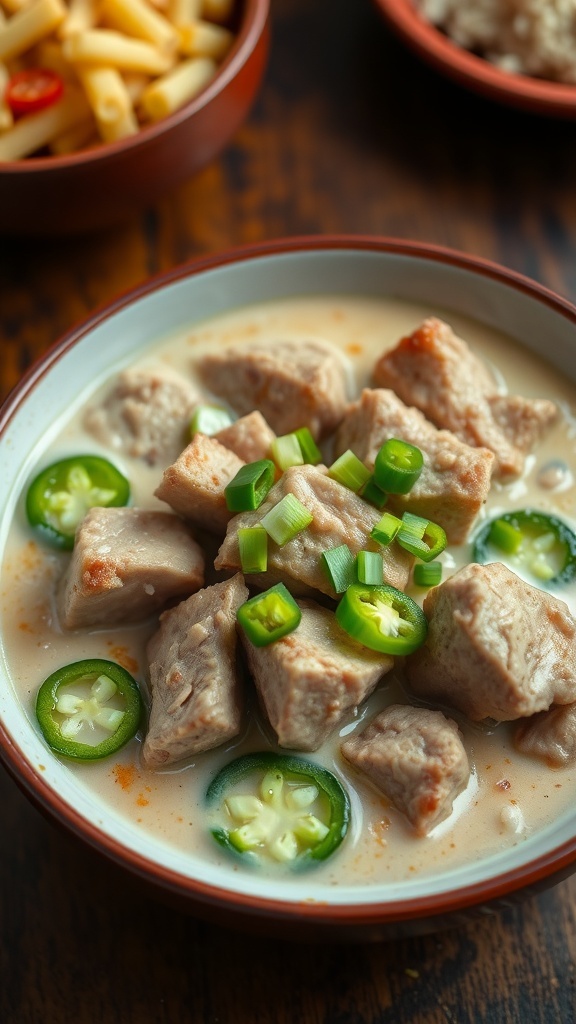
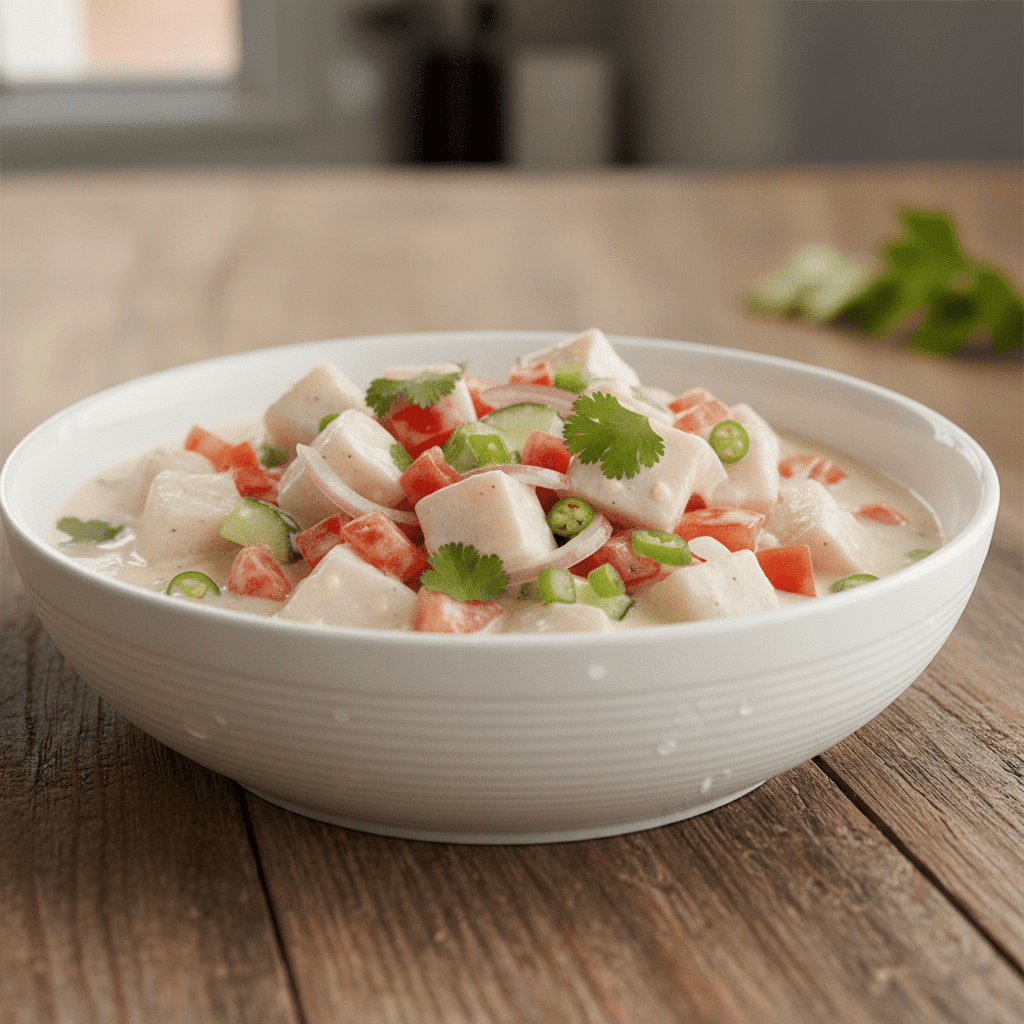
Kokoda (pronounced ko-kon-da) is Fiji’s answer to ceviche, and it’s one of the most refreshing dishes you’ll ever try. Fresh raw fish marinated in lime juice and mixed with rich coconut cream, diced vegetables, and a touch of chili—it’s bright, tropical, and absolutely delicious. The coconut cream makes it richer and more luxurious than traditional ceviche, and the combination of tangy lime, creamy coconut, and fresh fish is just perfect.
I first tried kokoda at a beachside restaurant in Fiji, and I was blown away by how fresh and flavorful it was. The creamy coconut balanced the acidity of the lime, and the vegetables added crunch and freshness. When I got home, I knew I had to learn how to make it. Now it’s my go-to dish when I want something light, refreshing, and tropical.
Why This Recipe Works
What makes kokoda special is the coconut cream. While ceviche uses just citrus juice to “cook” the fish, kokoda adds coconut cream after the fish has marinated in lime juice. This creates a rich, creamy sauce that’s more substantial than traditional ceviche. The result is this beautiful balance of tangy, creamy, fresh, and slightly spicy.
The key is using the freshest fish possible—traditionally mahi-mahi or Spanish mackerel, but any firm white fish works. The lime juice “cooks” the fish through acid denaturation, changing the protein structure so it becomes opaque and firm, just like cooked fish, but retains that fresh, clean flavor.
The Complete Recipe
What You’ll Need
For the Kokoda:
1 pound sushi-grade firm white fish (mahi-mahi, Spanish mackerel, snapper, or tuna), cut into ½-inch cubes
½ cup fresh lime juice (about 4-6 limes)
1 cup coconut cream (the thick cream from the top of a can of coconut milk)
1 medium tomato, seeded and diced
1 small cucumber, seeded and diced
1 small red onion, finely diced
1-2 red chili peppers, finely chopped (adjust to taste)
2 green onions, sliced
Salt to taste
For Garnish:
Fresh cilantro or parsley, chopped
Lime wedges
Extra chili slices (optional)
For Serving:
Cassava chips, taro chips, or crackers
Fresh bread
Step-by-Step Instructions
Step 1: Prepare the Fish
Make sure your fish is sushi-grade and very fresh. Cut it into ½-inch cubes, removing any skin or dark parts.
Place the fish cubes in a non-reactive bowl (glass or ceramic, not metal).
Step 2: Marinate in Lime Juice
Pour the fresh lime juice over the fish, making sure all pieces are submerged. If needed, add more lime juice to cover.
Cover and refrigerate for 15-30 minutes. The fish will turn opaque and firm as the lime juice “cooks” it. Don’t marinate longer than 30 minutes or the fish will become too firm and lose its delicate texture.
Step 3: Prepare the Vegetables
While the fish marinates, prepare all your vegetables. Dice the tomato, cucumber, and red onion into small, uniform pieces. Finely chop the chili peppers and slice the green onions.
Step 4: Drain and Mix
After the fish has marinated, drain off most of the lime juice, leaving just a tablespoon or two.
Add the coconut cream to the fish and stir gently to combine. The coconut cream should coat the fish and create a creamy sauce.
Add the diced tomato, cucumber, red onion, chili peppers, and green onions. Gently fold everything together.
Season with salt to taste. Start with ½ teaspoon and adjust as needed.
Step 5: Chill and Serve
Cover and refrigerate for at least 30 minutes to let the flavors meld. Kokoda is best served cold.
Before serving, give it a gentle stir and taste for seasoning. Add more salt or a squeeze of lime if needed.
Garnish with fresh cilantro or parsley and serve with lime wedges on the side.
Serve with cassava chips, taro chips, crackers, or fresh bread.
Tips I’ve Learned Along the Way
Use Sushi-Grade Fish: This is crucial. Since the fish is eaten raw (technically “cooked” by acid), it must be sushi-grade and very fresh. Buy from a reputable fishmonger.
Don’t Over-Marinate: 15-30 minutes in lime juice is perfect. Longer and the fish becomes too firm and loses its delicate texture.
Fresh Lime Juice Only: Bottled lime juice won’t work. You need fresh lime juice for the right flavor and acidity.
Coconut Cream, Not Milk: Use the thick coconut cream from the top of a can of full-fat coconut milk, or buy coconut cream specifically. Regular coconut milk is too thin.
Drain Most of the Lime Juice: After marinating, drain off most of the lime juice before adding coconut cream. Too much lime juice makes it too acidic.
Keep It Cold: Kokoda should be served cold. Keep it refrigerated until serving.
Serve Fresh: This dish is best eaten the day it’s made. The fish and vegetables are at their peak freshness.
Variations I Love:
Spicy Kokoda: Add more chili peppers or a dash of hot sauce
Bell Pepper Addition: Add diced red or yellow bell peppers for color
Mango Kokoda: Add diced fresh mango for sweetness
Avocado: Add diced avocado just before serving
Different Fish: Try salmon, tuna, or a mix of fish
Why This Dish is Special
Kokoda is the taste of the South Pacific in a bowl. It’s fresh, vibrant, and incredibly refreshing—perfect for hot summer days. The combination of tangy lime, creamy coconut, fresh fish, and crisp vegetables is just magical.
What I love most is how it showcases the quality of the ingredients. There’s no heavy sauce or complicated technique to hide behind—it’s all about fresh, high-quality fish and vegetables. When you use great ingredients, the dish shines.
It’s also surprisingly light despite the coconut cream. The vegetables add crunch and freshness, and the whole thing feels healthy and nourishing. It’s the kind of dish that makes you feel good after eating it.
Serving Suggestions
Kokoda is traditionally served as an appetizer or light meal with:
Cassava chips (traditional Fijian pairing)
Taro chips
Crackers or flatbread
Fresh bread
As part of a tropical feast
With cold beer or tropical cocktails
Fresh tropical fruit on the side
The Bottom Line
If you love ceviche or raw fish dishes, you need to try kokoda. The addition of coconut cream transforms it into something even more special—creamier, richer, and more tropical. It’s one of those dishes that transports you to a beach in Fiji with every bite.
I make this whenever I can get really fresh fish and want something light, refreshing, and special. It’s perfect for summer entertaining, beach picnics, or anytime you’re craving something tropical and delicious.
Give it a try with the freshest fish you can find, and I think you’ll understand why kokoda is so beloved in Fiji.
Have you tried kokoda or other Pacific Island dishes? What’s your favorite raw fish preparation? Let me know in the comments!
Recipe Card
Kokoda (Fijian Coconut Lime Fish Salad)
Prep Time: 20 minutes
Marinating Time: 15-30 minutes
Chilling Time: 30 minutes
Total Time: 1 hour 20 minutes
Servings: 4-6
Difficulty: Easy
Ingredients:
1 pound sushi-grade firm white fish, cut into ½-inch cubes
½ cup fresh lime juice
1 cup coconut cream
1 medium tomato, seeded and diced
1 small cucumber, seeded and diced
1 small red onion, finely diced
1-2 red chili peppers, finely chopped
2 green onions, sliced
Salt to taste
Fresh cilantro or parsley for garnish
Lime wedges for serving
Instructions:
Cut sushi-grade fish into ½-inch cubes
Place in non-reactive bowl
Pour lime juice over fish, making sure all pieces are submerged
Cover, refrigerate 15-30 minutes until fish is opaque
While fish marinates, dice tomato, cucumber, onion; chop chili; slice green onions
Drain most lime juice from fish, leave 1-2 tablespoons
Add coconut cream, stir gently to coat
Add tomato, cucumber, onion, chili, green onions; fold together
Season with salt to taste
Cover, refrigerate at least 30 minutes
Stir before serving, adjust seasoning
Garnish with cilantro, serve with lime wedges
Serve with cassava chips, crackers, or bread
Tips for Success:
Use sushi-grade fish only (very fresh)
Don’t marinate longer than 30 minutes
Use fresh lime juice (not bottled)
Use coconut cream (not milk)
Drain most lime juice before adding coconut cream
Keep cold until serving
Best eaten same day
Storage:
Best served fresh
Can refrigerate up to 24 hours
Fish texture changes over time
Nutrition (per serving):
Calories: ~210
Fat: 12g
Protein: 18g
Carbohydrates: 8g
Fiber: 2g