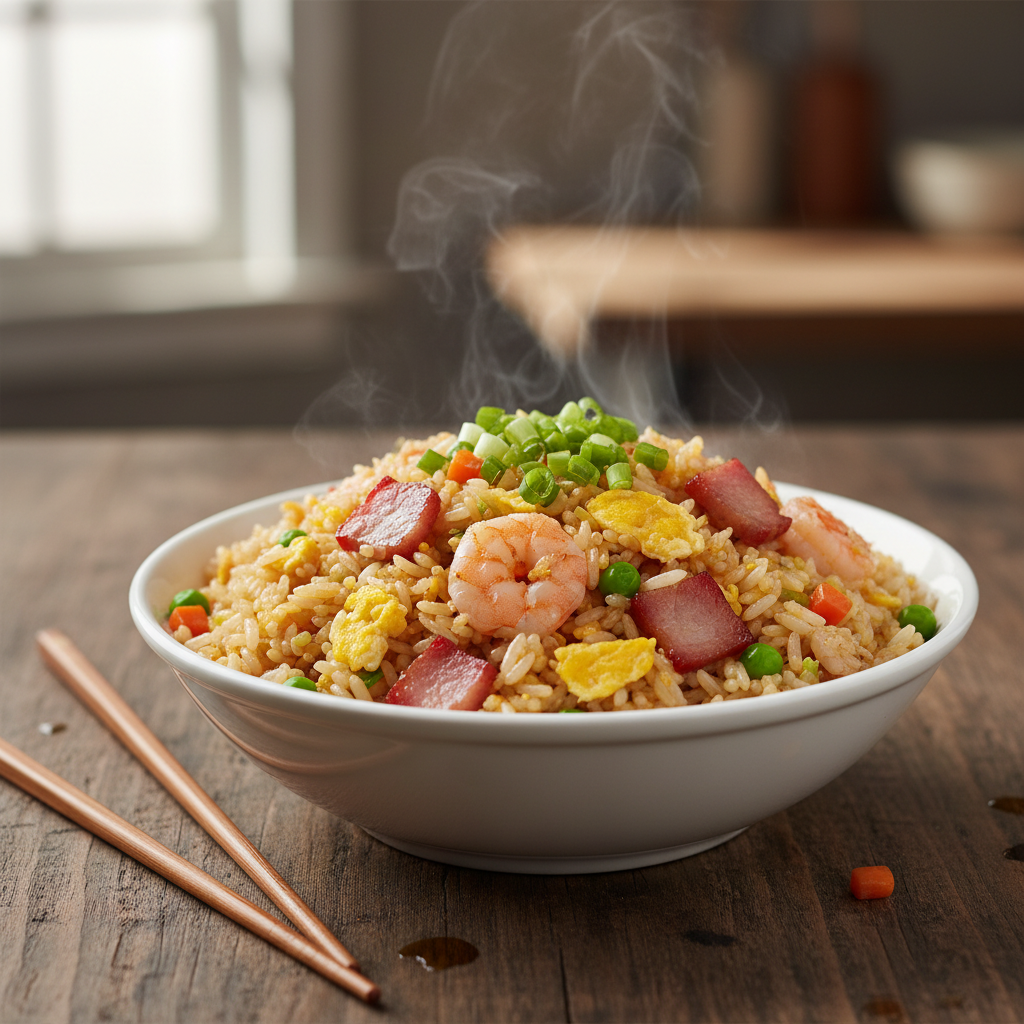
There’s something special about a perfectly executed plate of Yangzhou fried rice. Each grain of rice is separate and fluffy, coated in a thin layer of egg, studded with tender shrimp, savory Chinese sausage, and colorful vegetables. It’s the kind of dish that looks deceptively simple but requires technique to get right—and once you master it, you’ll never want takeout fried rice again.
I’ve been making fried rice for years, but it wasn’t until I learned the proper technique for Yangzhou-style fried rice that everything clicked. The secret? Day-old rice, high heat, and working quickly. This isn’t the mushy, oil-soaked fried rice you sometimes get from mediocre takeout places. This is the real deal—the kind you’d find in a good Cantonese restaurant, where every element is perfectly cooked and the rice has that elusive “wok hei” (breath of the wok) flavor.
Why This Recipe Works
Yangzhou fried rice, also known as Yang Chow fried rice, originated in the city of Yangzhou in Jiangsu Province. It’s considered one of the most refined versions of Chinese fried rice, and for good reason. The technique is all about timing and temperature—cooking each ingredient separately at high heat, then bringing everything together at the end.
The key to great fried rice is using day-old rice. Freshly cooked rice is too moist and will turn mushy when stir-fried. Day-old rice has dried out slightly, so each grain stays separate and gets that perfect slightly crispy exterior. I always make extra rice when I’m cooking just so I have leftovers for fried rice the next day.
The combination of ingredients is classic: shrimp for sweetness, Chinese sausage (lap cheong) for savory depth, eggs for richness, and colorful vegetables for texture and visual appeal. Each component is cooked separately to ensure everything is perfectly done, then combined at the end with the rice.
The Complete Recipe
What You’ll Need
Main Ingredients:
4 cups cooked jasmine rice, preferably day-old and cold
8-10 medium shrimp, peeled, deveined, and cut into small pieces
2 Chinese sausages (lap cheong), diced small
3 large eggs, beaten
½ cup frozen green peas (or fresh if available)
½ cup diced carrots
3 green onions, white and green parts separated, chopped
2 cloves garlic, minced
Seasonings:
2 tablespoons soy sauce
1 tablespoon oyster sauce
1 teaspoon sesame oil
½ teaspoon white pepper
Salt to taste
3-4 tablespoons vegetable oil (for cooking)
Optional Additions:
Diced char siu (Chinese BBQ pork) instead of or in addition to sausage
Diced ham
Bean sprouts
Corn kernels
Step-by-Step Instructions
Step 1: Prep Everything First (Mise en Place)
This is crucial for fried rice—once you start cooking, everything happens fast. Have all your ingredients prepped, measured, and within arm’s reach of your stove.
If your day-old rice has clumped together in the fridge, break it up with your hands or a fork. The grains should be separate before you start cooking.
Step 2: Scramble the Eggs
Heat your wok or large skillet over high heat. Add 1 tablespoon of oil and swirl to coat.
Pour in the beaten eggs and let them sit for just a few seconds until they start to set on the bottom. Then, using a spatula, quickly scramble them into large, fluffy curds. Don’t overcook—you want them soft and slightly underdone because they’ll cook more later.
Transfer the eggs to a plate and set aside. Wipe out the wok if there are any stuck bits.
Step 3: Cook the Chinese Sausage
Add another tablespoon of oil to the wok over high heat. Add the diced Chinese sausage and stir-fry for about 2-3 minutes until it’s browned and slightly crispy around the edges. The sausage will release some of its fat, which adds flavor.
Transfer the sausage to the plate with the eggs.
Step 4: Cook the Shrimp
Add a bit more oil if needed. Toss in the shrimp pieces and stir-fry for about 1-2 minutes until they just turn pink and are cooked through. Don’t overcook—shrimp get rubbery fast.
Transfer the shrimp to the plate with the other cooked ingredients.
Step 5: Cook the Vegetables
Add the white parts of the green onions and the minced garlic to the wok. Stir-fry for about 30 seconds until fragrant.
Add the diced carrots and peas. Stir-fry for 2-3 minutes until the carrots are tender-crisp. If using frozen peas, they’ll thaw and cook quickly.
Step 6: Add the Rice (The Main Event)
This is where it all comes together. Add the remaining oil to the wok, then add the cold rice. Break up any clumps with your spatula.
Stir-fry the rice for 3-4 minutes, pressing it against the hot surface of the wok and tossing constantly. You want the rice to heat through and get slightly crispy on some grains. This is where that “wok hei” flavor develops.
Step 7: Season and Combine
Push the rice to one side of the wok. In the empty space, add the soy sauce and oyster sauce. Let them sizzle for a second, then mix them into the rice, tossing to coat every grain.
Add back the scrambled eggs (breaking them into smaller pieces as you add them), sausage, shrimp, and the green parts of the green onions.
Toss everything together for another 1-2 minutes until heated through. Drizzle with sesame oil and season with white pepper and salt to taste.
Step 8: Serve
Transfer to a serving plate or individual bowls. Garnish with extra green onions if desired. Serve immediately while it’s hot and the rice still has that perfect texture.
Tips I’ve Learned Along the Way
Day-Old Rice is Non-Negotiable: I can’t stress this enough. Fresh rice will turn mushy. If you’re in a pinch and only have fresh rice, spread it on a baking sheet and refrigerate it for at least 2 hours to dry it out.
High Heat is Essential: Fried rice needs to be cooked over high heat. This is what gives it that slightly smoky, charred flavor (wok hei). If your heat is too low, you’ll end up steaming the rice instead of frying it.
Don’t Overcrowd the Wok: If you’re doubling this recipe, cook it in two batches. Overcrowding lowers the temperature and leads to steaming instead of frying.
Work Quickly: Once you start cooking, everything moves fast. This is why having everything prepped beforehand is so important.
Use the Right Oil: Use a neutral oil with a high smoke point like vegetable, canola, or peanut oil. Olive oil isn’t ideal for high-heat stir-frying.
Adjust Seasonings to Taste: Different brands of soy sauce and oyster sauce have different salt levels. Start with the amounts I’ve listed, then taste and adjust. You can always add more, but you can’t take it away.
The Wok Makes a Difference: While you can make this in a large skillet, a wok is ideal. The shape allows you to push ingredients up the sides while cooking others in the center, and it distributes heat more evenly for high-heat cooking.
Variations I Love:
Deluxe Version: Add diced char siu (Chinese BBQ pork) along with the sausage
Seafood Style: Use a mix of shrimp, scallops, and crab meat
Vegetarian: Skip the meat and add more vegetables like mushrooms, bell peppers, and baby corn
Extra Protein: Add diced cooked chicken or pork
Spicy Kick: Add a teaspoon of chili oil or some diced fresh chilies
Why This Fried Rice is Different
What sets Yangzhou fried rice apart from other fried rice styles is the technique and the quality of ingredients. Each component is cooked separately to ensure it’s perfectly done, then everything is combined at the end. This might seem like extra work, but it makes a huge difference in the final result.
The shrimp stays tender and sweet, the sausage gets crispy, the eggs are fluffy, and the vegetables maintain their texture and color. When you cook everything together from the start (like some recipes suggest), you end up with overcooked shrimp, mushy vegetables, and rubbery eggs.
This is restaurant-quality fried rice that you can make at home. Once you get the technique down, it becomes second nature, and you can have a complete meal on the table in less than 20 minutes.
Serving Suggestions
Yangzhou fried rice is substantial enough to be a meal on its own, but it also works beautifully as part of a larger Chinese meal:
As a main dish: Serve with a simple cucumber salad or hot and sour soup
As a side: Pair with kung pao chicken, sweet and sour pork, or Mongolian beef
For lunch: Pack it in a container for a satisfying work lunch
For brunch: Top with a fried egg for a Chinese-style breakfast
At parties: Serve family-style alongside other Chinese dishes
With tea: Enjoy with hot jasmine or oolong tea
The Bottom Line
If you’ve been making fried rice the same way for years and wondering why it never tastes quite like restaurant fried rice, this recipe will change that. The technique of cooking each ingredient separately, using day-old rice, and working over high heat makes all the difference.
Yangzhou fried rice is one of those dishes that looks impressive but is actually quite straightforward once you understand the method. It’s become one of my go-to recipes when I want something satisfying, flavorful, and ready in under 30 minutes (including prep time).
The combination of tender shrimp, savory sausage, fluffy eggs, and perfectly cooked rice is hard to beat. And once you master this technique, you can apply it to any style of fried rice you want to make.
What’s your favorite fried rice variation? Do you have any tips for achieving that perfect wok hei flavor? Let me know in the comments!
Recipe Card
Authentic Yangzhou Fried Rice
Prep Time: 15 minutes
Cook Time: 15 minutes
Total Time: 30 minutes
Servings: 4
Difficulty: Intermediate (requires high-heat cooking technique)
Ingredients:
4 cups cooked jasmine rice, day-old and cold
8-10 medium shrimp, peeled, deveined, diced
2 Chinese sausages (lap cheong), diced
3 large eggs, beaten
½ cup green peas
½ cup diced carrots
3 green onions, chopped (white and green parts separated)
2 cloves garlic, minced
2 tablespoons soy sauce
1 tablespoon oyster sauce
1 teaspoon sesame oil
½ teaspoon white pepper
Salt to taste
3-4 tablespoons vegetable oil
Instructions:
Prep all ingredients and have them ready near the stove
Break up day-old rice if clumped
Heat wok over high heat, add 1 tbsp oil
Scramble eggs until soft curds form, transfer to plate
Add 1 tbsp oil, stir-fry sausage 2-3 minutes until browned, transfer to plate
Add oil if needed, stir-fry shrimp 1-2 minutes until pink, transfer to plate
Add white parts of green onions and garlic, stir-fry 30 seconds
Add carrots and peas, stir-fry 2-3 minutes
Add remaining oil and cold rice, stir-fry 3-4 minutes, breaking up clumps
Push rice aside, add soy sauce and oyster sauce to empty space, let sizzle
Mix sauces into rice, tossing to coat
Add back eggs (breaking into pieces), sausage, shrimp, and green parts of onions
Toss everything together 1-2 minutes
Drizzle with sesame oil, season with white pepper and salt
Serve immediately
Tips for Success:
Must use day-old rice (fresh rice will be mushy)
Cook over high heat throughout
Have all ingredients prepped before starting
Work quickly once cooking begins
Don’t overcrowd the wok
Cook ingredients separately for best results
Storage:
Refrigerate leftovers in airtight container up to 3 days
Reheat in wok or skillet over high heat with splash of water
Can freeze up to 1 month (texture may change slightly)
Nutrition (per serving):
Calories: ~420
Protein: 18g
Carbohydrates: 52g
Fat: 15g
Fiber: 3g