Greek Vasilopita is a special New Year’s Day cake with a hidden good luck quarter inside. Finding the coin in your slice is said to bring good fortune for the year ahead.
This tradition blends a rich, buttery cake with symbols of hope and new beginnings. Sharing this cake with family and friends is a highlight of the celebration.
The cake’s light texture and citrus flavors, often enhanced with orange zest and brandy, make it a delicious treat with a meaningful ritual. The way we cut and share the cake follows a careful order, starting with blessings for sacred figures and ending with each person getting a personal piece.
Understanding these customs adds depth to the simple joy of eating Vasilopita together. Ready to bring a little luck (and maybe a quarter) to your New Year?
Greek Vasilopita New Year’s Day Cake and the Good Luck Coin
The Greek Vasilopita is more than just a cake—it’s a symbol of good luck and tradition. The hidden coin inside links the dessert to wishes for prosperity in the coming year.
Origin and Symbolism of Vasilopita
Vasilopita means “Basil’s Pie” and honors St. Basil the Great. This Greek New Year’s cake has been baked for centuries to mark the start of a new year with blessings.
The cake’s rich ingredients—like citrus and spices—represent abundance and prosperity. The hidden coin, usually a quarter or a small token, is tucked inside before baking.
Finding it in your slice means you’ll have good luck for the year ahead. This tradition blends religious respect, family unity, and hope into a simple but meaningful ritual.
Vasilopita Tradition and the Hidden Quarter
The tradition of hiding a coin in the Vasilopita dates back to old Greek customs. The coin symbolizes luck, prosperity, and protection from evil.
Each family typically bakes their own cake with the coin placed carefully inside. When sliced, the coin becomes a “prize” that brings joy and fortune to the person who finds it.
This practice connects everyone at the table, focusing attention on hope and shared celebration. The Vasilopita’s subtle citrus flavor and tender crumb make it a special treat to enjoy while observing this ritual.
How the Vasilopita Cake Is Traditionally Cut and Served
At midnight on New Year’s Eve or during New Year’s Day brunch, the Vasilopita is cut. The cutting order usually starts with the youngest family member and goes in age order or by importance.
Slices are marked for each member of the household, including absent family and even the home itself. The person who finds the hidden quarter keeps it as a lucky charm for the year.
Serving this light but flavorful Greek cake creates a moment of excitement and bonding for the whole family. For more on the Vasilopita’s rich family tradition and hidden coin, see this detailed Greek New Year’s Cake guide.
Essential Recipe for Traditional Greek Vasilopita
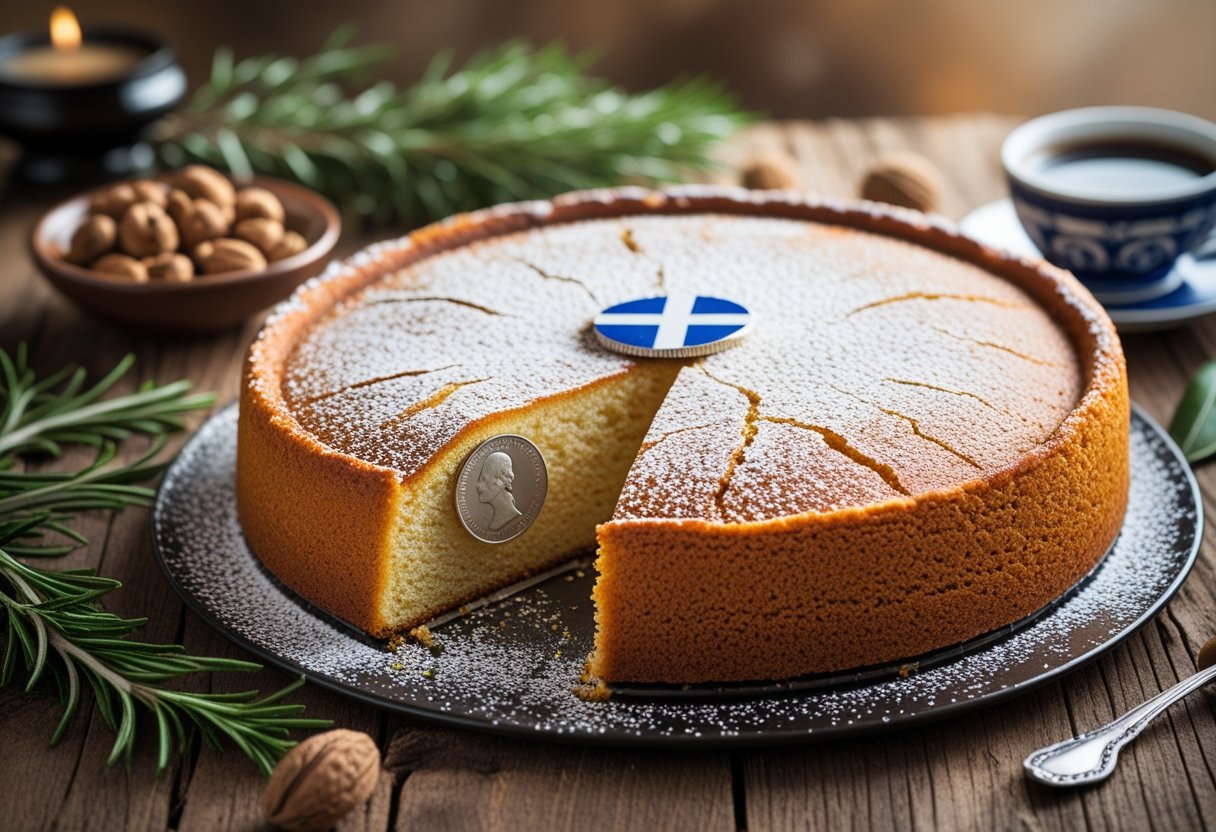
To make a proper traditional Vasilopita, we pay close attention to the unique blend of ingredients and the special way to hide the lucky coin. Simple but meaningful decoration turns this cake into a centerpiece for New Year’s celebrations.
Ingredients and Secret Flavors
Our Vasilopita recipe calls for butter, icing sugar, eggs, and all-purpose flour combined with baking powder for the perfect rise. We add fresh orange juice and zest to give the cake its bright citrus taste.
Vanilla extract and ground nutmeg bring warmth, while Mahlep powder adds a subtle, distinctive flavor characteristic of traditional Greek baking. Brandy or Cognac is often included, but if you’re skipping alcohol, more orange juice does the trick.
The key is balancing these flavors so the cake is lightly sweet, airy, and fragrant—never too heavy. This flavor mix defines the traditional Vasilopita cake.
Step-by-Step Preparation and Baking
We start by creaming the softened butter with icing sugar until it’s fluffy. Then, we add eggs one by one, mixing well after each addition to keep things light.
Next, we fold in the orange zest, vanilla, nutmeg, and Mahlep powder. We sift the flour and baking powder and add them alternately with milk and the orange juice–brandy mix.
This keeps the batter smooth and light. The batter is poured into a lined 10-inch springform pan for even baking.
Bake at 175°C (350°F) for about 40-45 minutes, using a toothpick to check for doneness. Don’t forget to resist the urge to eat it straight from the oven—patience is a virtue!
Tips for Inserting and Hiding the Coin
The coin is the heart of the Vasilopita tradition. We insert a clean, small coin into the cake after it cools slightly but before it fully sets.
Carefully remove the cake from the pan, slice off the top to create a flat surface, and press the coin inside. Place the cake back together, turning it upside down so the coin stays hidden.
Make sure to warn everyone that the coin is inside to avoid any unexpected trips to the dentist. Happy New Year, and may the luckiest bite be yours!
Decorating and Serving the New Year’s Cake
For decoration, the simplest and most common method is dusting the top with icing sugar.
You can use paper cutouts or cookie cutters to create festive shapes and numbers. Some folks get creative and pipe messages like “Happy New Year” with melted chocolate or frosting.
When serving, the cake is cut in a special order. It usually starts with blessings for sacred figures, the household, business, and then family members from the oldest to the youngest.
This tradition adds meaning to every slice, especially for the lucky person who finds the hidden coin inside the Vasilopita.
For a fresh twist, try a light citrus glaze or add orange slices for a pop of flavor and color. This way, you highlight the cake’s natural charm without covering it up.