You might think Rocky Mountain oysters sound daring, but you can make them at home with simple steps and common ingredients.
We’ll show you how to clean, bread, and fry authentic Rocky Mountain oysters so they turn out crispy outside and tender inside.
Follow our clear tips to avoid rookie mistakes and pick the right cuts and sauces.
You’ll find easy frying techniques, seasoning ideas, and pro tricks that make this Western classic approachable.
Key Takeaways
- Learn the basics to prepare authentic Rocky Mountain oysters at home.
- Step-by-step frying tips and practical seasoning choices.
- Common questions and quick troubleshooting to boost your confidence.
Essential Guide to Authentic Rocky Mountain Oysters
We focus on clear steps: what these are, where to buy the freshest pieces, how to clean and trim them safely, and which sauces and plates work best for serving.
What Are Rocky Mountain Oysters?
Rocky Mountain oysters are bull testicles sold as a meat item.
They come from cattle and are a traditional Western ranch dish.
The texture is tender when cooked right, with a mild, beefy flavor rather than a seafood taste.
We call them “oysters” by tradition, not because they come from the sea.
People usually slice them into rounds or leave them whole before breading and frying.
When prepared properly they are lightly crisp outside and soft inside.
For more background on this tradition, check out the complete guide here.
Selecting and Sourcing the Freshest Ingredients
Buy from a reputable butcher or a specialty shop that lists “beef testicles” or “rocky mountain oysters.”
We prefer fresh over frozen for texture.
Look for firm pieces with a clean, neutral smell and no sliminess.
If you buy frozen, thaw in the refrigerator overnight.
Keep them below 40°F until you cook.
Small local ranches and some online meat purveyors sell them by the pound; check reviews and handling notes before ordering.
For tips on where to find them regionally, consult this guide.
Bring a cooler and ice if transporting long distances.
Use gloves when handling raw pieces.
Plan to cook within 48–72 hours if fresh, or follow seller storage guidance.
Cleaning and Preparing the Delicacy
Start by rinsing each piece under cold running water.
Pat dry with paper towels.
Trim away the outer membrane and any visible connective tissue with a sharp knife; this reduces chewiness and removes bitterness.
Slice into 1/4–1/2 inch rounds for even cooking, or leave whole for grilling.
If you prefer milder flavor and softer texture, soak trimmed pieces in buttermilk for 30–60 minutes; this also helps breading stick.
For breading: flour, beaten eggs, and breadcrumbs or cornmeal make a reliable coating.
Keep prep tools separate from other foods and sanitize surfaces after handling.
An oyster knife is not needed for these; use a chef’s knife for trimming.
Maintain 160°F internal temperature for safety if measuring.
Popular Dipping Sauces and Serving Suggestions
We serve crisp Rocky Mountain oysters with acidic or spicy sauces to cut richness.
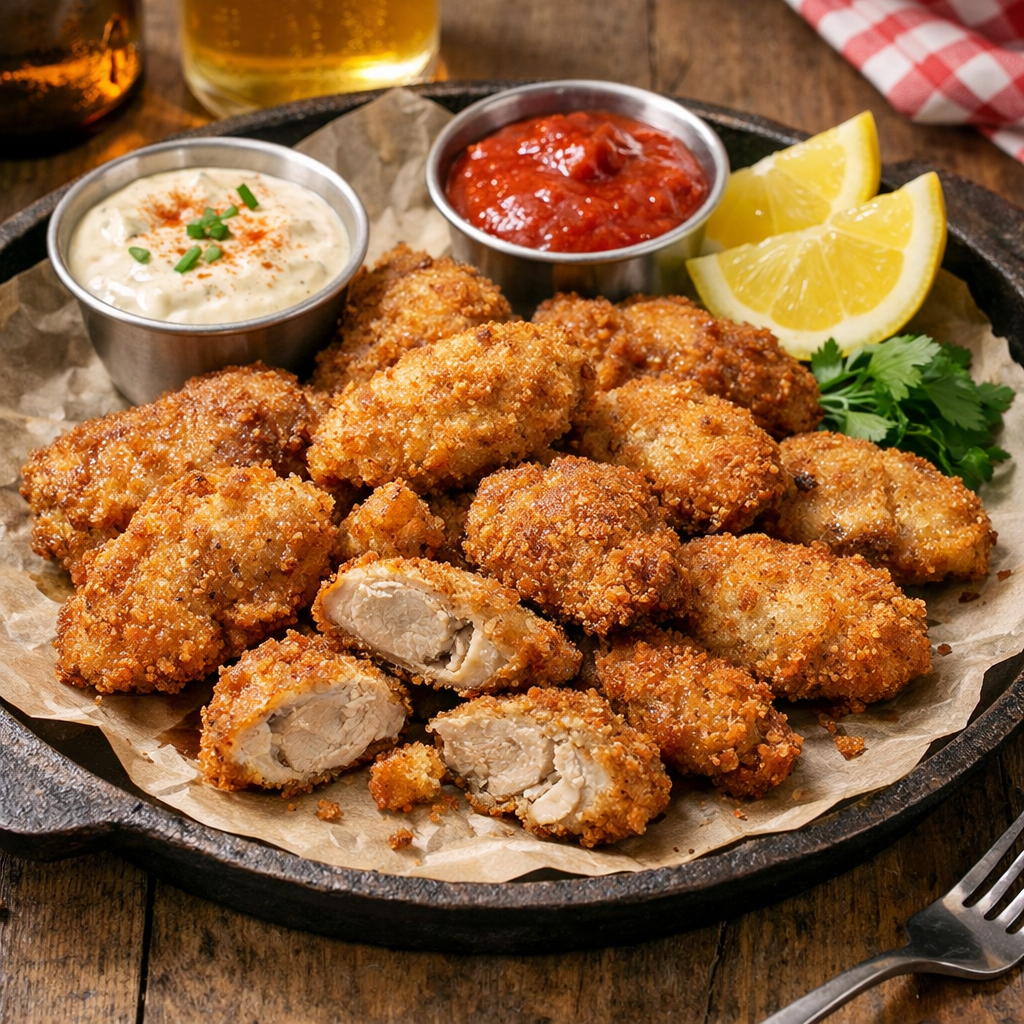
Classic options include cocktail sauce and remoulade.
Cocktail sauce pairs well for a bright, tomato-forward bite.
Remoulade and tartar sauce add creamy, tangy notes; we like to mix remoulade with chopped cornichons and paprika for texture.
Hot sauce is optional for guests who like heat.
Offer lemon wedges for a fresh squeeze.
Serve on a platter lined with paper towels or lettuce to absorb oil.
Add small bowls for sauces and toothpicks or forks for easy handling.
For a playful twist, place fried rounds in slider buns or tacos with slaw.
Crispy Western Fried Oysters: Step-by-Step Recipe and Pro Tips
We show exact steps, temperatures, and timing to get golden, crunchy bites.
Expect clear prep, a tested breading method, and a few pro tips that cut sogginess and boost flavor.
Classic Fried Rocky Mountain Oyster Recipe
Start by cleaning each oyster and removing the outer membrane, then slice into 1/3–1/2 inch pieces for even cooking.
Pat pieces dry with paper towels; moisture ruins crispness.
For breading, set up three shallow dishes: seasoned flour (1 cup flour + 1 tsp salt + 1/2 tsp black pepper + 1/2 tsp garlic powder), beaten egg with 2 tbsp milk, and 1 1/2 cups panko or plain breadcrumbs.
Dredge flour → egg → breadcrumbs, pressing gently so crumbs stick.
Heat oil (canola or peanut) to 360°F (180°C) in a deep pot or fryer.
Fry in small batches — 2–3 minutes per batch — until golden brown.
Use a thermometer to keep temperature steady; adjust heat between batches.
Drain on a wire rack over a sheet pan to keep air flowing under the fritters.
Serve immediately with lemon wedges and a dipping sauce like horseradish ranch or cocktail sauce.
Southern Fried Oysters vs. Rocky Mountain Oysters
Southern fried oysters use shucked bivalve oysters, while Rocky Mountain oysters are bull testicles; both benefit from crisp coatings but differ in texture and prep.
Southern fried oysters are usually smaller and cook very quickly — often 1–2 minutes per side in shallower oil or a skillet.
We often use seasoned cornmeal or self-rising flour to get a classic Southern crunch.
A light buttermilk soak helps tenderize and add tang.
Rocky Mountain oysters need membrane removal and sometimes a buttermilk soak or gentle pounding to tenderize before breading.
They hold up well to panko or thicker batters and can take slightly longer in oil without becoming rubbery.
Both dishes pair well with tart, creamy sauces and sides like fries or slaw.
For flavor, we add cayenne to Southern mixes and smoked paprika to Rocky Mountain oyster breading.
Secrets to the Perfect Crunch Every Time
Temperature control matters most.
Keep oil at 350–375°F (175–190°C).
If oil drops below 350°F, pieces absorb oil and get greasy; above 375°F they brown too fast and stay raw inside.
Dryness before breading is critical.
Pat each piece completely dry and dust with flour before egg to create a barrier that helps crumbs stick and reduces steam under the crust.
Use panko or a mix of panko and fine breadcrumbs for a flaky, airy crunch.
Press crumbs just enough to adhere but not so hard that coating compacts.
Fry in small batches to avoid crowding, and rest cooked pieces on a wire rack, not paper towels.
For extra crispness, double-fry: fry 90–120 seconds, rest 1–2 minutes, then finish 60–90 seconds at the same temp.
Finish with a light sprinkle of fine salt and a squeeze of lemon to brighten the flavors.
Frequently Asked Questions
What is the traditional preparation method for Rocky Mountain oysters?
Start by removing the outer membrane, then slice the testicles into rounds.
Dredge the pieces in seasoned flour or cornmeal, then deep-fry until golden and crisp.
Many recipes add salt, black pepper, and garlic powder to the coating.
Common serving sauces include cocktail sauce and horseradish for a sharp contrast.
Can Rocky Mountain oysters be found fresh outside of the mountain region?
Yes, you can buy them from some local butchers and online meat purveyors across the U.S. and Canada.
They also appear at Western-themed restaurants and food festivals in states like Colorado and Montana.
Availability peaks in spring when ranching operations handle livestock.
Check with specialty butcher shops or the restaurant’s menu before you travel.
How does the taste of Rocky Mountain oysters compare to other seafood oysters?
Rocky Mountain oysters do not taste like seafood oysters.
They have a mild, slightly beefy flavor and a tender interior with a crispy exterior when fried.
Texture and seasoning affect the experience more than a seafood-like briny taste.
People often compare them to fried calf liver or other organ meats in flavor profile.
What are some health benefits of consuming Rocky Mountain oysters?
They provide protein and several minerals such as zinc and iron.
Organ meats typically contain higher micronutrient levels than equivalent muscle meats.
Portion size matters; they can be calorie-dense when breaded and deep-fried.
We recommend balancing them with vegetables or a light salad to round out a meal.
Is there a simple and quick recipe for preparing Rocky Mountain oysters?
Yes! Pat dry and peel the testicles, slice into 1/4–1/2 inch rounds, and season.
Coat in flour or cornmeal, then fry in oil at 350°F (175°C) for 2–3 minutes per side until golden.
Drain on paper towels and serve hot with cocktail sauce or horseradish.
This method works for beef, bison, or lamb testicles.
Why are Rocky Mountain oysters considered a unique culinary experience?
They reflect ranching practices where nothing goes to waste—yes, even the weird parts.
The name alone is a conversation starter and has cemented them as a quirky icon of the American West.
Preparation is half the fun, and communal tasting events turn curiosity into a party.